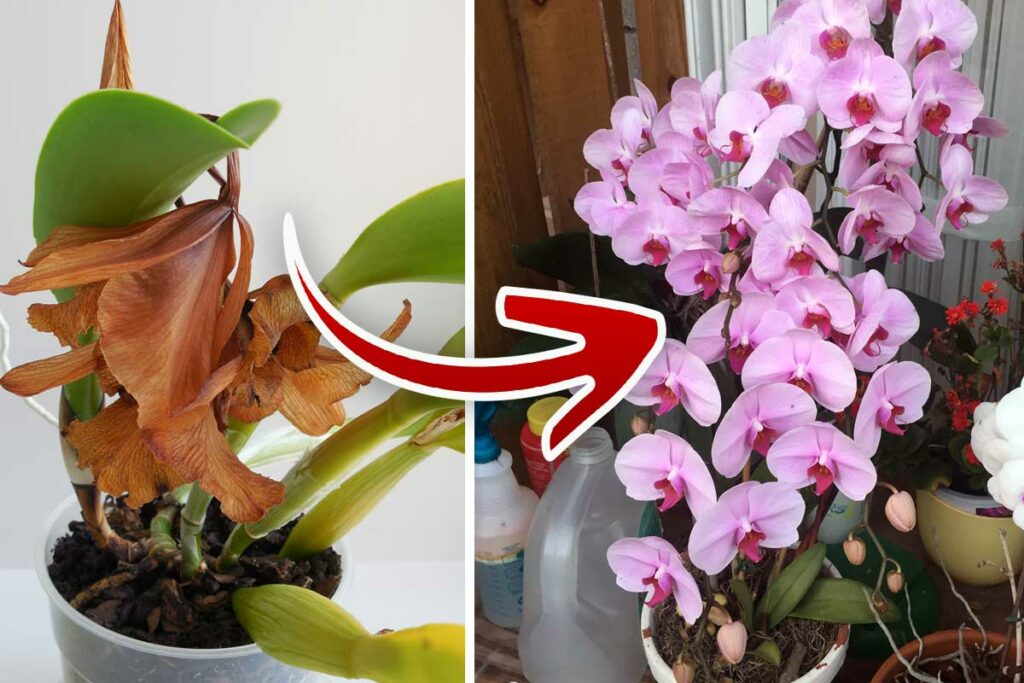
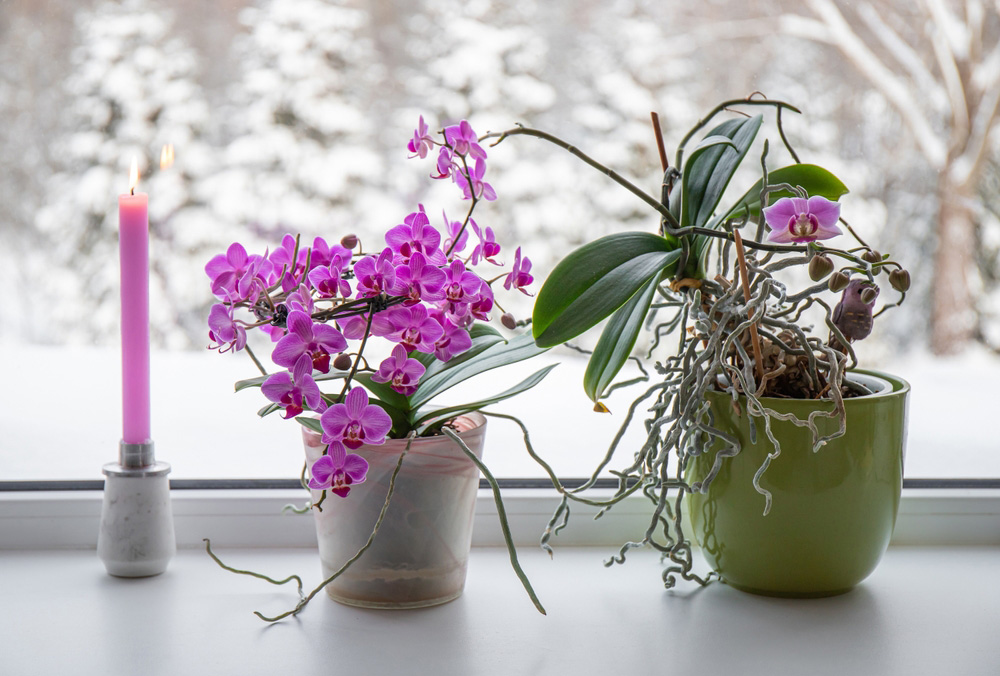
Winter can be a tricky time for orchids. The days are shorter, the air is drier, and suddenly that happy plant on your windowsill does not look quite as perky as it did a few months ago.
So what is going on? And more importantly, what should you actually change during the winter months?
Today, we will go over exactly how to care for your orchids in winter, what signs of stress to watch for, and how a few small adjustments can make a big difference.
Let’s take a closer look.
Do Orchids Go Dormant in Winter?
This is one of the most common questions gardeners ask, and the answer might surprise you.
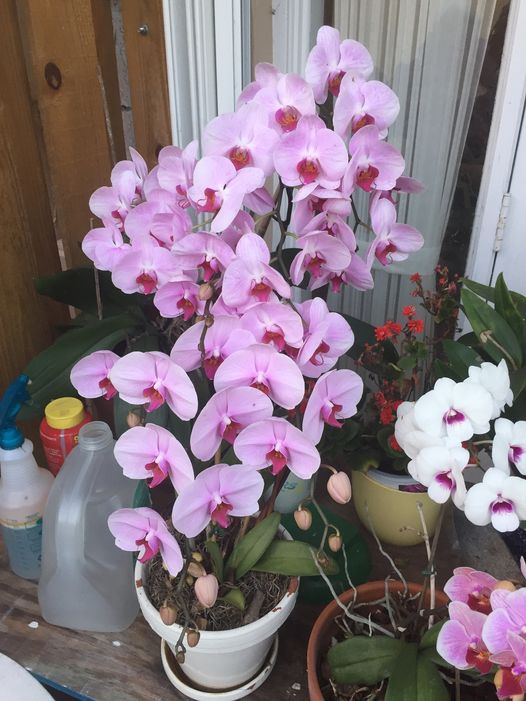
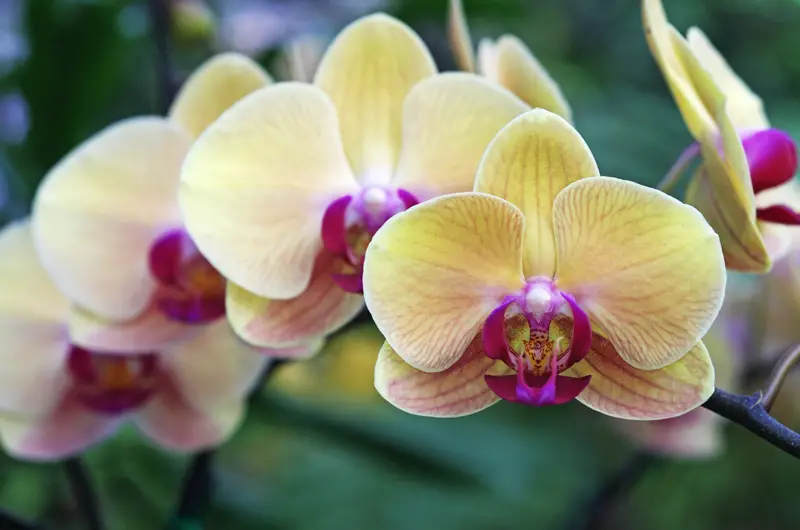
Most popular houseplant orchids, especially Phalaenopsis (moth orchids), do not go fully dormant in winter.
However, they do slow down. Growth is less active, water-use decreases, and the plant becomes more sensitive to its environment.
In fact, winter stress is often caused not by neglect, but by treating orchids the same way year-round.
Winter Light: Your Orchid Needs More Than You Think
While temperatures may drop outside, light is usually the biggest winter issue indoors.
Shorter days and weaker sunlight mean your orchid may not be getting enough energy to support healthy leaves and roots.
You will want to:
- Move orchids closer to a bright window
- Favor east- or south-facing windows
- Rotate the plant weekly so all sides receive light
If you are wondering whether light is an issue, look at the leaves. Very dark green leaves often mean the plant is craving more light.
Watering Orchids in Winter (This Is Where Most Problems Start)
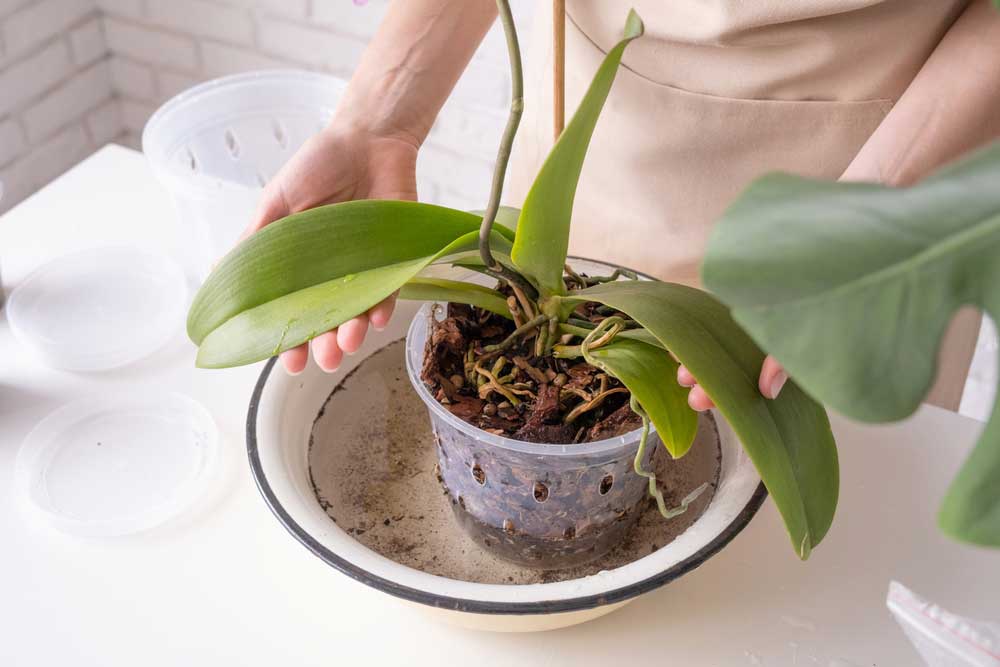
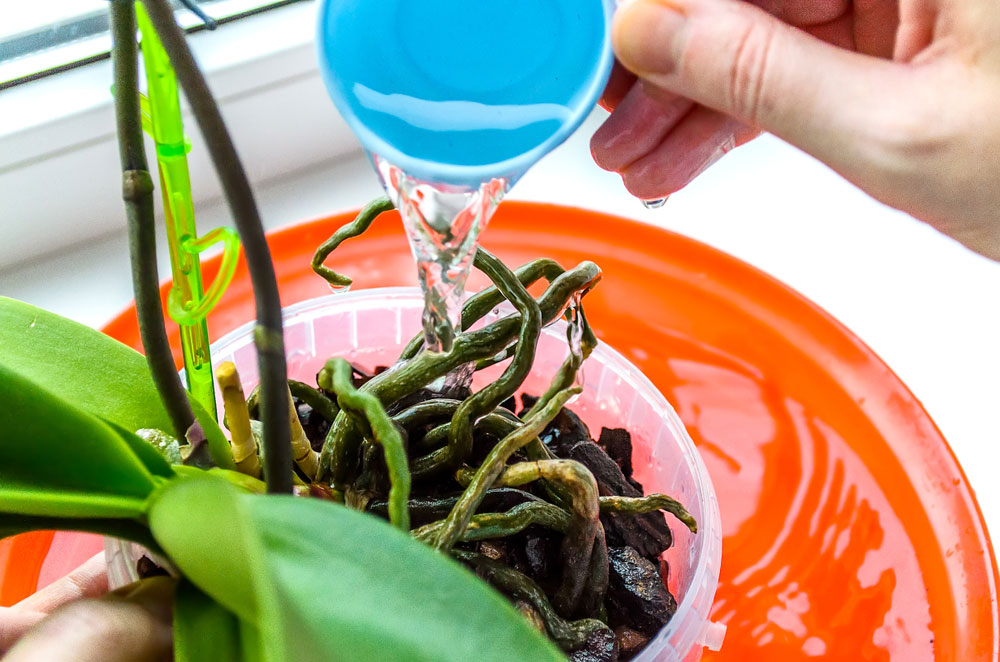
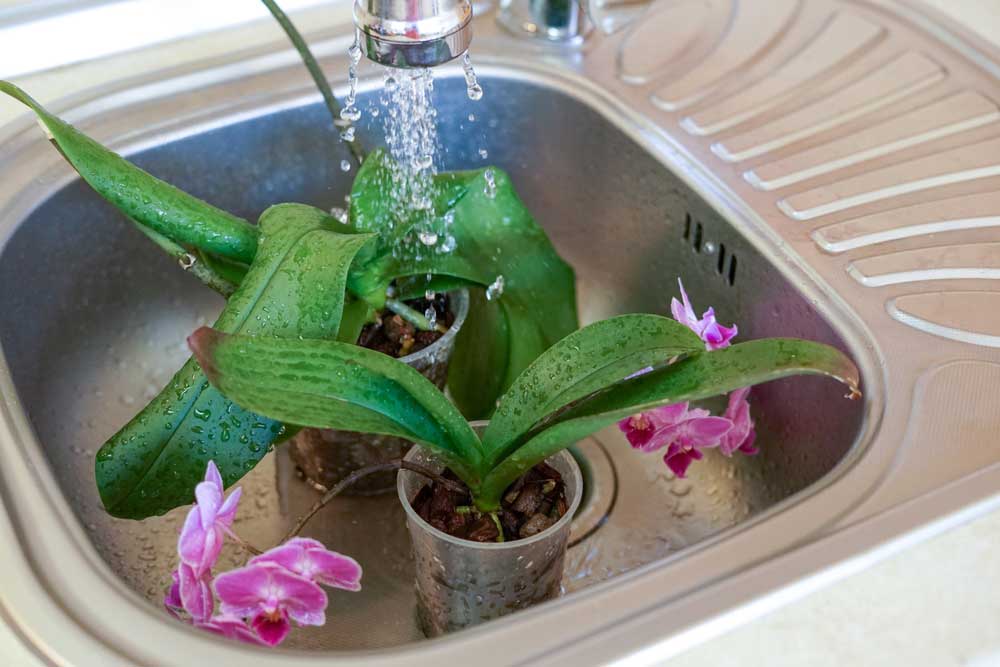
Here is the tricky part. Orchids need less water in winter, but they still need consistent moisture.
Cold temperatures and lower light mean water evaporates more slowly. Overwatering during winter is one of the most common reasons orchids struggle, and it often leads to root problems.
A few simple rules help:
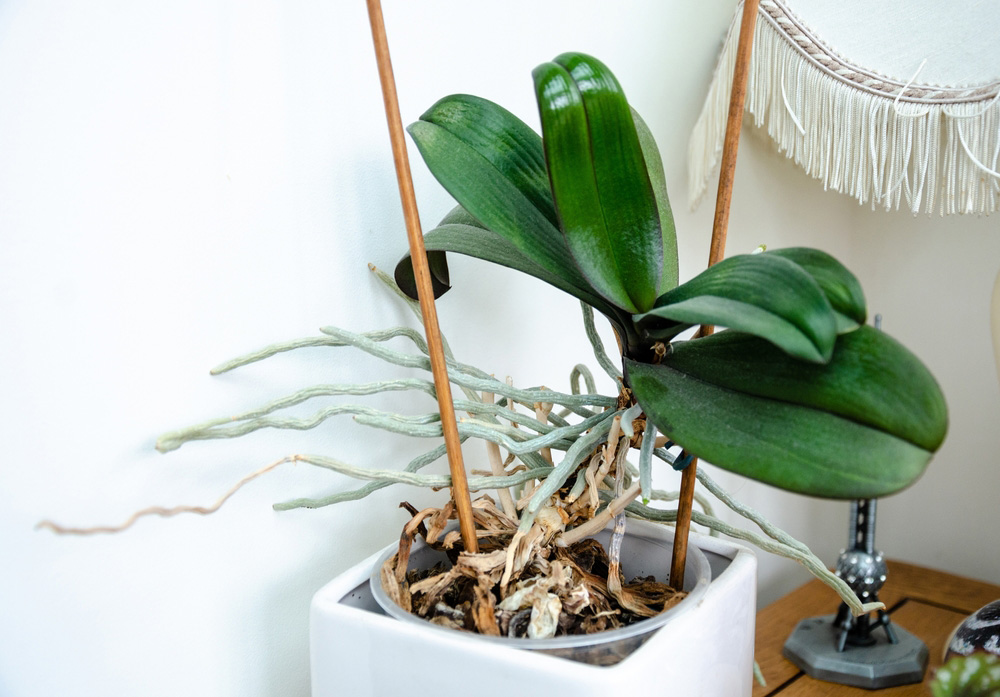
- Water only when roots turn silvery, not green
- Let the pot dry a bit longer between waterings
- Always water in the morning, never at night
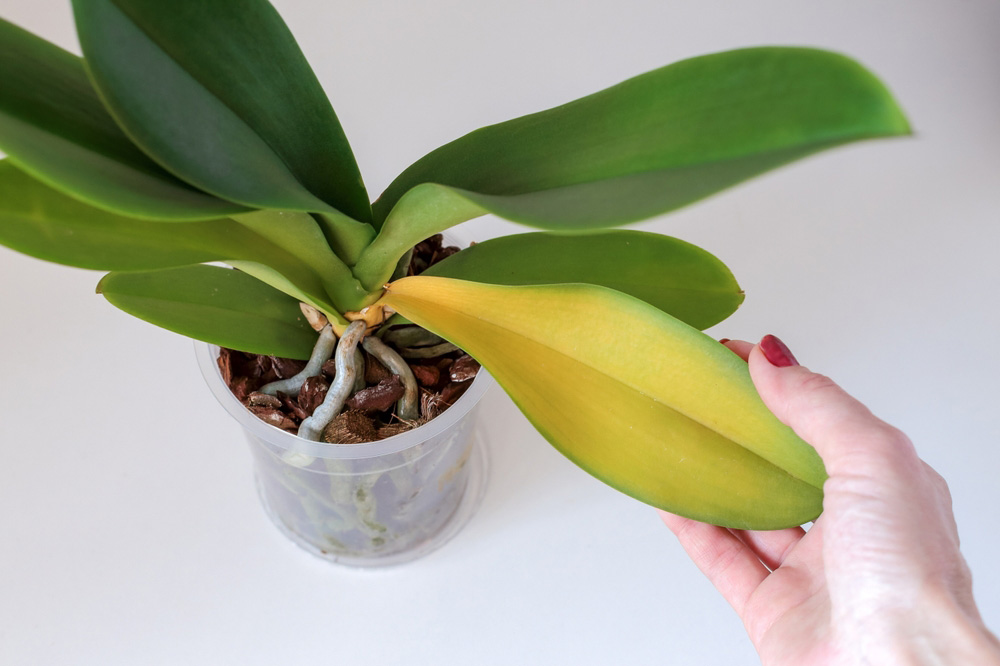
If leaves start to look limp or leathery, do not immediately assume the plant needs more water. In fact, those symptoms often point to root stress, not thirst.
Winter Humidity: The Hidden Stress Factor
Heated homes feel cozy to us, but orchids often disagree.
Indoor heating strips moisture from the air, and orchids prefer humidity levels between 40 and 60 percent.
Easy ways to boost humidity include:
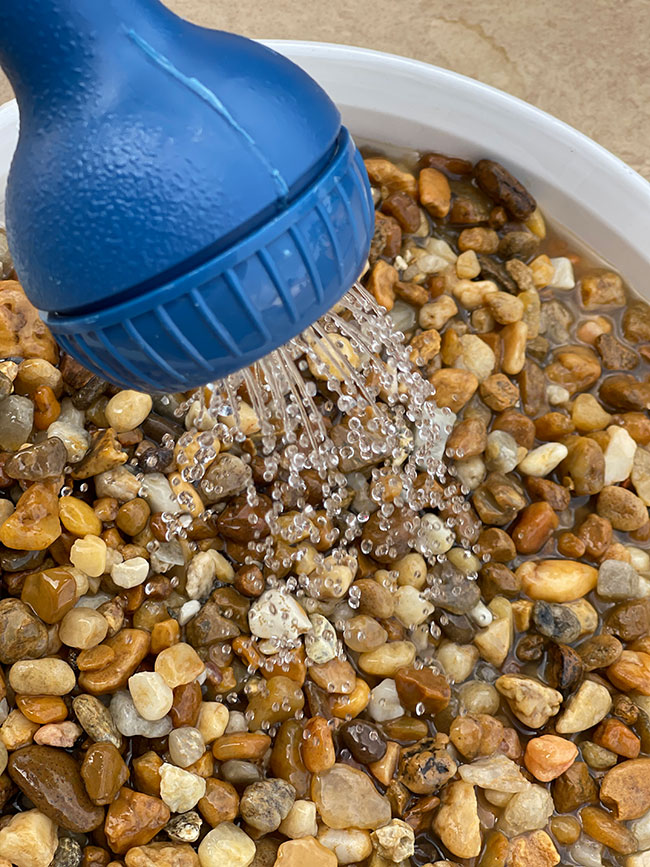
- Placing orchids on a humidity tray
- Grouping plants together
- Using a small humidifier nearby
While misting is tempting, it is best avoided in winter, especially at night. Wet leaves combined with cool temperatures can invite fungal issues.
Temperature Changes to Watch Out For
Orchids are sensitive to sudden temperature shifts, which happen more often in winter than we realize.
Ideal winter temperatures are:
- Daytime: 65 to 75 degrees Fahrenheit
- Nighttime: 60 to 65 degrees Fahrenheit
Be careful of:
- Cold window glass at night
- Drafty doors or windows
- Heat vents blowing directly on leaves or roots
If your orchid sits right against a window, pulling it back a few inches at night can help prevent cold damage.
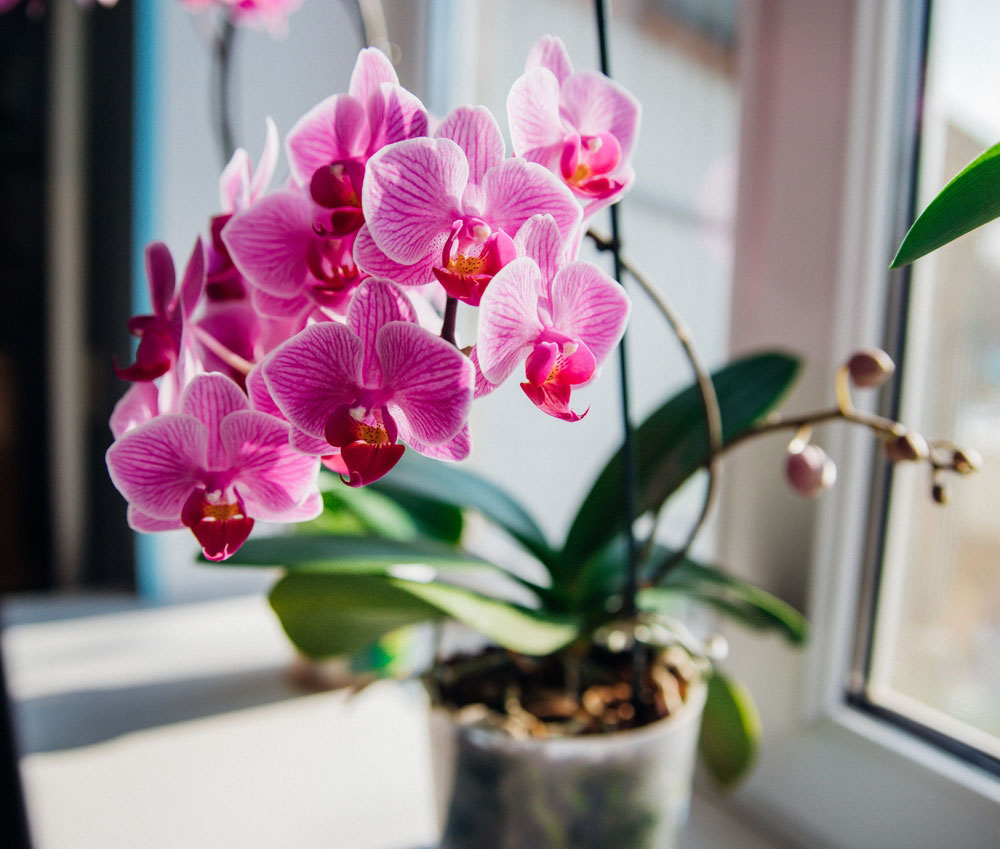
Should You Fertilize Orchids in Winter?
In most cases, orchids do not need much fertilizer during winter.
Because growth slows, excess fertilizer can actually do more harm than good. You will want to:
- Reduce feeding to once a month
- Use a diluted fertilizer at one-quarter strength
If your orchid is actively growing new leaves or roots, light feeding is fine. Otherwise, winter is a good time to let the plant rest.
Is Winter a Good Time to Repot Orchids?
Generally speaking, no.
Repotting is best saved for spring or early summer, when orchids are naturally ready to grow new roots. Winter repotting can add unnecessary stress.
The only time repotting makes sense in winter is if:
- Roots are actively rotting
- The potting medium has completely broken down
Otherwise, patience pays off.
Winter Orchid Care Checklist
Before you go, here is a quick summary you can come back to anytime:
✅ Increase light exposure
✅ Water less frequently, but carefully
✅ Boost indoor humidity
✅ Protect from cold drafts and heat vents
✅ Reduce fertilizer
✅ Be patient, winter blooms come in their own time
Frequently Asked Questions About Winter Orchid Care
Q. Should I water my orchid less in winter?
A. Yes. Most orchids use water more slowly in winter due to lower light and cooler temperatures. Always check the roots first. If they are still green, wait. Water only when they turn silvery.
Q. Why are my orchid leaves limp during winter?
A. Limp or leathery leaves are often a sign of root stress, not just dehydration. Overwatering in cool conditions is a common cause. Poor light and low humidity can also contribute.
Q. Can orchids bloom in winter?
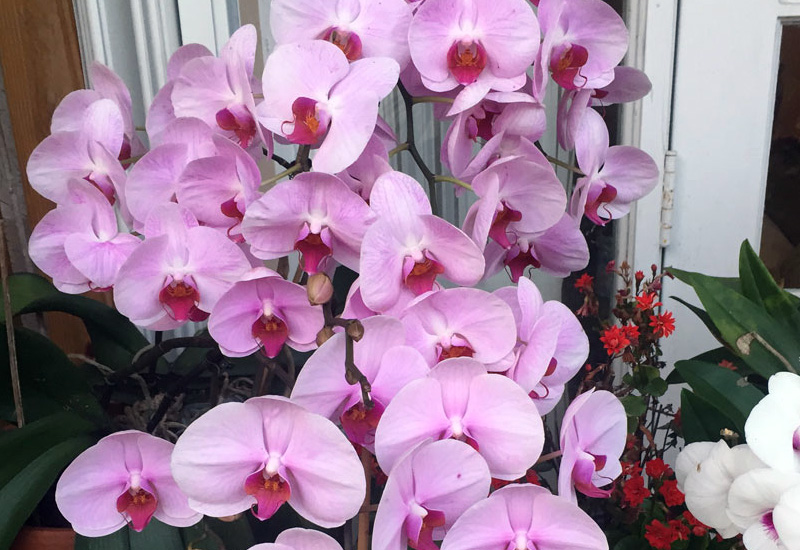
A. They can. Many Phalaenopsis orchids naturally produce flower spikes in late fall or winter, especially when nighttime temperatures are slightly cooler than daytime temperatures.
Q. Should I move my orchid away from the window at night?
A. If the window is cold or drafty, yes. Even a few inches of distance can protect your orchid from temperature shock during winter nights.
Q. Do orchids need fertilizer during winter?
A. Usually less. If your orchid is not actively growing, feeding once a month with diluted fertilizer is enough. Some orchids do fine with no fertilizer at all until spring.
Q. Is it okay to mist orchids in winter?
A. It is best to avoid misting during winter, especially in the evening. Moist leaves combined with cool temperatures can increase the risk of fungal problems.