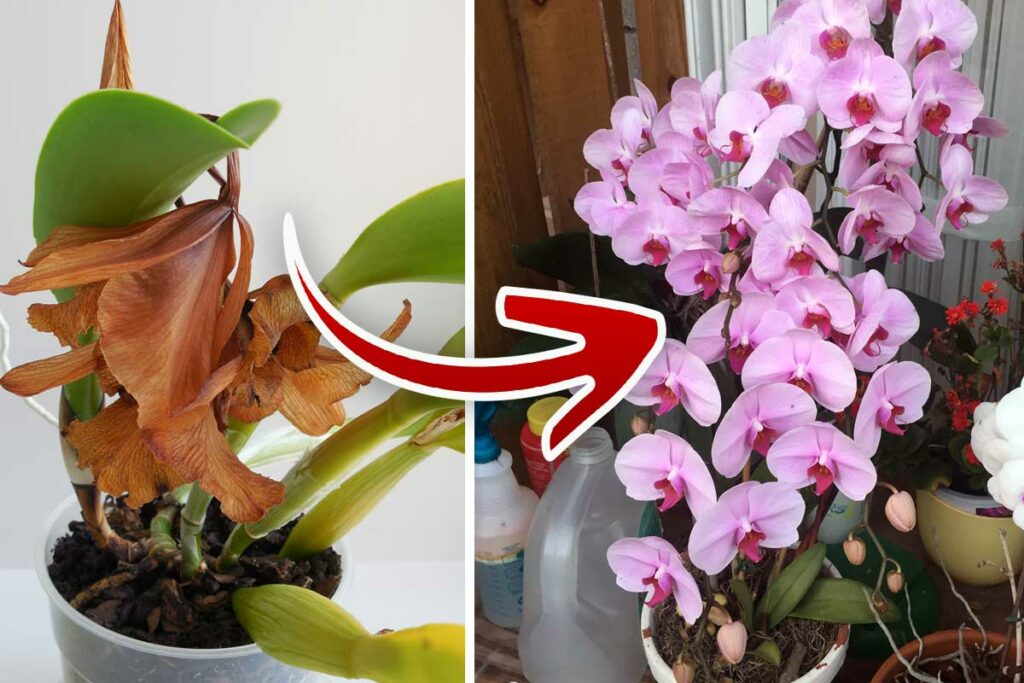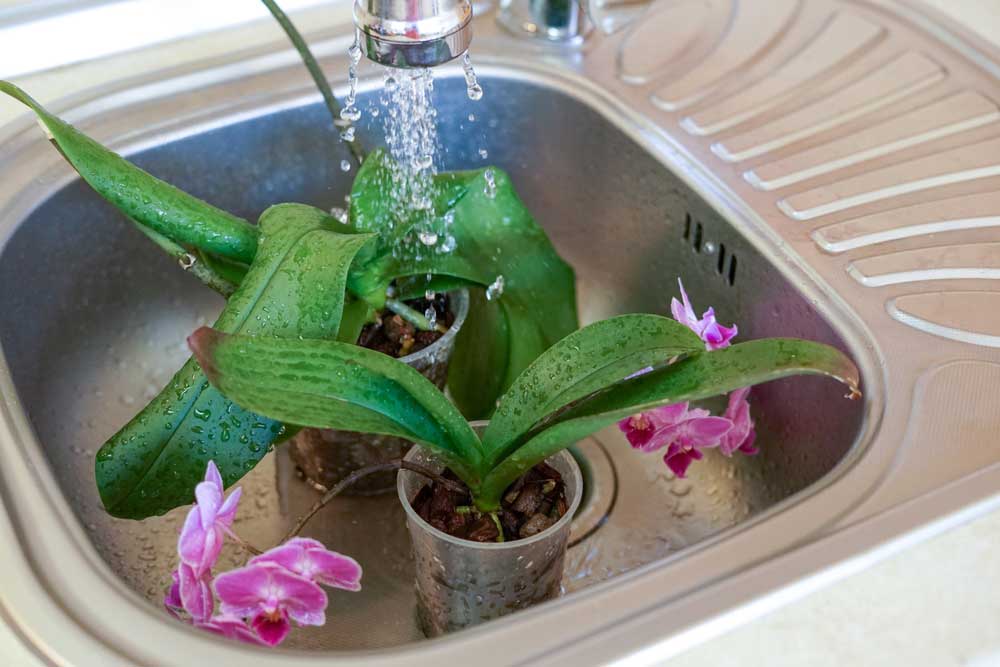
If you’ve ever looked at your orchid and thought, “Something is off, but I can’t quite tell what,” I want to reassure you.
Orchids are very good at communicating when they’re unhappy.
The trick is learning how to read the signs before small issues turn into bigger problems.
I’ve grown orchids for years, and I’ve learned that they rarely fail overnight. They usually whisper first. Droopy leaves, odd colors, stalled growth. Those are your clues.
Let’s go through ten clear signs your orchid is asking for help and exactly what to do when you notice them.
1. Leaves Are Wrinkled or Limp
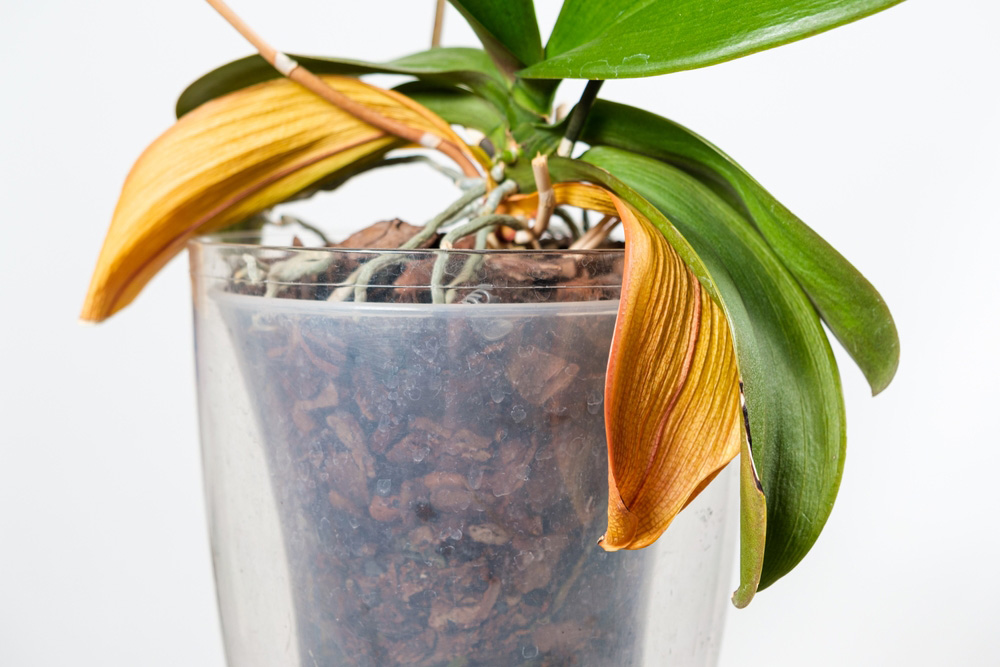
Wrinkled or floppy leaves are often the first sign something isn’t right. Many people assume the orchid needs more water, but that’s not always the case.
This usually happens when the roots are damaged and can’t absorb moisture properly, even if you’re watering regularly.
What to do:
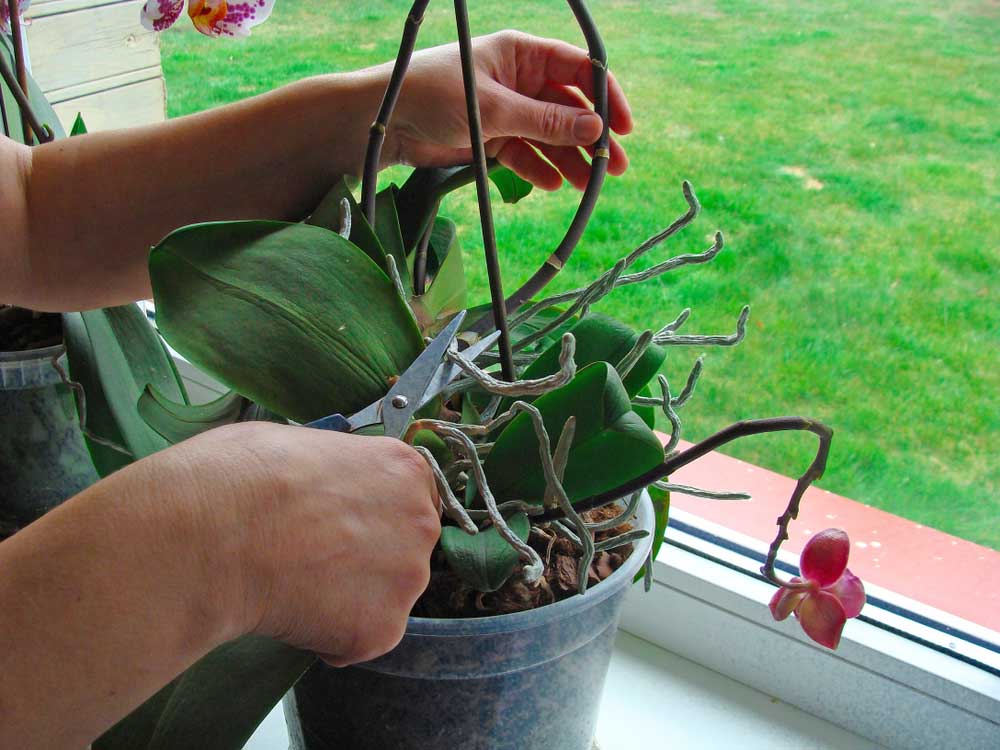
Check the roots. Healthy roots should feel firm and look green or silvery. If you see brown, mushy, or hollow roots, trim them away and repot in fresh orchid bark. Once the roots recover, the leaves will slowly plump back up.
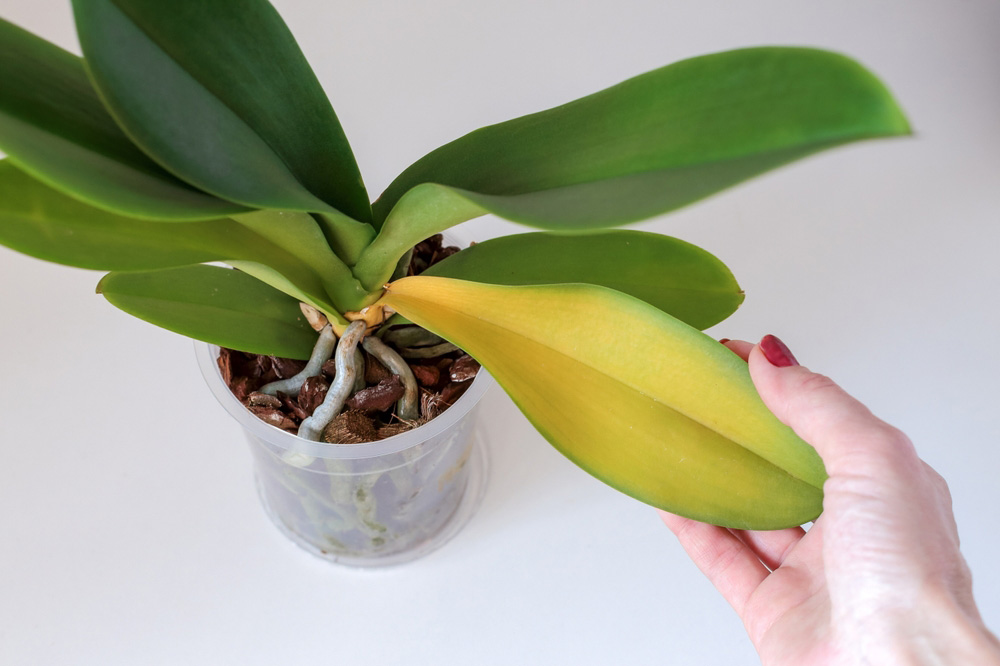
2. Leaves Are Turning Yellow
Yellow leaves can be alarming, but context matters. Orchids naturally shed older leaves, especially the bottom ones.
The concern starts when multiple leaves turn yellow at the same time or when yellowing spreads quickly.
What to do:
Look at where the yellowing is happening. One lower leaf turning yellow is normal. Several leaves turning yellow usually means a watering or light issue. Let the potting mix dry slightly between waterings and make sure the plant is getting bright, indirect light.
3. No New Growth for Months
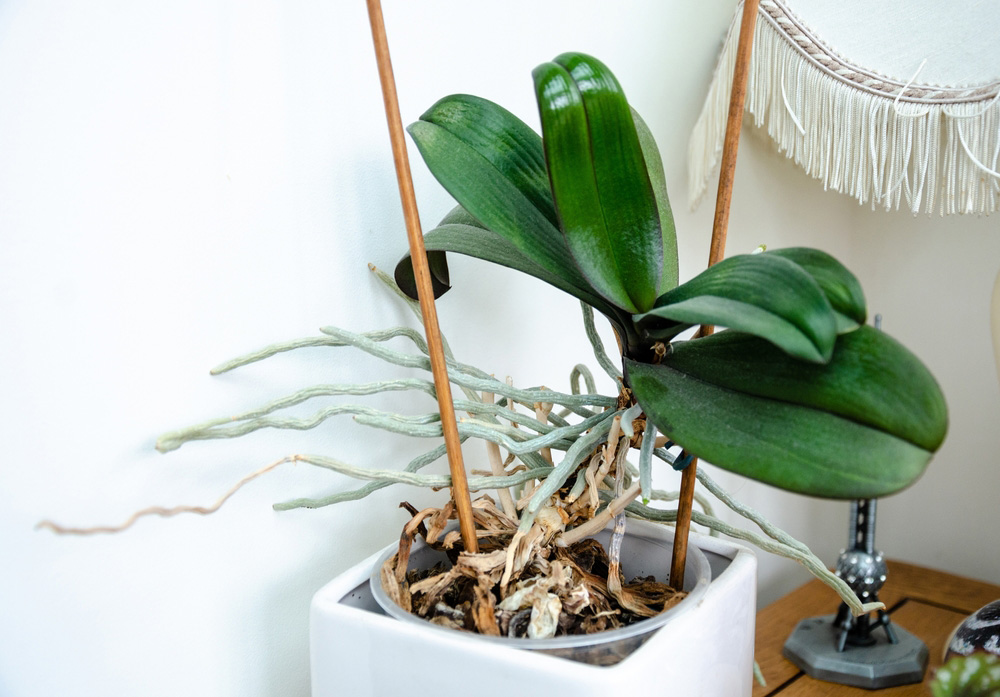
If your orchid hasn’t produced new leaves or roots in a long time, it may be struggling even if it still looks green.
Orchids do rest, but long periods of inactivity can signal stress.
What to do:
Evaluate the basics. Check light first, then watering. Most orchids need brighter light than people expect. I want to encourage you to move it closer to a window with filtered sunlight and see how it responds over the next few weeks.
4. Buds Form but Fall Off
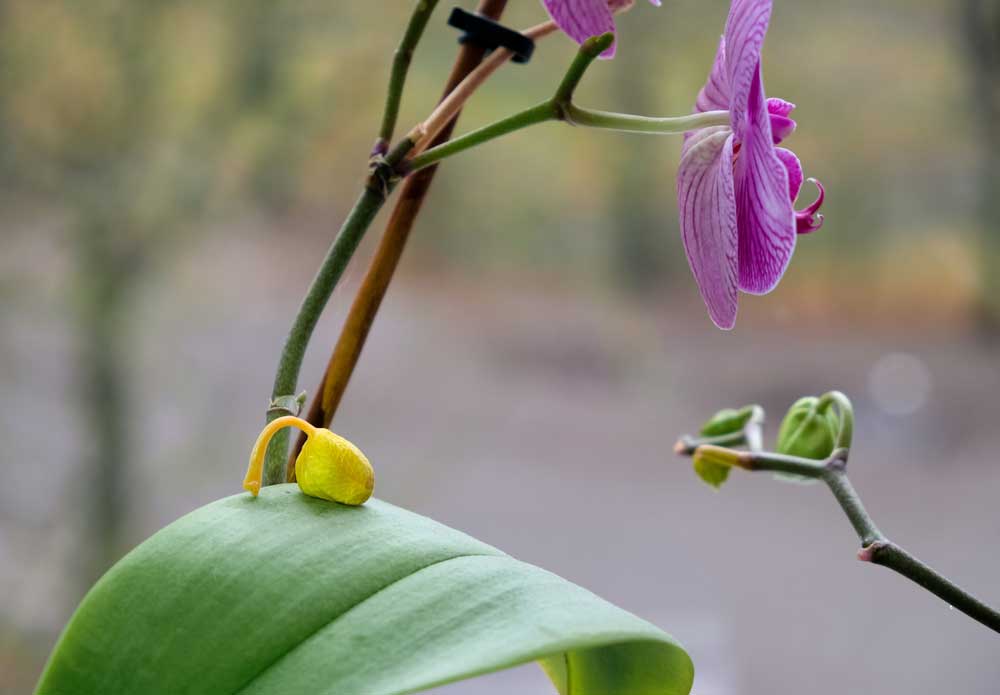
Few things are more disappointing than watching buds drop before they open.
This is called bud blast, and it’s almost always stress related.
What to do:
Once buds appear, keep conditions steady. Avoid moving the plant, protect it from drafts, and keep it away from ripening fruit. Orchids are sensitive during the budding stage and prefer consistency.
5. Roots Look Brown or Mushy
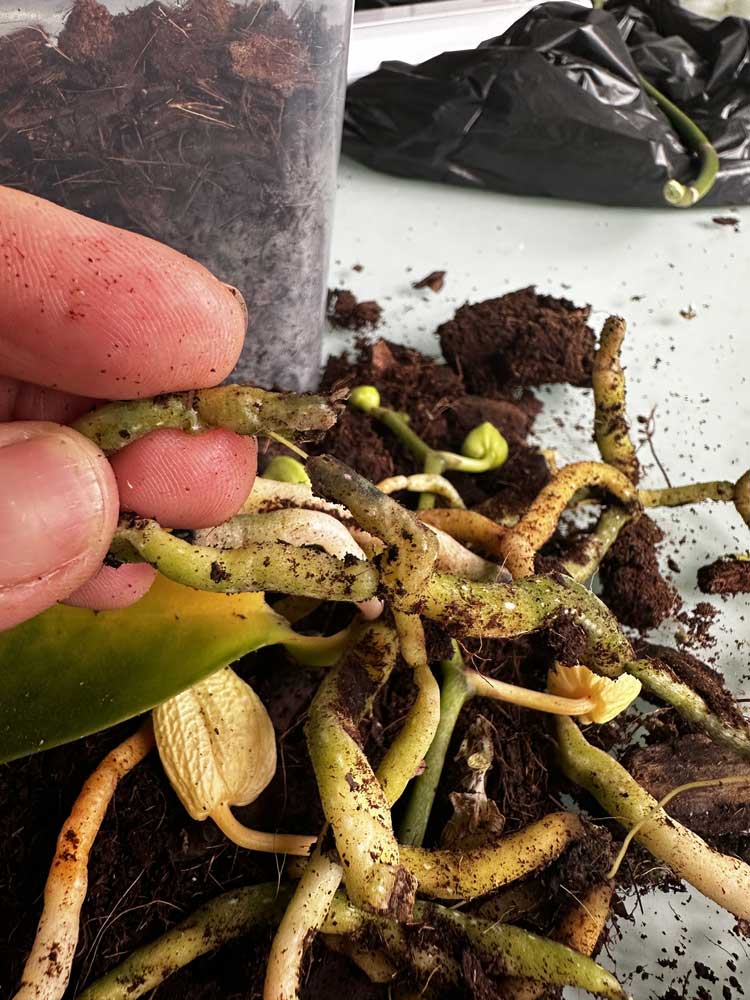
Roots tell you more about orchid health than leaves ever will.
Brown, mushy roots are a sign of rot, usually caused by overwatering or poor airflow.
What to do:
Remove the orchid from its pot and trim away all damaged roots with clean scissors. Repot in fresh orchid mix and use a pot with drainage holes. Water thoroughly but less often going forward.
6. Leaves Have Black Spots or Mold
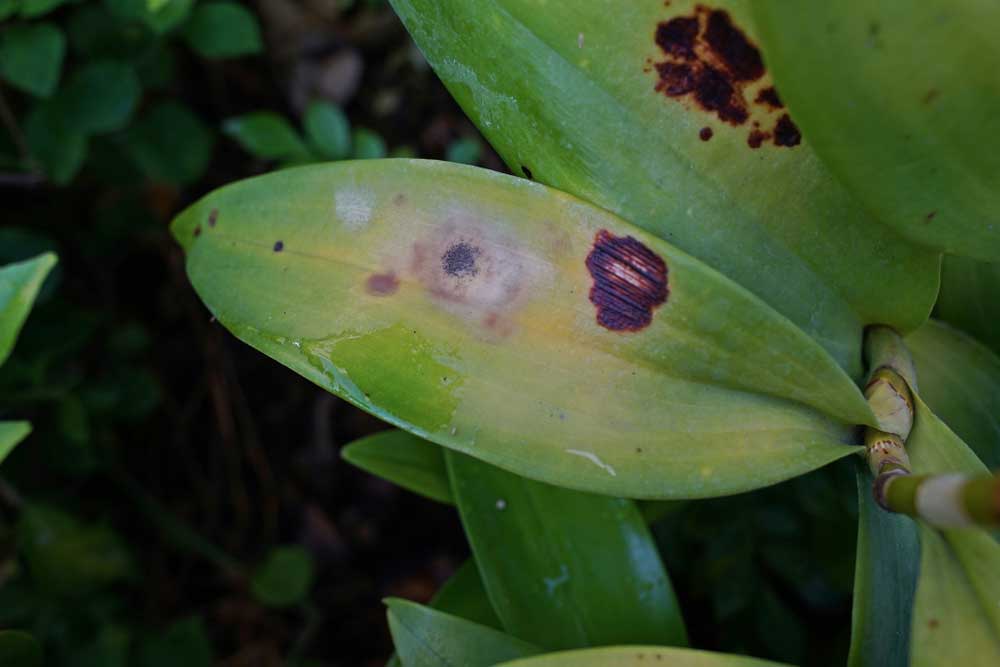
Black spots, fuzzy patches, or mold on leaves or potting mix usually mean moisture is lingering too long.
This often shows up when airflow is poor or humidity is too high.
What to do:
Improve air circulation around the plant and avoid misting late in the day. A gentle garlic water solution can help control fungus.
Crush two or three garlic cloves, steep them overnight in warm water, strain, and dilute before using.
Lightly water the potting mix or mist affected areas.
7. Sticky Residue on Leaves
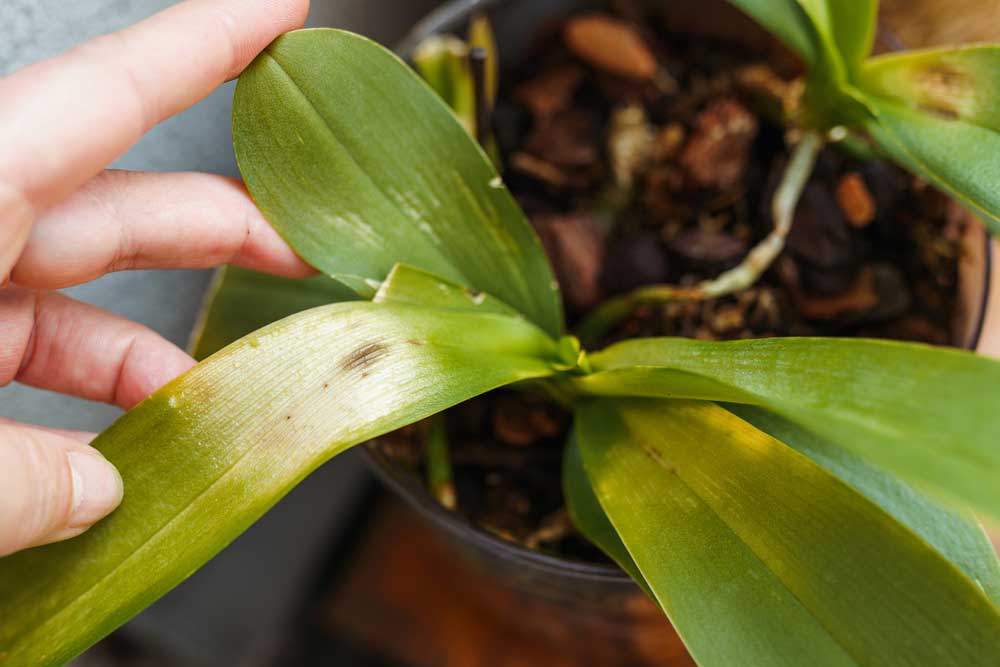
Sticky leaves are often a sign of pests, even if you don’t see insects right away.
Aphids, scale, and mealybugs feed slowly and leave behind sticky residue.
What to do:
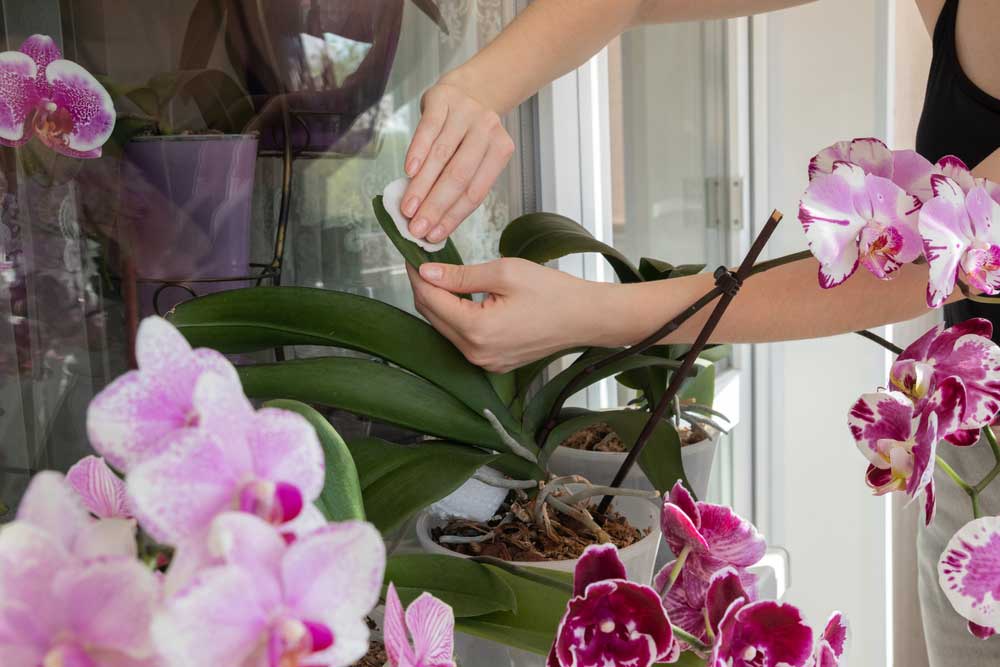
Wipe the leaves with a damp cloth and inspect closely, especially under the leaves and along leaf joints. Treat with insecticidal soap or neem oil once a week until pests are gone. Be patient and consistent.
8. Brown or Crispy Leaf Tips
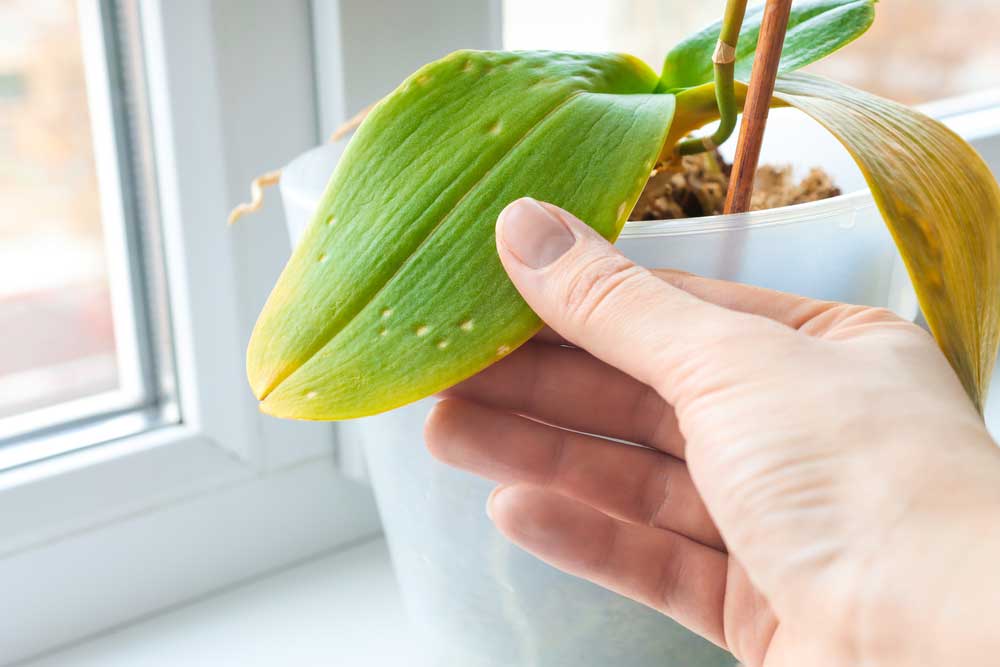
Brown tips are usually caused by environmental stress rather than disease.
Low humidity, fertilizer buildup, or mineral heavy tap water are common culprits.
What to do:
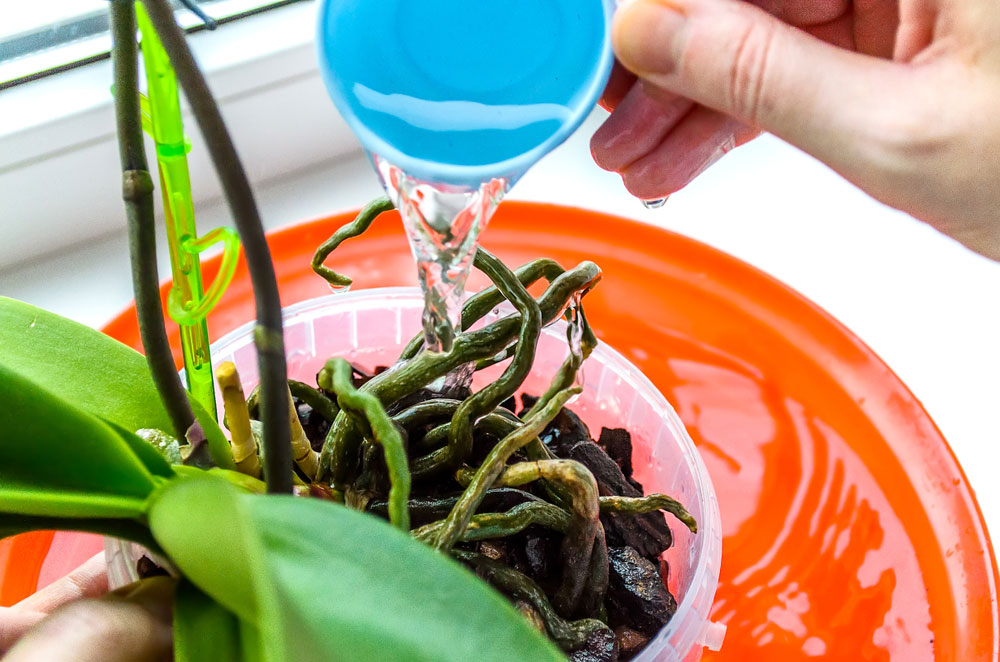
Increase humidity with a pebble tray or by grouping plants together. Flush the pot with clean water once a month to remove salt buildup. If possible, use rainwater or distilled water.
9. Water Sitting in the Crown
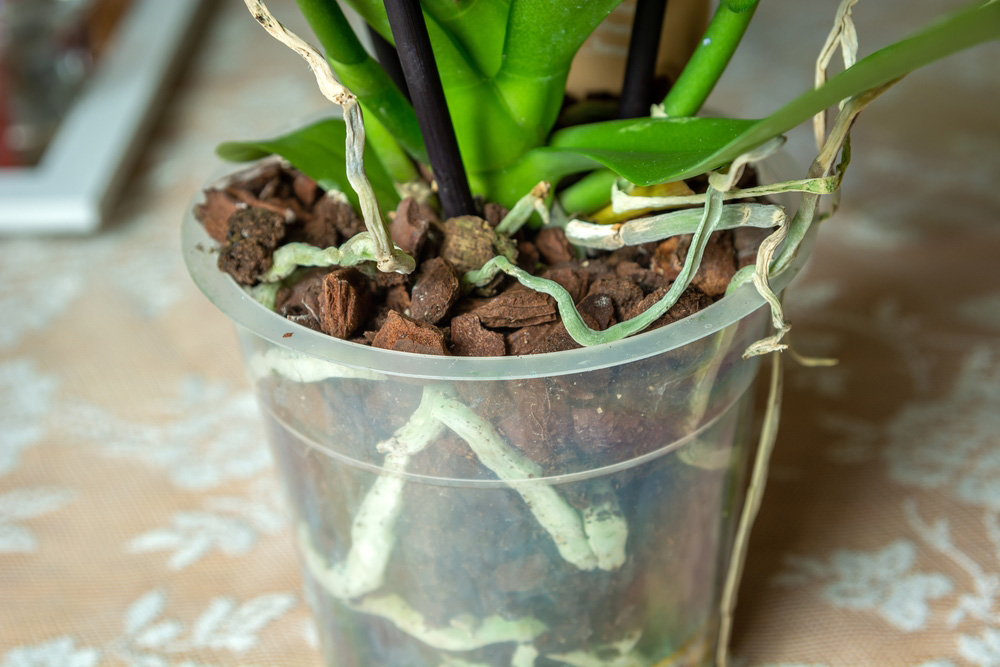
Water collecting in the center of the plant where new leaves grow is a serious warning sign. This can quickly lead to crown rot if ignored.
What to do:
After watering, always check the crown. If you see water sitting there, gently blot it dry with a paper towel. If the area looks soft or darkened, sprinkle a small amount of cinnamon to help dry and protect the tissue.
10. The Orchid Looks Healthy but Never Blooms
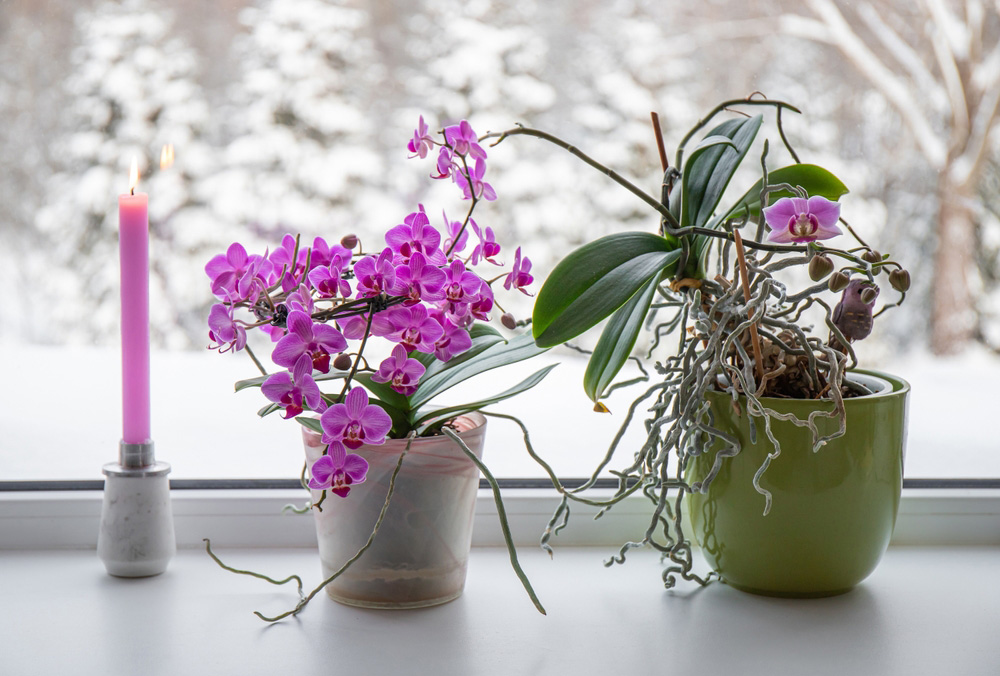
A healthy looking orchid that refuses to bloom is still asking for help.
In most cases, the issue is light, not fertilizer.
What to do:
Move the orchid to brighter, indirect light. East facing windows work especially well. Leaves that are very dark green often indicate the plant needs more light to produce flowers.