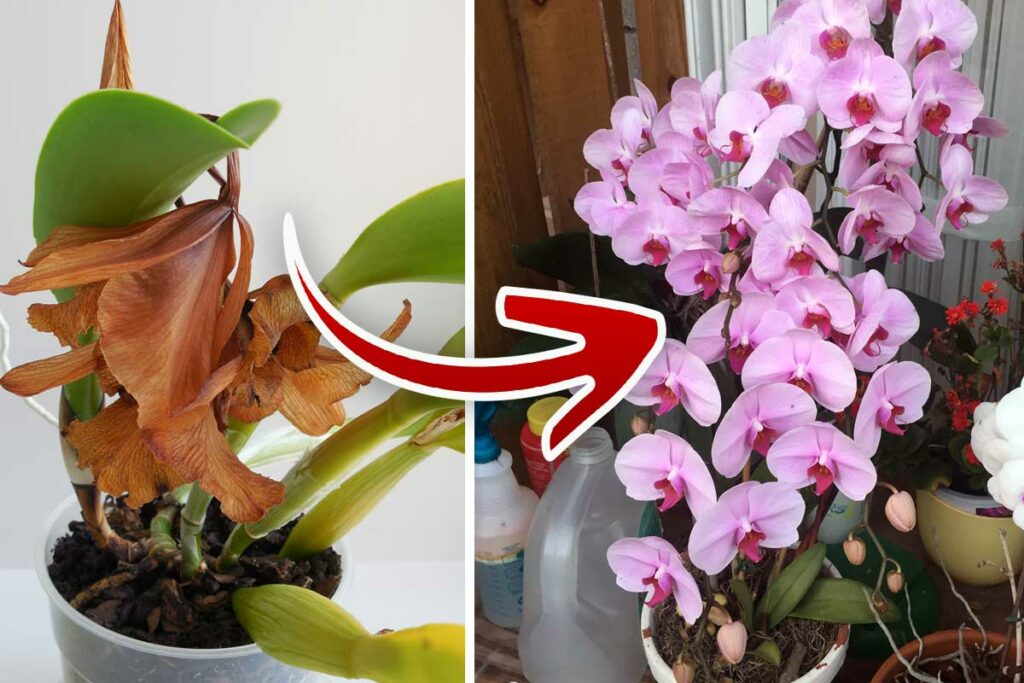
If you’ve ever stood in front of your orchid wondering, “What did I do wrong?” – trust me, you’re not alone.
I’ve been growing orchids for years, and I’ll be honest: they look delicate, but they’re tougher than people give them credit for.
The problem isn’t that orchids are hard to grow. It’s that they’re often misunderstood.
Here’s the thing. Most orchid issues can be attributed to just a handful of common mistakes.
The good news? Nearly all of them are fixable if you catch them early.
Let’s walk through 12 of the most common orchid problems I see, and I’ll show you exactly what to do instead – no complicated routines, no expensive products.
1. Yellow Leaves
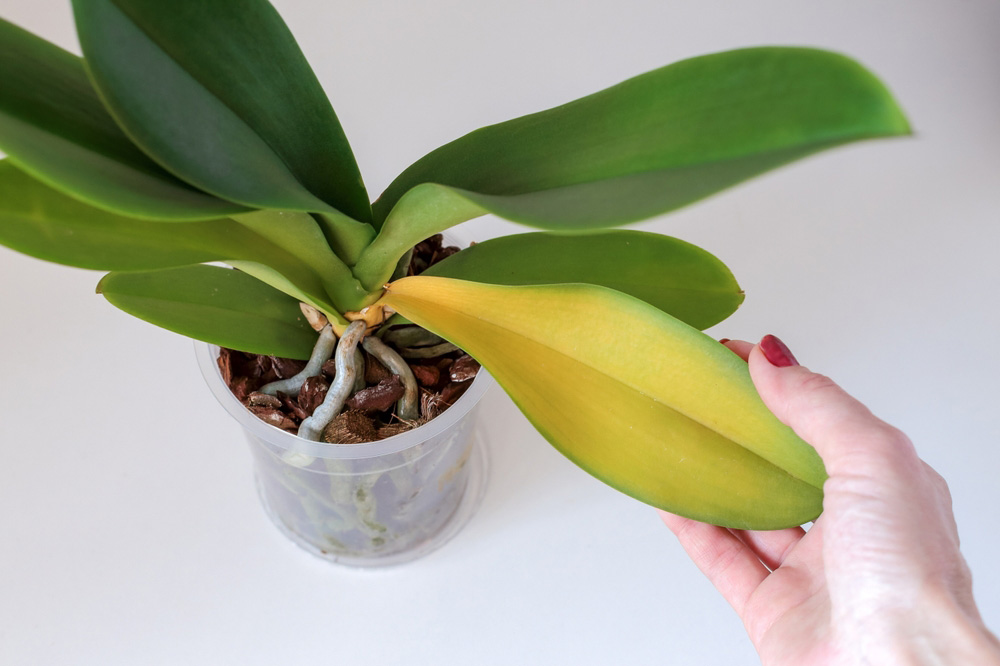
Yellow leaves tend to cause instant worry, but they’re not always a bad sign. Orchids naturally shed older leaves as part of their growth cycle, especially the lowest leaf near the base of the plant.
When a single bottom leaf turns yellow slowly and the rest of the plant looks healthy, that’s completely normal. The concern starts when several leaves turn yellow at the same time.
What to do:
Take a moment to look at the overall plant. If multiple leaves are yellowing, check your watering habits and root health. Orchids prefer drying slightly between waterings. Let the potting mix dry out before watering again and make sure excess water drains freely.
2. Wrinkled or Limp Leaves
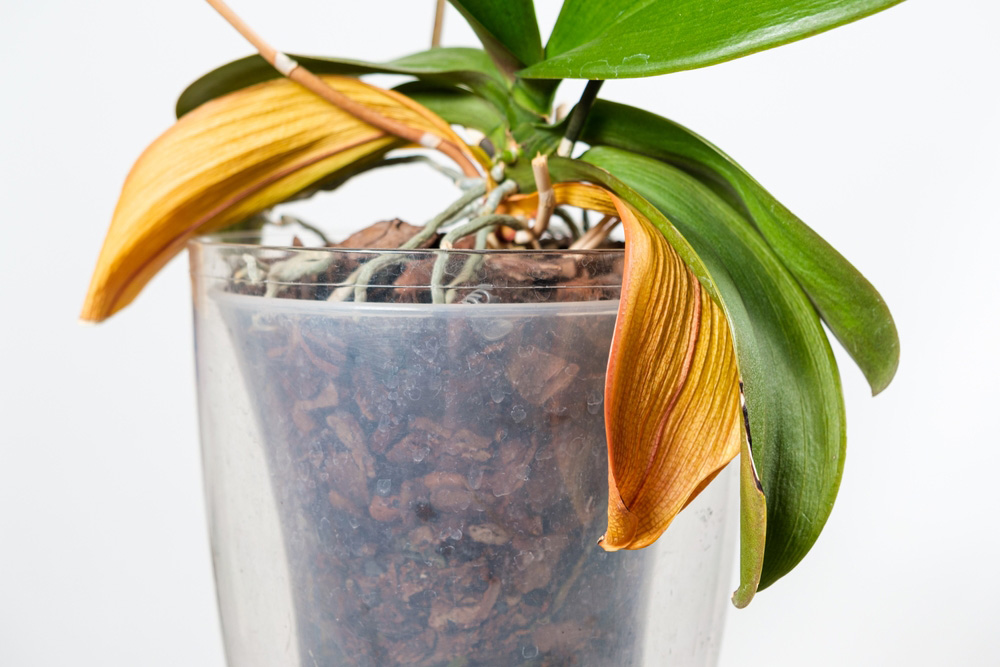
Wrinkled or floppy leaves often look like a sign of thirst, but that’s not always the case. Many times, the issue is root damage rather than lack of water.
When roots are compromised, the plant can’t absorb moisture even if it’s watered regularly.
What to do:
Gently remove the orchid from its pot and inspect the roots. Trim away any roots that are brown, mushy, or hollow. Repot the plant in fresh orchid bark and resume a consistent watering routine. Healthy roots will eventually lead to firm, plump leaves again.
3. Root Rot
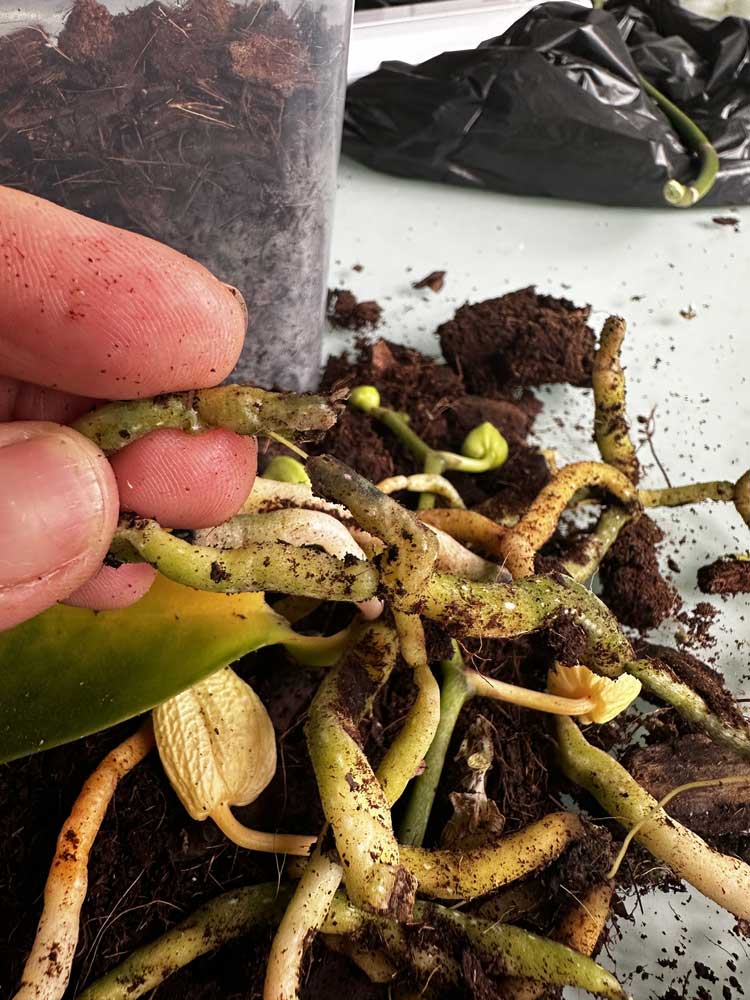
Root rot is one of the most serious orchid problems and also one of the most common. Orchids need airflow around their roots, and sitting in wet media for too long causes roots to break down.
You may notice a sour smell, dark roots, or a plant that won’t stay upright.
What to do:
Remove the orchid from the pot and cut away all rotted roots using sterilized scissors.
Repot in clean, airy orchid mix and always use a pot with drainage holes. I want to encourage you to water less often but more thoroughly.
Orchids recover far better from dryness than from rot.
4. No Blooms
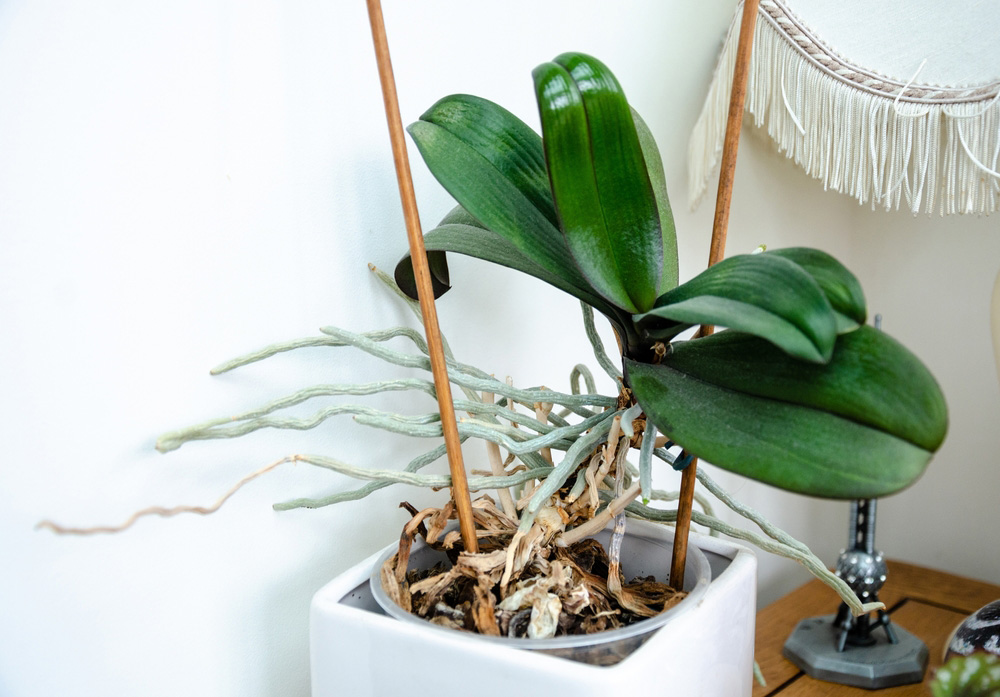
It’s frustrating when an orchid looks healthy but refuses to bloom. In most cases, the problem isn’t fertilizer or watering, it’s light.
Orchids need brighter light than many people expect in order to produce flowers.
What to do:
Move your orchid to a spot with bright, indirect light, such as near an east facing window. Leaves that are very dark green often indicate the plant needs more light. Once lighting improves, blooming usually follows.
5. Bud Blast
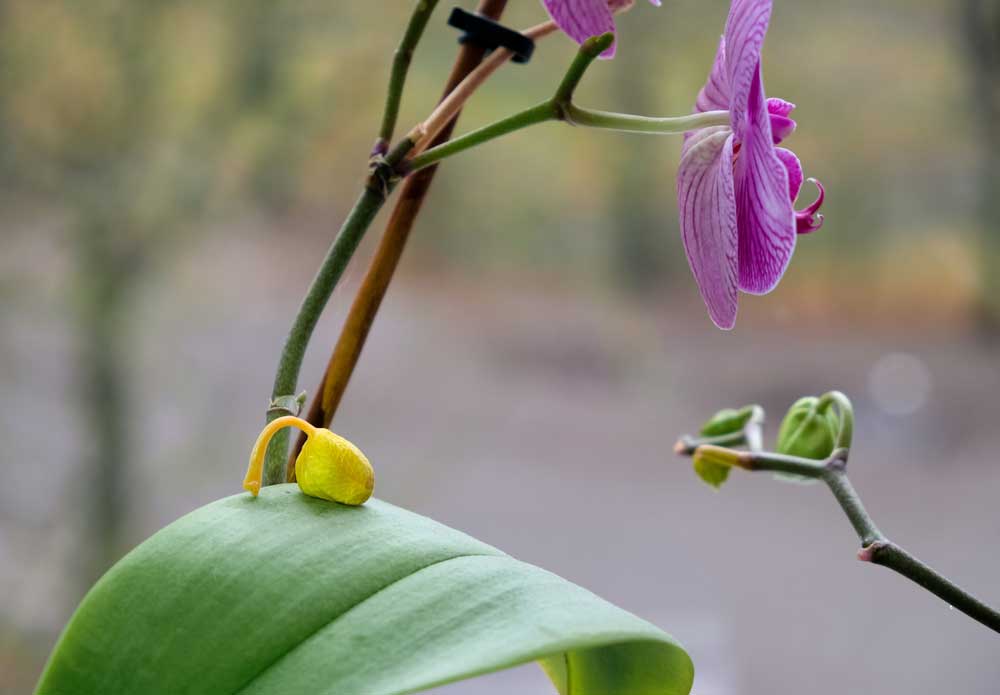
Bud blast occurs when flower buds form and then drop before opening. This often happens suddenly and can be disappointing.
Environmental stress is usually the culprit.
What to do:
Keep conditions stable once buds appear.
Avoid moving the plant, protect it from drafts, and keep it away from ripening fruit.
Orchids prefer consistency, especially during the blooming stage.
6. Fungus or Mold
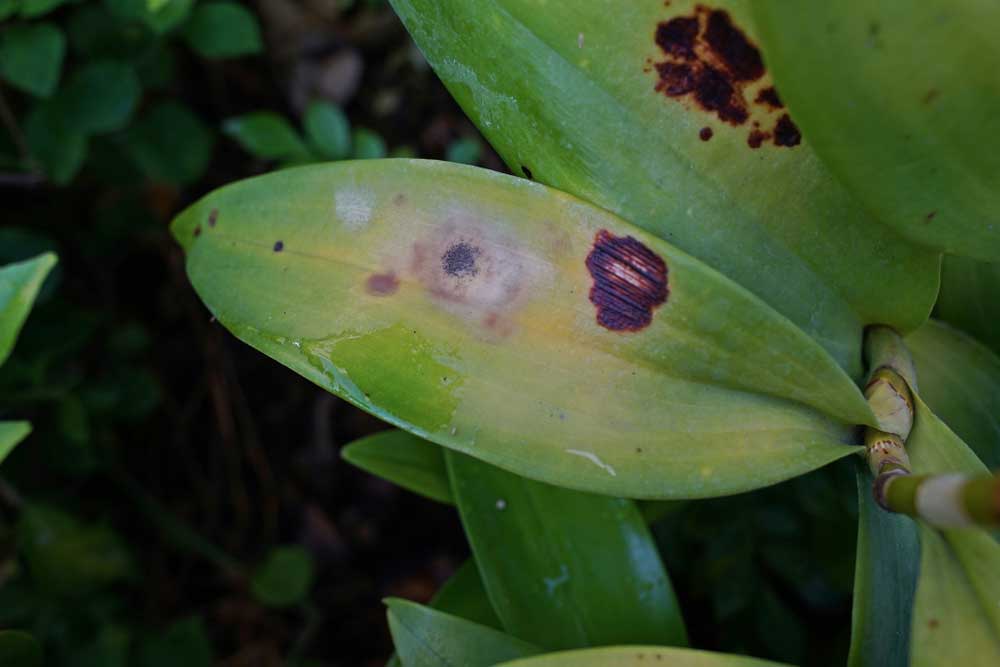
Fungal issues may show up as white fuzz, gray mold, or dark spots on leaves or potting mix. This usually means moisture is lingering too long with limited airflow.
What to do:
Improve air circulation and avoid misting late in the day.
For a gentle natural option, use garlic water.
Step 1: Crush two or three garlic cloves, steep them overnight in warm water, strain, and dilute before use.
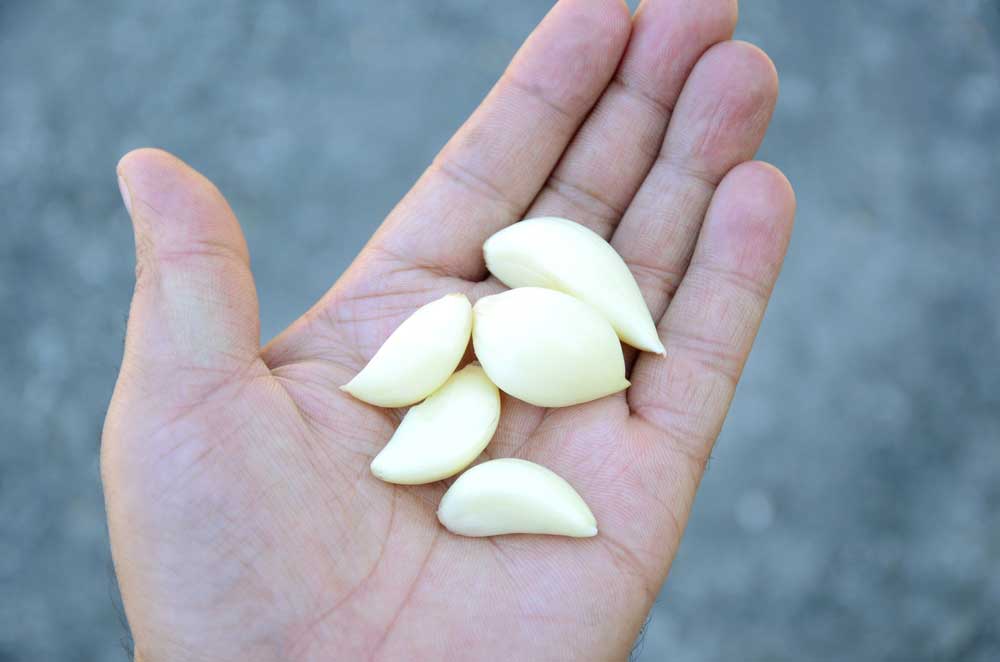
Step 2: Lightly water the potting mix or mist affected areas to help control fungus.
7. Sticky Leaves
Sticky residue on orchid leaves is often caused by pests such as aphids, scale, or mealybugs.
These insects feed slowly, so the damage isn’t always obvious at first.
What to do:
Wipe leaves with a damp cloth and inspect closely, especially under the leaves and along leaf joints.
Treat with insecticidal soap or neem oil once a week until pests are gone. Consistency is key, since one treatment is rarely enough.
8. Brown Leaf Tips
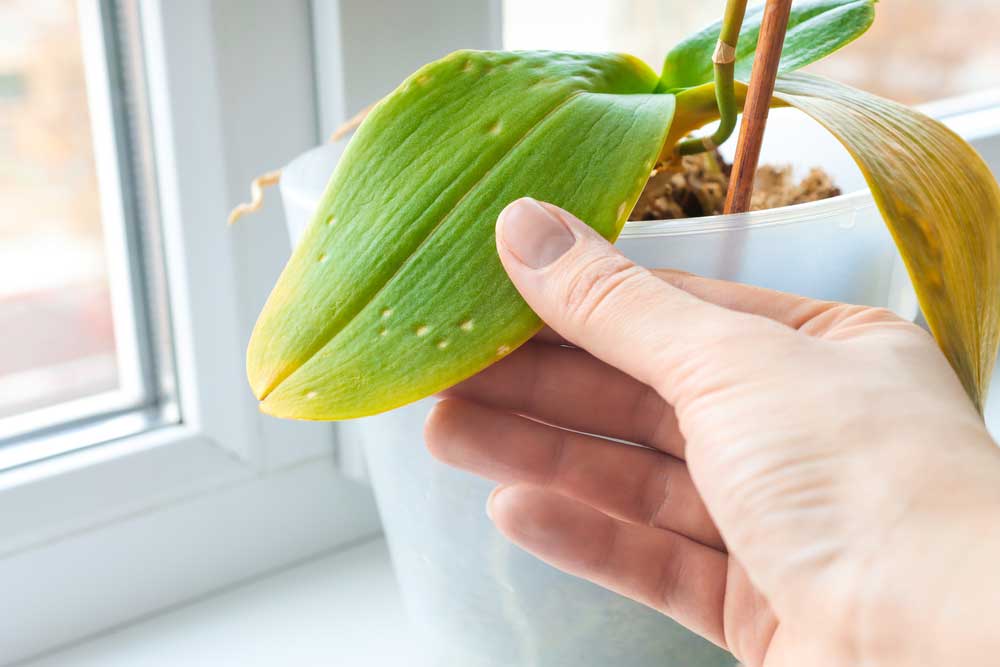
Brown leaf tips are usually related to environmental stress rather than disease. Low humidity, fertilizer buildup, or mineral heavy tap water are common causes.
What to do:
Increase humidity using a pebble tray or grouping plants together.
Flush the pot with clean water monthly to remove salt buildup.
If possible, use rainwater or distilled water instead of tap water.
9. Crown Rot
Crown rot happens when water sits in the center of the orchid, right where new leaves emerge. This area is called the crown, and it is essentially the growth point of the plant.
Unlike roots, the crown is not designed to stay wet. When water collects there and doesn’t dry out quickly, it creates the perfect environment for rot to begin.
What to do:
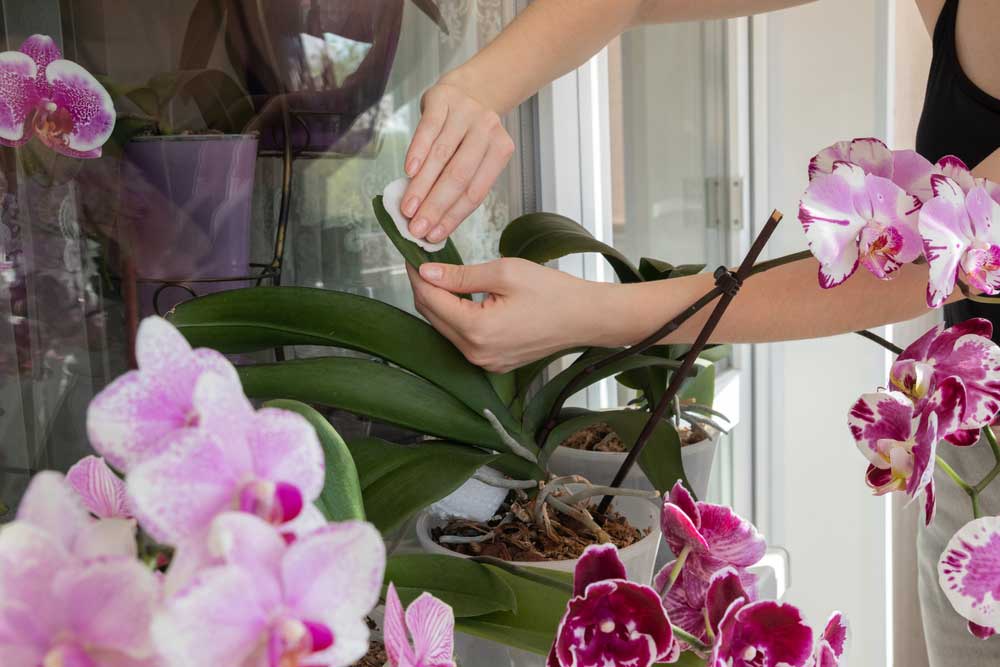
After watering, gently dry the crown with a paper towel. If rot is present, apply a small amount of cinnamon to the affected area.
Cinnamon helps dry the tissue and has natural antifungal properties.
10. Pale or Bleached Leaves
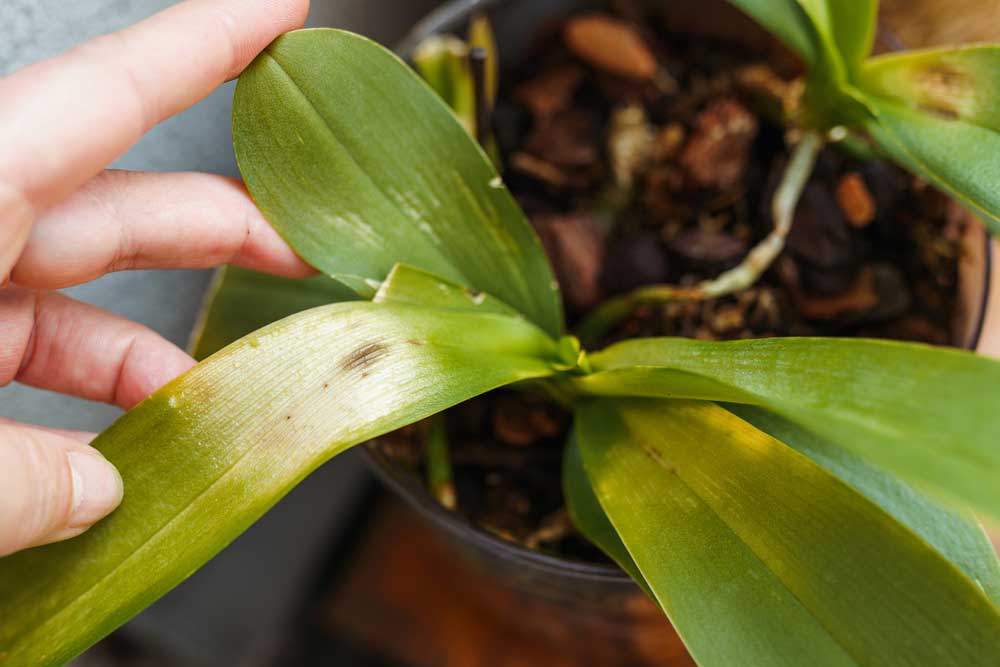
Leaves that look faded or washed out are often getting too much direct sunlight.
While orchids love bright light, direct sun can scorch them.
What to do:
Move the orchid slightly away from the window or filter the light with a sheer curtain.
Healthy leaves should be a medium green color, not pale or yellowish.
11. Weak Growth or Thin Flower Spikes
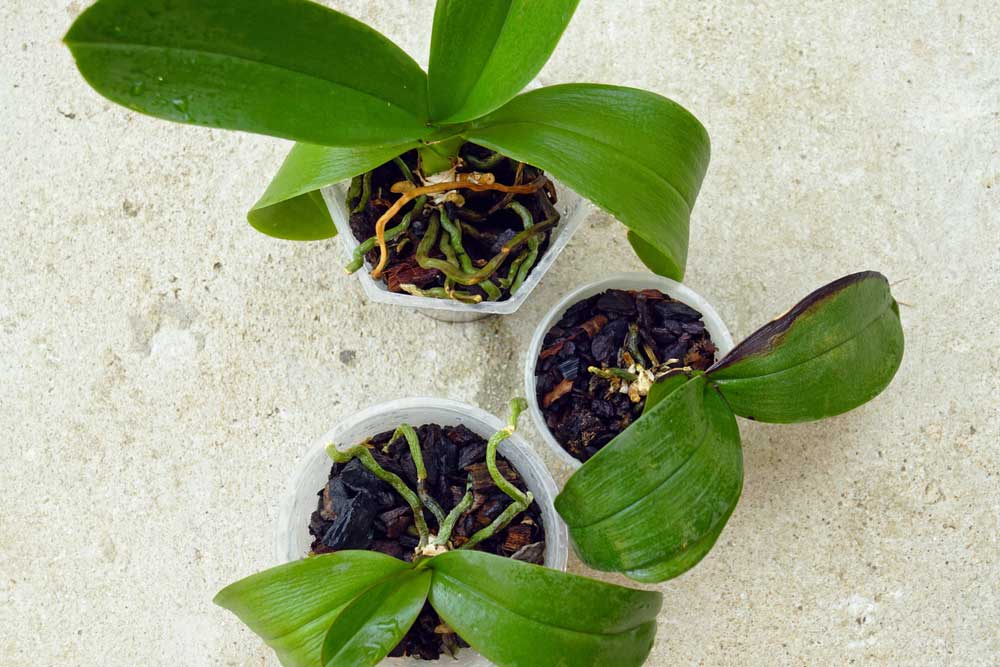
Weak growth and thin flower spikes often point to a lack of nutrients or overall plant stress.
What to do:
Use a gentle banana and ginger tea as an occasional boost.
Soak banana peels and a few slices of fresh ginger in water overnight, strain, and dilute before use.
Water your orchid with this mixture once a month to support blooming and overall vigor.
12. Orchid Isn’t Growing
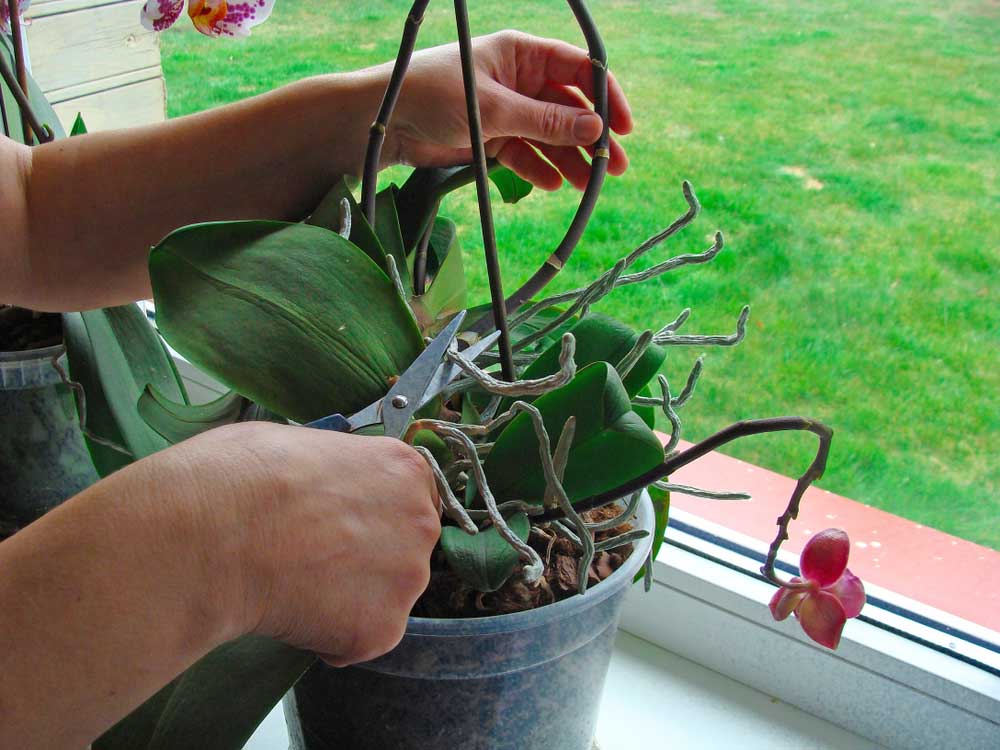
Sometimes orchids simply pause, especially after flowering.
This resting phase is normal and often mistaken for a problem.
What to do:
Stay consistent with light, watering, and airflow.
Avoid over-fertilizing or repotting repeatedly. Give the plant time.
Orchids grow in cycles, and resting periods are part of healthy growth.
If you enjoyed this guide, be sure to check out our other guides on Orchid Care: