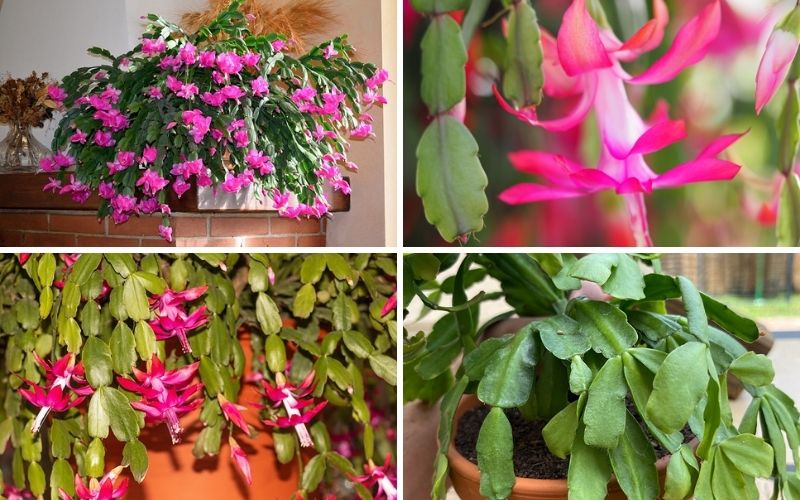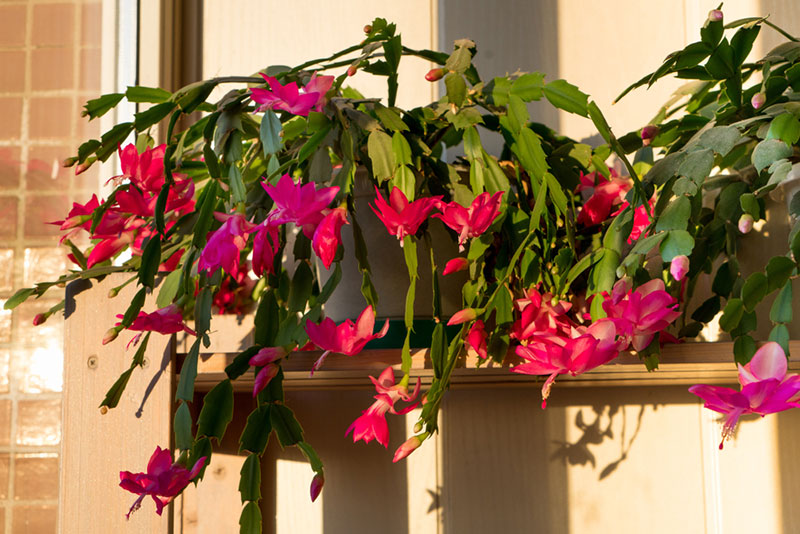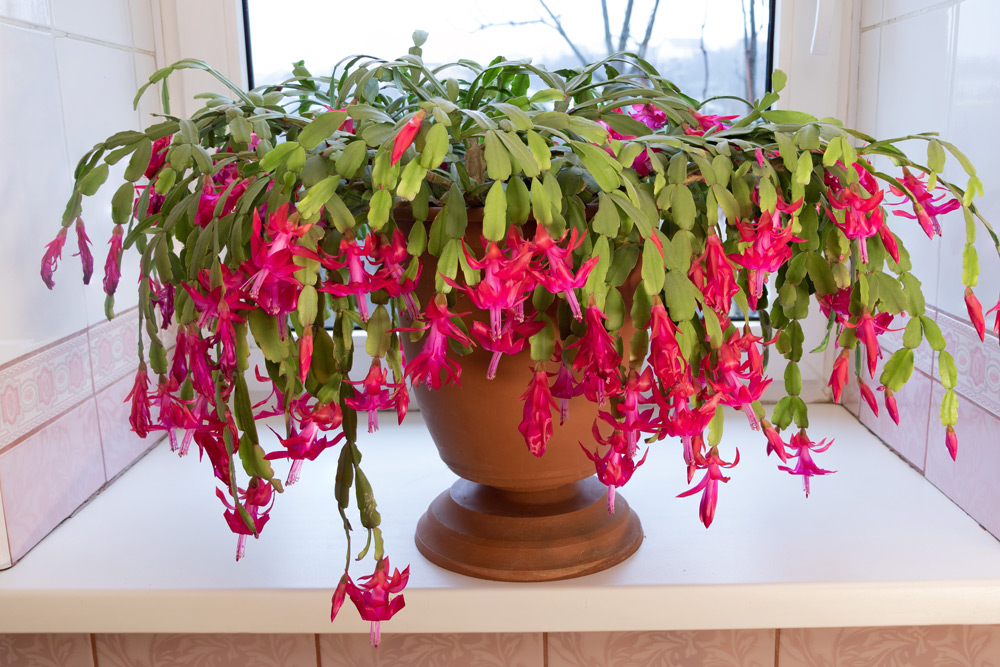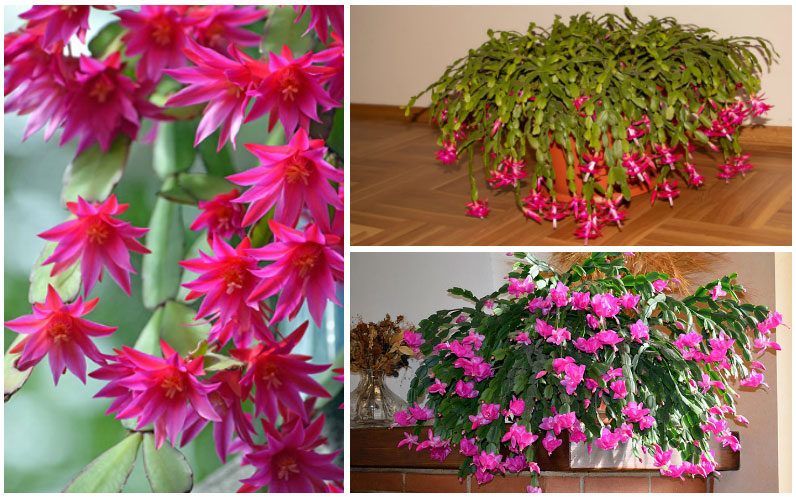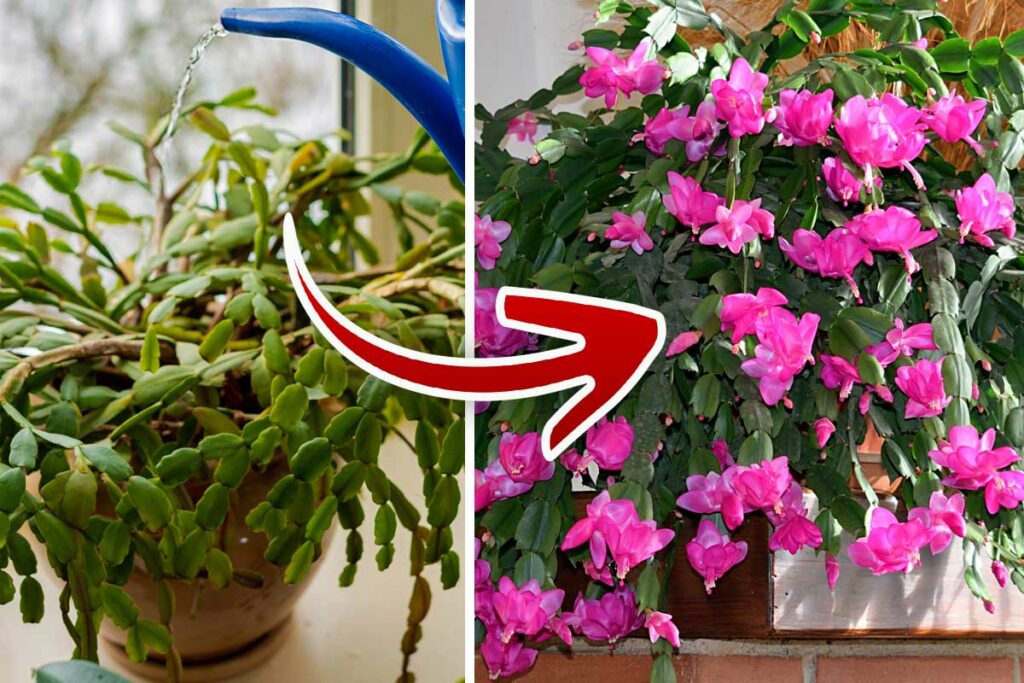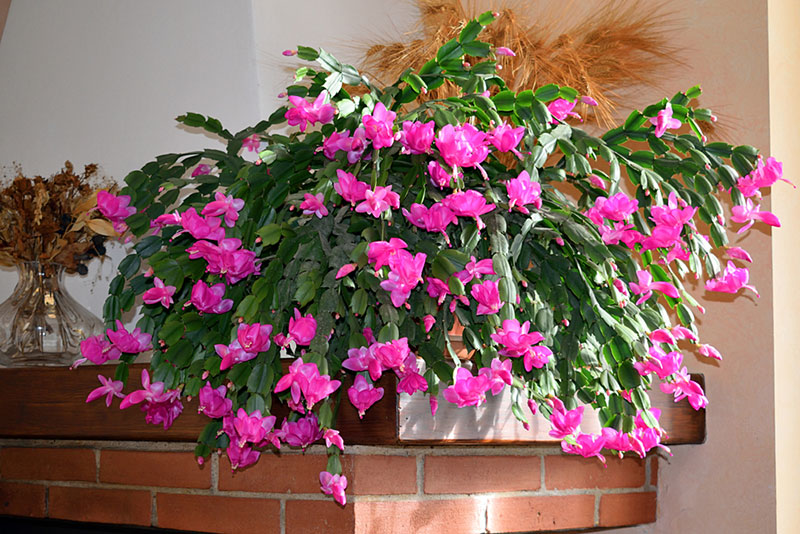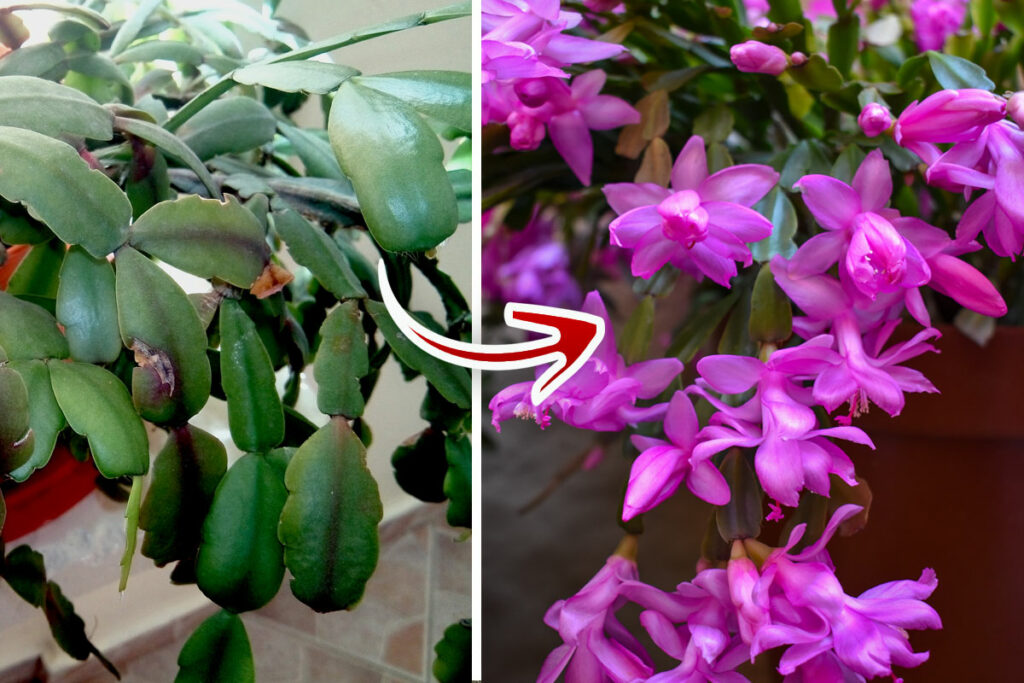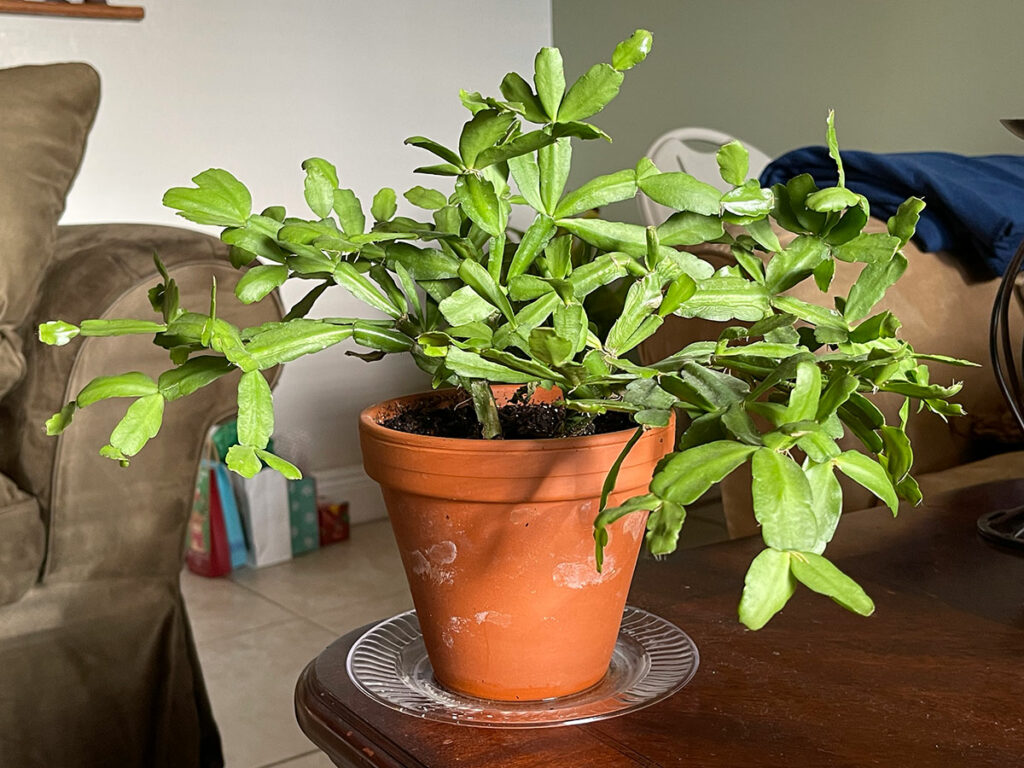
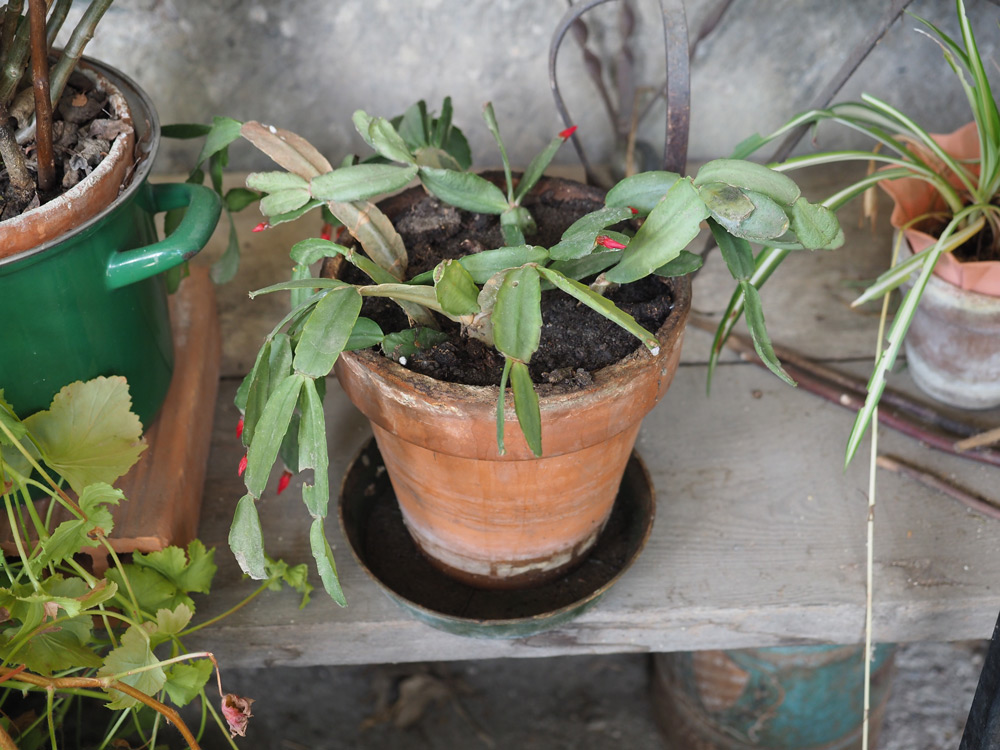
Christmas cacti are usually pretty easygoing. Give them bright, indirect light, a pot that drains well, and reasonably consistent watering, and they can live for decades.
But easygoing does not mean completely silent.
When something is wrong, your Christmas cactus will usually try to tell you. It may turn purple, wrinkle up, drop segments, or abandon every flower bud just when you were getting excited.
The tricky part? Several different problems can cause almost identical symptoms.
A wrinkled Christmas cactus might need water. Or it might have been watered so often that its roots have rotted and can no longer absorb water. Adding another drink in that situation only makes things worse.
Note to self: Check the soil before reaching for the watering can.
Technically, the flat green “leaves” on a Christmas cactus are stem segments. You may also hear them called cladodes or phylloclades. For simplicity, I’ll call them segments throughout this article.
These problems and solutions also apply to Thanksgiving cactus, which is what many stores actually sell under the Christmas cactus name.
Here are 13 signs your Christmas cactus may be unhappy, what each one usually means, and what you can do to help.
Related articles you may like: A Month-by-Month Routine for Christmas and Thanksgiving Cactus
1. The Segments Are Turning Purple or Reddish
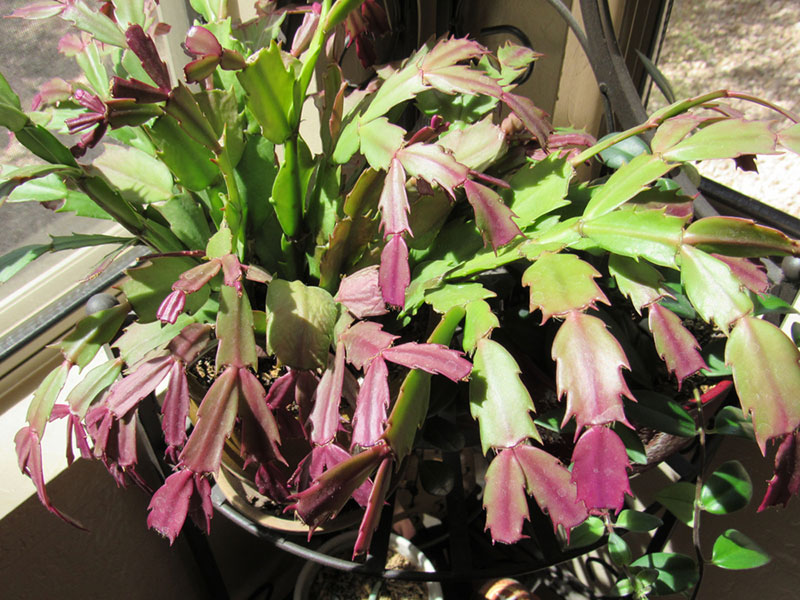
A slight reddish tint is not always a crisis. In fact, a Christmas cactus can develop attractive red or purple coloring and continue growing normally.
Still, the color change is usually a sign of stress.
What it usually means
The most common cause is too much intense sunlight. Holiday cacti naturally grow in filtered light beneath the rainforest canopy. Strong summer sun, especially through a hot south- or west-facing window, can cause the green segments to turn red, purple, or pale.
Cold stress can also deepen the color, particularly if the plant is pressed against a chilly window or left outdoors when nighttime temperatures drop.
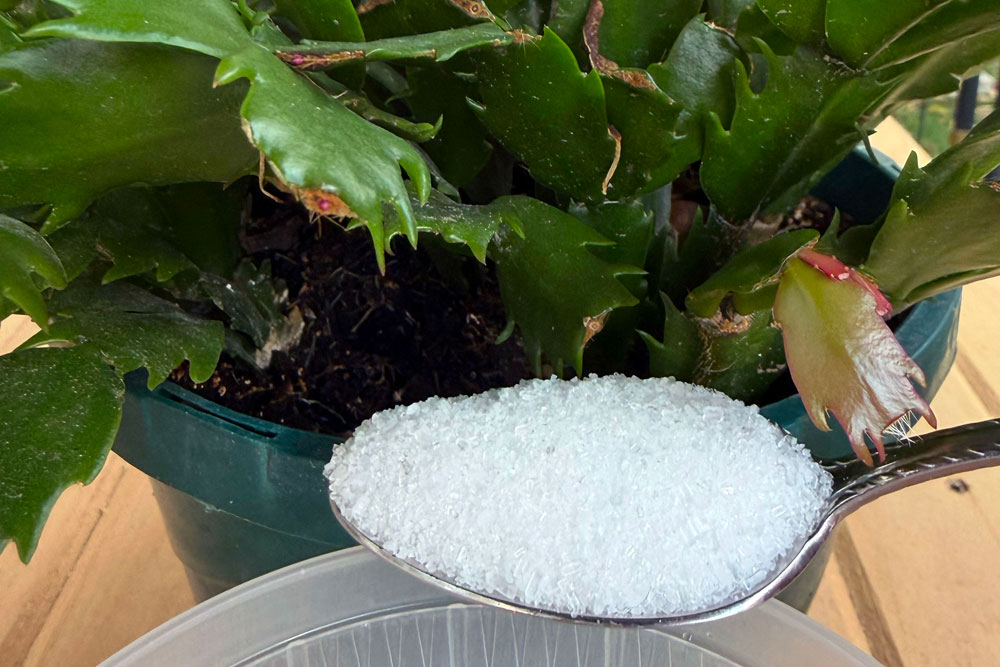
A nutrient problem is possible, but do not automatically assume your plant needs fertilizer or Epsom salt. Light and temperature are much more sensible places to start. Excessive light is a documented cause of red segments in holiday cacti.
What to do
Move the plant into bright, indirect light. An east-facing window is often ideal, or place it a few feet back from a brighter window.
Check for cold drafts and make sure the segments are not touching cold glass.
If the plant is otherwise firm and growing, give it time. The reddish color may fade gradually after the stress is corrected, although older segments may not return completely to their original green.
2. The Segments Look Wrinkled or Shriveled
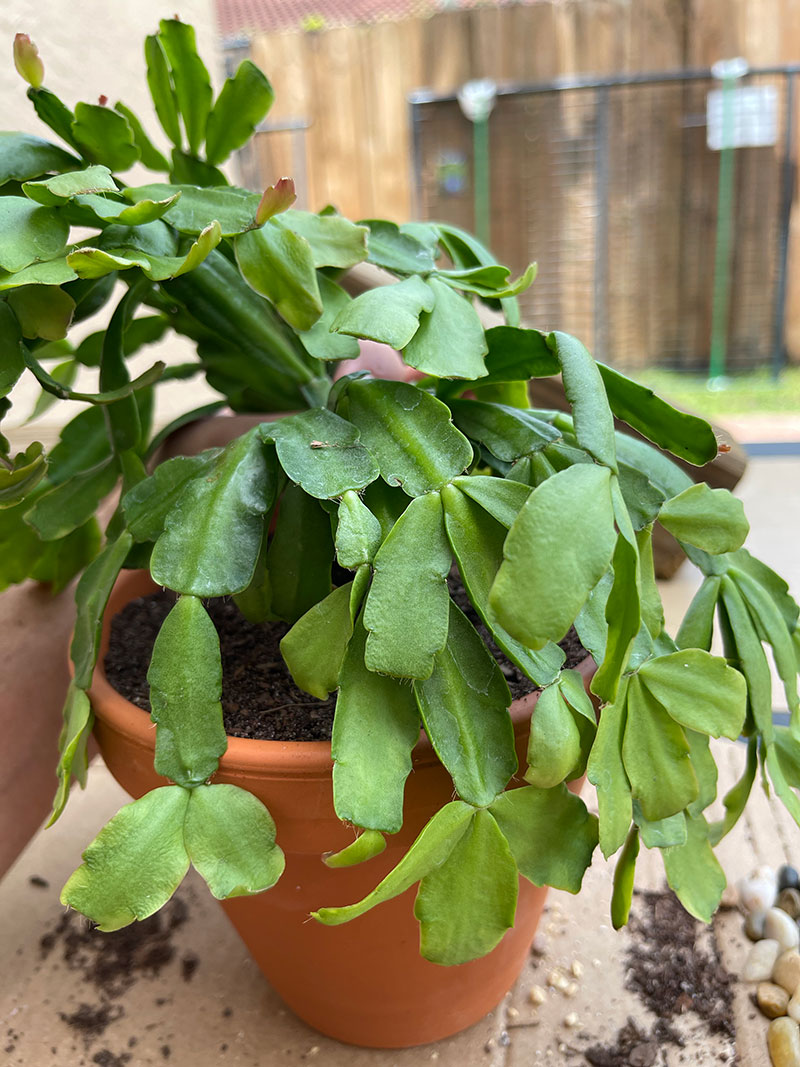
Wrinkled segments seem like an obvious sign that a Christmas cactus is thirsty.
Sometimes they are.
But before watering, stick your finger into the potting mix.
What it usually means
If the soil is dry, the plant probably needs a thorough drink.
If the soil is still damp or wet, the roots may be damaged from overwatering. Rotting roots cannot absorb moisture properly, so the plant begins to wrinkle even though it is sitting in wet soil.
This is why watering a wilted plant without checking the pot first can turn a manageable problem into a soggy disaster. Overwatering is one of the most common causes of shriveled holiday cactus segments.
What to do
If the soil is dry, water thoroughly until excess water drains from the bottom. Empty the saucer and allow the plant to recover.
If the soil is wet, stop watering and inspect the drainage holes. Make sure the pot is not sitting inside a decorative container filled with trapped water.
For a severely wrinkled plant in wet soil, gently remove it from the pot and inspect the roots. Healthy roots should feel firm. Brown, black, soft, or mushy roots indicate rot.
Trim away damaged roots with clean scissors and repot the plant in fresh, airy potting mix.
3. The Plant Looks Limp and Droopy
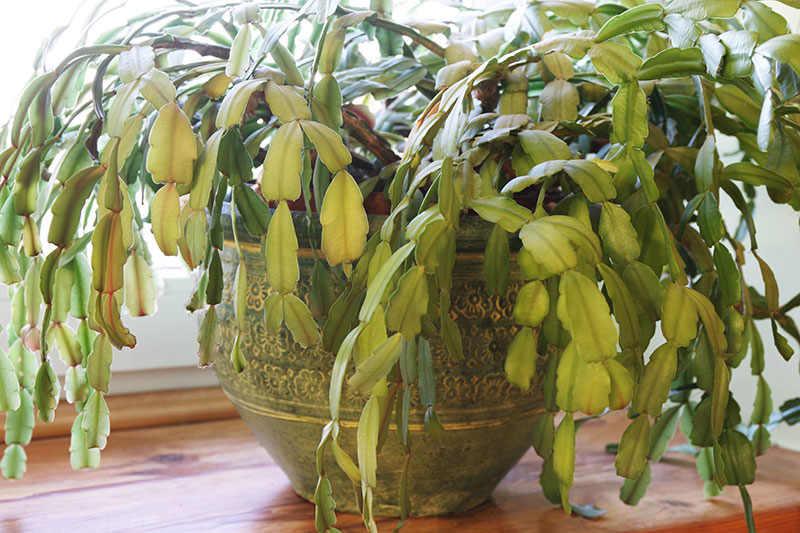
A mature Christmas cactus naturally develops long, arching branches. That graceful, cascading shape is part of its charm.
Sudden limpness is different.
What it usually means
A limp Christmas cactus may be severely dry, but overwatering is often the bigger concern. When roots begin to rot, the segments lose their firmness and hang weakly from the plant.
Direct sunlight can also make the segments limp, especially if the plant was moved outdoors or into a much brighter window without time to adjust.
Overwatering is known to cause limp growth and root rot in holiday cacti.
What to do
Feel the soil first.
If it is dry several inches down, water the plant thoroughly and allow it to drain. The segments may begin firming up within a day or two.
If the soil is wet, inspect the roots instead of adding more water.
Also consider whether the plant was recently moved. A sudden blast of direct sun, a cold draft, or a spot beside a heating vent can cause rapid stress.
4. Segments Are Falling Off
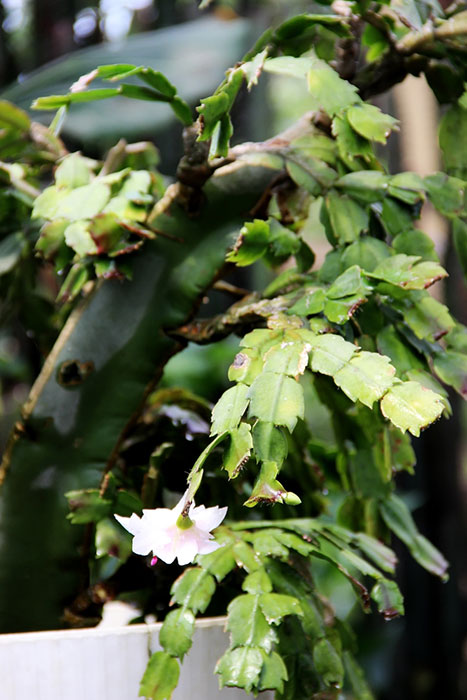
Finding one or two segments on the windowsill is not necessarily alarming. Older plants occasionally shed pieces, especially when their branches become long and heavy.
A sudden shower of falling segments deserves attention.
What it usually means
Segment drop can be triggered by:
- Overwatering
- Severe dryness
- Root damage
- Sudden temperature changes
- A major change in light
- Heavy branches the plant can no longer support
- Being bumped, moved, or handled repeatedly
Large holiday cacti may drop entire branches simply because the plant can no longer support their weight. Root problems and environmental stress can make the shedding much more dramatic.
What to do
Check the moisture level and drainage first. Then think about what changed recently.
Did you move the plant indoors? Turn on the heat? Place it in a sunny window? Repot it while it was blooming?
Try to give the plant a stable location while it recovers.
If an older plant has extremely long, heavy branches, prune some of them back after flowering. The healthy pieces can be rooted to create new plants.
5. The Flower Buds Keep Dropping
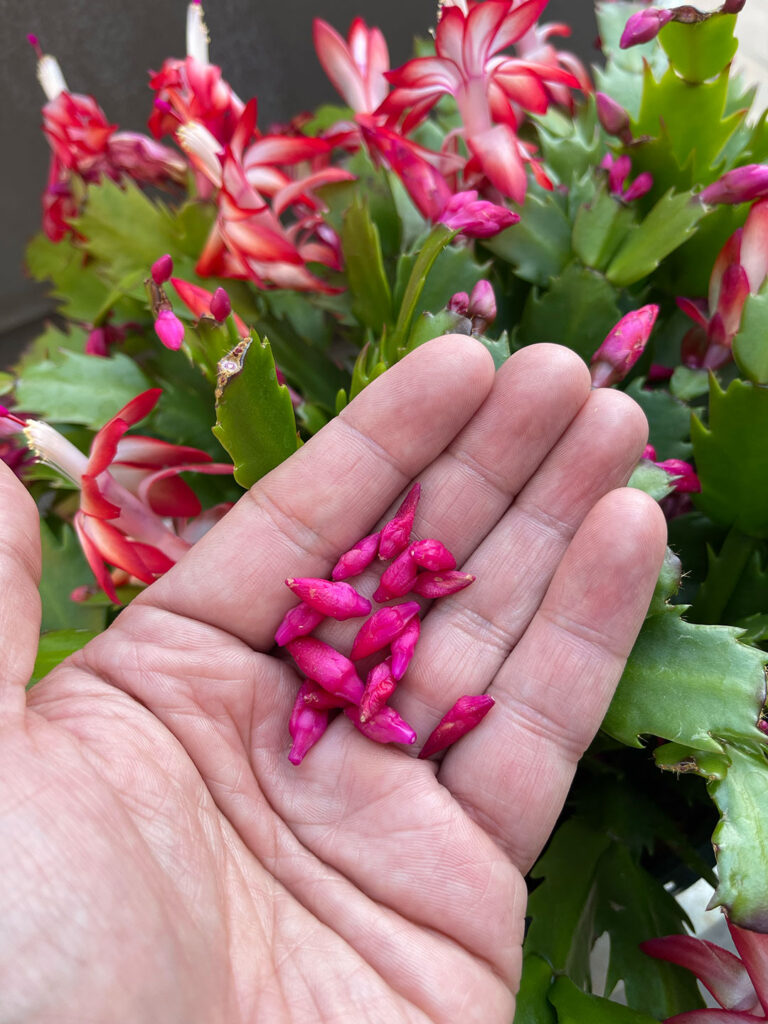
This may be the most frustrating Christmas cactus problem of all.
The plant forms dozens of promising little buds. You start picturing a waterfall of flowers. Then the buds begin dropping onto the table one by one.
Rude.
What it usually means
Holiday cactus buds are surprisingly sensitive to change. Bud drop may be caused by:
- Sudden changes in temperature
- Hot or cold drafts
- Moving or rotating the plant
- Too much or too little water
- Low humidity
- Insufficient light
- Excessively warm rooms
- An unusually heavy crop of buds
Sometimes a healthy plant produces more buds than it can support and simply sheds the extras. In other cases, the plant is reacting to a change in its environment.
What to do
Once buds appear, keep the plant’s conditions as stable as possible.
Avoid moving it from room to room or repeatedly turning the pot. Keep it away from exterior doors, fireplaces, heating vents, and cold windows.
Water when the top of the potting mix begins to feel dry, but do not leave the roots sitting in water.
A few lost buds are normal. Losing nearly all of them suggests the plant experienced a significant change in light, moisture, temperature, or humidity.
6. The Flowers Fade or Drop Too Quickly
Individual flowers do not last forever, of course. But if your Christmas cactus opens its flowers and loses them almost immediately, the room may be working against you.
What it usually means
Warm temperatures speed up flowering and shorten the display. Dry air, direct sun, inconsistent watering, and heat from a nearby vent can make the flowers fade even faster.
Cooler temperatures generally help holiday cactus flowers remain attractive longer.
What to do
Move the plant to a bright but cooler room, ideally away from heat sources and strong midday sun.
Keep the potting mix lightly and consistently moist while the plant is flowering. It should never be soggy, but allowing it to become bone-dry can cause flowers and unopened buds to drop.
Avoid misting directly onto the flowers. Wet petals combined with poor air circulation may encourage spotting or decay.
7. The Plant Is Producing No New Growth
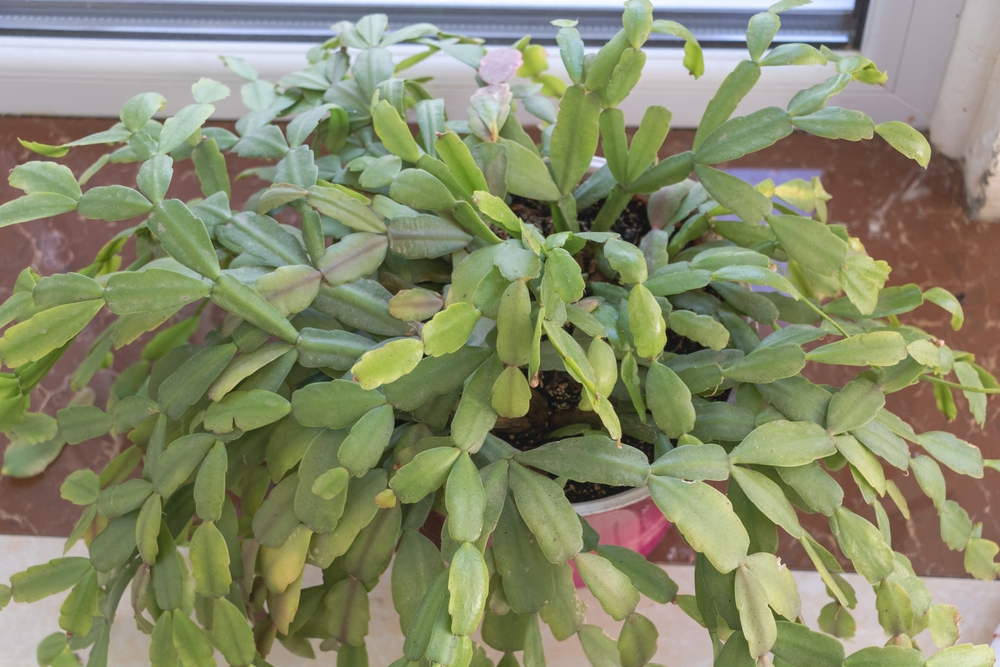
Christmas cacti do not grow vigorously all year. They often rest for a while after flowering, so a quiet period in winter is not automatically a problem.
By spring and summer, however, you should begin seeing fresh segments forming at the ends of older growth.
What it usually means
A lack of growth during the active season may point to:
- Insufficient light
- Damaged or rotting roots
- Potting mix that remains wet for too long
- Severely depleted potting mix
- A plant that has become extremely root-bound
- Too little water
- A lack of nutrients during active growth
Holiday cacti normally resume more active growth in spring or early summer and can be fertilized lightly during this period.
What to do
Move the plant into brighter indirect light and examine your watering routine.
If the soil stays wet for a week or longer, the mix may be too dense or the pot may be too large. If water runs straight through and the soil dries almost immediately, the plant may be severely root-bound.
During active spring and summer growth, feed the plant with a balanced houseplant fertilizer diluted to half strength. Do not try to force growth with extra fertilizer. More is not better here.
8. The Stems Feel Mushy
This is one symptom you should not ignore.
Healthy Christmas cactus segments should feel firm and slightly fleshy. Soft, translucent, slimy, or collapsing tissue usually means rot has started.
What it usually means
Mushy stems are most often associated with overwatering, poor drainage, or a potting mix that remains saturated.
Soft rot and fungal stem diseases can also produce wet, blackened, or collapsing tissue. Overwatered holiday cacti are especially vulnerable because weakened roots and stems are easier for disease organisms to attack.
What to do
Remove the plant from its pot immediately and inspect the roots and lower stems.
Cut away all soft, discolored tissue using a clean, disinfected blade. If the base of the plant is badly rotted, saving the original root system may not be realistic.
Fortunately, healthy Christmas cactus segments are easy to propagate. Remove several firm sections from well above the damaged area and use them to start a new plant.
Discard the old potting mix. Wash the container thoroughly or use a clean pot with fresh, well-draining mix.
9. The Stem Tips Are Turning Black
Blackened tips can be caused by environmental injury or disease, and the appearance of the damaged tissue provides an important clue.
What it usually means
If the tips turned dark shortly after exposure to cold, the plant may have suffered chilling or freezing damage. Cold-damaged tissue often looks dark, soft, or water-soaked before drying out.
Black, wet, sunken spots that continue spreading may indicate stem rot or a bacterial or fungal disease. Some holiday cactus diseases create blackened lesions and cause infected segments to fall away.
What to do
Move the plant away from cold windows and drafts.
Remove affected segments with clean scissors, cutting back into healthy, firm tissue. Disinfect the scissors between cuts, especially if the black areas are soft or spreading.
Keep the foliage dry, improve air circulation, and check the soil for excess moisture.
If blackening continues despite removing the damaged areas, isolate the plant from your other houseplants and consider taking healthy cuttings as insurance.
10. The Segments Are Turning Yellow
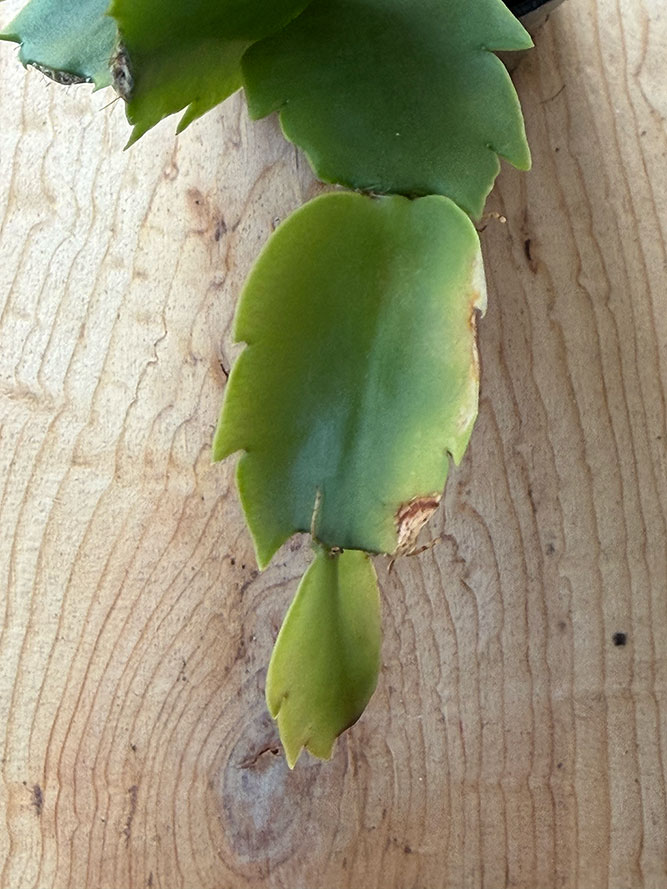
Yellow segments are the Christmas cactus equivalent of a general complaint. Something is wrong, but the plant is not being terribly specific about it.
What it usually means
Common causes include:
- Overwatering
- Poor drainage
- Root rot
- Too much direct sunlight
- A sudden temperature change
- Nutrient deficiency
- Natural aging of a few older segments
Bright summer sun can make holiday cacti look pale or yellow, while consistently wet soil can damage the roots and interfere with nutrient and water uptake.
What to do
Start with the soil.
If it is consistently wet, reduce watering and improve drainage. If the plant is yellow, limp, and sitting in damp soil, inspect the roots.
If the yellowing is concentrated on the side facing the window, move the plant away from direct sun.
Only consider fertilizer after ruling out root and watering problems. Fertilizing a plant with rotting roots will not solve the problem and may add another layer of stress.
11. Brown or Crispy Patches Are Appearing
Brown patches are permanently damaged tissue. Unfortunately, those areas will not turn green again.
The goal is to identify the cause and prevent new spots from appearing.
What it usually means
Dry, crispy patches may be caused by:
- Sunburn
- Severe underwatering
- Hot air from a heating vent
- Cold damage
- Excess fertilizer or accumulated salts
- Physical injury
- Certain pests or diseases
Sunburn is especially likely when the brown patches appear on the side facing a bright window or after the plant has been moved outdoors. Direct sunlight can scorch holiday cactus stems.
What to do
Move the plant into filtered light and check the soil moisture.
If you recently applied a strong dose of fertilizer, flush the potting mix by slowly running water through it several times. Allow all excess water to drain away.
Inspect the plant closely for mealybugs, scale, spider mites, or unusual spreading spots. Remove badly damaged segments if they are distracting, but do not prune away large portions of the plant while it is already stressed.
12. Roots Are Growing Through the Drainage Holes
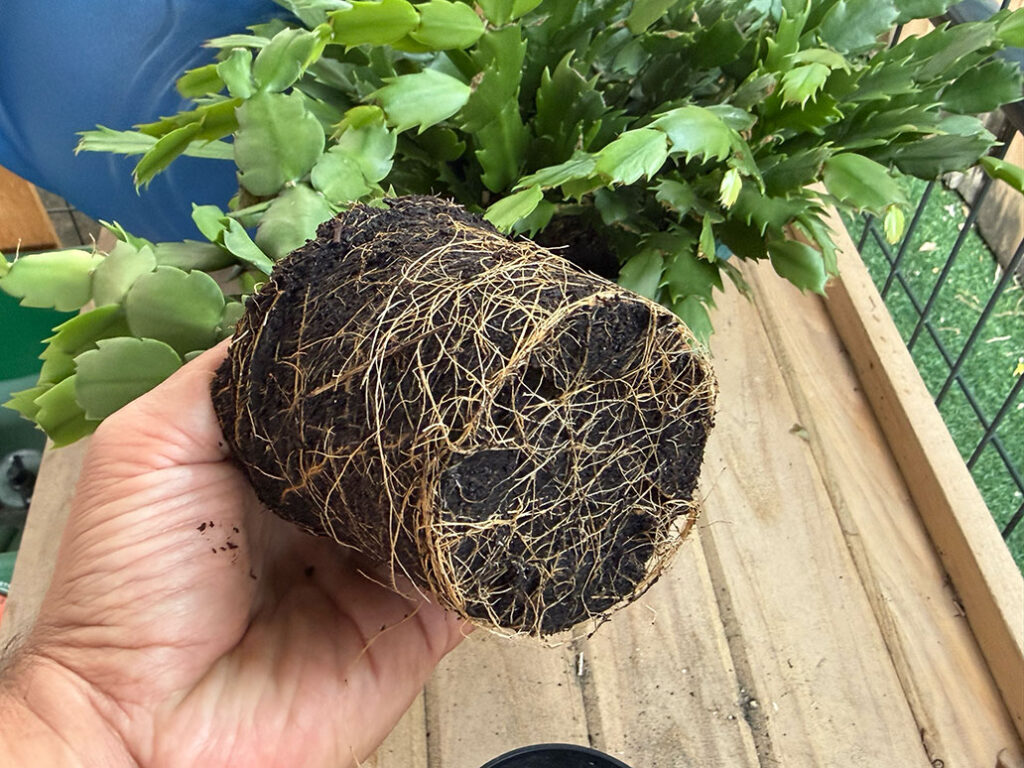
Roots poking out of the pot look dramatic, but this is not always an emergency.
Christmas cacti actually flower well when they are somewhat snug in their containers.
What it usually means
A few visible roots simply mean the plant has reached the edges of its pot.
Repotting becomes more urgent when:
- The pot dries out unusually quickly
- Water runs straight through without soaking the mix
- The plant repeatedly wilts
- Growth has stalled during spring and summer
- The potting mix has broken down and become dense
- Roots form a tightly packed mass with very little soil remaining
Holiday cacti often need repotting only about once every three years, preferably in spring.
What to do
Wait until after flowering, then gently slide the plant from its pot and inspect the roots.
If they are tightly circling the root ball, move the plant into a container only one size larger. An oversized pot holds more wet soil around the roots and increases the risk of rot.
Use a loose, well-aerated potting mix and make sure the new container has drainage holes.
13. The Plant Looks Healthy but Never Flowers
A Christmas cactus can look green, full, and perfectly healthy while refusing to produce a single bud.
This usually means the plant is comfortable enough to grow but has not received the seasonal signals that tell it to flower.
What it usually means
Christmas and Thanksgiving cacti are short-day plants. More accurately, they are long-night plants.
They need several weeks of long, uninterrupted darkness and cooler temperatures to initiate flower buds. Light from a lamp, television, hallway, or frequently opened closet can interrupt the dark period.
Plants may also fail to flower if they are kept too warm, fertilized heavily late in the season, or exposed to inconsistent conditions.
What to do
Beginning in early fall, give the plant approximately 12 to 14 hours of uninterrupted darkness every night for about six weeks.
During the day, place it in bright, indirect light. Cooler nighttime temperatures around 55 to 65°F can also help trigger bud formation.
Stop regular fertilizing in late summer and water a little less frequently, but never allow the plant to become severely wrinkled.
Once buds appear, return to normal watering and avoid changing the plant’s location unnecessarily.
Check the Soil Before You Do Anything Else
Christmas cactus symptoms can be confusing because both overwatering and underwatering may cause wrinkling, wilting, drooping, and segment drop.
The soil helps you tell the difference.
Dry soil combined with thin, wrinkled segments usually means the plant needs water. Wet soil combined with limp, wrinkled, or mushy growth points toward root trouble.
The most urgent combination is a wet pot with a wilted plant. That usually means the roots are no longer functioning properly and should be inspected as soon as possible.
A purple plant that is still firm can usually wait.
A mushy plant cannot.
Once you learn to check the soil, roots, light, and recent changes before reacting, your Christmas cactus becomes much easier to understand. It may be a little dramatic from time to time, but at least now you know what it is trying to tell you.