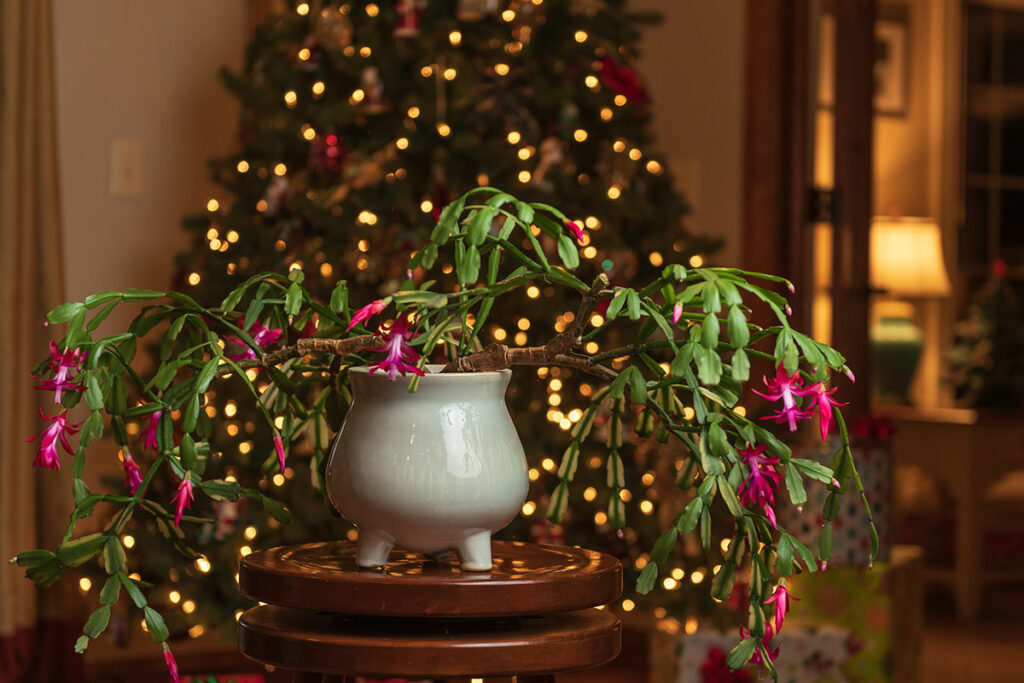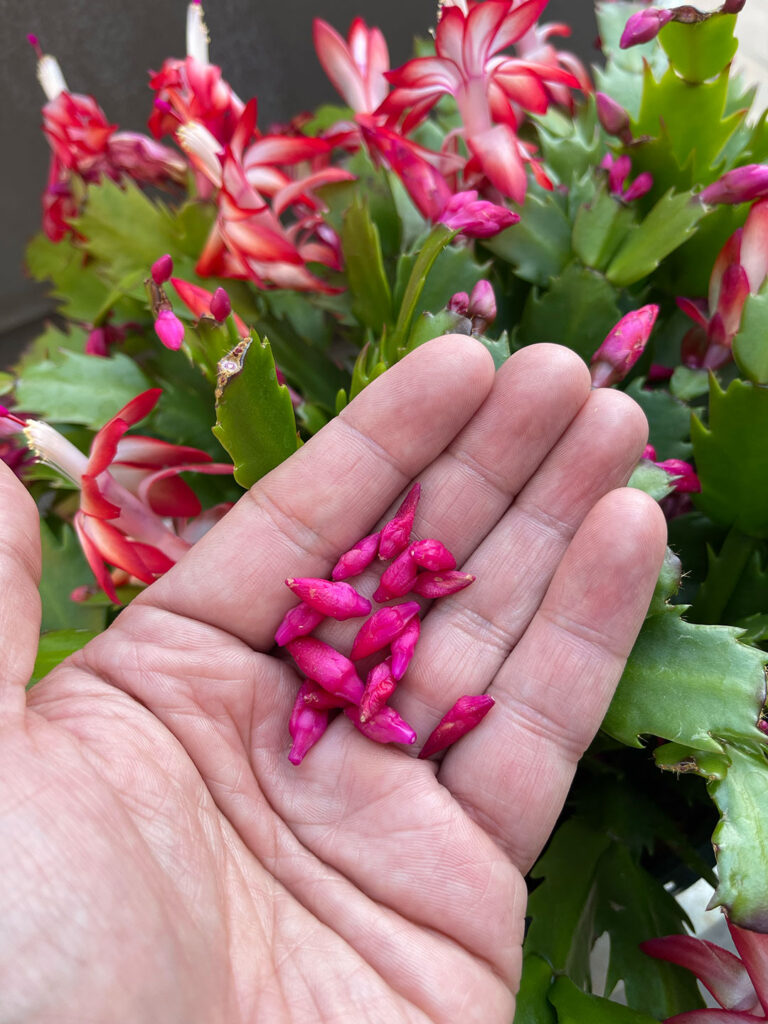
I used to think caring for a holiday cactus was mostly a matter of keeping it alive until December.
Water it occasionally. Put it near a window. Cross my fingers when fall arrived.
Sometimes it bloomed beautifully. Other years, it produced three lonely flowers in February, which felt a little passive-aggressive.
Here is what I eventually learned: Holiday cacti have a predictable yearly rhythm. They rest after flowering, grow during spring and summer, prepare their buds in fall, and bloom as the holidays approach.
Once you understand that rhythm, caring for them becomes much easier.
This month-by-month guide covers watering, fertilizing, repotting, pruning, propagation, bloom preparation, and even popular tricks involving coffee grounds and Epsom salt.
The schedule applies to both Christmas cactus and Thanksgiving cactus. However, Thanksgiving cactus usually begins setting buds and flowering several weeks earlier.
The Month-by-Month Holiday Cactus Care Routine
January: Protect the Flowers
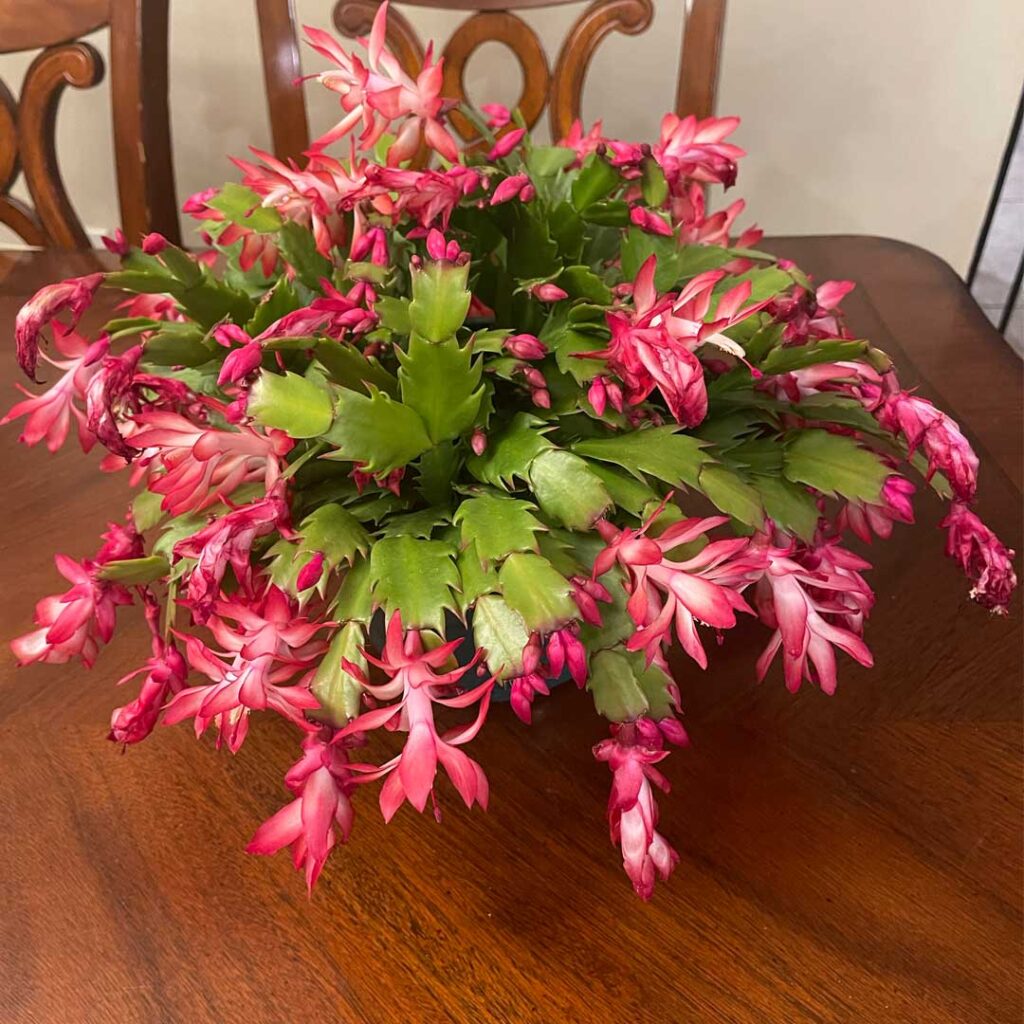
Your holiday cactus may still be covered in flowers, finishing its display, or preparing for one final round.
Water when the upper portion of the potting mix begins to dry. Do not let a flowering plant become bone dry, but never leave the pot standing in water.
Keep it away from fireplaces, heating vents, cold windows, and frequently opened doors. Sudden temperature changes can shorten the flowers’ lifespan or cause unopened buds to fall.
Skip the fertilizer, pruning, and repotting. This is not the month for a major renovation.
February: Give It a Rest
Once flowering ends, remove the wilted flowers and allow the plant to rest.
Water a little less frequently, but continue checking the soil rather than following a rigid schedule. Bright, indirect light is still important.
This is also a good time to inspect the plant. Look closely for scale, mealybugs, mushy stems, sour-smelling soil, or roots growing heavily from the drainage holes.
Do not begin feeding until you see active new growth. After flowering, holiday cacti naturally benefit from a cooler, slightly drier resting period.
March: Watch for the Wake-Up Call
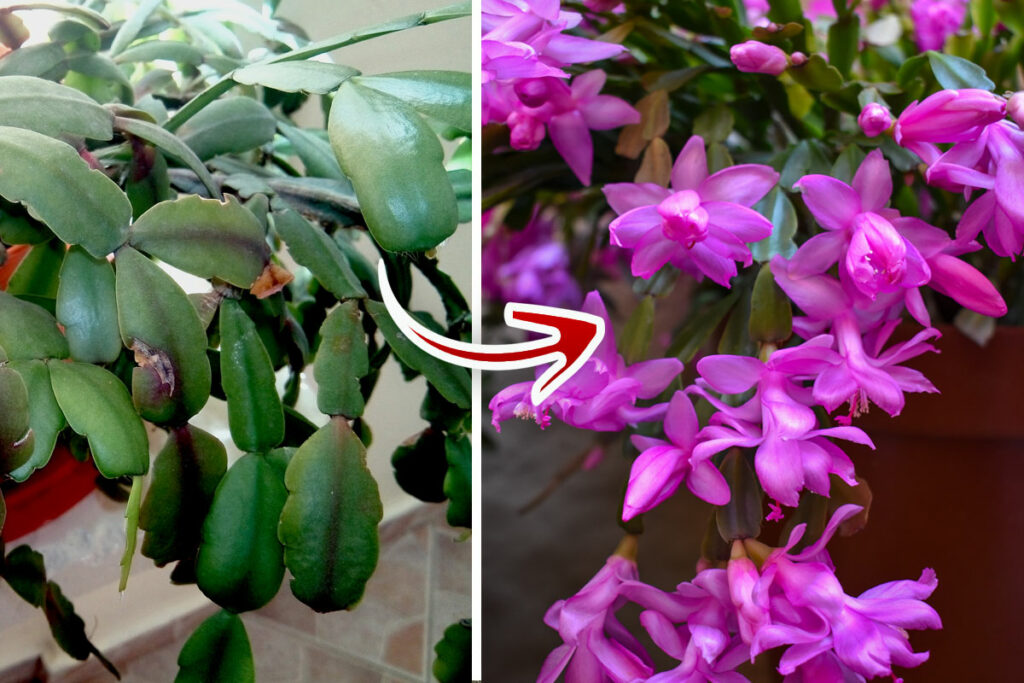
As the days grow longer, small new stem segments may begin appearing at the tips of the older growth.
That is your plant’s way of saying, “Vacation is over.”
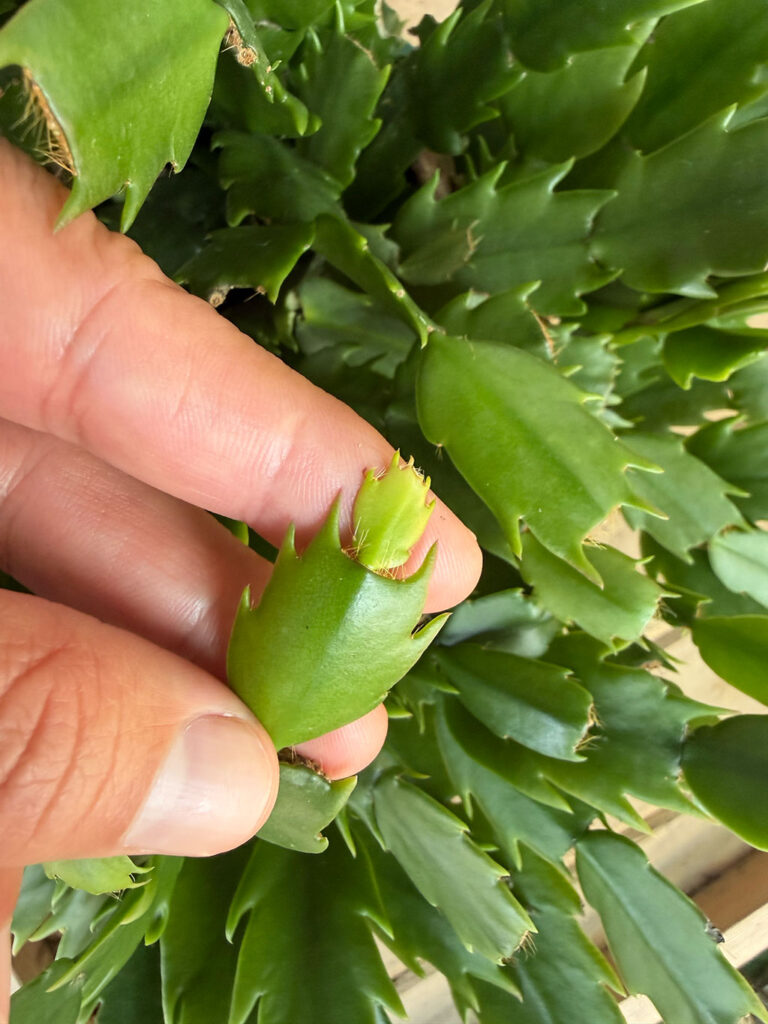
Gradually increase watering as growth resumes. Once new segments are clearly developing, begin feeding with a balanced, water-soluble houseplant fertilizer diluted to half strength.
If the plant needs repotting, gather your potting mix and a slightly larger container. There is no need to rush, though. Holiday cacti often bloom better when their roots are comfortably snug.
April: Repot Only If Necessary
Spring is one of the safest times to repot a holiday cactus because flowering has ended and active growth is beginning.
Repot only when the plant has truly outgrown its container, the potting mix has broken down, or water no longer drains correctly. Many healthy holiday cacti can remain in the same container for several years.
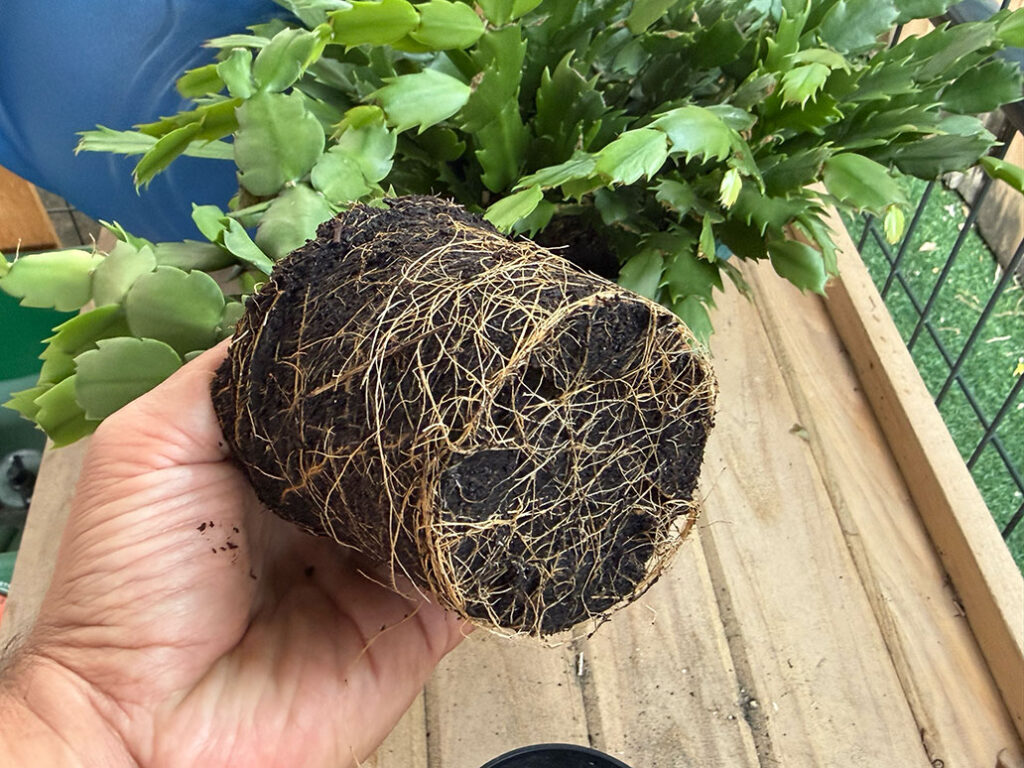
Choose a pot only one size larger. A dramatically larger pot holds more wet soil around the roots, which can quickly lead to rot.
Use a loose, well-draining potting mix. An all-purpose houseplant mix amended with perlite, fine orchid bark, or another coarse material usually works well.
If you repot, wait several weeks before fertilizing. Fresh potting mix normally contains enough nutrients to get the plant started. Holiday cacti are commonly repotted in spring or early summer and generally perform best when somewhat pot-bound.
May: Prune, Shape, and Take Cuttings
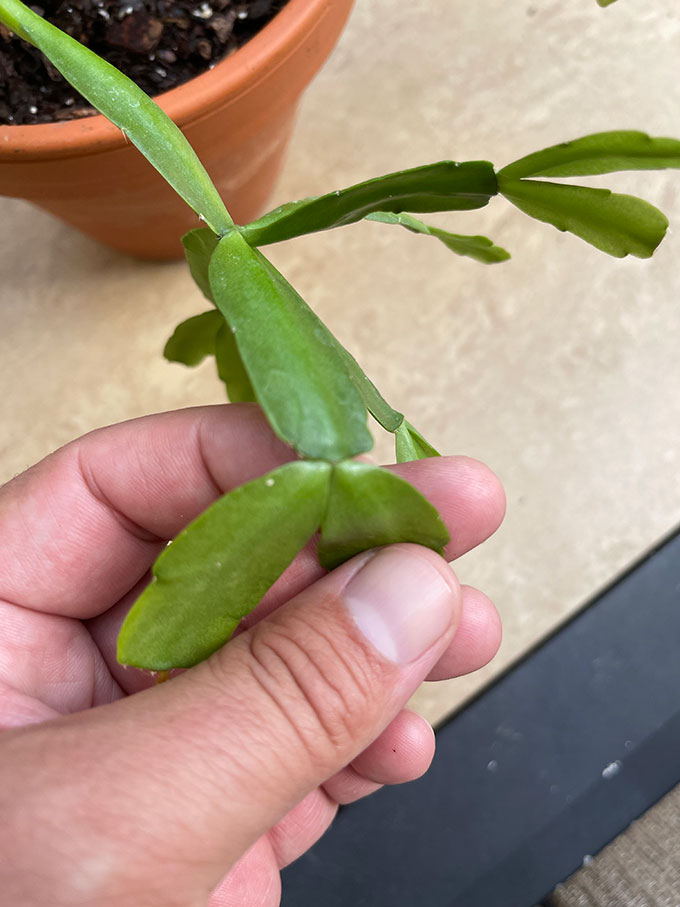
May is an excellent month to tidy up a holiday cactus that has become lopsided, crowded, or a little wild around the edges.
Twist or pinch the plant apart where two stem segments meet. Removing the tips encourages the plant to branch. More branches mean more growing tips, and those tips are where future flowers develop.
Avoid removing more than about one-third of a healthy plant at one time.
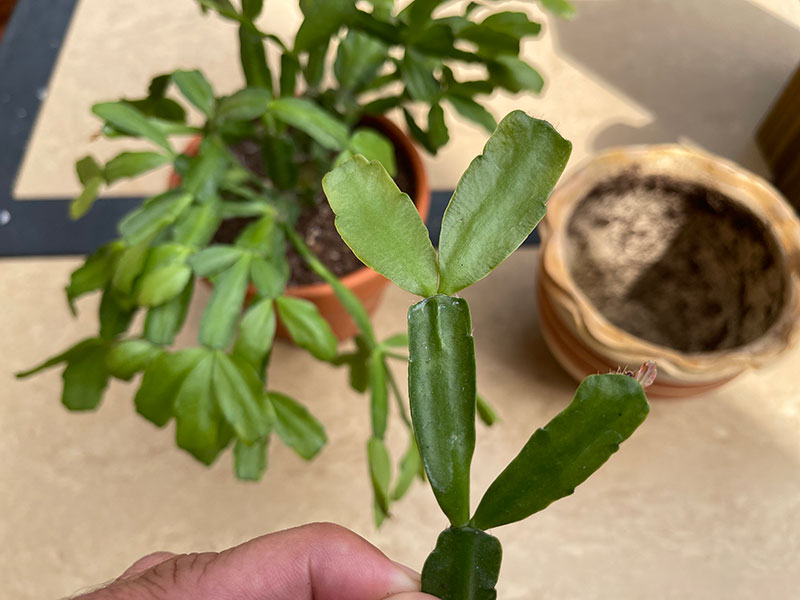
Do not throw those pieces away. Sections containing two to five healthy segments can be turned into new plants.
Let the cut ends dry and callus overnight. Then insert the bottom end about one inch into moist perlite, coarse sand, or another airy rooting medium. Place the cuttings in bright, indirect light and water when the medium begins to dry. Roots generally form in several weeks.
June: Support Strong Summer Growth
June is usually one of the plant’s most active growing months.
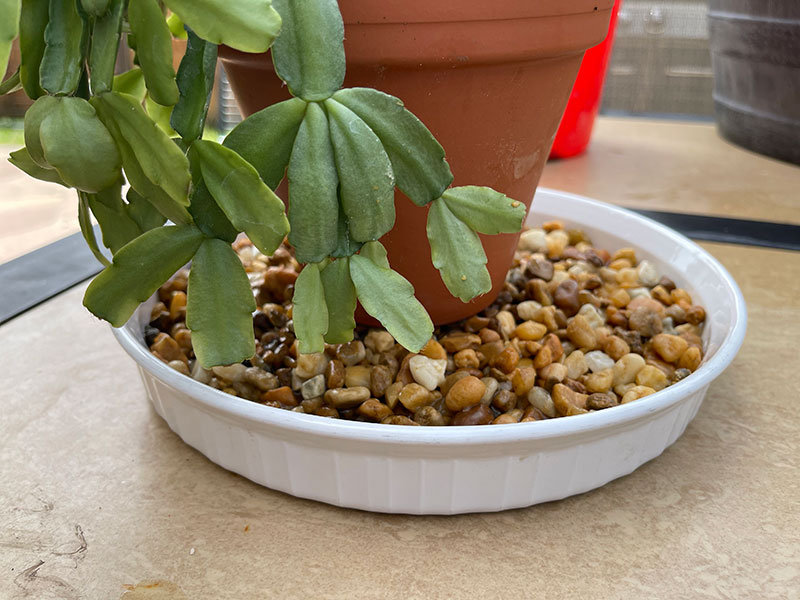
Provide bright, indirect light and water thoroughly when the potting mix dries. Allow all excess water to drain before returning the plant to its saucer or decorative container.
Continue feeding once during the month with half-strength fertilizer.
You can move the plant outdoors once the weather is reliably mild. Place it in bright shade or filtered light, such as beneath a tree or covered patio. Do not move it directly from an indoor windowsill into blazing afternoon sun. That is a reliable way to trade healthy green segments for a rather crispy-looking cactus.
Outdoor holiday cacti should also be protected from heavy rain and standing water. Filtered outdoor light can support strong summer growth, but excessive sun may cause pale growth, reddish discoloration, or sunburn.
July: Maintain Growth Without Overdoing It
Continue watering according to the soil’s moisture level. Hot weather may dry an outdoor plant faster, but that does not mean every plant needs water every day.
Feed once this month at half strength.
Rotate the pot occasionally if one side receives considerably more light. This helps maintain balanced growth. July is also a good month to flush accumulated fertilizer salts from the soil. Run plain water slowly through the pot and allow it to drain completely.
Avoid severe pruning now. A light pinch is unlikely to cause trouble, but removing large amounts of growth this late may reduce the number of tips available to form fall buds.
August: Make the Final Push
August is the transition between summer growth and fall bloom preparation.
Give the plant its final regular feeding of the year. After this, stop fertilizing so the plant can shift its energy away from producing new segments and toward forming flower buds.
Stop pruning and taking large numbers of cuttings. From this point forward, you want to preserve those mature growing tips.
Check the plant carefully for insects, especially if it has spent the summer outdoors. Inspect between the stem joints, beneath branches, and around the rim of the pot.
You should also decide where the plant will spend its fall bloom-preparation period. Choose a cool location where lamps, televisions, and porch lights will not interrupt its nighttime darkness.
September: Begin Preparing Thanksgiving Cactus for Blooms
September is an important month for Thanksgiving cactus and early-blooming hybrids.
Place the plant in a cool location with bright daytime light. At night, aim for approximately 14 hours of uninterrupted darkness. Some varieties may respond to 12 hours, but a longer dark period provides a safer margin.
An unused room is often easier than covering and uncovering the plant every day. Just make sure light from a hallway, lamp, or streetlight does not reach it during the dark period.
Night temperatures around 55°F to 65°F can also help trigger flowering.
Water more cautiously, but do not allow the plant to shrivel. Skip the fertilizer, pruning, and repotting.
Holiday cacti generally need approximately six weeks of short days or cool nights to initiate flowers.
October: Prepare Christmas Cactus for Blooms
Continue the darkness routine for Thanksgiving cactus if buds have not yet appeared.
For a true Christmas cactus, late September or early October is usually the time to begin providing long, uninterrupted nights.
Keep the routine consistent for about six weeks. Provide bright, indirect light during the day and complete darkness at night. Cooler temperatures help, while temperatures that remain too warm can prevent flower formation.
Once buds appear, stop covering, rotating, or repeatedly relocating the plant. Keep its light, temperature, and watering conditions as steady as possible.
October is a month for doing less. I know that can be difficult when a plant is finally producing buds, but enthusiastic hovering rarely improves the situation.
November: Protect Developing Buds and Flowers
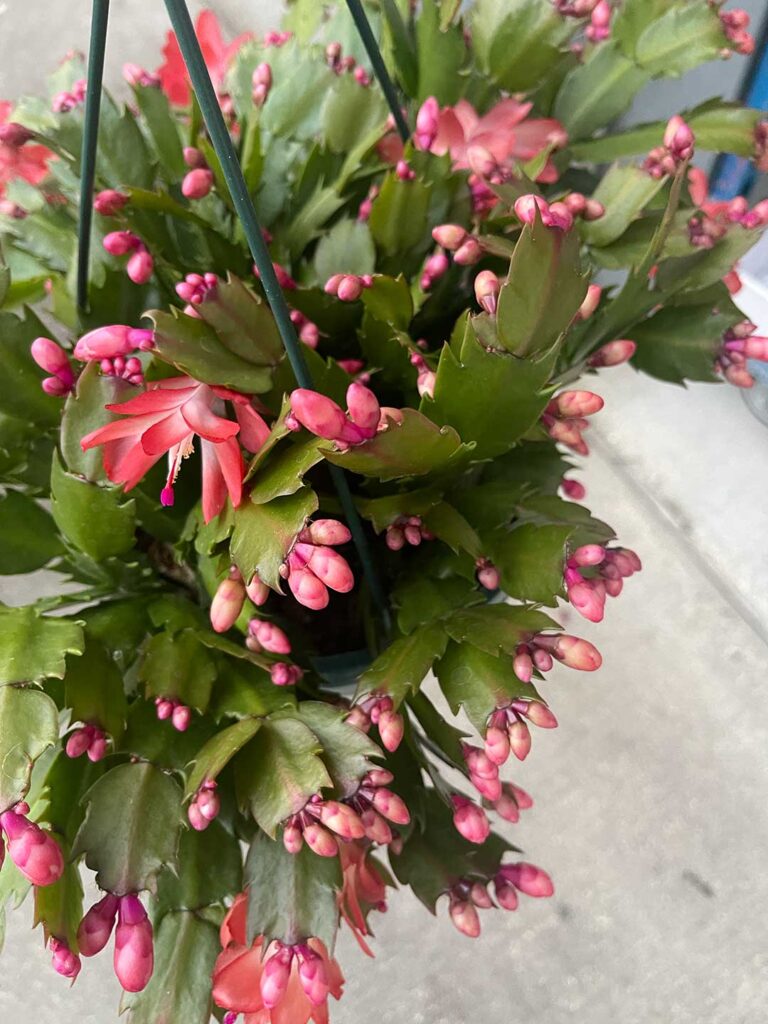
Thanksgiving cactus may be flowering now, while Christmas cactus buds are likely swelling at the ends of the stems.
Keep the potting mix lightly and evenly moist. Do not allow it to stay soggy, but avoid letting a budded plant become extremely dry.
Keep the plant away from drafts, heaters, and sudden changes in temperature. Avoid moving it until at least some flowers begin to open.
Bud drop is often a response to stress. Changes in temperature, light, moisture, or location can all cause a perfectly healthy plant to release some of its buds.
December: Enjoy the Show
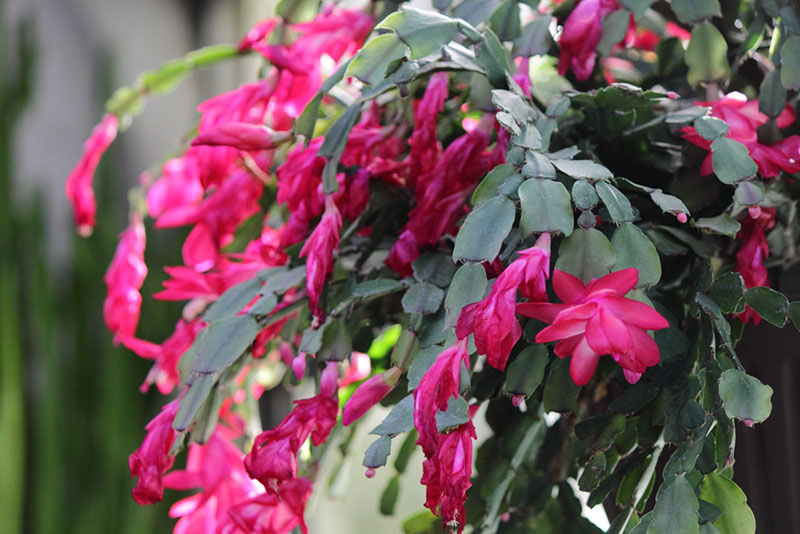
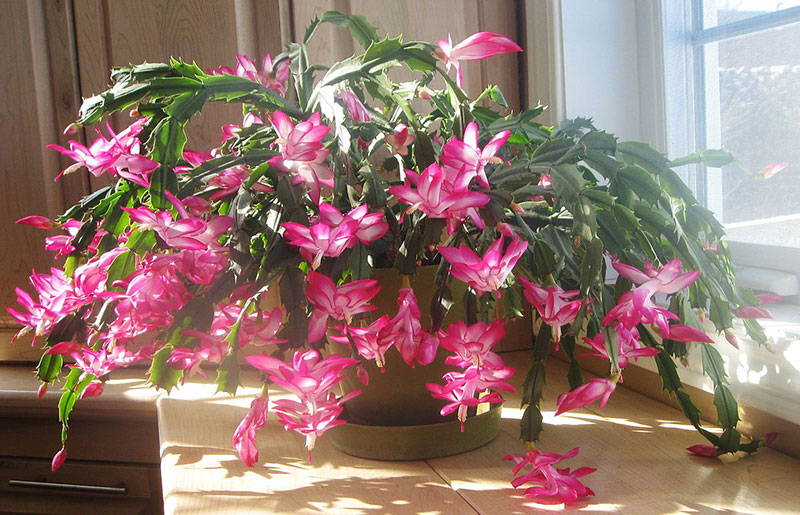
December is the payoff.
Place your blooming cactus where you can enjoy it, provided the location has bright, indirect light and is not beside a heat source.
Continue watering when the upper portion of the potting mix begins to dry. Always empty water from saucers and decorative pot covers.
Do not fertilize, prune, or repot while the plant is flowering.
Remove faded flowers carefully, but avoid pulling on unopened buds. You may also want to record when the plant started flowering. That date can help you fine-tune next year’s fall routine.
| Month | Plant Stage | Main Care Tasks | Fertilizer | Special Notes |
|---|---|---|---|---|
| January | Blooming or finishing bloom | Maintain steady moisture and protect flowers | None | Keep away from heaters and drafts |
| February | Post-bloom rest | Remove faded flowers and reduce watering slightly | None | Inspect for pests and root problems |
| March | New growth begins | Increase watering and watch for fresh segments | Begin monthly feeding when growth appears | Prepare to repot if necessary |
| April | Active growth | Repot only if the plant has outgrown its container | Feed at half strength | Use a loose, well-draining potting mix |
| May | Active growth | Prune, shape, and take cuttings | Feed at half strength | Pruning encourages more branching |
| June | Strong summer growth | Provide bright filtered light and regular watering | Feed at half strength | The plant may be moved outdoors into shade |
| July | Continued growth | Maintain moisture and inspect for sunburn or pests | Feed at half strength | Avoid major pruning |
| August | Late growing season | Prepare the plant for fall bud formation | Give the final regular feeding | Stop pruning and taking cuttings |
| September | Thanksgiving cactus bud preparation | Provide cool nights and long periods of darkness | Usually none | Keep away from artificial light at night |
| October | Christmas cactus bud preparation | Continue long nights and steady care | None | Do not repot, prune, or repeatedly move the plant |
| November | Budding and flowering | Keep moisture and temperature consistent | None | Sudden changes may cause bud drop |
| December | Main flowering period | Enjoy the flowers and remove spent blooms | None | Keep away from fireplaces and heating vents |
How Watering Changes Throughout the Year
Holiday cacti are tropical forest plants, not desert cacti. They need more moisture than a barrel cactus, but their roots still require plenty of air.
The goal is not to water on the same day every week. The goal is to check the soil and respond to what the plant actually needs.
After Flowering
Water less frequently while the plant rests. Allow more of the potting mix to dry before watering again.
During Spring and Summer Growth
Water thoroughly once the upper portion of the mix has dried. Let excess water flow freely from the drainage holes.
During Fall Bud Preparation
Reduce watering slightly, but do not force the plant into a severe drought. Mildly drier conditions can support the seasonal transition, while extreme dryness can stress the plant.
While Budding and Flowering
Keep moisture more consistent. A plant covered in buds should not swing repeatedly between soggy soil and complete dryness.
Never let the pot sit in collected water. Heavy, wet potting mix and poor drainage are among the most common causes of root rot in holiday cacti.
When and How to Fertilize Holiday Cactus
Begin feeding when new growth appears in spring. Use a balanced, water-soluble houseplant fertilizer diluted to half the strength recommended on the label.
Feed approximately once a month during active growth. Stop regular fertilizing by the end of August so the plant can prepare for fall bud production.
Do not fertilize while the plant is covered in buds or flowers.
Holiday cacti can be sensitive to fertilizer salts, so stronger is not better. Flush the potting mix with plain water once or twice during the growing season.
For a more detailed feeding schedule, see our How to Fertilize Holiday Cactus: A Month-by-Month Guide. The feeding window recommended in that guide runs from early spring through August, followed by a fall and winter break.
The Epsom Salt Hack: Does It Really Help?
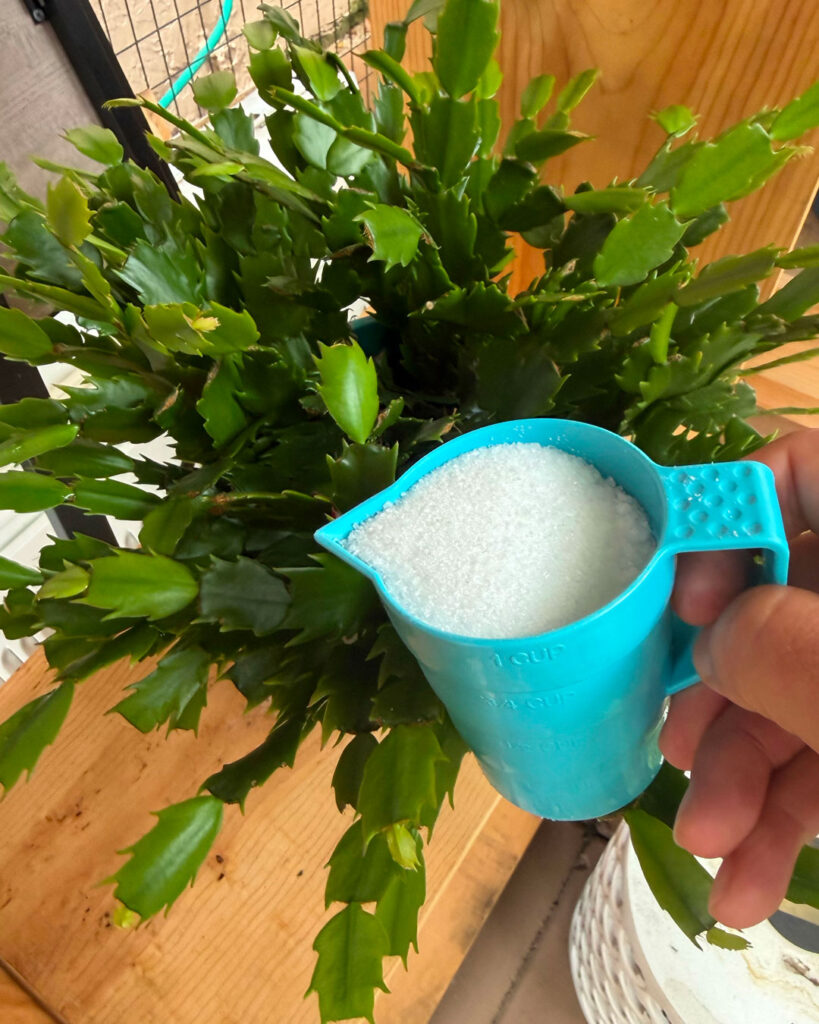
This is one plant hack that has some legitimate reasoning behind it.
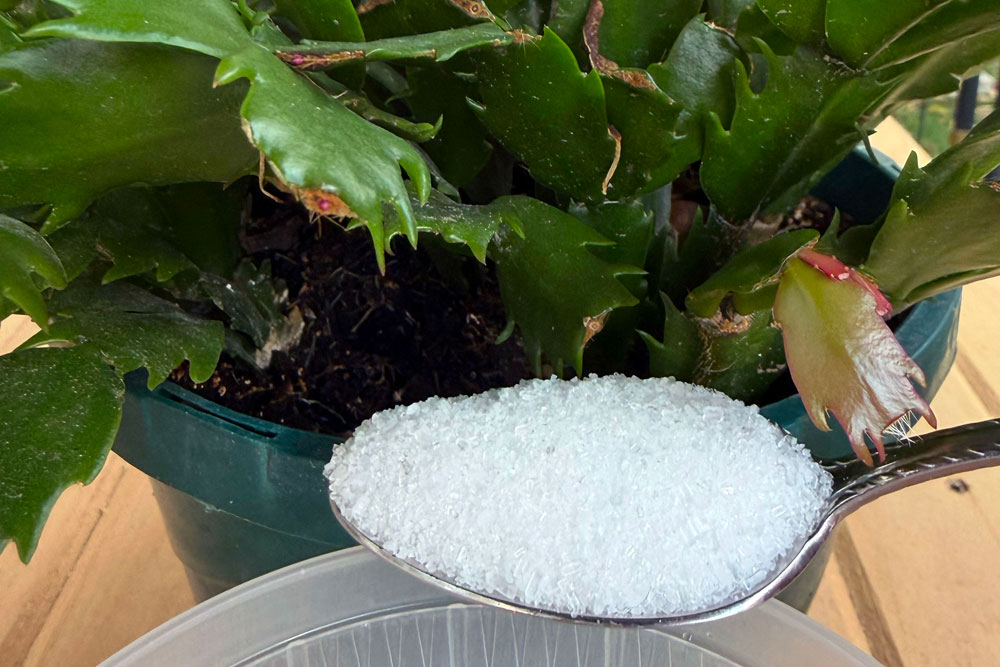
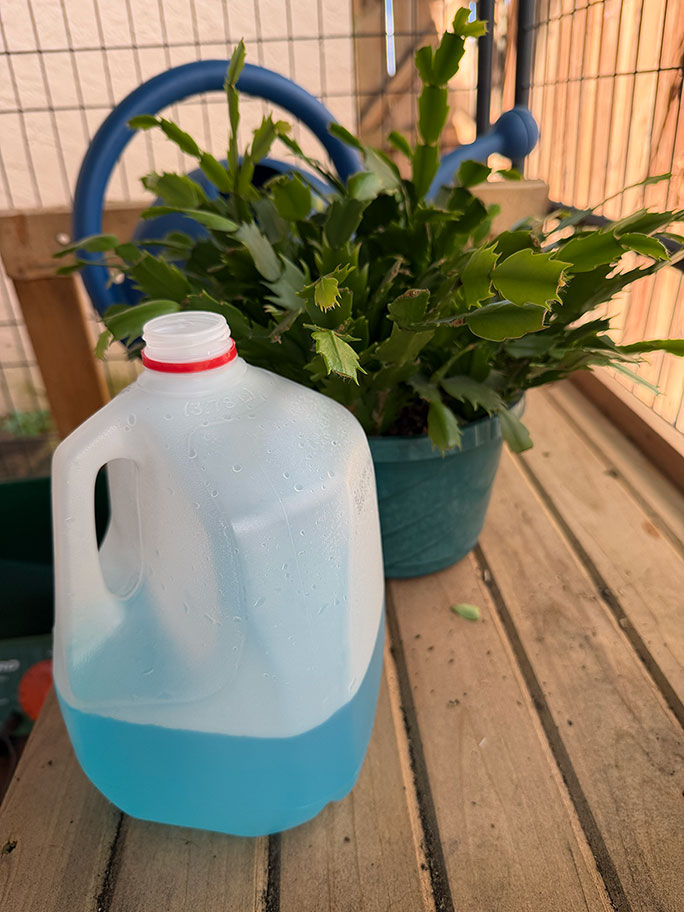
Epsom salt is magnesium sulfate, and holiday cacti have a higher magnesium requirement than many common houseplants. Clemson Extension recommends mixing one teaspoon of Epsom salt into one gallon of water and applying it monthly during the growing season.
There are a few rules:
- Apply it only during active spring and summer growth.
- Do not apply it during the same week as regular fertilizer.
- Stop using it by late summer.
- Do not increase the amount in hopes of producing more flowers.
- Skip it if your fertilizer already supplies sufficient magnesium.
Epsom salt is optional. It is not a substitute for balanced fertilizer, correct watering, or the fall darkness routine.
If your plant already has glossy green growth and blooms dependably, you may not notice any benefit. More power to you. There is no prize for adding an extra product to a routine that already works.
What About Coffee Grounds?
Holiday cacti prefer a mildly acidic, organic potting mix, which is why the coffee-ground trick sounds convincing.
Unfortunately, dumping grounds directly into the pot is not a dependable way to acidify the soil or feed the plant.
Used coffee grounds are generally close to neutral after brewing. They contain some nitrogen and trace nutrients, but not enough to replace a balanced fertilizer. Large amounts can also temporarily tie up nitrogen as they decompose.
In a small houseplant pot, a layer of damp grounds may compact, hold excess moisture, and make it more difficult to tell when the plant actually needs water.
The safer option is to add used grounds to your compost pile. Once the compost is fully decomposed, a small amount can be incorporated into a fresh potting mix.
Would one spoonful of coffee grounds instantly kill a holiday cactus? Probably not. Would I make it part of the monthly care routine? Also no.
Your coffee is more useful to you than it is to the cactus.
How to Propagate Holiday Cactus From Cuttings
The easiest time to propagate a holiday cactus is during spring or early summer, especially when you are already pruning the plant.
- Remove a healthy cutting containing two to five stem segments.
- Separate it at a natural joint.
- Let the cut end callus overnight.
- Insert the bottom end about one inch into moist perlite or coarse sand.
- Place the cutting in bright, indirect light.
- Water when the rooting medium begins to dry.
- Transplant once the cutting has developed a healthy root system.
Make sure the cutting is not planted upside down. The end that was closest to the parent plant goes into the rooting medium.
Plant several rooted cuttings together if you want a fuller-looking pot. Cuttings commonly take six to eight weeks to produce a substantial root system.
When Should You Repot a Holiday Cactus?
Holiday cacti do not need annual repotting.
Repot when:
- Roots are heavily emerging from the drainage holes.
- The potting mix stays wet for too long.
- Water runs directly through badly compacted soil.
- The plant has become unstable or dangerously top-heavy.
- The roots show signs of rot.
- The plant has clearly outgrown its container.
Spring or early summer is generally the best time. Never repot a plant that is developing buds or actively flowering unless you are trying to save it from root rot.
Choose a pot only slightly wider than the current one. Make sure it has drainage holes and fill it with an airy, fast-draining mix.
A snug pot is not automatically a problem. Holiday cacti often flower well when slightly pot-bound and may go several years between repotting sessions.
Can You Encourage a Second Round of Flowers?
Some holiday cacti produce a smaller second bloom in late winter or spring.
You may encourage reblooming by giving the plant another period of cool temperatures and long nights after it has rested. Keep watering modest during the rest period, then increase it slightly if new buds appear.
Do not try to force a recently repotted, badly stressed, or unhealthy plant to flower again. Let it rebuild its roots and stems first.
A second bloom is a lovely bonus, not a yearly guarantee. Sometimes the plant agrees with your plans. Sometimes it apparently has other appointments.
Holiday Cactus Problems to Check for Throughout the Year
The Plant Does Not Bloom
The most common causes are warm fall temperatures, artificial light at night, pruning too late, or a lack of mature growing tips.
Give the plant cooler nights and at least 12 hours of uninterrupted darkness for approximately six weeks.
The Buds Fall Off
Sudden changes in moisture, light, temperature, or location can trigger bud drop. Avoid moving the plant once buds are developing.
The Stem Segments Look Wrinkled
The plant may be too dry, or damaged roots may be preventing it from absorbing water.
Check the soil before automatically adding more water. A wilted plant sitting in wet soil may have root rot.
The Stems Turn Red or Purple
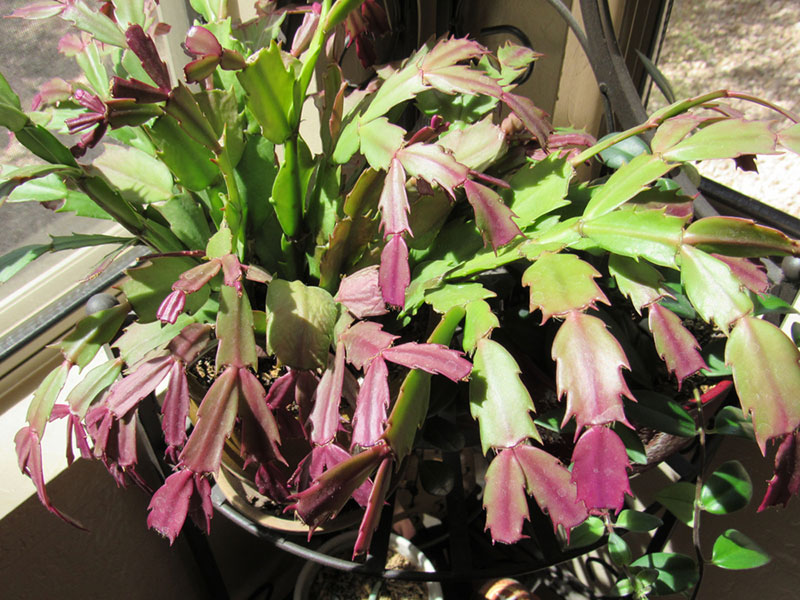
Strong sunlight, cold temperatures, root stress, or nutrient problems can cause reddish or purple discoloration.
Move the plant away from harsh direct sun and inspect the soil and roots.
The Base Becomes Soft or Brown
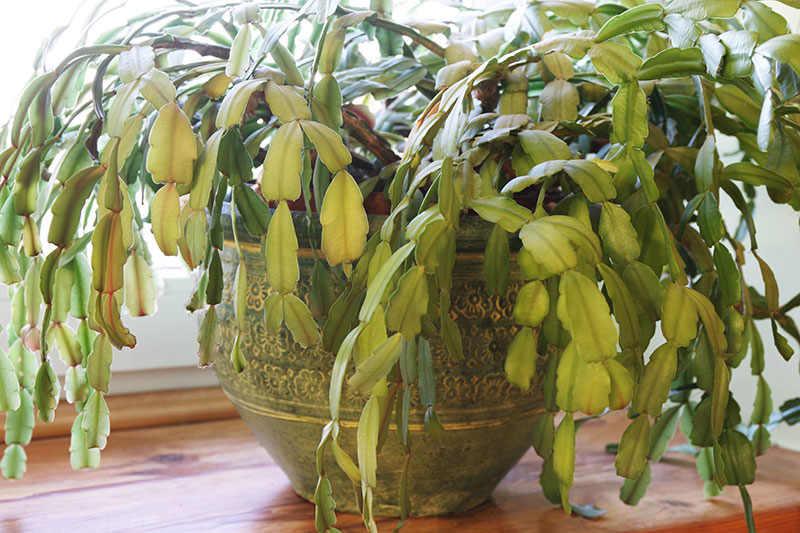
A soft, dark, or foul-smelling base often points to rot. Remove the plant from wet soil, trim damaged roots, and repot it in fresh, well-draining mix.
A firm, dry, corky base on an older plant may simply be normal aging.
Segments or Branches Fall Off
Overwatering, root damage, rough handling, or the weight of an oversized plant may cause sections to break away.
Healthy fallen sections can often be rooted as cuttings.
Scale, Mealybugs, and Fungus Gnats Appear
Check stem joints and undersides regularly. Scale looks like small brown bumps, while mealybugs resemble bits of white cotton.
Fungus gnats are usually a sign that the potting mix is remaining wet for too long. Correcting the moisture problem is an important part of controlling them.
Frequently Asked Questions
How often should I water a holiday cactus?
Check the potting mix rather than watering according to the calendar. Water thoroughly when the upper portion has dried, then allow the pot to drain.
What month should I repot it?
March through early summer is usually the best window. Repot only after flowering and before fall bud preparation.
>> See our Christmas Cactus repot guide here
When is the best time to take cuttings?
Spring and early summer are ideal because the plant is entering active growth.
Can I prune a holiday cactus during summer?
Light pruning in late spring or early summer is fine. Avoid major pruning in late summer because you may remove the tips that would have produced flowers.
When should I stop fertilizing?
Give the final regular feeding by the end of August. Do not fertilize while buds and flowers are developing.
See our Holiday Cactus Month by Month Fertilizer Guide Here
Does Epsom salt make a holiday cactus bloom?
Not directly. Epsom salt supplies magnesium, but flowers are primarily triggered by long nights, cool temperatures, and proper seasonal care.
Are coffee grounds good for holiday cactus?
Directly adding grounds to the pot is unnecessary and may create moisture or decomposition problems. Compost the grounds instead.
How much darkness does it need?
Aim for 12 to 14 hours of uninterrupted darkness each night for approximately six weeks. Some varieties may require up to 16 hours.
Can I leave my holiday cactus outside in summer?
Yes, provided it is protected from frost, harsh direct sunlight, heavy rain, and standing water. Bright shade or filtered light is best.
Why does my Christmas cactus bloom at Thanksgiving?
It may actually be a Thanksgiving cactus or a hybrid. Many plants are sold under the general Christmas cactus name.
Can Christmas and Thanksgiving cactus follow the same routine?
Yes. Their care is almost identical, but Thanksgiving cactus normally begins its fall bud routine and flowering cycle a few weeks earlier.
How long can a holiday cactus live?
With good care, holiday cacti can live for many decades. Some are passed from one generation of gardeners to the next.
The Routine Is More Important Than the Hacks
Holiday cacti are not especially demanding plants. They simply need their care to change with the seasons.
Let them rest after flowering. Support new growth during spring and summer. Stop feeding and pruning as fall approaches. Then provide cool nights, uninterrupted darkness, and consistent care while buds develop.
Epsom salt may provide an optional magnesium boost. Coffee grounds are better sent to the compost pile. Neither hack can replace the basics.
And if your cactus still decides to flower in February instead of December?
Do not be too hard on yourself. Adjust the timing next year, keep the routine consistent, and let the plant work on its own slightly mysterious schedule.