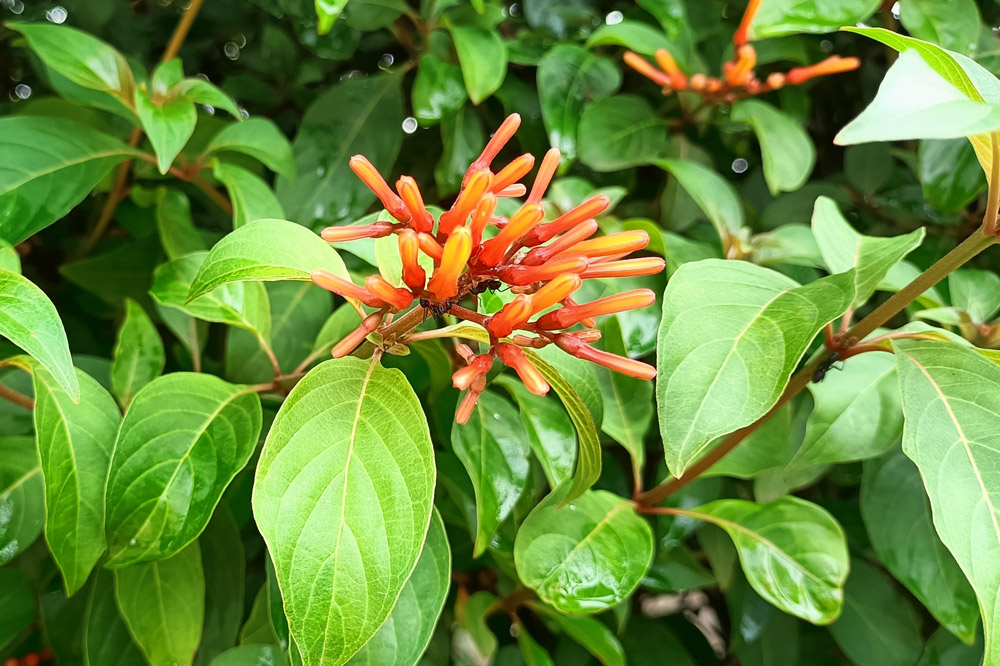
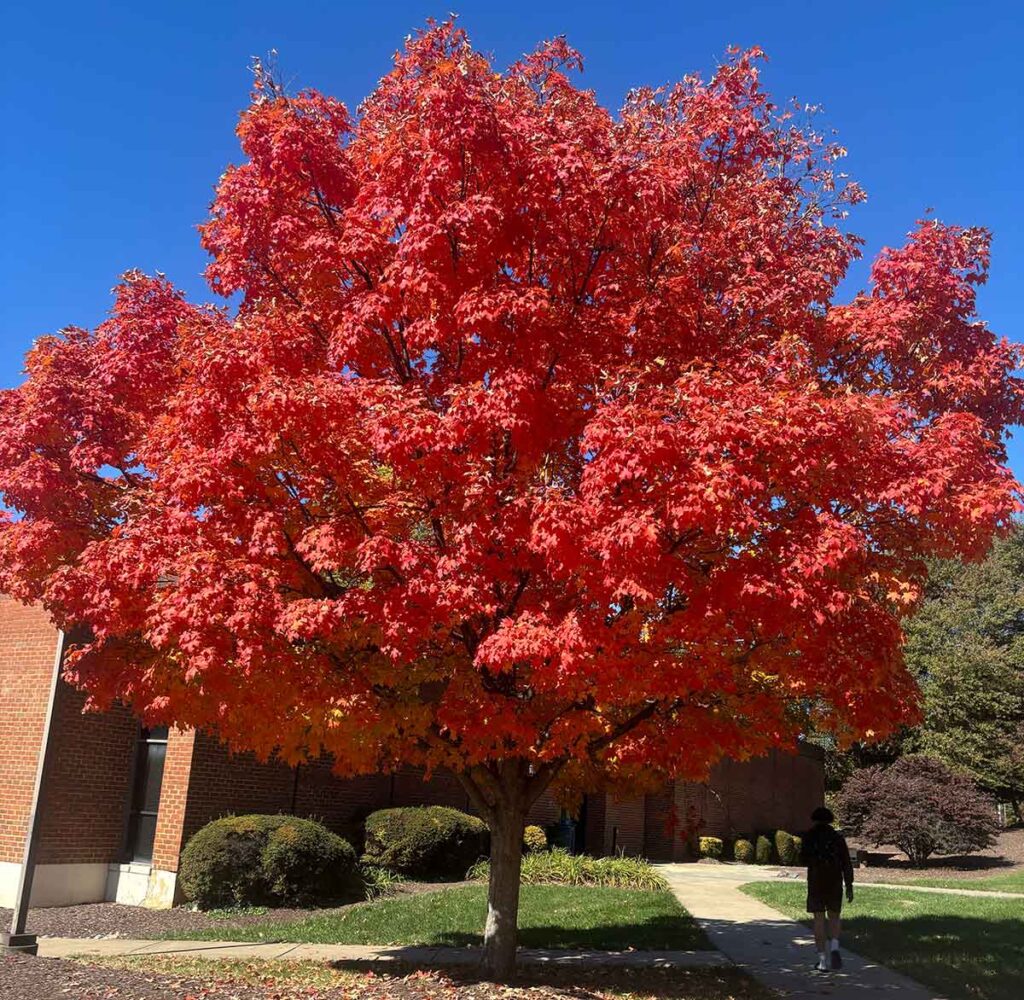
You’ve probably heard someone say “Florida doesn’t have fall color,” usually while the leaf photos from up north fill your feed. It’s an easy thing to believe when the oaks and palms in your neighborhood stay green all year.
Florida native plants do put on a fall and winter show, though. It just comes in different forms, like pink grass plumes, purple berries on bare stems, and red maple flowers in January, when few other plants are in bloom.
The 9 natives below bring color to your yard from fall into late winter. Each one is matched to North, Central or South Florida, so you can choose the plants that will do well where you live.
* Throughout this article, “not on the lists” means the ASPCA hasn’t rated a plant either way, not that it’s safe.
1. Muhly Grass (Muhlenbergia capillaris)
| Botanical name | Muhlenbergia capillaris |
| Sun | Full sun |
| Height | 3 to 5 feet in bloom, 2 to 3 feet wide |
| USDA zones | 7 to 11 (all of Florida) |
| Color season | Pink to purple plumes in fall |
| Pet safety | Not on the ASPCA’s lists |
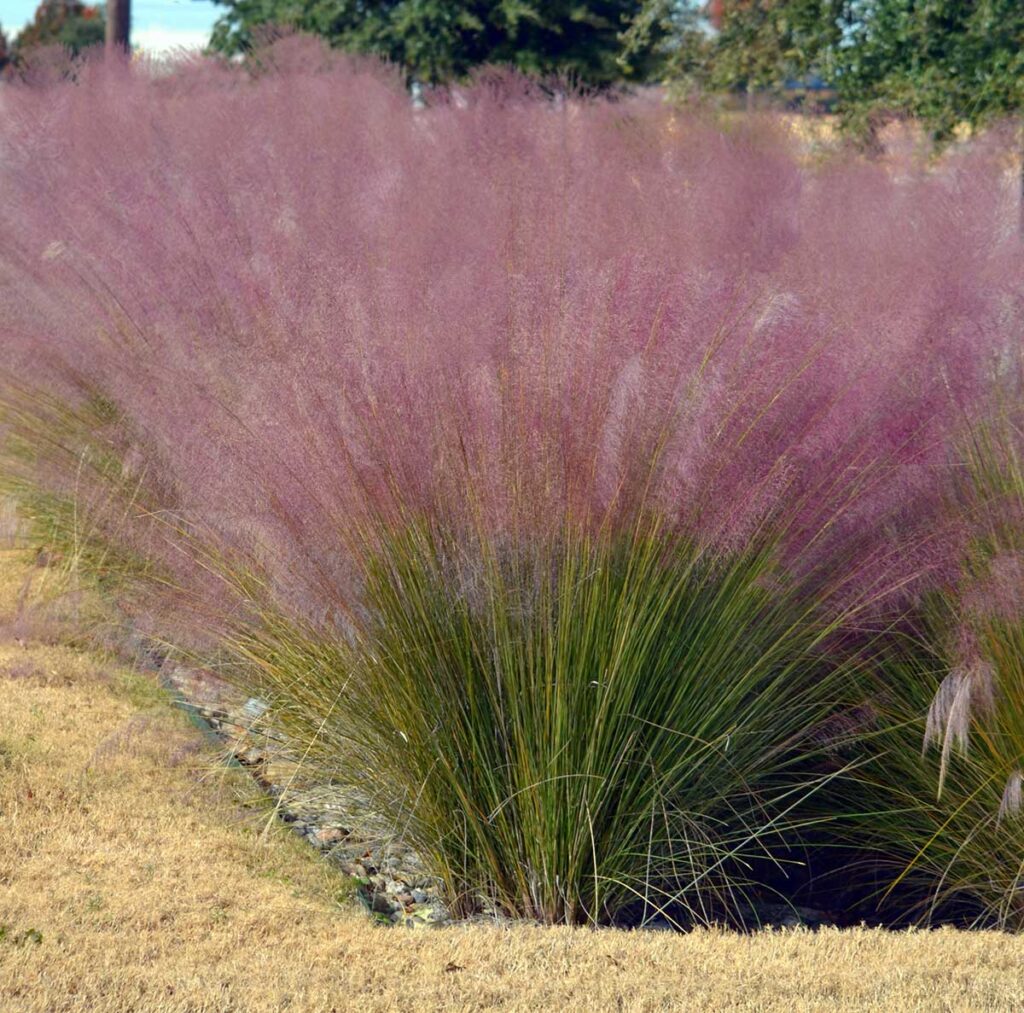
If you’ve noticed a soft pink haze along a Florida roadside in fall, there’s a good chance it was muhly grass. For most of the year it’s a neat clump of slender, dark green leaves. Then fluffy pink to purple flower stalks rise above the foliage, and the whole clump turns into a cloud of color.
Muhly grass wants full sun, but it isn’t fussy about soil. It grows in sand, loam or clay and even tolerates extended flooding. After the plumes fade, leave them standing for winter texture, then cut the clump back to the ground in spring before new growth emerges. That one trim clears out the old brown leaves so the fresh green growth comes through clean.
Garden Lovers Club Tip: Plant muhly grass in groups of three or more instead of a single clump. Massed together, the plumes blend into one drift of color, which is the look that makes neighbors slow down on their evening walk.
Looking for more grasses with this kind of texture? Our roundup of Florida ornamental grasses has more ideas.
2. American Beautyberry (Callicarpa americana)
| Botanical name | Callicarpa americana |
| Sun | Full sun to part shade |
| Height | 3 to 8 feet |
| USDA zones | 7A to 11B (all of Florida) |
| Color season | Purple berries late summer into early winter |
| Pet safety | Not on the ASPCA’s lists |
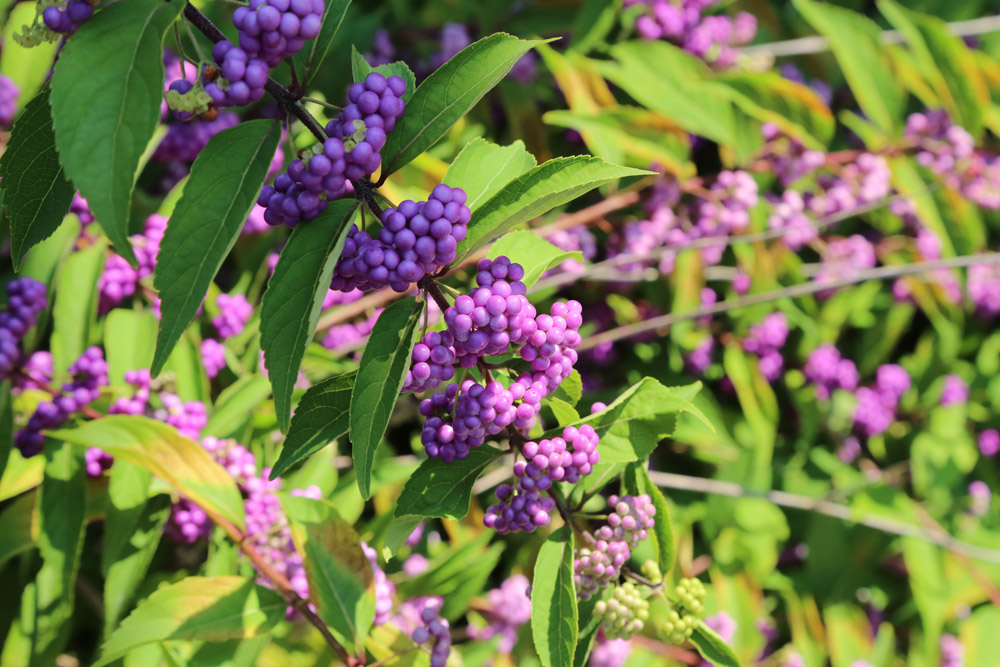
Beautyberry is the shrub that makes visitors lean in to check whether the berries are real. Tight clusters of bright purple fruit circle the stems from August through October, and they hang on for several weeks after the leaves drop, into the start of winter. That late stretch, with bare branches still ringed in purple, is when it earns its spot on this list.
It’s an easygoing shrub that grows in full sun or part shade and handles both wet soil and moderate drought. The one thing to get right is pruning. Flowers and berries form on new growth, so prune it hard between late fall and early spring, cutting the older stems back. That gives you plenty of new stems in spring, and new stems are where next year’s berries form.
Not sure how far to cut? Our list of shrubs to prune before winter ends includes beautyberry.
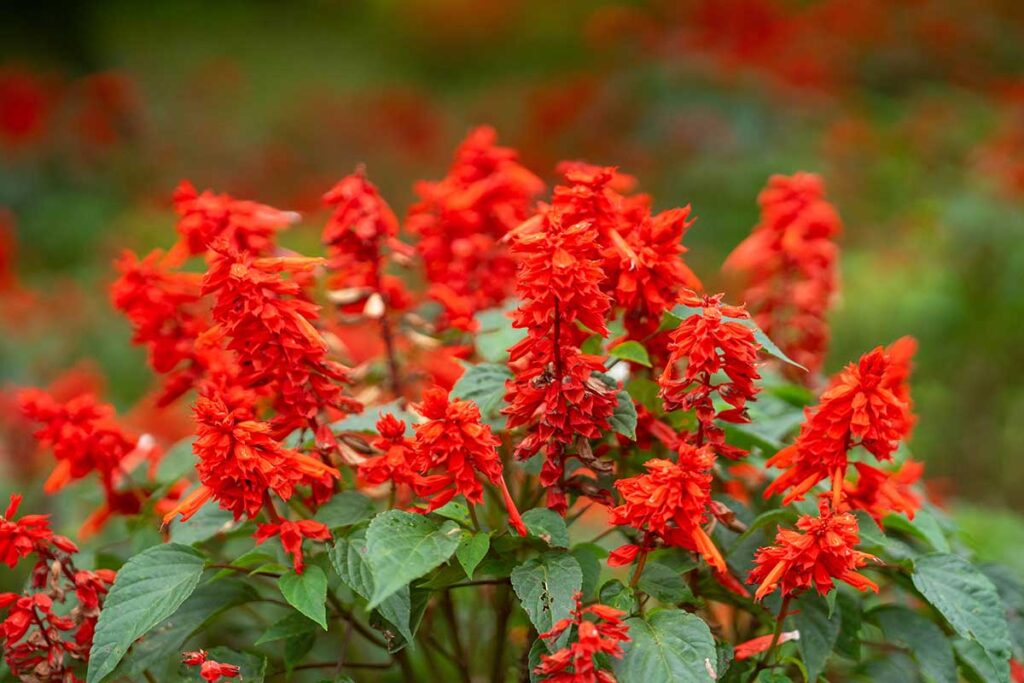
3. Scarlet Sage (Salvia coccinea)
| Botanical name | Salvia coccinea |
| Sun | Part sun to part shade |
| Height | 2 to 4 feet |
| USDA zones | 7 to 11 (all of Florida) |
| Color season | Red, pink or white flowers late spring through fall, year-round where frost doesn’t hit |
| Pet safety | Non-toxic to dogs and cats |
Scarlet sage keeps the red coming after many summer flowers have quit. Its slim flower spikes bloom from late spring through fall, and perennial salvias like this one will bloom year-round when frost or a freeze doesn’t knock them back. Hummingbirds and butterflies both visit, and if red isn’t your color, the same plant also comes in pink and white.
Give it at least part sun, since deeper shade means fewer flowers, and space plants 24 to 36 inches apart so they have room to fill out. When it finishes flowering for the year, cut it back to tidy it up for the next round. Scarlet sage also reseeds into nearby beds, which is a gift in a wild corner and a chore in a neat border. Pull the seedlings you don’t want while they’re small, or snip off faded spikes before the seeds ripen.
4. Climbing Aster (Symphyotrichum carolinianum)
| Botanical name | Symphyotrichum carolinianum (also sold as Ampelaster carolinianus) |
| Sun | Full sun to part shade |
| Height | About 5 feet as a mound, 8 feet or more when climbing |
| USDA zones | 8A to 11 (all of Florida) |
| Color season | Lavender to pinkish purple flowers late fall into winter |
| Pet safety | Not on the ASPCA’s lists |
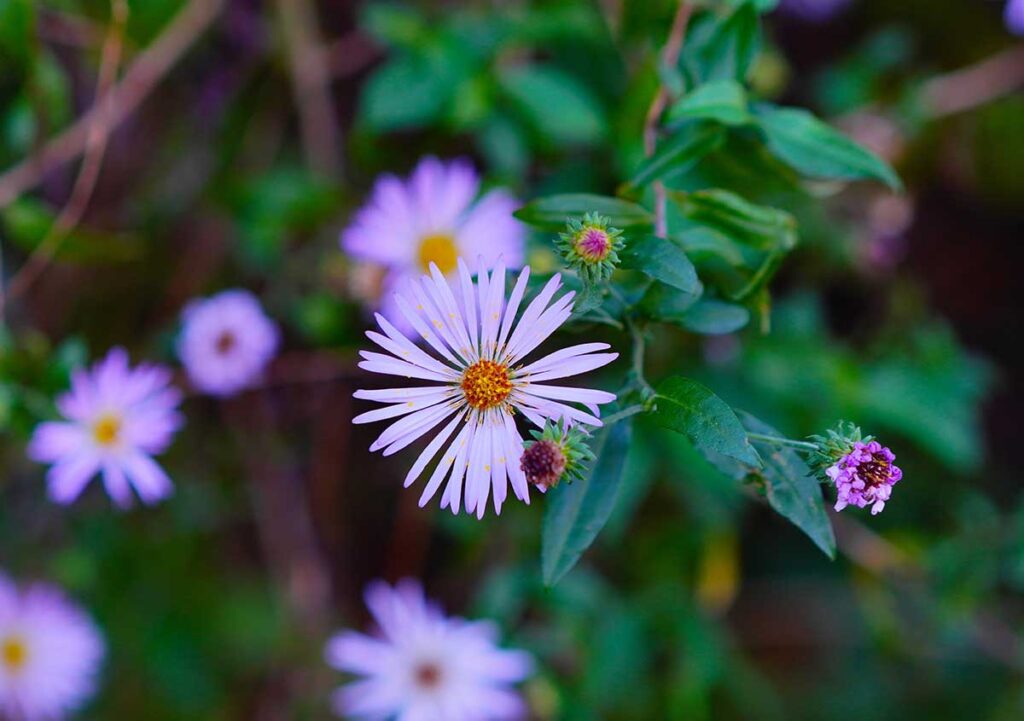
Climbing aster is one of the few Florida wildflowers that will bloom in December. Its fragrant, daisy-like flowers come in lavender to pinkish purple with yellow-orange centers, and they open from late fall into winter. In South Florida the flowers last all season, with native bees, butterflies and moths stopping by.
As the name suggests, this is a sprawling, vine-like shrub that can stretch 8 feet or more when it has something to lean on, or form a loose mound about 5 feet tall and wide on its own. Give it a fence, trellis or sturdy shrub to climb, in full sun to part shade. It’s a wetland plant that also handles drier soil, so it works near a pond edge or in an ordinary bed. If it starts to look like a tangle, you can prune it into whatever shape you like.
5. Dahoon Holly (Ilex cassine)
| Botanical name | Ilex cassine |
| Sun | Full sun to part shade |
| Height | Usually 20 to 30 feet, 8 to 12 feet wide |
| USDA zones | 8A to 11 (all of Florida) |
| Color season | Red berries fall and winter (female plants) |
| Pet safety | Not listed by name; the ASPCA lists other hollies as toxic to dogs and cats |
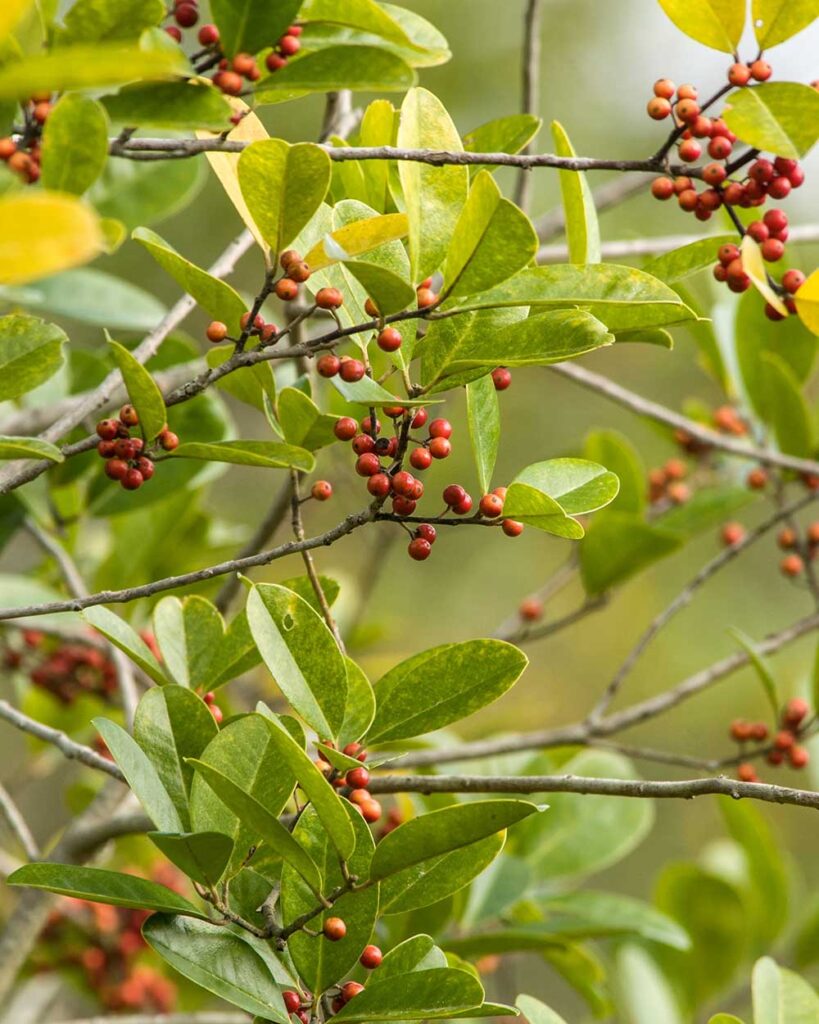
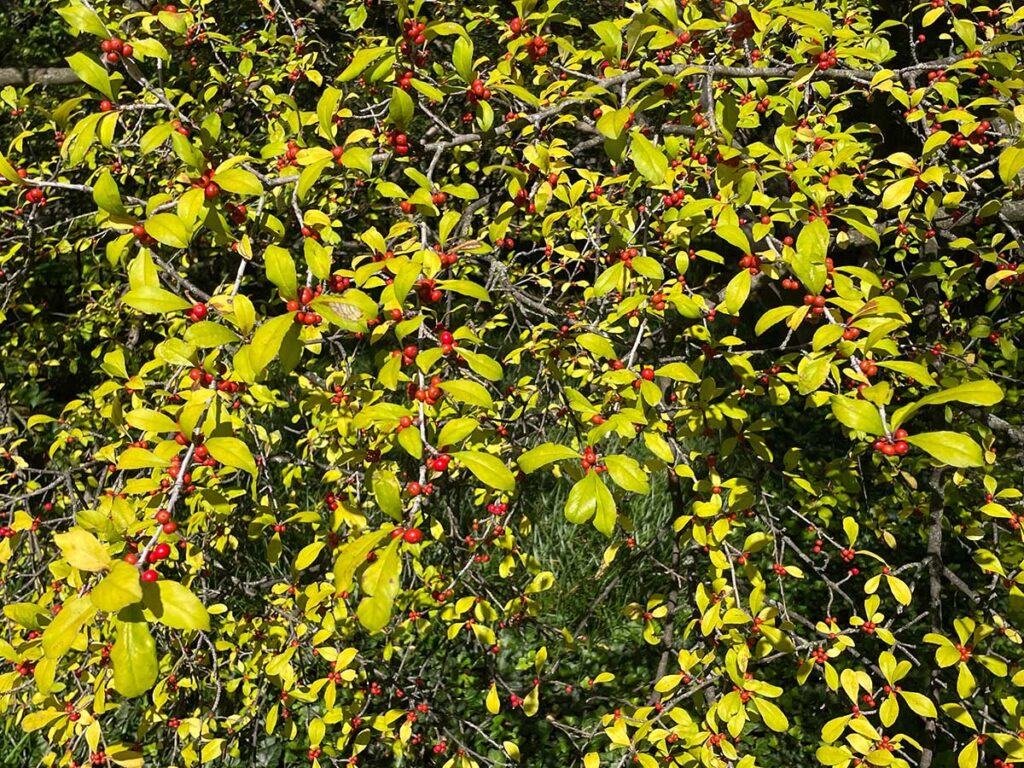
Dahoon holly brings the classic holiday look, glossy evergreen leaves and bright red berries, from a tree that grew here long before anyone hung a wreath. The berries appear in fall and winter and last through the colder months, right when the rest of the yard is taking a breather. It grows into a small to medium tree, so plant it where it has room to spread.
Hollies have separate male and female plants, and only the females make berries. Plant at least one male dahoon nearby so your female fruits. Dahoon grows in full sun to part shade and handles wet or well-drained soil, which makes it a good choice for a low spot that stays soggy after summer storms. Since the ASPCA lists American and English holly as toxic to dogs and cats, keep pets away from the berries.
Garden Lovers Club Tip: Choose a plant that already has berries on it. Since only females fruit, the berries tell you exactly what you’re bringing home.
6. Bahama Cassia (Senna mexicana var. chapmanii)
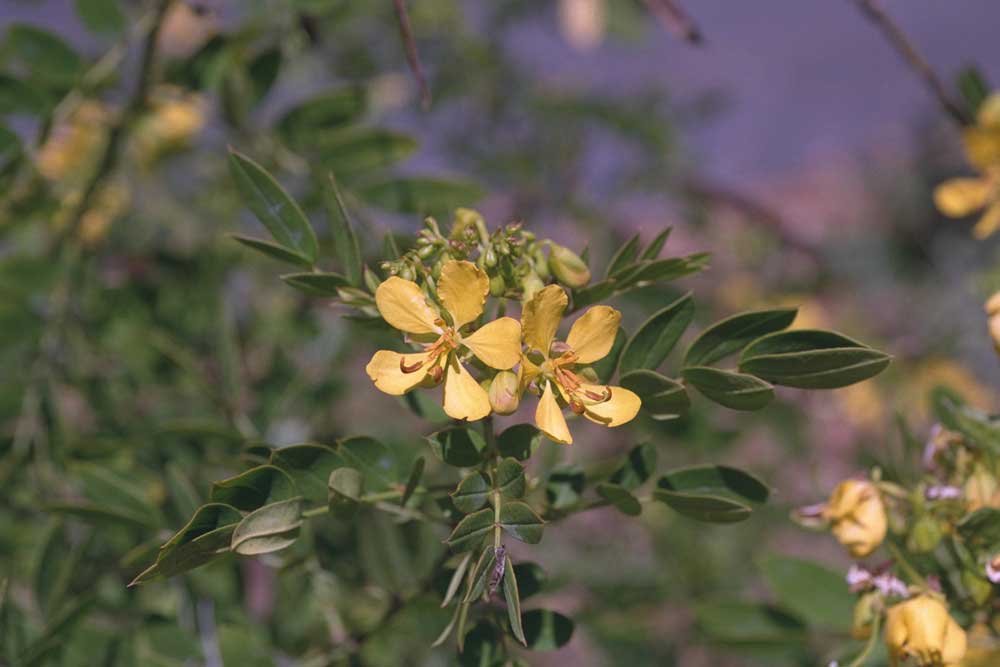
[Photo: Bahama cassia in bloom with yellow flower clusters, ideally with a sulphur butterfly]
| Botanical name | Senna mexicana var. chapmanii |
| Sun | Full sun to part shade |
| Height | 2 to 4 feet, 3 to 6 feet wide |
| USDA zones | 10A to 11 (South Florida) |
| Color season | Yellow flowers year-round |
| Pet safety | Not on the ASPCA’s lists |
For South Florida gardeners, Bahama cassia is a dependable spot of yellow when the calendar says winter. It flowers year-round and keeps its leaves, and its compact size makes it easy to fit into a sunny border or along a driveway.
It likes sandy, well-drained soil, handles drought and some salt spray, and grows in full sun or part shade. What it can’t handle is a freeze, which is why it’s a South Florida plant.
Every few years, cut it back to the ground in spring to rejuvenate it. It also drops seed, so watch for volunteers in nearby beds and weed out any you don’t want. Bahama cassia is listed as threatened in Florida, so get yours from a native plant nursery.
Garden Lovers Club Tip: If some leaves get chewed, look before you spray. Bahama cassia is a host plant for cloudless sulphur and sleepy orange butterflies, so those holes may belong to caterpillars that will soon be butterflies.
7. Possumhaw (Ilex decidua)
| Botanical name | Ilex decidua |
| Sun | Full sun to part sun |
| Height | About 20 feet, 10 feet wide |
| USDA zones | 8A to 9B (North and Central Florida) |
| Color season | Red berries on bare branches through winter (female plants) |
| Pet safety | Not listed by name; the ASPCA lists other hollies as toxic to dogs and cats |
Possumhaw is the holly for anyone who likes a little drama in January. It drops its leaves for winter, and the red berries stay behind on the bare branches, where they’re especially showy because nothing hides them. Birds notice too, from cardinals and thrushes to woodpeckers and warblers.
This is an understory tree that fits naturally at the edge of a wooded area or in an informal bed. Plant it where the soil stays moist, and keep it away from salt spray, which it doesn’t tolerate. Like dahoon, it needs a male plant nearby for the females to fruit, and the same pet caution applies. Possumhaw is state-listed as threatened in Florida and is mostly carried by native plant nurseries.
8. Florida Paintbrush (Carphephorus corymbosus)
| Botanical name | Carphephorus corymbosus |
| Sun | Full sun to light shade |
| Height | 2 to 3 feet in bloom |
| USDA zones | 8A to 10B (peninsular Florida, plus Bay and Jackson counties) |
| Color season | Bright pink to lavender flowers late summer into fall |
| Pet safety | Not on the ASPCA’s lists |
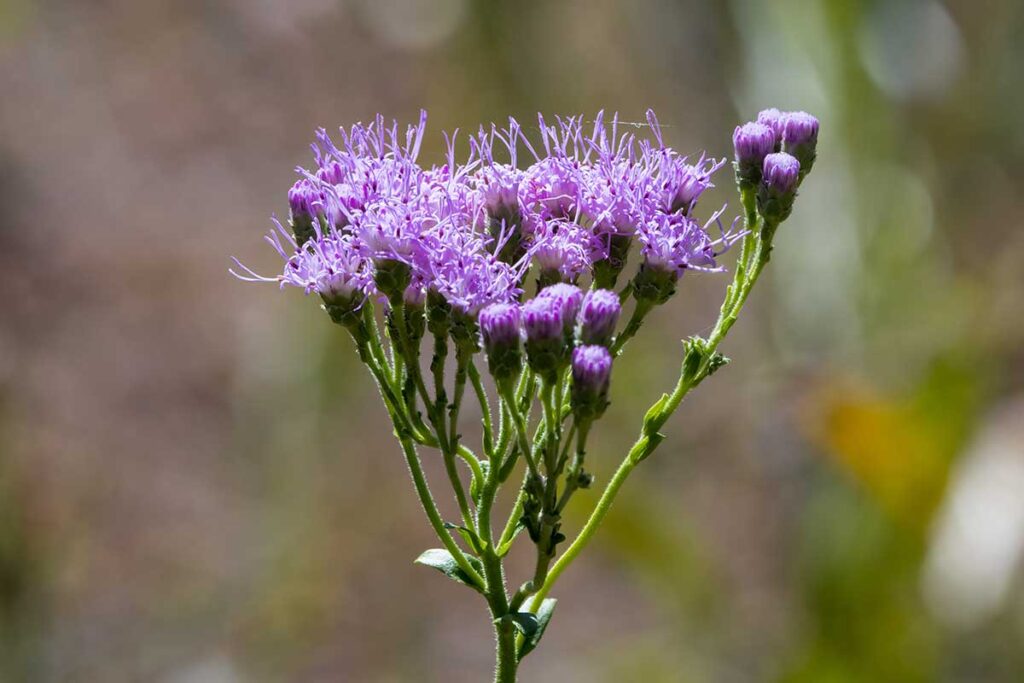
Florida paintbrush earns its name with clusters of bright pink to lavender flowers held on stems 2 to 3 feet tall when blooming, as if someone dabbed color across the bed. It blooms from late summer into fall, and butterflies and other pollinators find it quickly.
This wildflower is made for dry, sandy, well-drained soil and full sun, with no more than a little shade. Plant it in your sunniest spot with fast-draining soil, and keep it away from low areas where water sits after a storm. It’s mostly carried by native plant nurseries, and it can also be grown from seed if you’d like a bigger patch.
Garden Lovers Club Tip: Leave the spent flower heads standing until spring. They add color interest through winter, or you can cut them to collect seed for more plants.
9. Red Maple (Acer rubrum)
| Botanical name | Acer rubrum |
| Sun | Full sun (handles part shade) |
| Height | 60 to 75 feet at maturity, often smaller in warm, dry sites |
| USDA zones | 4A to 9B (North and Central Florida; South Florida in wet spots) |
| Color season | Yellow, orange and red leaves in fall, red flowers January through March |
| Pet safety | Non-toxic to dogs and cats; toxic to horses |
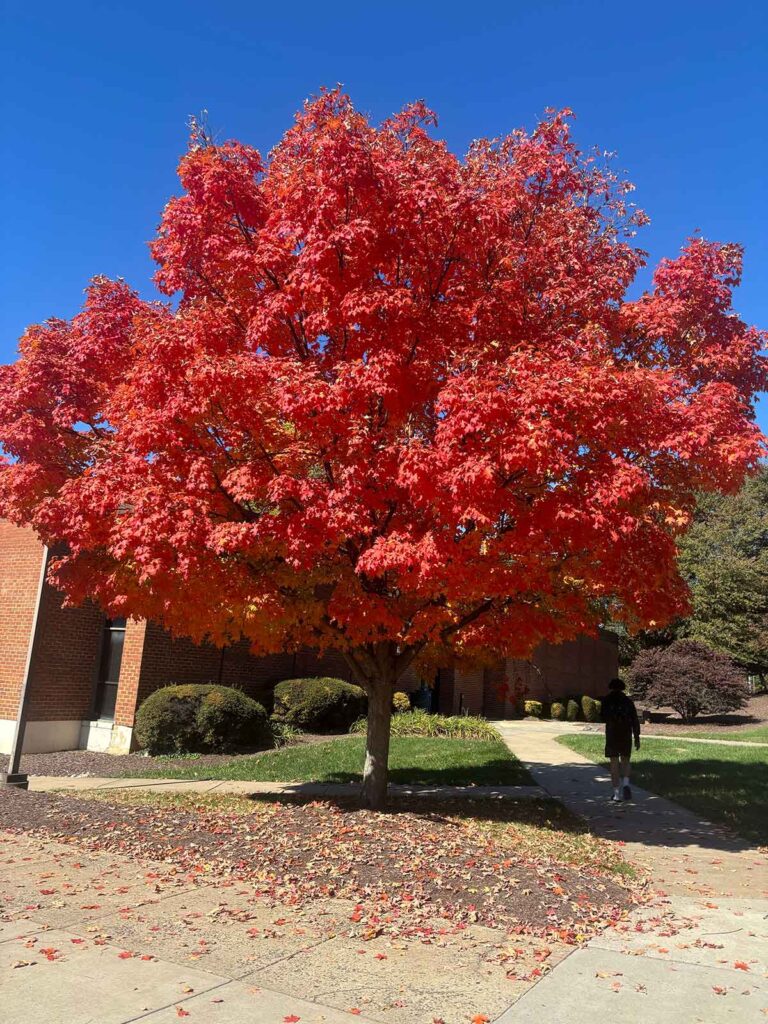
Red maple is the closest Florida gets to a New England fall. Its leaves turn yellow, orange and red in autumn, and the color lasts for several weeks. Then, between January and March, it blooms with red flowers before the new leaves arrive, followed by winged red seeds that birds and other wildlife eat.
This big shade tree needs plenty of room, and its other name, swamp maple, is a good hint: plant it in wet, acidic soil. It isn’t salt tolerant, and South Florida gardeners will need to water it, especially in the dry months. Without enough water, it gets scorch, where parts of the leaves die between the veins. If you keep horses, plant it well away from their pasture.
Garden Lovers Club Tip: Short on space? Choose a smaller variety like ‘Gerling’, which reaches only about 35 feet, or ‘Autumn Flame’ at about 45 feet.
How to Plan a Yard With Color From Fall to Late Winter
These plants don’t all peak at the same time, which works in your favor, because you can line them up for a longer show. Beautyberry starts in late summer and carries into fall, muhly grass and Florida paintbrush take over in fall, and climbing aster picks up in late fall and keeps going into December. The two hollies hold their berries through winter, and red maple closes out the season with flowers from January into March. Scarlet sage and Bahama cassia fill the gaps along the way.
To put that to work, pick at least one plant from each stretch of the season that suits your part of Florida. Place them where you’ll see them from a window, the porch or the front walk, since color only helps if you notice it. Keep the smaller plants toward the front of beds, where the trees and shrubs won’t hide them.
Your Zone Makes a Difference
Winter cold changes a lot between the Panhandle and the southern tip of the peninsula, so not every plant on this list suits every yard. Here’s how the 9 plants line up by region.
- North Florida: Muhly grass, beautyberry, scarlet sage, climbing aster, dahoon holly, possumhaw and red maple all fit. Florida paintbrush is native to the peninsula and to Bay and Jackson counties, so it suits the peninsula side of North Florida better than the western Panhandle. Skip Bahama cassia, which can’t take a freeze.
- Central Florida: Every plant on the list fits except Bahama cassia. Possumhaw is rated only to zone 9B, so check your zone if you live in one of the warmest coastal areas.
- South Florida: Muhly grass, beautyberry, scarlet sage, climbing aster, dahoon holly and Bahama cassia all fit. Florida paintbrush grows up to zone 10B, so skip it in zone 11. Plant red maple only in a wet spot you can water through the dry months, and skip possumhaw, which grows only as far south as zone 9B.
Helping New Natives Get Established
Native plants earn their low-care reputation only after their roots settle in. A six-year UF/IFAS study of landscape shrubs found that native and non-native shrubs needed the same amount of water to get established, which takes about 20 to 28 weeks after planting. The payoff of picking the right plant for the right spot comes after that, when a shrub can get by on rain alone.
For the shrubs on this list, water little and often during that first stretch. The study recommends about 1 gallon per shrub every 8 days north of Orlando and every 4 days in South Florida, poured right on the root ball, and more water at once doesn’t make up for watering less often. Skip a watering if a quarter inch of rain or more fell in the last 24 hours.
Once a shrub is established, check it during dry spells, which are most likely in April, May, October and November, and water when you see wilting, before the leaves start to die. Set a reminder for your watering day, and about six months from planting, you can let the rain do most of the work while your yard puts on its fall and winter show.