No one enjoys mosquitoes. Especially here in Florida, where stepping outside for five minutes can feel like an open invitation.
So naturally, I started wondering…
Can plants actually help keep mosquitoes away, or is this just another garden myth?
I’ve seen everything from citronella claims to “plant this and you’ll never get bitten again.” Sound familiar?
Here’s the honest answer:
No plant is going to completely eliminate mosquitoes in your yard. Not really.
But… some plants contain natural oils and compounds that may help discourage mosquitoes when planted near patios, seating areas, or walkways.
Good enough for me.
Here are 10 that are actually worth considering for Florida gardens.
1. Lavender
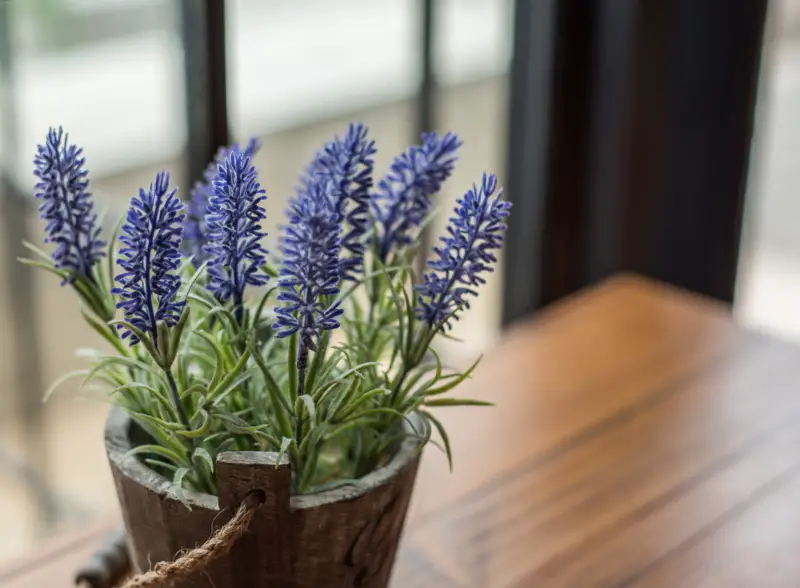
Lavender smells amazing to us. Mosquitoes are not fans.
That said, this is one of those plants that works best up close, not across your entire yard. Think containers near seating areas.
One thing to keep in mind. Lavender can be a little finicky in Florida humidity, especially in South Florida. Good drainage is key.
2. Catnip
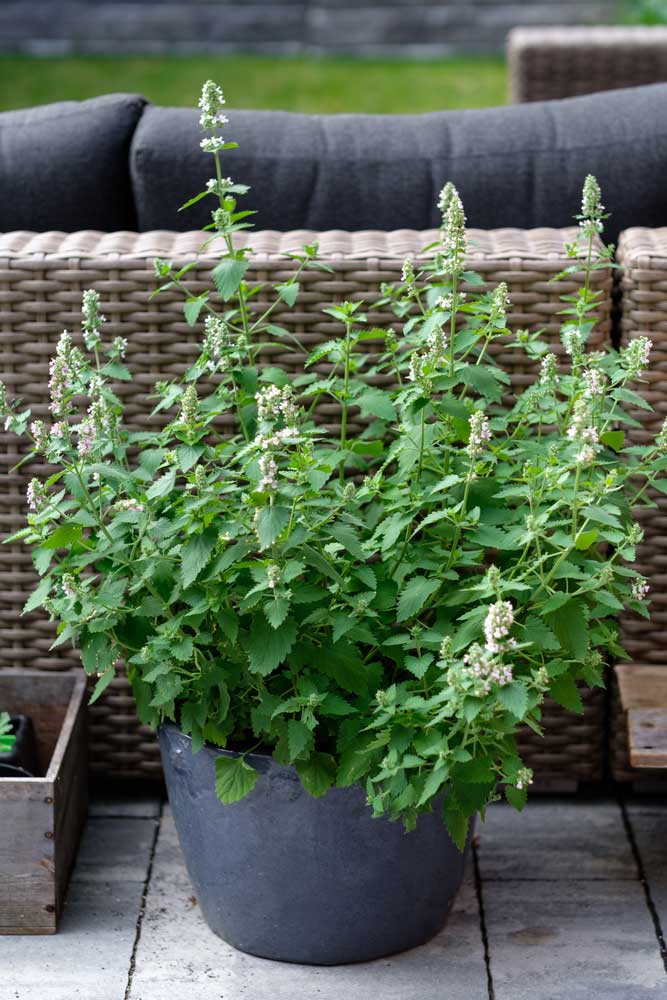
This one surprised me.
Catnip contains a compound called nepetalactone, which has actually been studied for its mosquito-repelling properties.
It won’t create a force field around your yard. But planted near where you sit, it can help.
Just be prepared. If you have cats nearby, they will find it.
3. American Beautyberry
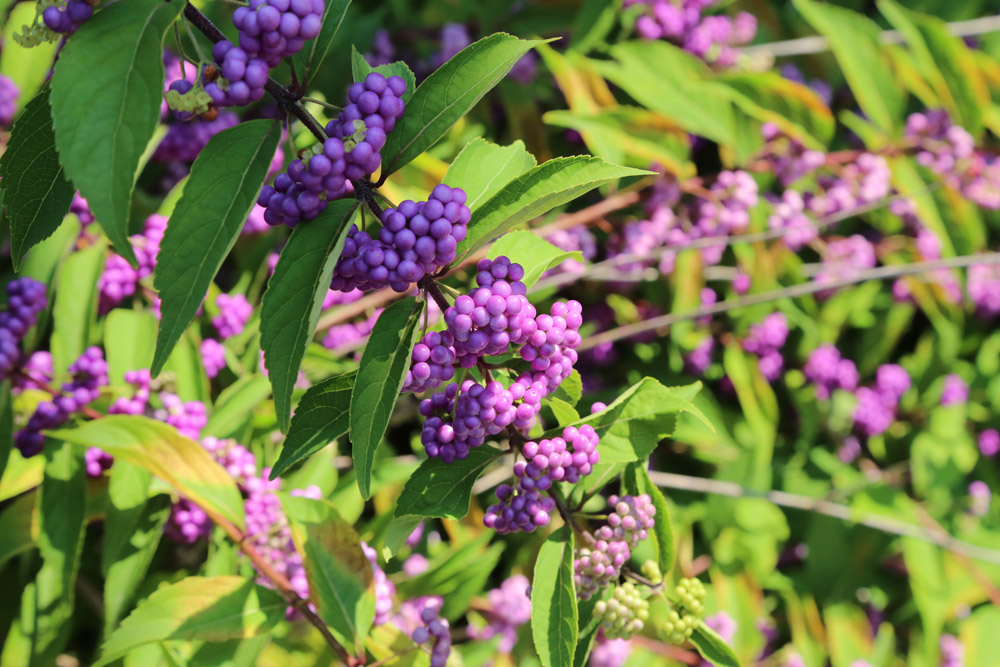
Now this one is interesting.
American beautyberry is native to Florida, and studies have shown compounds in the leaves can help repel mosquitoes when crushed.
That’s a big step up from some of the others on this list.
Plus, it’s a beautiful shrub with those bright purple berries. Hard to beat.
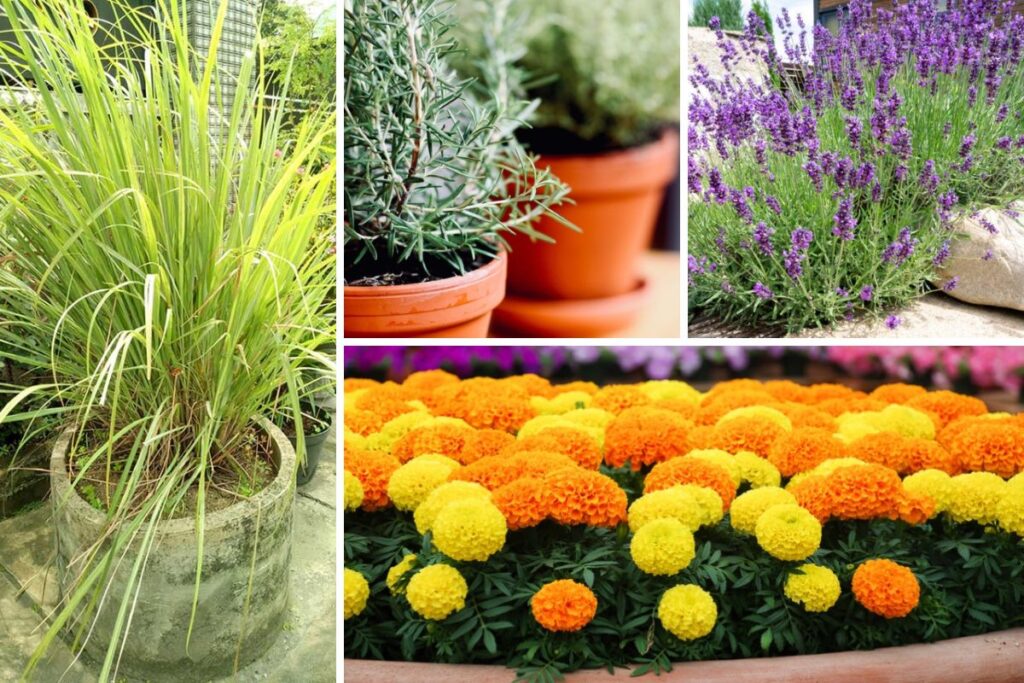
4. Marigolds
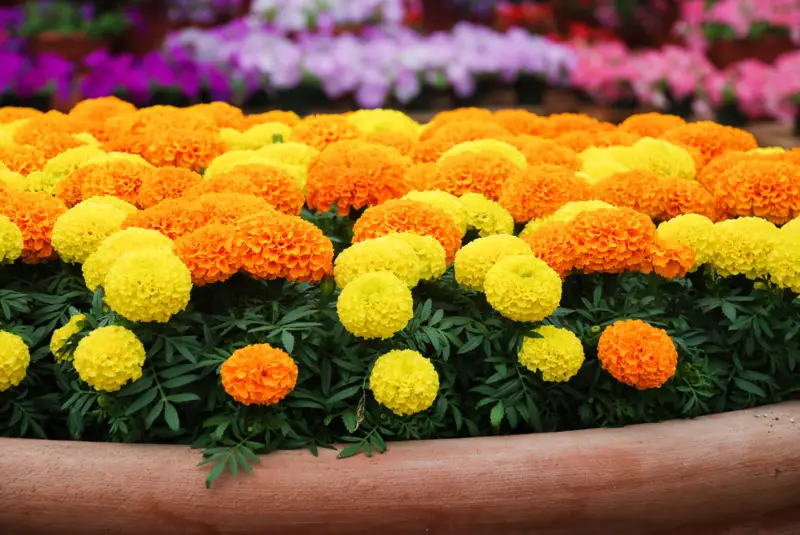
Marigolds are often recommended for pest control, and for good reason.
They contain compounds used in insecticides. But in the garden, their effect is more subtle.
Think of them as part of the mix rather than your main defense. They’re bright, easy to grow, and still worth planting.
5. Rosemary
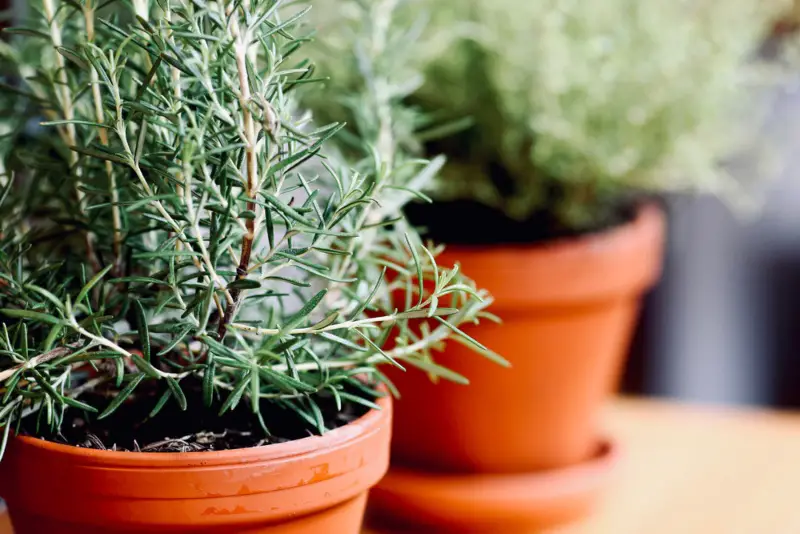
Another classic herb that earns its spot.
Rosemary’s strong scent can help deter mosquitoes in small areas, especially when the oils are released. Some people even toss a few sprigs on the grill for that reason.
It loves heat and sun, which makes it a solid choice for Florida gardens.
6. Lemongrass
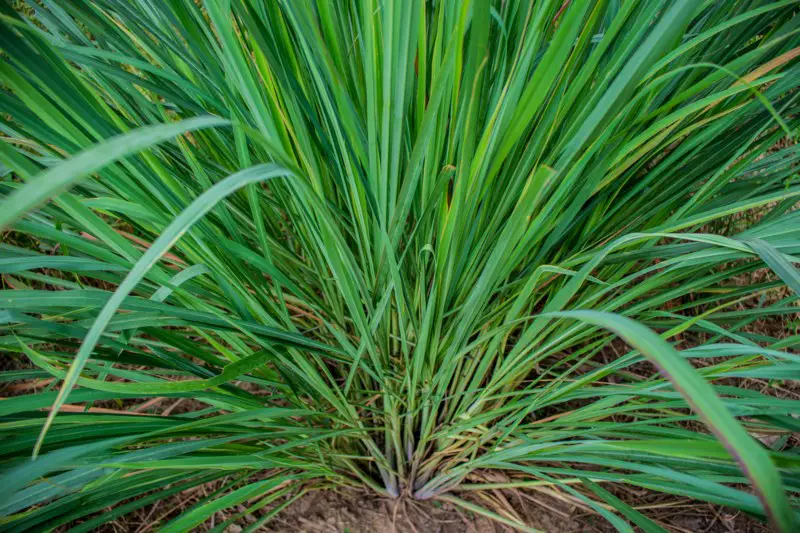
You’ve probably heard of citronella candles. This is where that scent comes from.
Lemongrass contains citronella oil, which mosquitoes tend to avoid. But here’s the catch…
The plant itself is only mildly effective unless the oils are released. Still, it’s a great Florida-friendly plant that thrives in heat and sun.
And you can cook with it. Not bad.
7. Mint
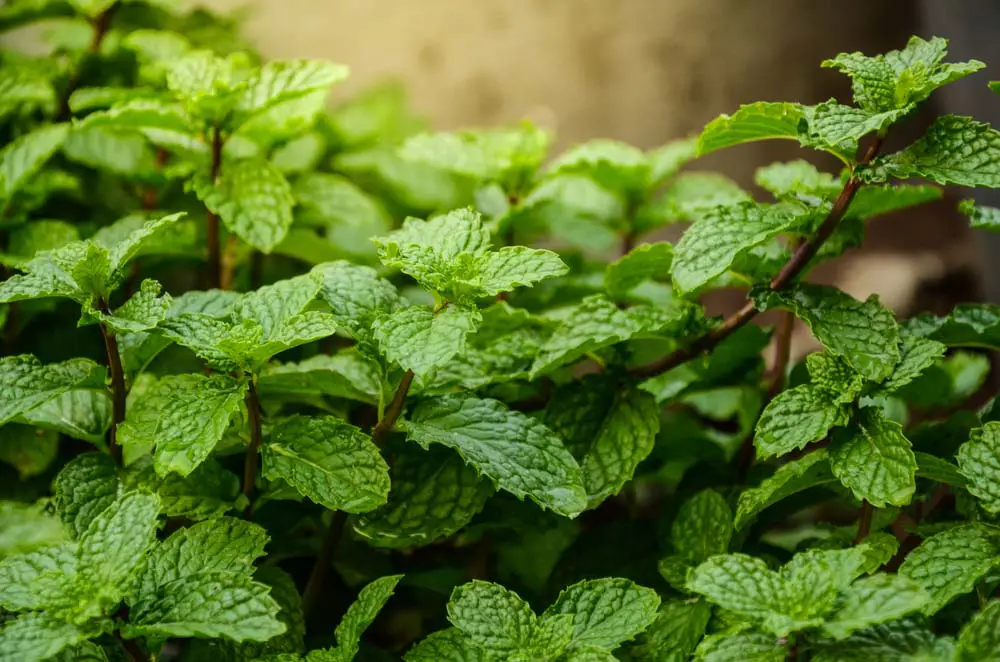
Mint is one of those plants that just keeps going.
Its strong scent may help deter mosquitoes nearby, especially when brushed against.
Quick note. Always grow mint in containers unless you want it taking over your garden. Ask me how I know.
8. Citronella
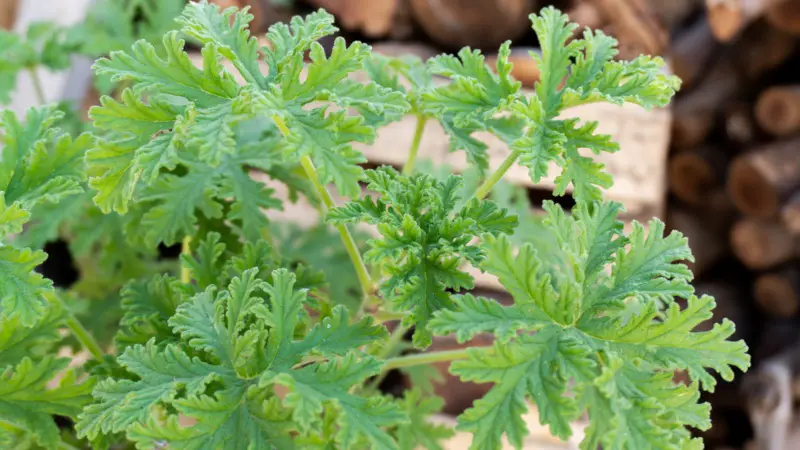
This is the one everyone talks about.
The so-called “mosquito plant” is actually a scented geranium with a citronella-like smell.
Does it work? A little. Mostly when the leaves are crushed and the oils are released.
So it’s not magic. But it’s still a nice plant to keep around outdoor seating areas.
9. Basil
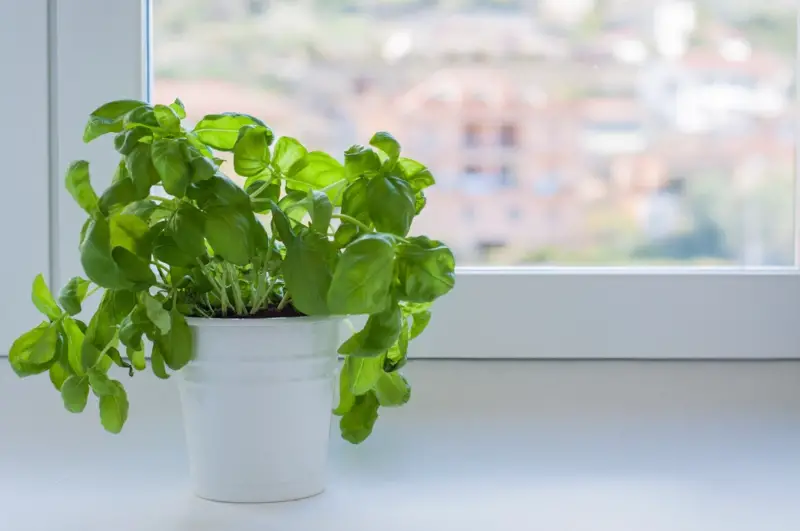
Basil pulls double duty. Great in the kitchen, and it may help discourage mosquitoes nearby.
Like a lot of herbs, the effect is stronger when the leaves are brushed or crushed. So placing it near walkways or seating areas works best.
Plus, it’s easy to grow. Always a win.
10. Lemon Balm
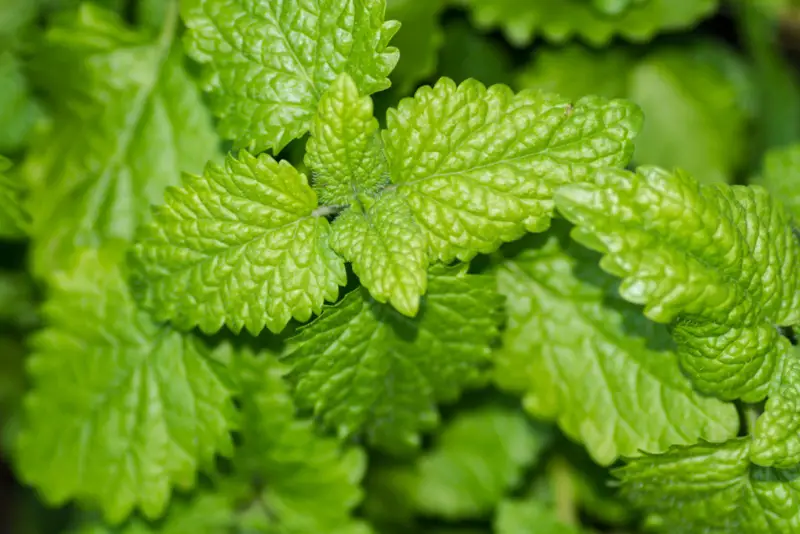
Lemon balm has that fresh citrusy scent mosquitoes tend to avoid.
It grows easily. Maybe a little too easily. This one can spread if you’re not paying attention.
But if you keep it in containers or controlled areas, it’s a great addition near patios or doors.
So… do these plants actually work?
Not in the way social media sometimes makes it sound.
You’re not going to plant a few herbs and suddenly have a mosquito-free yard. If only it were that easy.
But here’s where they do help:
- Around patios and seating areas
- In containers near doors or windows
- When combined with other strategies (like removing standing water)
Think of these plants as one small piece of the puzzle, not the entire solution.