Every yard has one.
That gloomy little patch where the soil goes bone-dry by July and the sun shows up for maybe twenty minutes a day, if it’s feeling generous.
Mine is a sad strip along the north fence, tucked under a thirsty old maple that drinks up every drop of rain before anything else gets a sip.
I have murdered a lot of plants in that corner.
Petunias? Gone in a week.
That “shade-loving” impatiens the garden center swore by? It melted into a puddle of regret.
For years, I just gave up and called it the spot where good intentions go to die.
But here’s the thing I learned the hard way: dry shade is not impossible. It is just picky.
The trick is matching the plant to the problem instead of fighting it. Some perennials are much better at handling dry shade than others, especially once they have had a full season to settle in. Some have thick leaves that hold moisture. Others spread by sturdy roots or naturally grow in woodland conditions where tree roots steal most of the water.
A quick note before we dig in: “dry shade tolerant” means tolerant once established. Even the tough ones need regular water during their first season.
Give them time to root in, mulch them well, and they will have a much better chance of turning that miserable corner into something you actually want to look at.
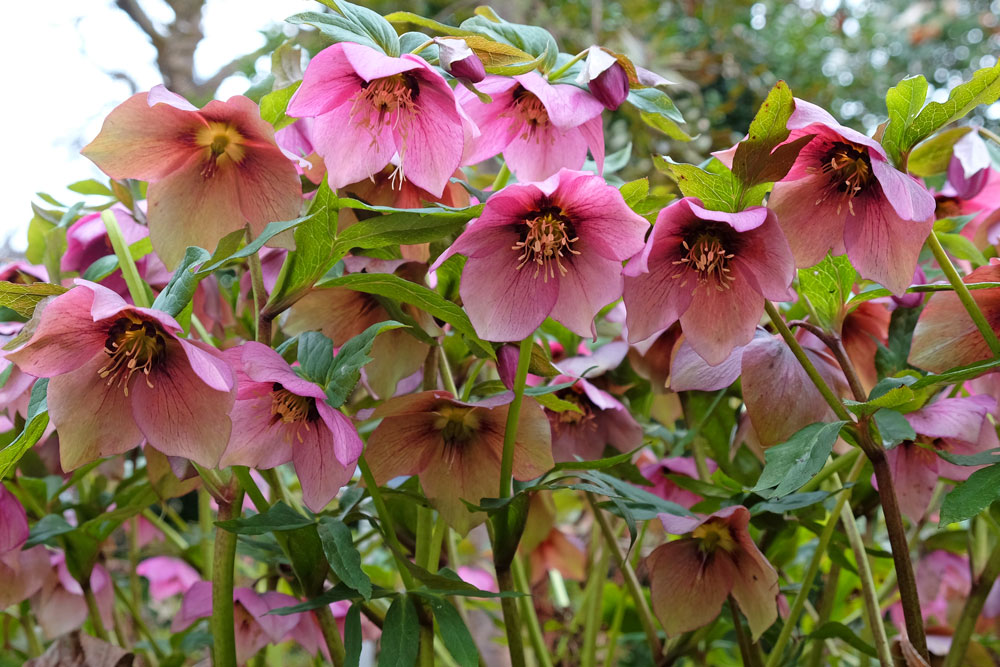
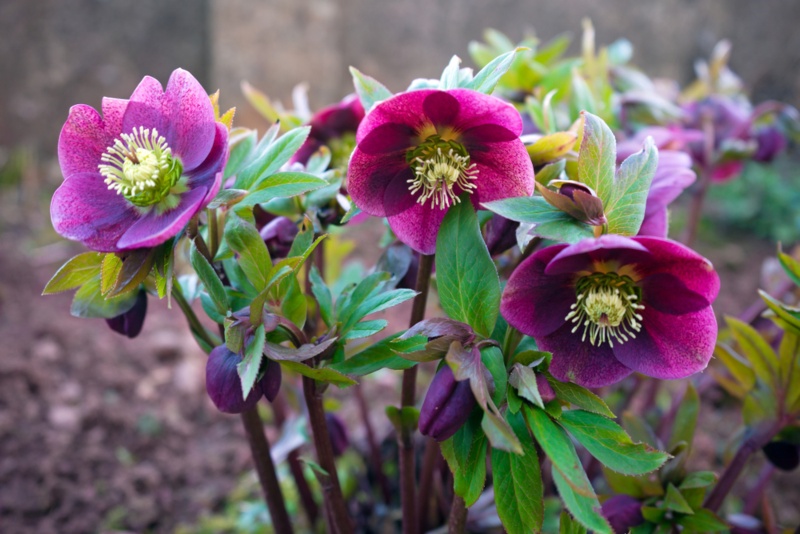
1. Hellebore (Helleborus)
Zones 4–9
If I could only plant one thing in dry shade, it might be this one.
Hellebores bloom in late winter or very early spring when almost nothing else has the nerve to show up. The leathery evergreen leaves look good for much of the year, deer usually leave them alone, and established plants can handle dry shade better than many flowering perennials.
They are not always cheap, but they live for years and slowly bulk up into handsome clumps. Under trees, along a shady fence, or near the foundation on the north side of the house, hellebores earn their keep.
Give them decent soil, water them the first year, and then try not to fuss over them too much. They do not need much drama, which is exactly why I like them.
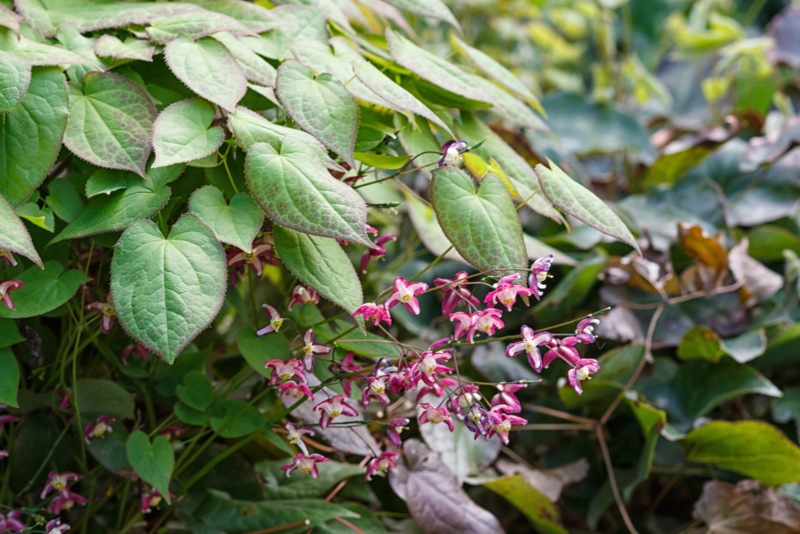
2. Barrenwort (Epimedium)
Zones 5–9
This is the dry-shade champion more gardeners should know about.
Barrenwort, also called epimedium, handles tree-root competition surprisingly well once established. It sends up delicate little spring flowers that look almost too dainty for such a tough plant. Then the heart-shaped leaves fill in and make a tidy, weed-discouraging groundcover.
It is not a plant that races across the bed overnight. In fact, the first year you may wonder if it is doing anything at all.
Be patient.
Once it settles in, epimedium becomes one of those plants you quietly appreciate every time you walk past it. It is especially useful under mature trees where other perennials sulk.
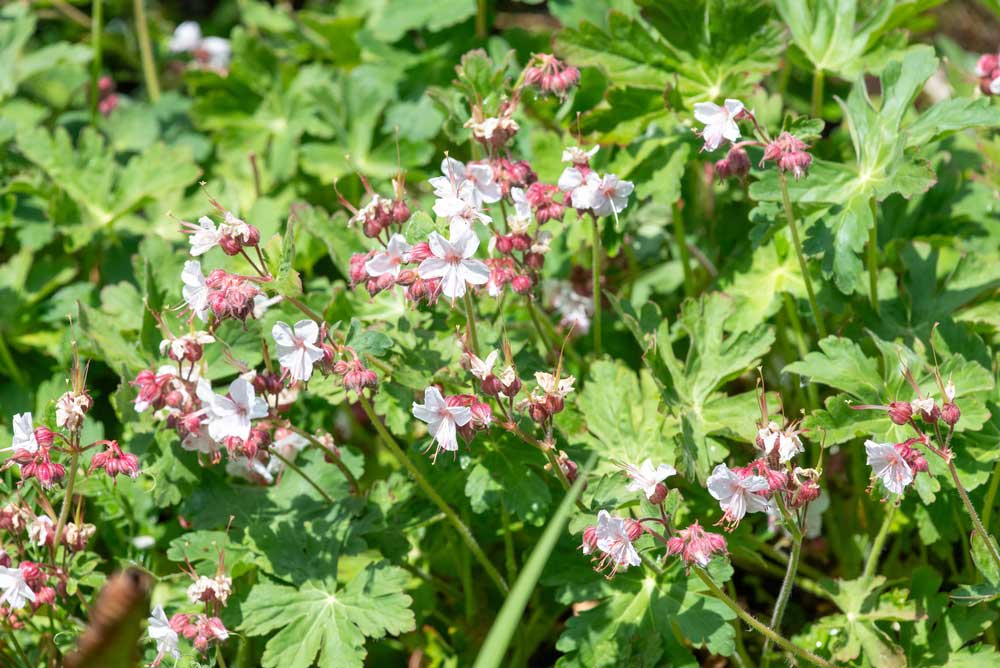
3. Bigroot Geranium (Geranium macrorrhizum)
Zones 4–8
This is not the geranium from the hanging basket section at the grocery store.
Bigroot geranium is a hardy perennial cranesbill with aromatic leaves, spring flowers, and thick rhizomes that help it handle dry spells. It spreads into a low, leafy carpet without feeling as aggressive as some of the more troublesome groundcovers.
The foliage has a spicy scent when brushed, which is a small free joy in the garden. Flowers are usually pink, magenta, or white, depending on the variety.
Use it along a shady walkway, under shrubs, or around the base of small trees. It is one of the better choices when you want something pretty, useful, and not painfully fussy.
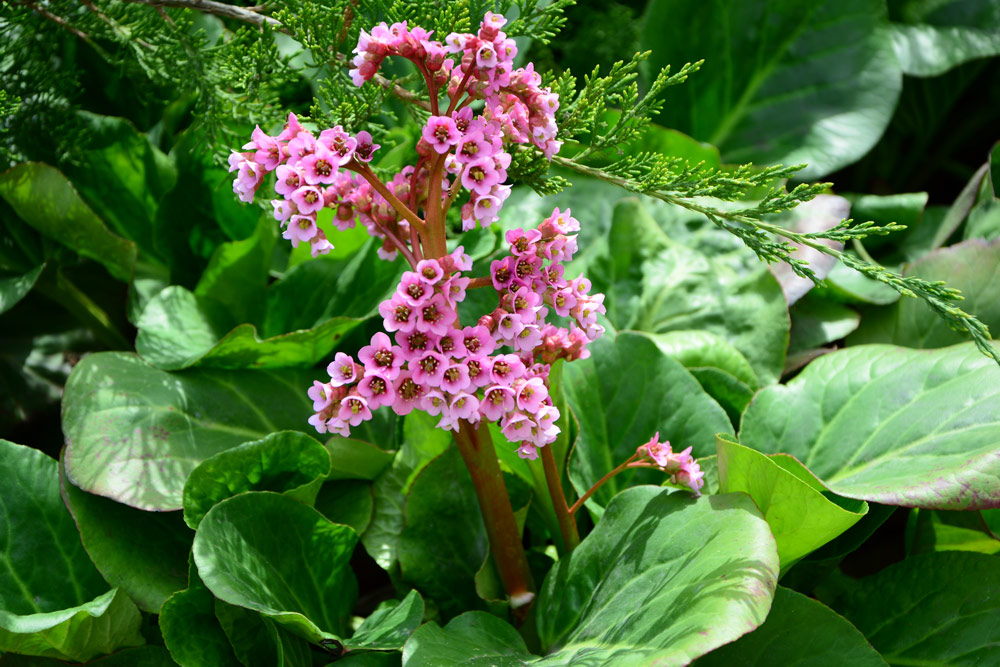
4. Bergenia / Pigsqueak (Bergenia)
Zones 3–8
Bergenia is the kind of plant that looks like it should be more delicate than it is.
The leaves are big, glossy, and almost leathery. In cold weather, they can take on burgundy or bronze tones, which gives a shady bed some color when everything else looks tired.
In spring, bergenia sends up clusters of pink or rosy flowers. And yes, it really is nicknamed “pigsqueak” because the leaves can squeak when rubbed between your fingers. I have tested this more times than a grown adult probably should. Worth it every time.
Bergenia does best with some moisture while it is getting established, but mature clumps can handle dry shade better than many flashier perennials.
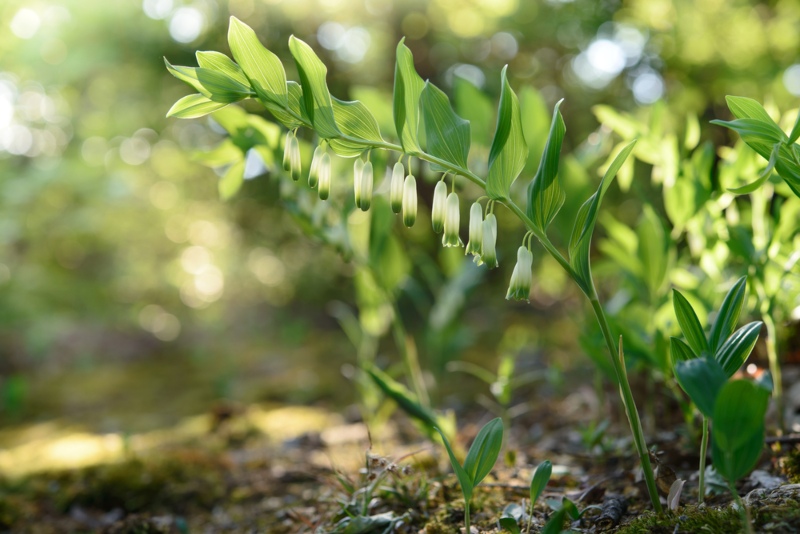
5. Solomon’s Seal (Polygonatum)
Zones 3–9
Solomon’s seal brings pure elegance to shade.
The arching stems carry little dangling white flowers in spring, almost like tiny bells tucked underneath the leaves. The variegated kinds are especially useful because they brighten dark corners without needing flowers to do all the work.
This is not a loud plant. It is graceful, quiet, and dependable.
Solomon’s seal spreads slowly by rhizomes, forming a natural-looking colony over time. It is lovely under deciduous trees, along woodland paths, or mixed with ferns and hellebores.
It appreciates a little care the first year, but once it settles in, it can handle more dry shade than its delicate appearance suggests.
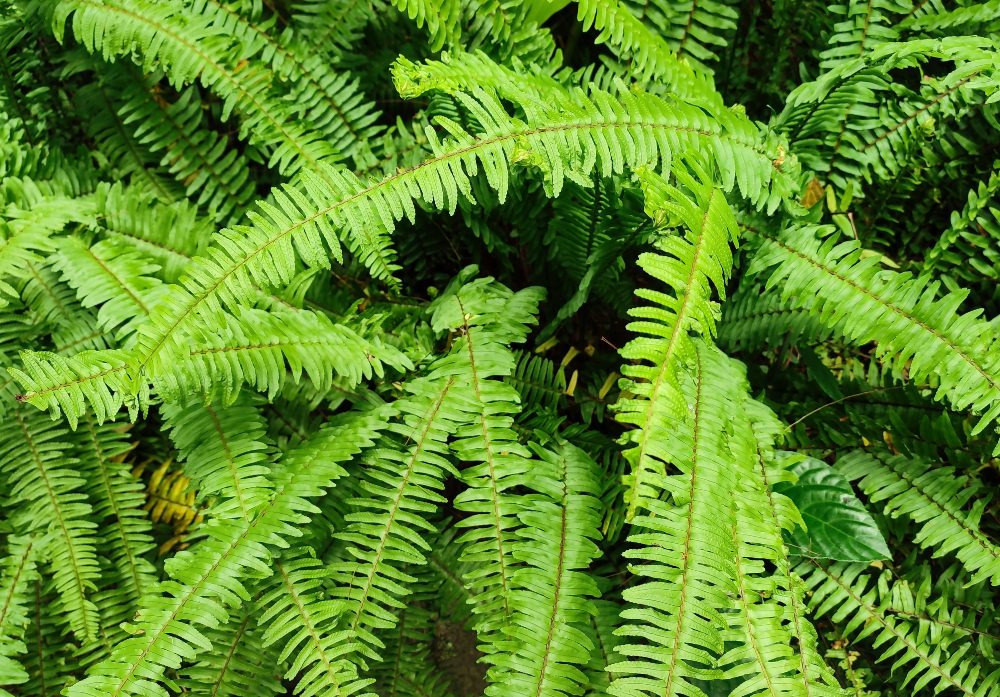
6. Christmas Fern (Polystichum acrostichoides)
Zones 3–9
Most ferns act like you personally betrayed them if the soil dries out.
Christmas fern is different.
This native evergreen fern has leathery green fronds that can stay handsome through winter, which is where the name comes from. It is one of the better fern choices for dry shade, especially compared with moisture-loving types that collapse the minute August shows up.
It looks best planted in loose drifts rather than one lonely fern sitting by itself like it missed the bus.
Try it under trees, along shady slopes, or in a woodland-style bed with hellebores and sedges. It brings that soft, ferny texture without demanding constant babysitting.
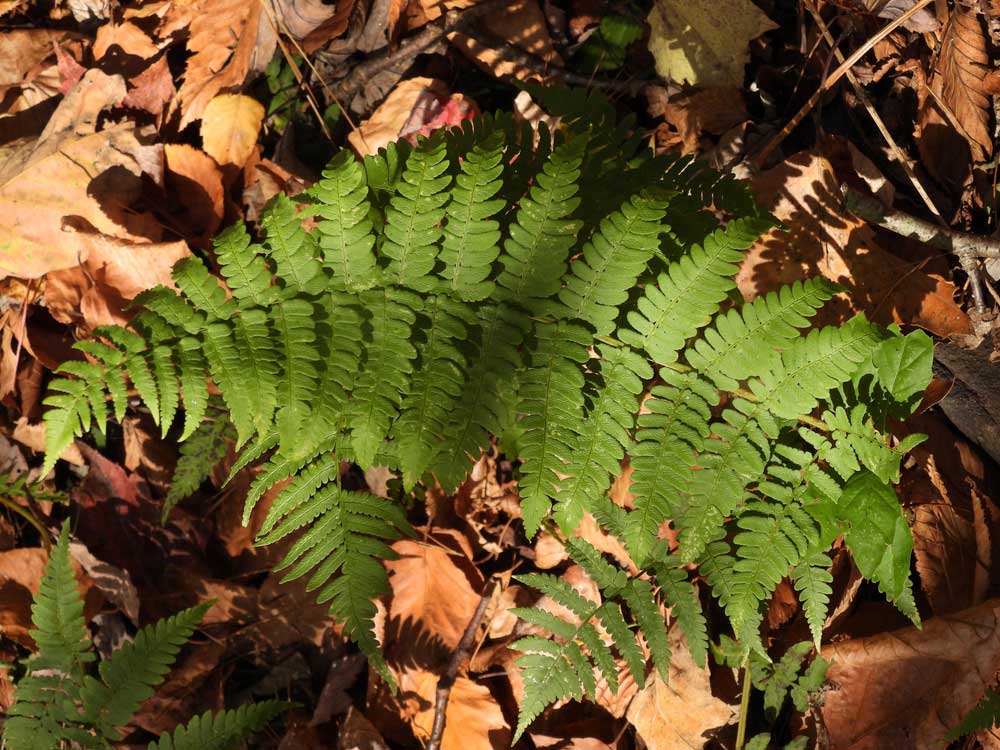
7. Marginal Wood Fern (Dryopteris marginalis)
Zones 3–8
If you want another fern that can handle less-than-perfect moisture, marginal wood fern is worth knowing.
It has sturdy, blue-green fronds and a classic woodland look. Like Christmas fern, it is tougher than many ferns in dry shade once established. It will still look better with mulch and occasional water during long dry spells, but it is not as dramatic as the moisture divas.
This is a great plant for naturalizing under trees or softening the edge of a shaded border.
Pair it with epimedium, Solomon’s seal, or wild ginger for a layered woodland effect that feels calm instead of cluttered.
8. Autumn Fern (Dryopteris erythrosora)
Zones 5–9
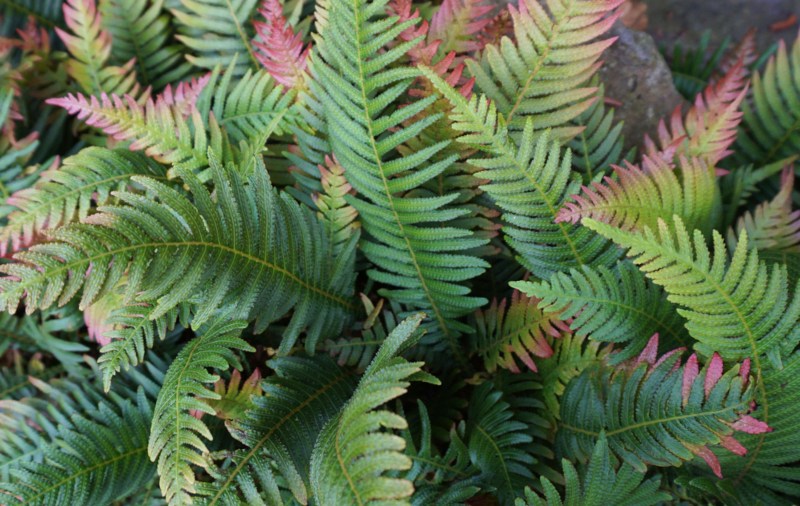
Autumn fern earns its spot because of the color.
New fronds often emerge coppery, bronze, or rosy before maturing to glossy green. That fresh growth can make a dry, shady corner feel much more alive, especially in spring.
This fern is tougher than it looks, but I would not put it in the driest, most root-choked patch and expect miracles. Think of it as a good choice for dry-ish shade, not the dust bowl under an old maple with no mulch.
Give it leaf mulch, water it during its first year, and place it where it gets shade with at least a little organic matter in the soil.
9. Hardy Cyclamen (Cyclamen hederifolium)
Zones 5–9
Hardy cyclamen is a clever little plant.
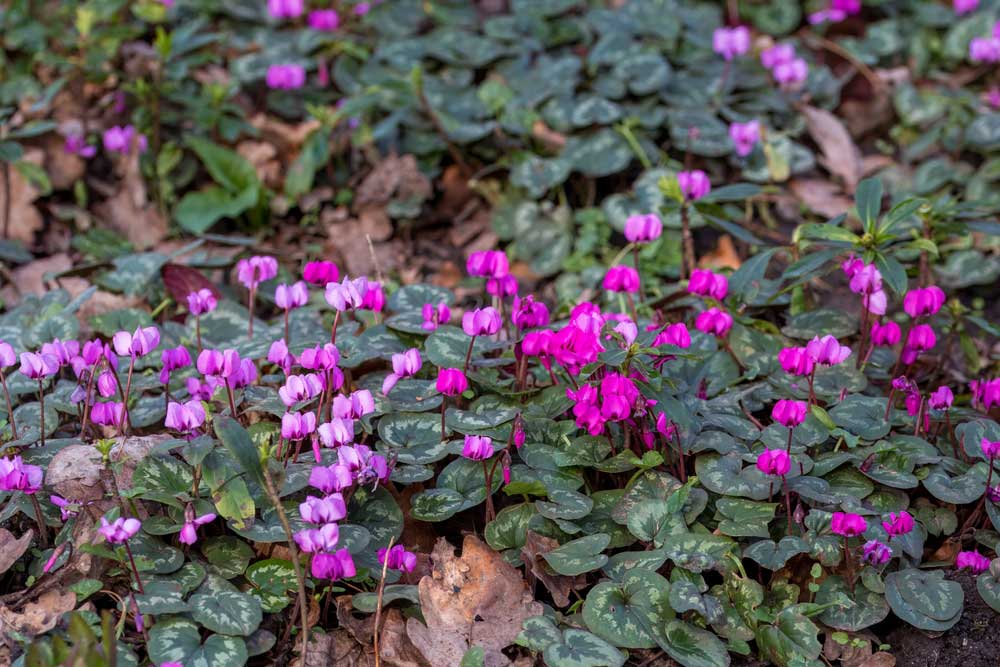
It grows when many other plants are winding down, then goes dormant during the hottest, driest part of summer. That makes it surprisingly useful under deciduous trees, where summer conditions can be brutal.
The flowers are small and swept back, usually pink or white, and the marbled leaves are just as pretty as the blooms. Over time, hardy cyclamen can seed around and form charming little colonies.
The trick is remembering where you planted it. Since it disappears during dormancy, it is easy to accidentally dig into the spot later.
Ask me how I know.
10. Pennsylvania Sedge / Oak Sedge (Carex pensylvanica)
Zones 3–8
If your dry shade needs something soft and grass-like, Pennsylvania sedge is a smart choice.
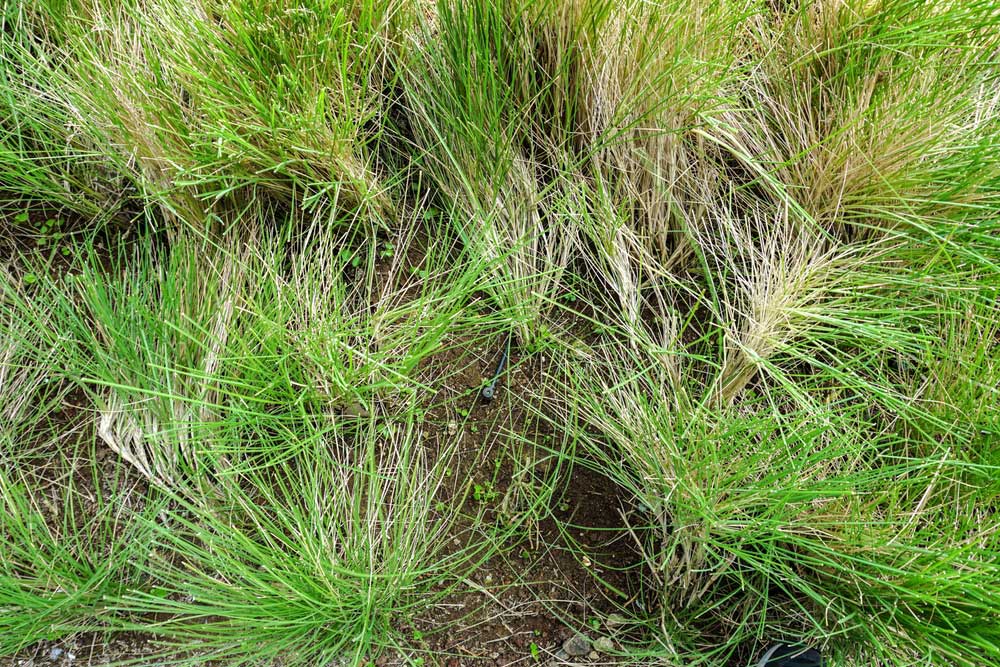
It forms low, fine-textured clumps that can slowly knit together into a natural-looking groundcover. Unlike lawn grass, it does not need full sun to look decent, and it can handle dry woodland conditions once established.
This is especially useful under trees where turf grass keeps failing.
It will not give you a bright flower show, but it does something just as valuable: it covers bare soil, softens the space, and makes the area look intentional instead of abandoned.
For a natural garden, shady slope, or tree understory, this one is a quiet workhorse.
11. Plantain-Leaf Sedge (Carex plantaginea)
Zones 4–8
Plantain-leaf sedge has a bolder look than Pennsylvania sedge.
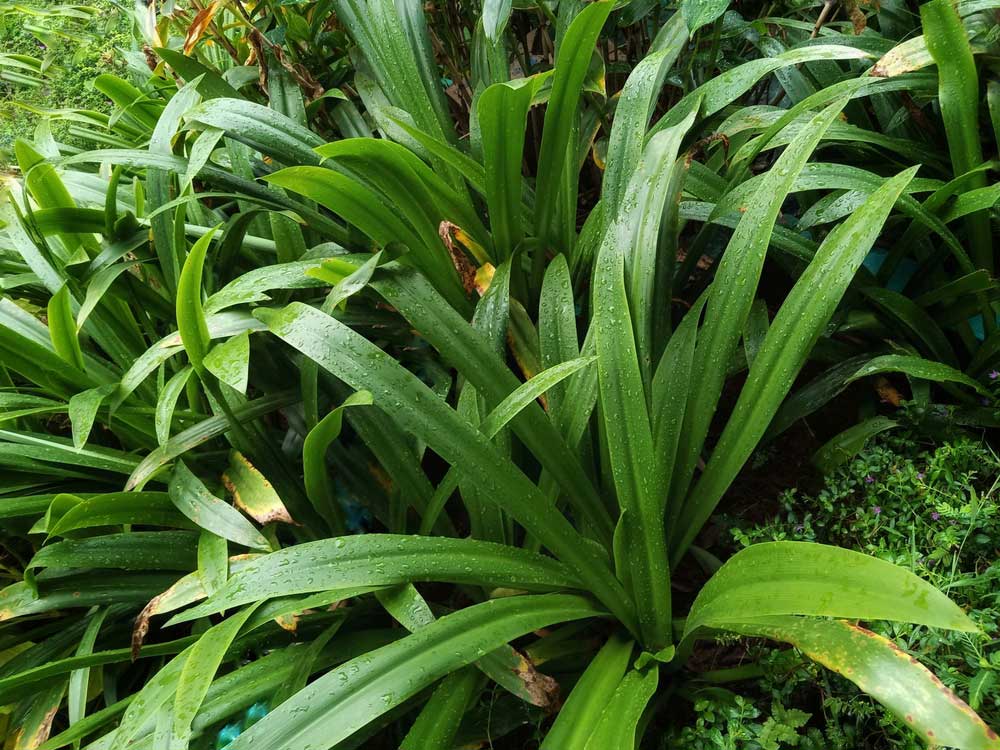
The leaves are wider, pleated, and almost tropical-looking, which makes it stand out in shade. It stays low and tidy, forming clumps that look good along paths or at the front of a shady bed.
It prefers decent soil, but once established, it can handle some dry shade better than many ornamental grasses or moisture-loving perennials.
Use it when you want texture more than flowers. It pairs beautifully with hellebores, ferns, and wild ginger.
This is one of those plants that makes a shady corner look designed, not just filled.
12. Barren Strawberry (Geum fragarioides / Waldsteinia fragarioides)
Zones 4–8
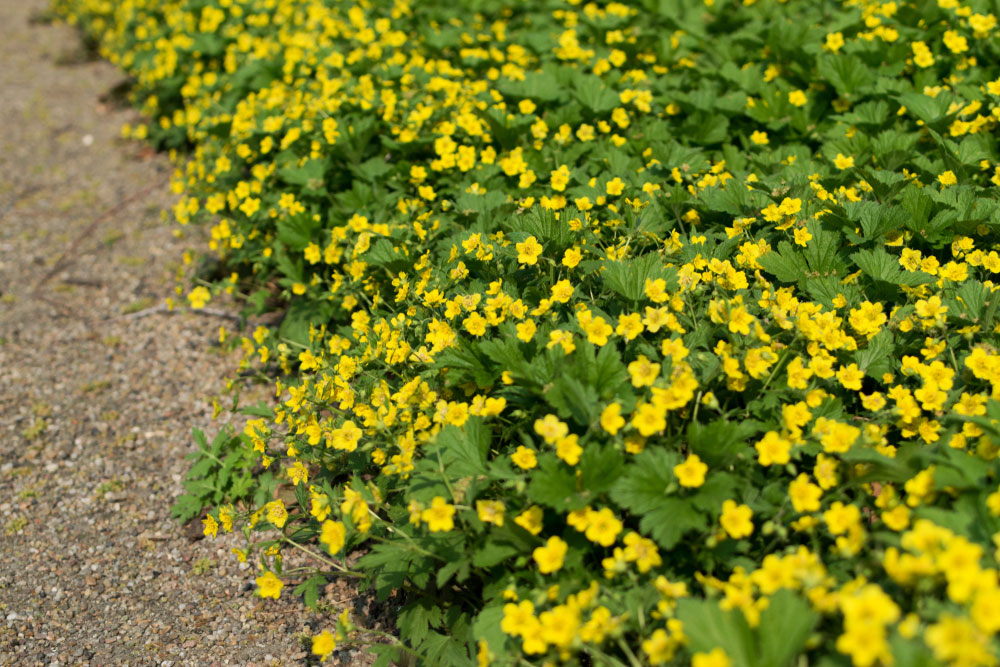
Barren strawberry looks a bit like a strawberry plant, but it is grown as an ornamental groundcover rather than for fruit.
It has low green foliage and cheerful yellow spring flowers that brighten up shade without demanding much attention. Once established, it can handle dry conditions better than many delicate-looking groundcovers.
This is a nice alternative if you want something that spreads, but you do not want to use the more aggressive groundcovers that can take over a bed.
It works well along woodland edges, under shrubs, or in a shady corner where you want a low, living carpet.
Give it water while it settles in, then let it do its thing.
13. Allegheny Spurge (Pachysandra procumbens)
Zones 5–9
If you like the idea of pachysandra but want a more interesting, less overused option, look for Allegheny spurge.
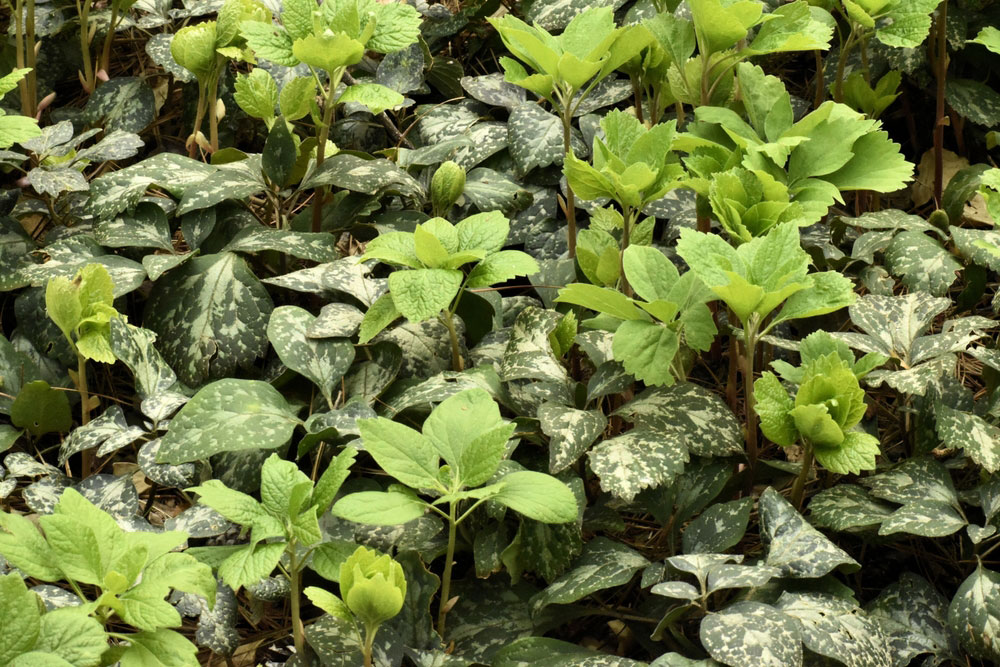
This is not the same as the common Japanese pachysandra you see carpeting older landscapes. Allegheny spurge is a native woodland groundcover with mottled leaves and a softer, more natural look.
It is not as fast or dense as Japanese pachysandra, which is actually a good thing in many home gardens. It fills in gradually without looking like green outdoor carpet.
Allegheny spurge appreciates humus-rich soil and some moisture while establishing, but it can handle dry shade once it has settled in.
It is a lovely choice under trees, especially if you want a calmer, woodland-style planting.
14. Wild Ginger (Asarum canadense)
Zones 3–8
Wild ginger is not flashy, and that is part of its charm.
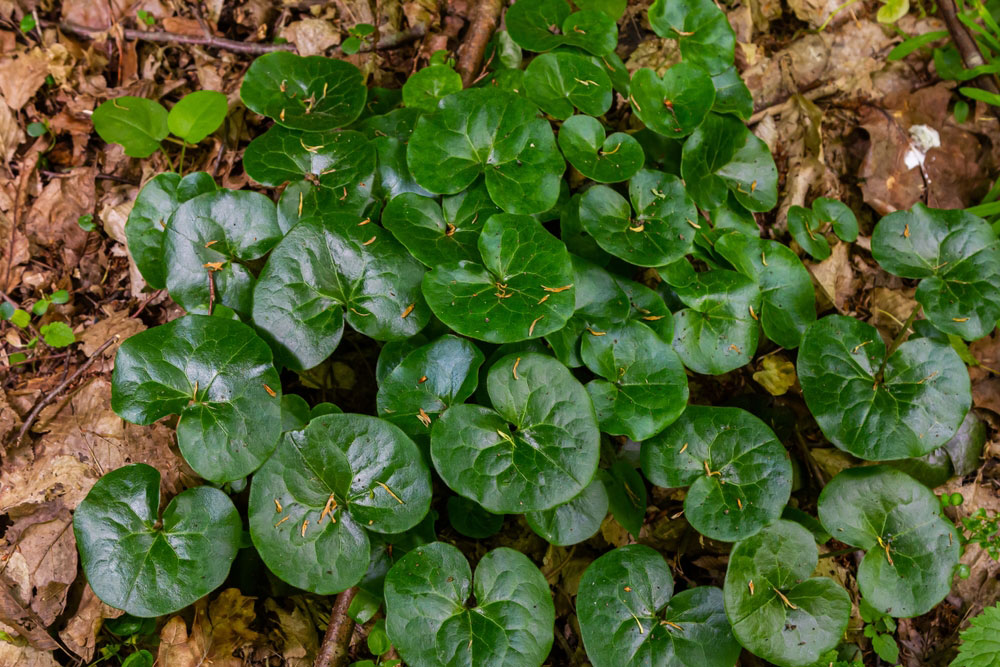
The heart-shaped leaves form a low, soft groundcover in shade. The unusual little flowers hide near the soil, so this is not a plant you grow for big color. You grow it because it makes dry shade look lush, quiet, and natural.
It prefers woodland soil with leaf litter, so mulch matters here. If your shady corner is dry because of tree roots, give wild ginger compost and shredded leaves to help it settle in.
Once established, it can tolerate more dryness than many shade plants, especially in a naturalized bed.
This is a good choice for gardeners who like subtle plants that reward a closer look.
15. White Wood Aster (Eurybia divaricata)
Zones 3–8
Here is a dry-shade plant that actually gives you late-season flowers.
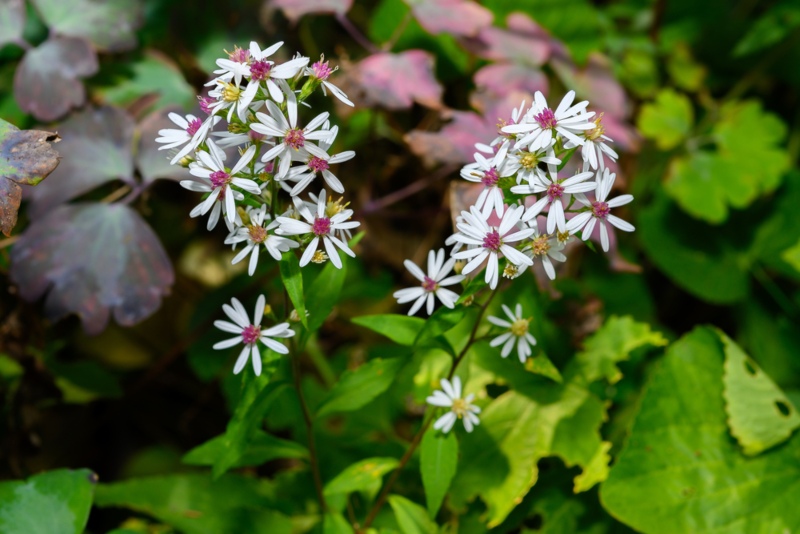
White wood aster has dark stems, airy white blooms, and a relaxed woodland look. It is not stiff or formal, which is exactly why it works so well under trees or along a shaded fence.
Many shade gardens look good in spring and then get boring by August. White wood aster helps fix that.
It can handle dry shade once established and is especially useful in native or naturalistic plantings. Let it weave through ferns, sedges, and Solomon’s seal for a loose, meadow-meets-woodland effect.
If you like everything clipped and tidy, this may not be your plant. If you like a little softness and movement, it is wonderful.
16. Blue-Stemmed Goldenrod (Solidago caesia)
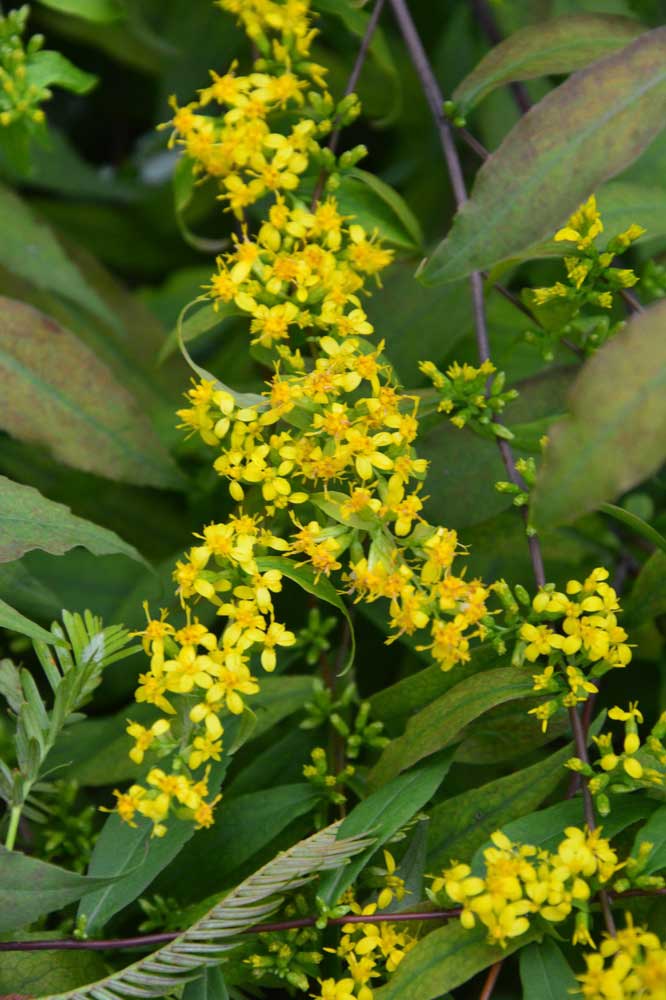
Zones 4–8
Do not let the word “goldenrod” scare you.
Blue-stemmed goldenrod is not the giant roadside bully people sometimes picture. It is a more refined woodland goldenrod with arching stems and small yellow flowers that appear in late summer to fall.
It handles part shade and dry woodland conditions better than many perennials, and it gives pollinators something valuable when the season is winding down.
This is a great plant for that awkward shady edge where you want flowers but do not want to water constantly.
It looks especially nice with white wood aster. The yellow and white together feel fresh without being too loud.
17. Wild Columbine (Aquilegia canadensis)
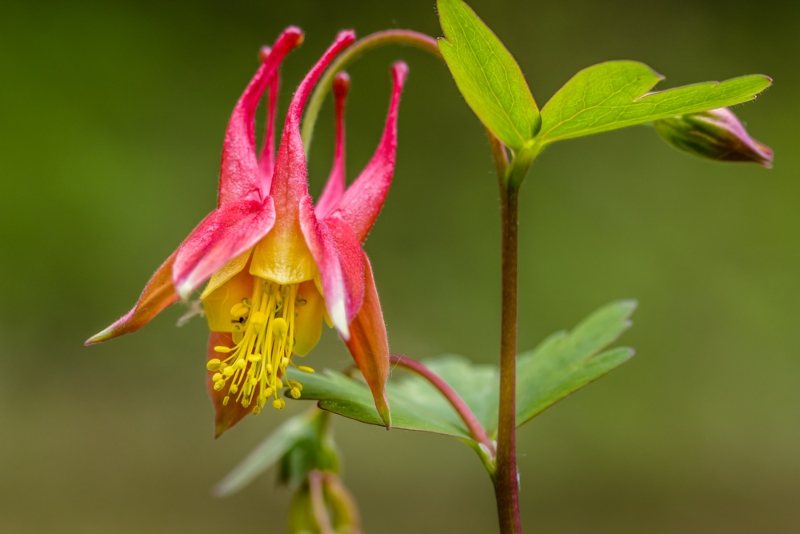
Zones 3–8
Wild columbine is one of those plants that makes shade feel a little more magical.
The red and yellow nodding flowers appear in spring and are loved by hummingbirds. The foliage is delicate and pretty, but the plant is tougher than it looks.
It does best in part shade or dappled shade, especially in soil that is not completely baked dry. Still, once established, it can handle leaner, drier spots better than many spring bloomers.
Wild columbine may self-sow, but usually in a charming way rather than a “what have I done?” way. Seedlings are easy to move or remove.
Use it near ferns, sedges, and hellebores for a woodland planting with a little sparkle.
18. Coral Bells / Alumroot (Heuchera)
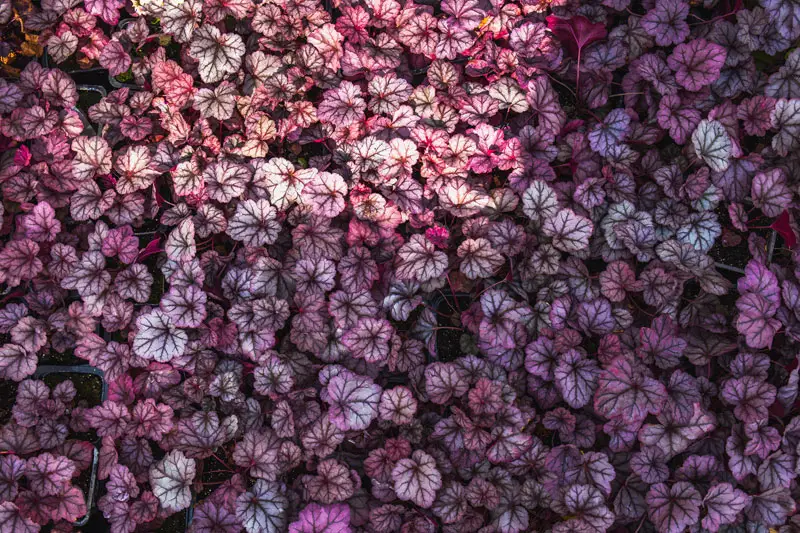
Zones 4–9
Coral bells are grown mostly for their foliage, which comes in just about every color a leaf has any business being: caramel, lime, plum, silver, bronze, and near-black.
But for dry shade, variety matters.
Some coral bells are much tougher than others. Look for heat-tolerant types and thicker-leaved varieties, especially those with Heuchera villosa in their background. These tend to hold up better in rougher conditions than the daintier, fussier kinds.
Coral bells still appreciate decent soil and some moisture, especially during their first year. I would not plant them in the absolute driest tree-root war zone and expect perfection.
But in dry-ish shade, they can bring color that most shade plants simply do not offer.
19. Lungwort (Pulmonaria)
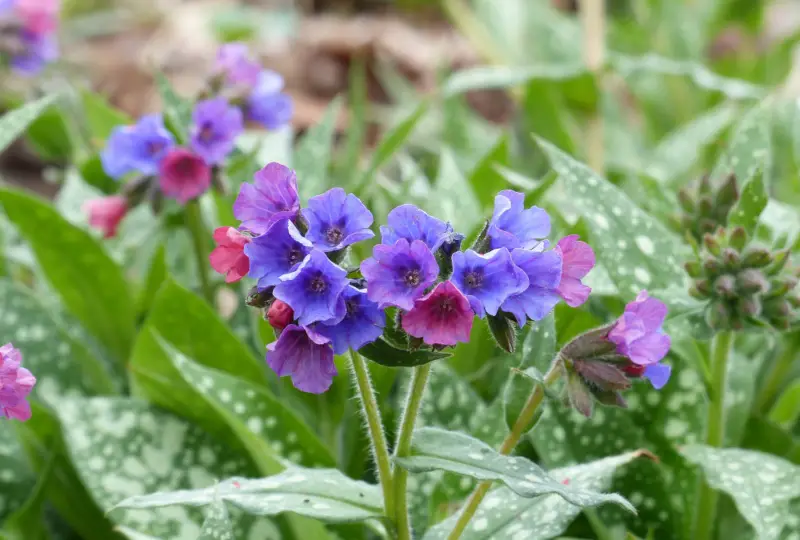
Zones 3–8
Yes, the name sounds like a Victorian ailment.
Push past it.
Lungwort has silver-spotted leaves and early spring flowers that often open pink and age toward blue or purple. It is one of the first pretty things to wake up in the shade garden, and bees appreciate those early blooms.
That said, I would not call lungwort a bone-dry shade plant. It does best in shade with decent soil and at least some moisture. In a dry corner, place it near the edge where it can get a little extra water, or tuck it into a mulched bed instead of planting it directly under the thirstiest tree roots.
So why include it? Because in the right dry-ish shade spot, it is beautiful, useful, and forgiving enough to earn a try.
Just do not make it your first choice for the harshest corner.
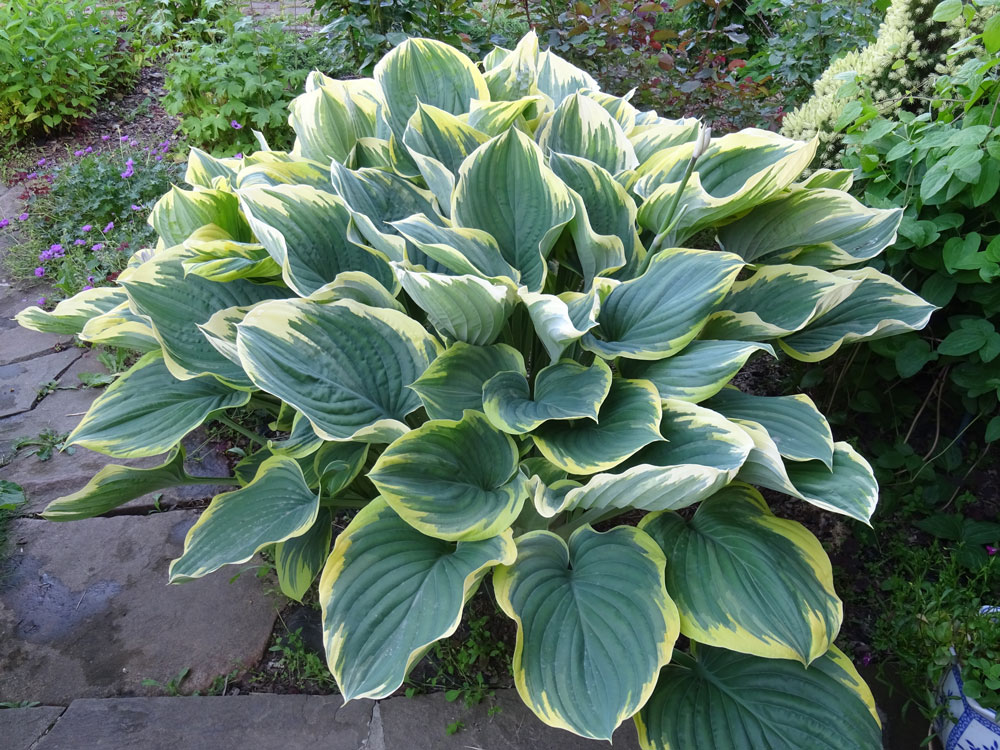
20. Hosta (Hosta)
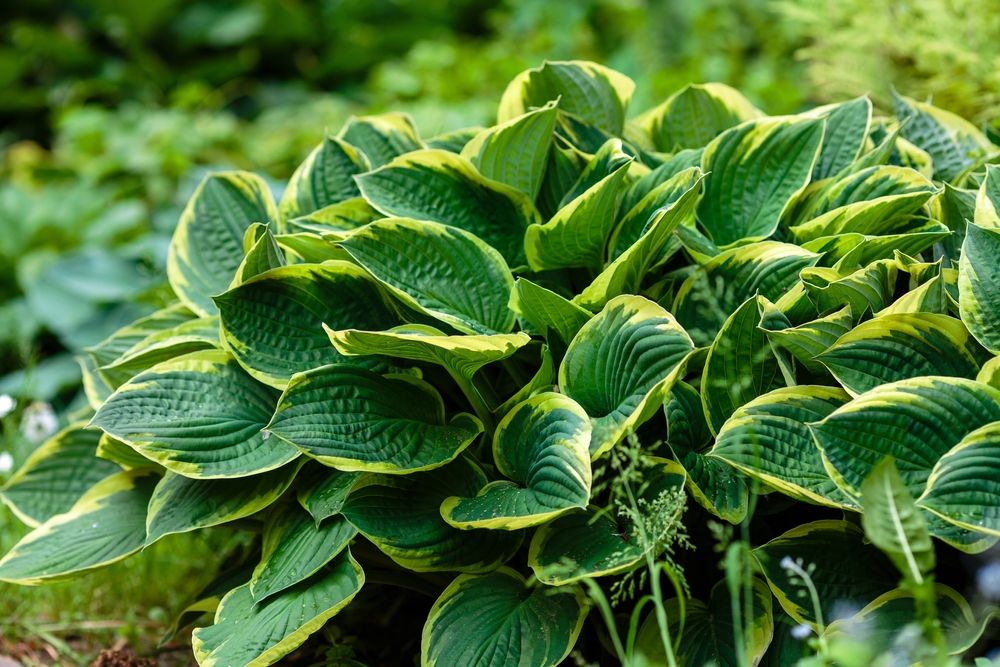
Zones 3–9
I know, I know. Everybody has hostas.
But there is a reason they are the default shade plant: they work.
The catch is that hostas handle dry shade much better once they are established. The thick, blue-leaved varieties are often better choices for dry spots because their waxy coating helps slow moisture loss.
That does not mean hostas want to live in dust. They will look bigger, fuller, and happier with regular moisture. But in a mulched, shady bed, mature hostas can forgive more than people think.
One honest warning: if you have deer, they may treat your hostas like an open salad bar.
If deer are a problem in your yard, start with hellebores, epimedium, ferns, or sedges instead.
So Which Ones Should You Actually Plant?
Here is my no-pressure advice: do not try to cram all 20 into one corner like I once tried to.
Note to self: a garden is not a stamp collection.
Pick three or four that match your zone, your soil, and how dry the spot really is.
If I had to hand you a starter combination, I would choose:
- Hellebores for winter and early spring flowers
- Epimedium for a tough, tidy groundcover
- Bigroot geranium for fragrance and weed-smothering foliage
- Christmas fern or Pennsylvania sedge for soft woodland texture
That combo alone can take a dead zone and make it look like you meant to plant it that way.
A few last things will stack the odds in your favor.
Water the first year, even the tough ones.
“Dry shade tolerant” is a promise the plant keeps after it has rooted in, not the day you bring it home from the nursery.
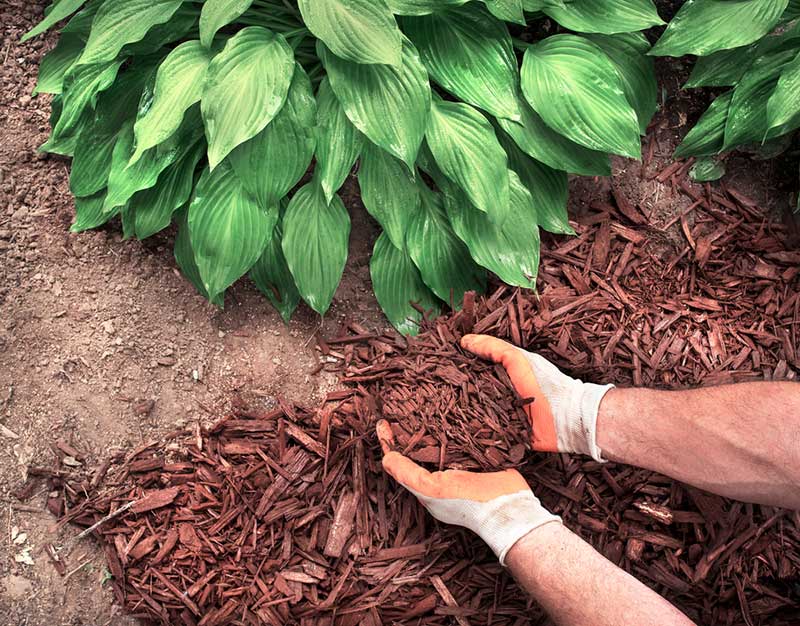
Mulch generously.
A couple inches of shredded leaves, pine bark, or composted leaf mold helps hold in moisture and slowly improves the soil. If you have mature trees, leaf mulch is your best friend.
Do not plant directly against giant tree roots if you can help it.
Dig carefully, avoid damaging major roots, and make a slightly wider planting pocket with compost mixed into the surrounding soil. You are trying to give the new plant a head start, not start a wrestling match with the tree.
Be honest about the spot.
There is dry shade, and then there is “nothing but dust and maple roots” dry shade. For the harshest spots, start with the toughest plants on this list: epimedium, bigroot geranium, Christmas fern, Pennsylvania sedge, barren strawberry, and hellebore.
And if a couple still do not make it?
Do not be mad.
Every garden has its own quirks, and that stubborn corner of yours might just have opinions of its own. Try another plant from the list and consider the lost one tuition in the school of dry shade.
We have all paid it.