Have you ever brought home a beautiful new houseplant and immediately started looking for a bigger pot? After all, more room for the roots means a bigger, healthier plant. Right?
Well, not always.
Believe it or not, some of our favorite houseplants are perfectly happy with their roots tucked into a smaller pot. A few may even produce more flowers when their roots are a little crowded.
And here’s the surprising part. Moving these plants into an oversized container can actually do more harm than good.
It all comes down to moisture. A pot that’s too large can hold more water than a small root system can use, leaving the soil wet for too long. That’s an invitation for root rot, and nobody wants that.
But there’s an important difference between a plant that enjoys a snug pot and one that’s practically bursting out of its container.
So, before you grab that bag of potting soil and start repotting every houseplant in sight, take a look at these 10 plants that prefer smaller pots or tolerate a little crowding.
You might discover that the best thing you can do for your plants is simply leave them alone!
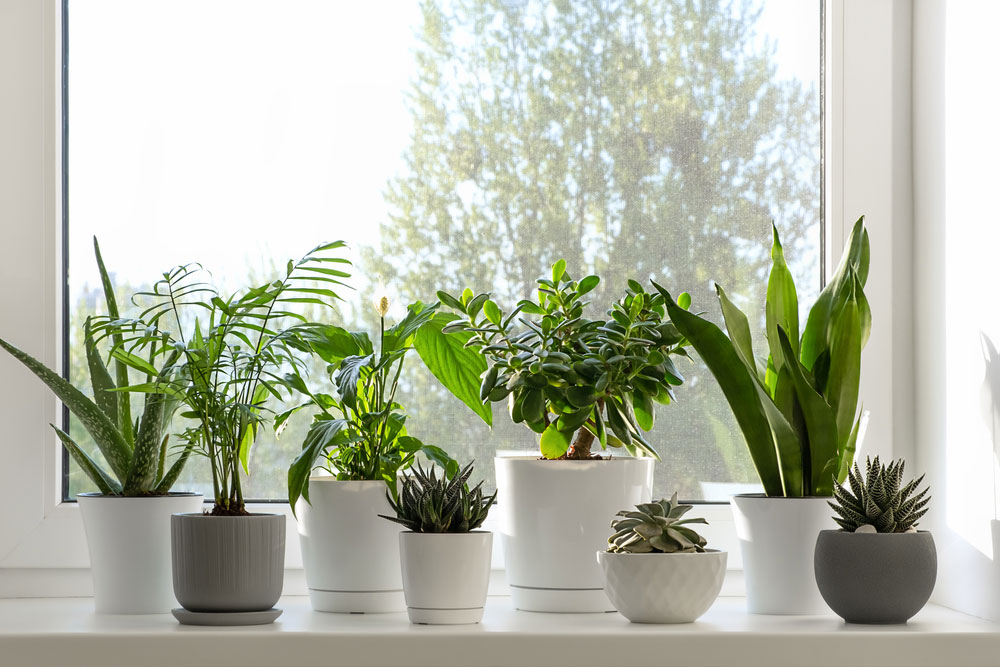
1. Snake Plant (Dracaena trifasciata)
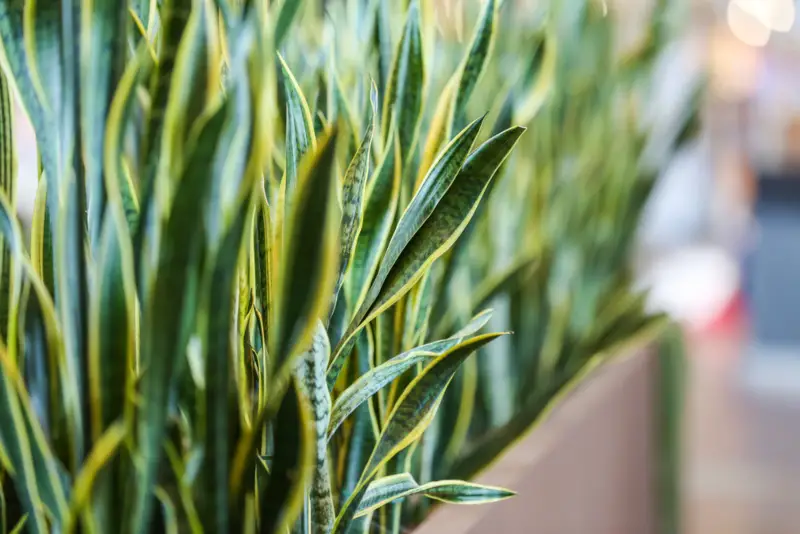
If there’s one houseplant that doesn’t need constant attention, it’s the snake plant.
These tough beauties are famous for surviving a little neglect, and that includes spending quite a bit of time in the same container.
Snake plants have thick underground stems called rhizomes that store water and produce new growth. They don’t mind a snug pot, and there’s no need to move them into a larger one simply because you spot a few roots near the drainage holes.
But don’t get too comfortable. Those expanding rhizomes can eventually become powerful enough to crack a ceramic or terracotta pot.
That’s one way to tell you it’s time to give your plant some extra space!
When to repot: When the pot begins to bulge or crack, the plant becomes unstable, or the roots are extremely crowded. Choose a container just one size larger and use a well-draining succulent potting mix.
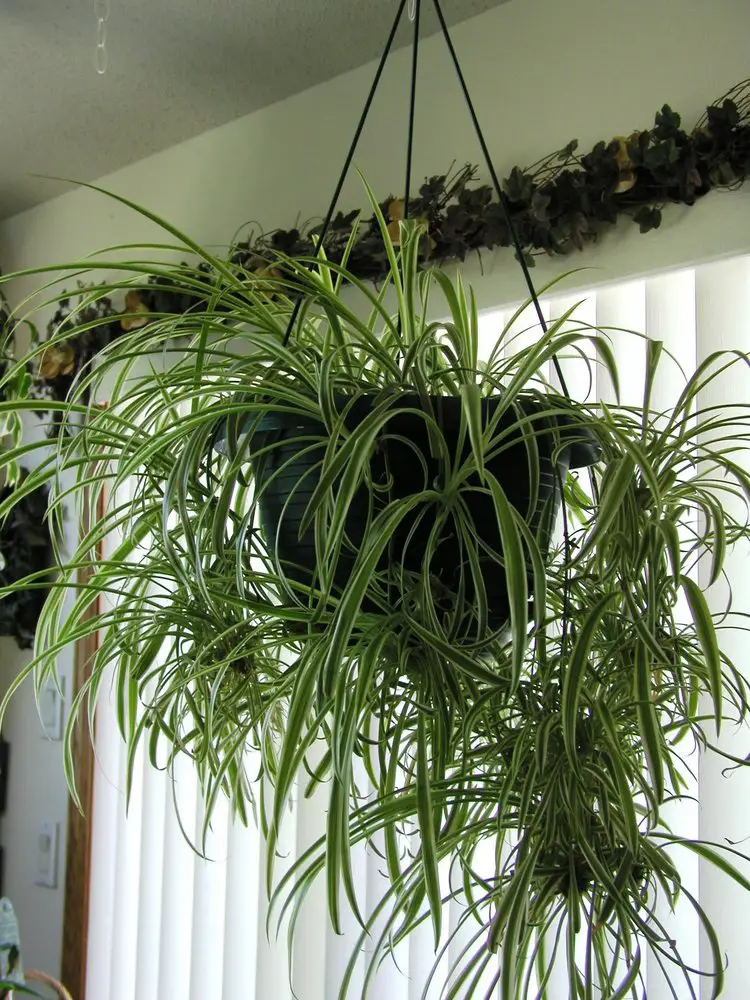
2. Spider Plant (Chlorophytum comosum)
Want more baby spider plants? You might want to hold off on that repotting project.
Spider plants are one of those houseplants that tolerate slightly crowded roots. Mature plants may produce lots of baby plants, also called spiderettes, although adequate light and growing conditions are important, too.
Those adorable little plantlets grow on long, arching stems and can eventually be removed to start an entirely new collection. Or you can leave them attached and enjoy the cascading display.
However, spider plants grow surprisingly thick, fleshy roots. Give them enough time, and they’ll fill just about any container you put them in.
A little crowding is fine. A solid mass of roots with practically no soil left? Not so much.
When to repot: When the soil starts drying out unusually quickly, growth slows, or the roots become excessively crowded. If your plant has become enormous, you can also divide it into several smaller plants.
For spider plants, the trick is finding that happy medium between slightly crowded and completely overgrown.
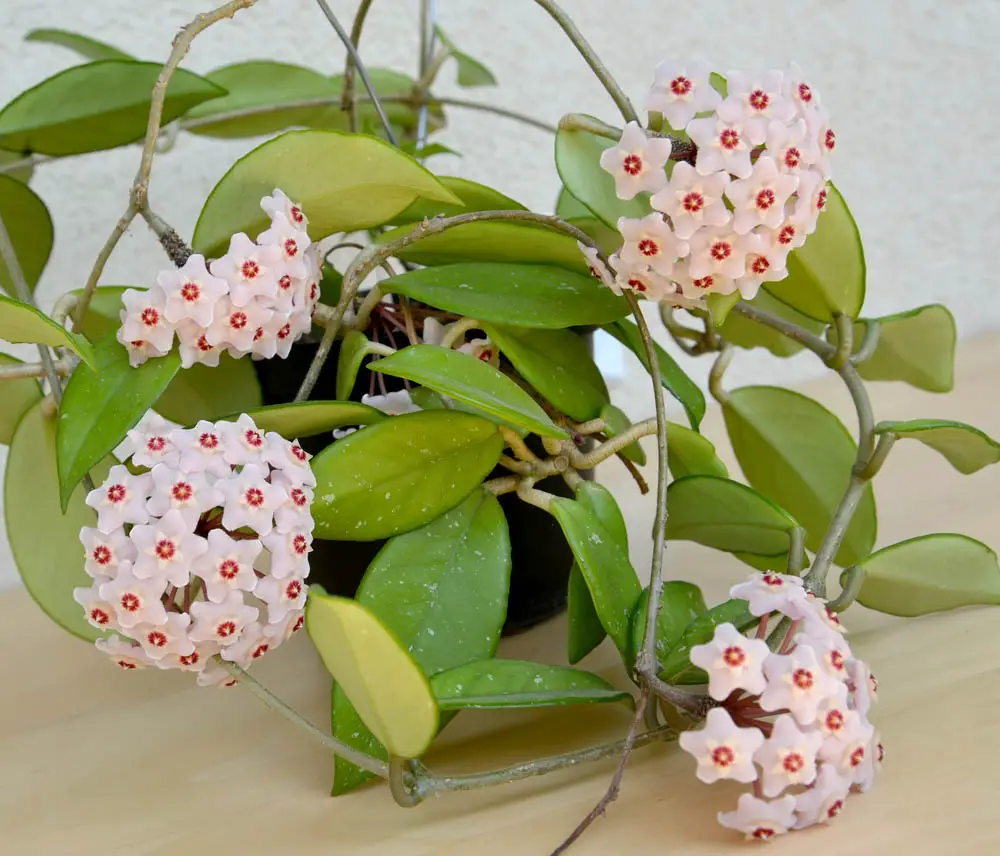
3. Hoya (Wax Plant)
If you’ve ever waited patiently for a hoya to flower, you’ll understand why this one deserves a place on our list.
Hoyas are beautiful trailing or climbing plants with thick, waxy leaves and clusters of star-shaped flowers. Some varieties even produce wonderfully fragrant blooms.
Here’s something worth knowing: many hoyas grow and flower happily when they’re slightly pot-bound.
These plants don’t appreciate having their roots surrounded by an enormous amount of damp soil. A smaller container, paired with a loose, airy potting mix, helps prevent excess moisture from collecting around their roots.
And since many hoyas aren’t in a hurry to outgrow their containers, they can often remain in the same pot for several years.
Of course, a snug pot isn’t the only secret to getting flowers. Your hoya also needs adequate light and appropriate watering.
When to repot: When the roots clearly outgrow the container or the potting mix breaks down and no longer drains properly. Spring is a good time to repot. Choose a container only slightly larger than the root ball.
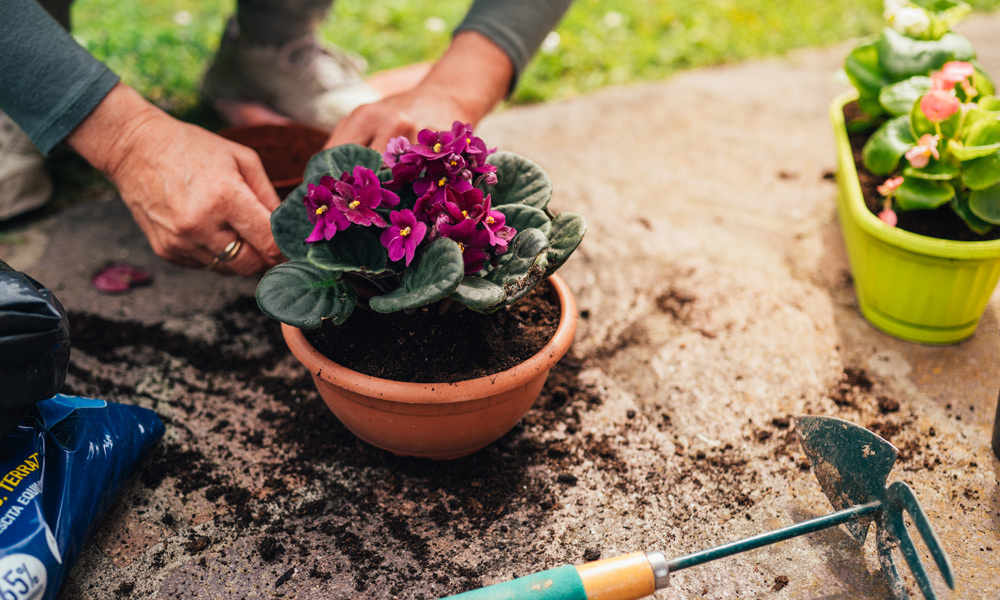
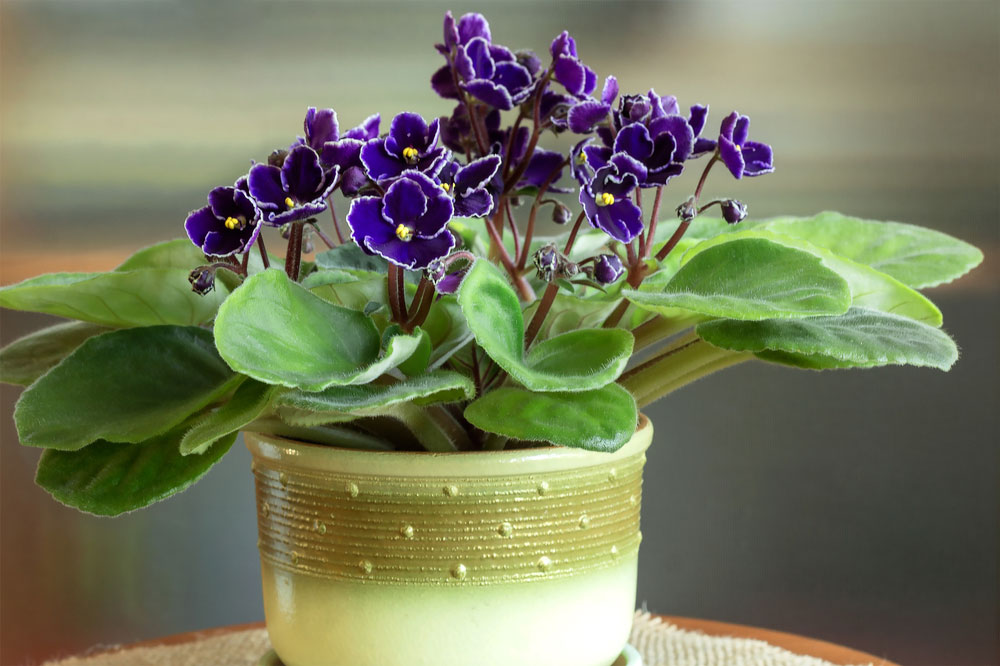
4. African Violet (Streptocarpus ionanthus)
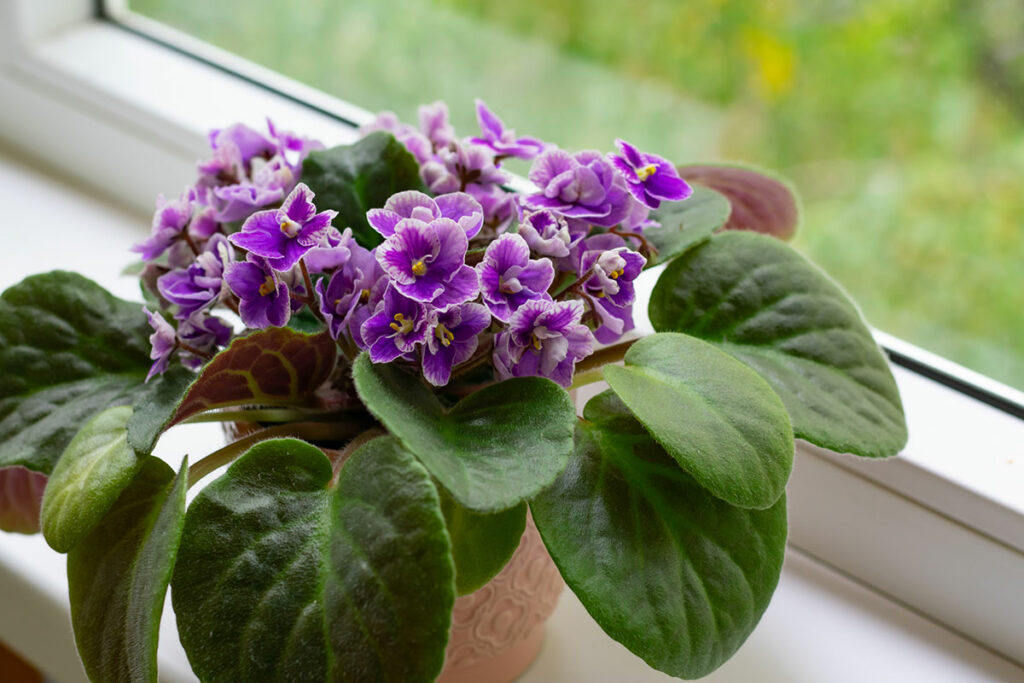
Don’t let those gorgeous flowers fool you. African violets can be surprisingly particular about their growing conditions, especially their containers.
One of the secrets to keeping African violets blooming is giving them a relatively small pot.
Unlike plants that need plenty of room to spread their roots, African violets often flower well when they’re slightly pot-bound.
A good guideline is to choose a pot approximately one-third the diameter of the plant’s leafy spread.
But here’s where things get interesting.
Just because African violets enjoy a smaller container doesn’t mean you should leave them in the same old soil forever.
Their delicate roots appreciate fresh, well-draining potting mix, and refreshing the soil helps keep these little flowering beauties healthy.
When to repot: Plan to refresh the potting mix about once a year. You can often reuse the same container rather than moving your violet into a larger one.
And don’t forget the other ingredients for beautiful blooms: bright, indirect light, consistent moisture, and a little fertilizer.
5. Holiday Cactus (Schlumbergera)
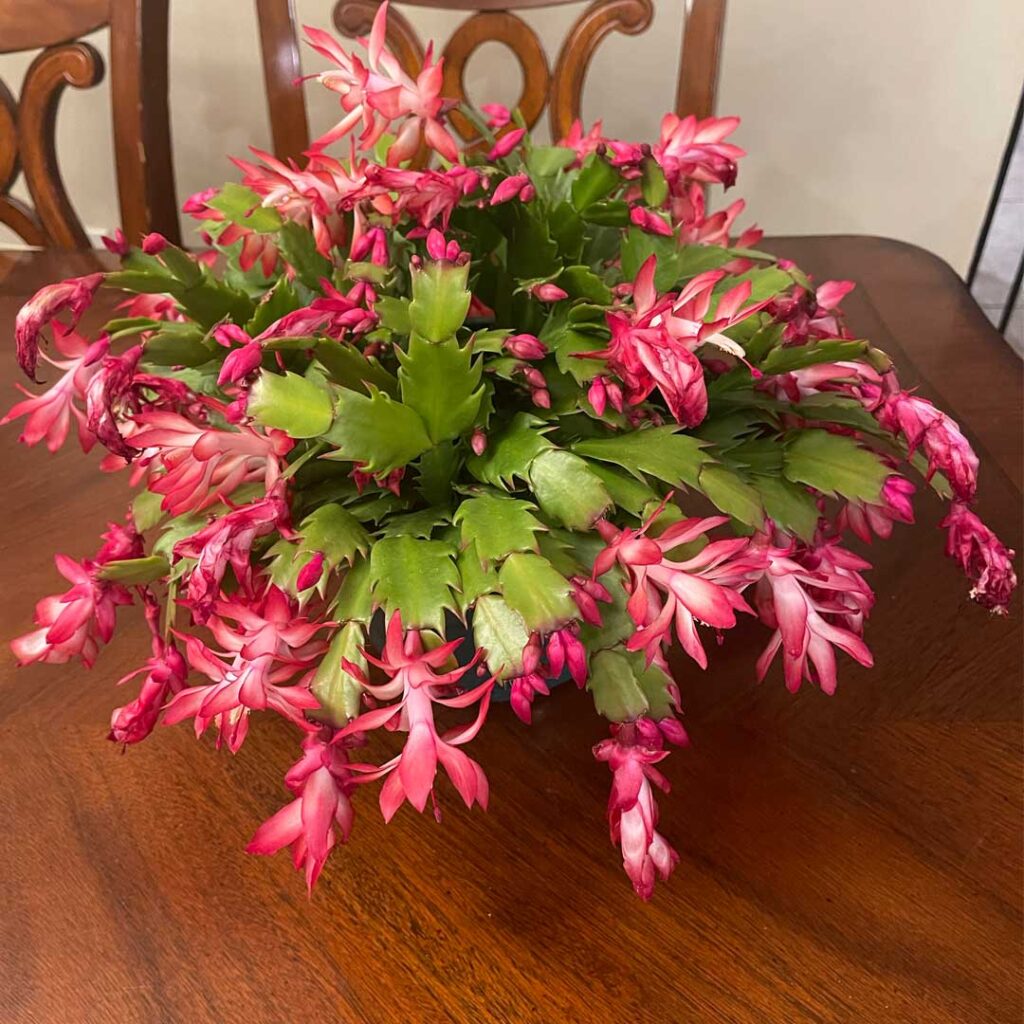
If your holiday cactus is growing happily in its current pot, here’s my advice: don’t be in a rush to disturb it!
Whether you have a Thanksgiving cactus or a true Christmas cactus, these beautiful holiday bloomers generally perform well when they’re somewhat pot-bound.
In fact, healthy holiday cacti may only need repotting about every three years.
These plants naturally grow in tropical rainforests, where their roots need plenty of air. An oversized container filled with soggy soil is hardly their idea of a comfortable home.
And if your plant is already developing flower buds, this definitely isn’t the time to start moving things around.
Sudden changes in its environment can cause those precious buds to drop before they ever open.
When to repot: After flowering, when the roots have become excessively crowded or the potting mix no longer drains properly. Choose a slightly larger container with good drainage. More information on repotting
One more thing: keeping your holiday cactus slightly pot-bound won’t guarantee flowers. Shorter days and cooler nighttime temperatures are important for encouraging those beautiful holiday blooms.
6. Clivia (Clivia miniata)
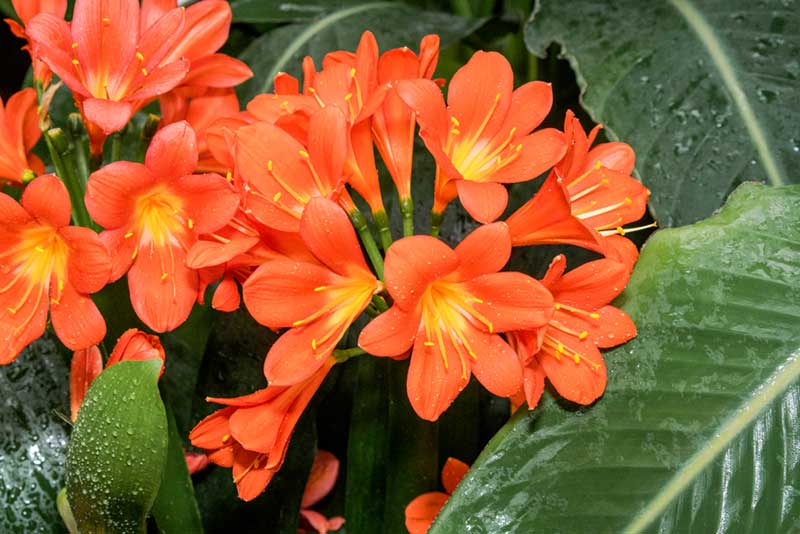
Looking for a flowering houseplant that doesn’t demand a new pot every spring? Meet the clivia.
With its long, glossy green leaves and spectacular clusters of orange, yellow, or red-orange flowers, clivia is one of those plants that looks far more demanding than it actually is.
And when it comes to repotting, less really can be more.
Clivias generally flower well when their thick, fleshy roots are a little crowded. They also dislike having their roots disturbed unnecessarily.
A mature plant can often remain in the same container for several years, making it an excellent choice if you’d rather spend your time enjoying flowers than wrestling with bags of potting soil.
However, clivias aren’t completely maintenance-free. They need appropriate light, careful watering, and a cooler resting period to encourage flowering.
When to repot: Approximately every three to five years, or when the roots become tightly packed and begin escaping through the drainage holes. After flowering is generally a good time.
When you finally give your clivia a new home, resist the temptation to choose a much larger pot. A little extra room is all it needs.
7. Amaryllis (Hippeastrum)
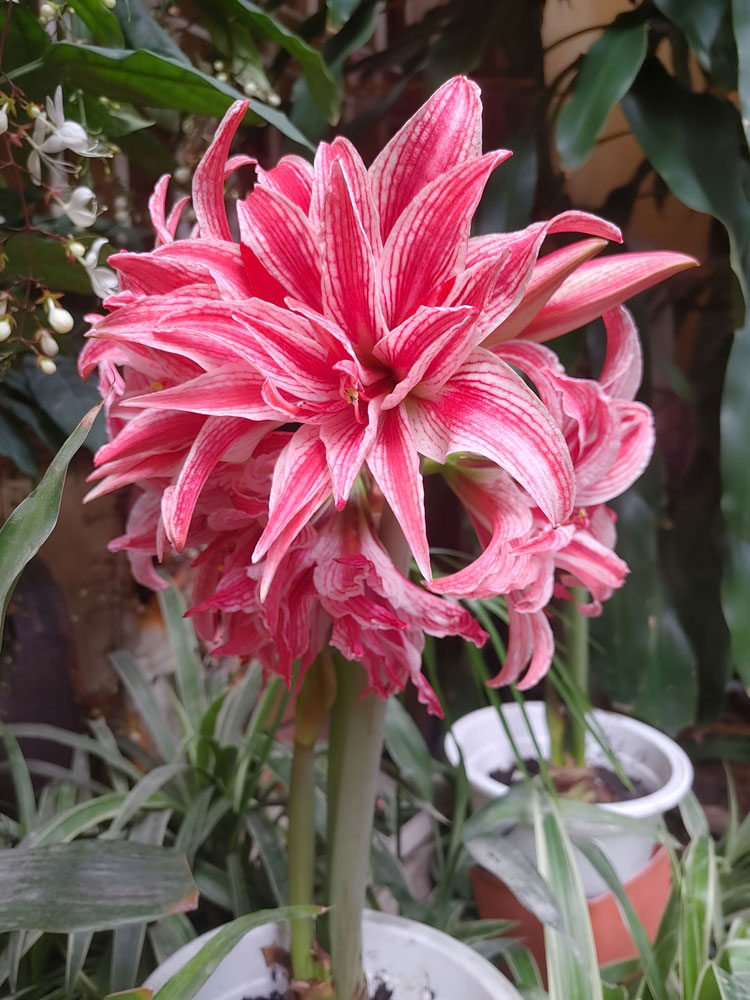
Here’s another flowering favorite that might surprise you.
Those enormous amaryllis flowers look as though they should need a huge container to support them. But the opposite is often true.
Amaryllis bulbs bloom beautifully when planted in narrow containers with very little extra space around the bulb.
For a single bulb, choose a pot approximately one to two inches wider than the bulb itself. Make sure it’s deep enough to accommodate the developing roots and sturdy enough to support those impressive flower stalks.
A little crowded? Absolutely. But that’s exactly how these plants like it.
There’s also no need to repot your amaryllis after every flowering season. Established plants can often remain in their containers for several years.
When to repot: Every three to four years, or when the bulb and its roots have clearly outgrown the container. Ideally, repot near the end of the plant’s dormant period, before active growth resumes.
Just remember that getting an amaryllis to bloom again also involves proper care after flowering. Those long green leaves help the bulb store the energy it needs for its next spectacular display.
8. Jade Plant (Crassula ovata)
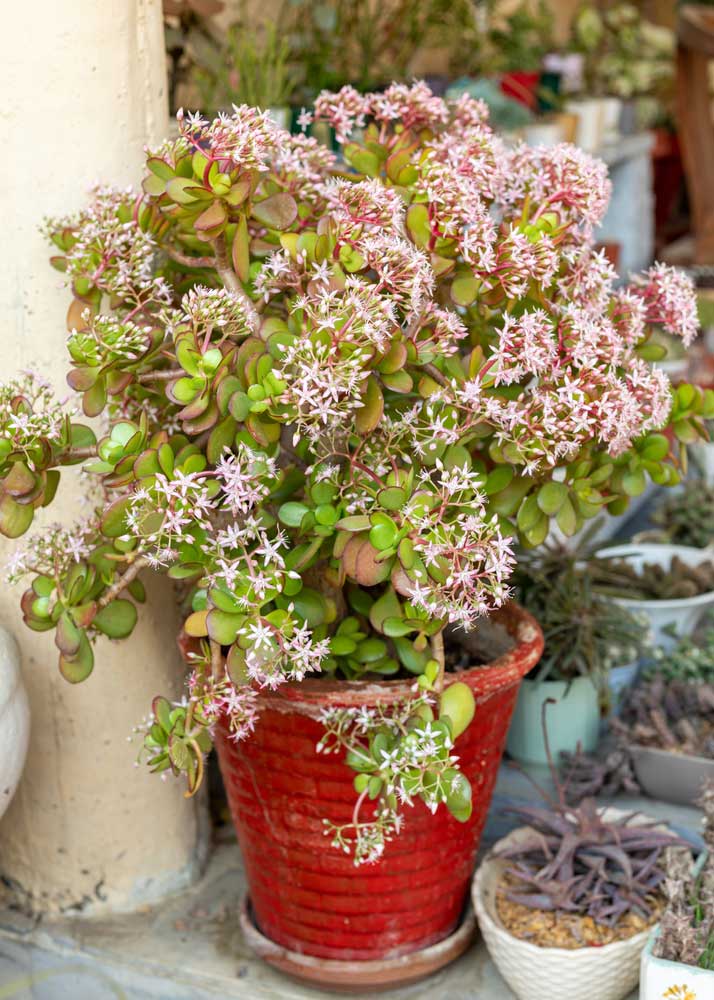
Jade plants are practically made for gardeners who prefer a more hands-off approach.
These beautiful succulents can develop thick, woody trunks and glossy green leaves, eventually resembling miniature trees.
But while the upper part of a mature jade plant can become quite impressive, its roots don’t necessarily need a giant container.
Jade plants tolerate being root-bound for surprisingly long periods. In fact, some can remain in the same container for years without much trouble.
What they don’t appreciate is sitting in excessively wet soil.
Because jade plants store water in their leaves and stems, they require less frequent watering than many other houseplants. A huge container filled with moisture-retaining potting mix can quickly become a problem.
Choose a sturdy pot with excellent drainage and a well-draining succulent mix instead.
When to repot: Generally every two to three years for younger plants, or as needed for mature specimens. Repot sooner if the plant becomes top-heavy, unstable, or severely root-bound.
As your jade plant grows taller, stability becomes increasingly important. A heavy container can help prevent your miniature tree from taking an unexpected tumble.
9. Peperomia (Peperomia spp.)
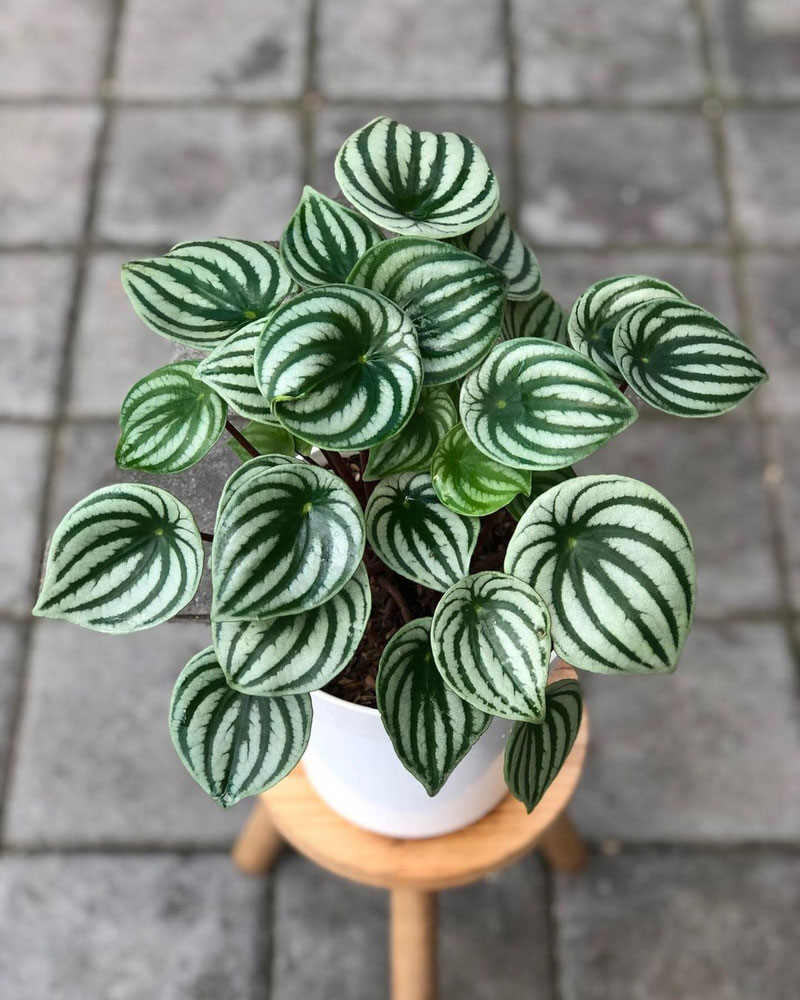
If you’ve ever admired those adorable little peperomias at your local garden center, here’s another reason to bring one home.
Many of these compact houseplants are perfectly suited to smaller containers.
From the glossy leaves of the baby rubber plant to the textured foliage of watermelon peperomia, there’s quite a variety to choose from.
Most peperomias grow relatively slowly and don’t need frequent repotting. Their modest root systems also make them particularly vulnerable to oversized containers.
Too much damp soil surrounding those roots can lead to root rot, especially if you’re a little too generous with the watering can.
And let’s face it, sometimes loving our houseplants a little too much is exactly what gets us into trouble!
When to repot: Usually every two to three years, or when the roots begin filling the container. Select a pot only slightly larger than the existing root ball.
A loose, well-draining potting mix and bright, indirect light will help keep most popular peperomias happy.
10. Cast-Iron Plant (Aspidistra elatior)
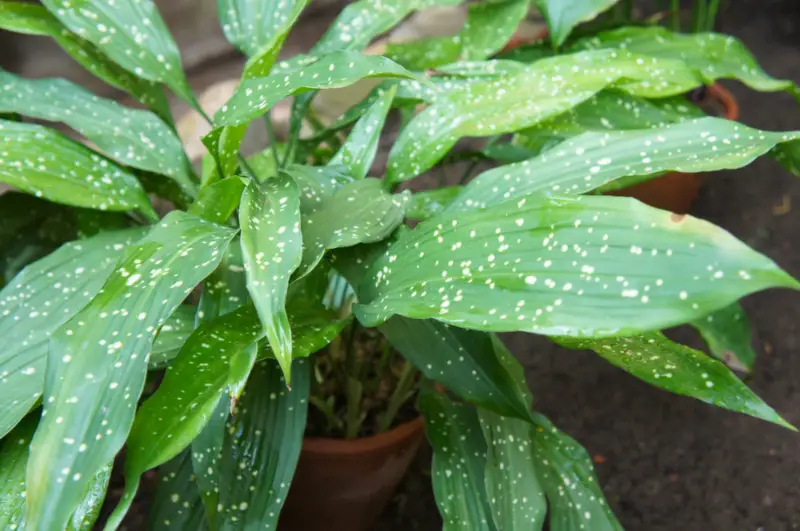
With a name like cast-iron plant, you’d expect this houseplant to be pretty tough.
And it certainly lives up to its reputation.
This old-fashioned favorite has been brightening up homes for generations, thanks to its ability to tolerate low light, occasional neglect, and less-than-perfect growing conditions.
But here’s something you might not know. Cast-iron plants also prefer not to have their roots disturbed too frequently.
These slow-growing plants can remain in the same container for several years. They’re quite happy with a slightly crowded root system and don’t need constant repotting to maintain their attractive, deep-green foliage.
Of course, that doesn’t mean you should ignore an overcrowded plant indefinitely. Its underground stems will eventually need some extra room.
When to repot: Approximately every three to four years, or when the plant has clearly outgrown its container.
Spring is a good time to repot. If your plant has grown into a particularly large clump, you can divide it and turn one houseplant into several.
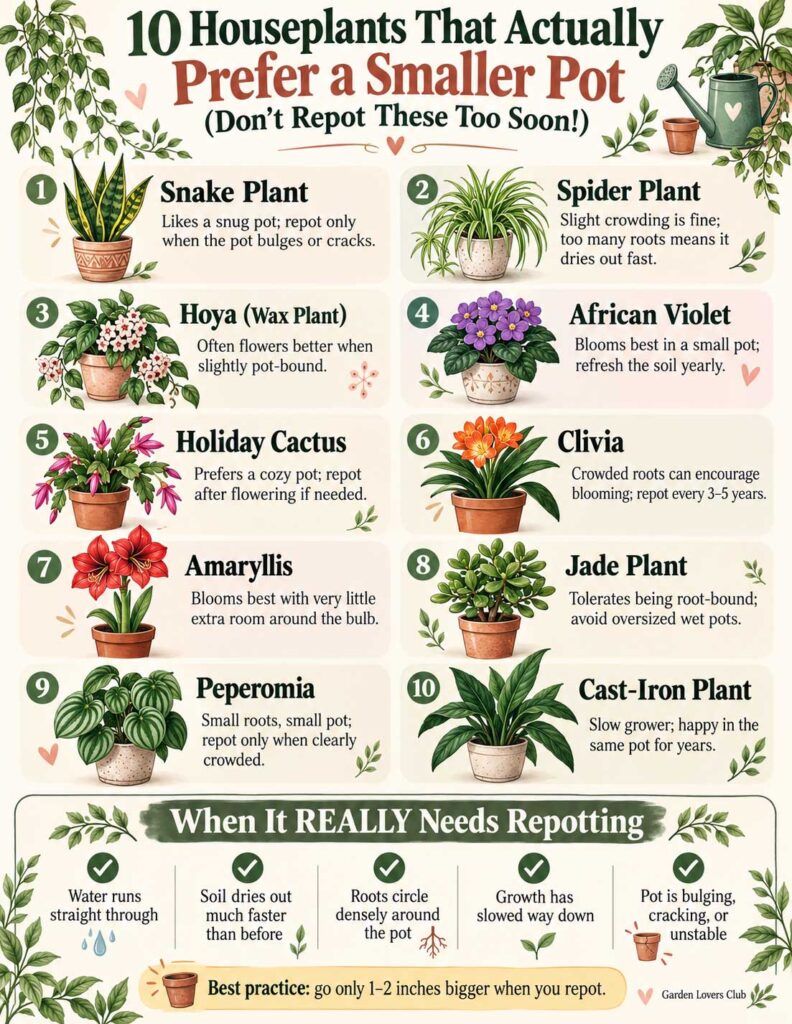
How Do You Know When a Houseplant Really Needs Repotting?
Now, before you decide that every plant on this list should spend the rest of its life in the same little pot, there’s something important to understand.
Slightly root-bound and severely root-bound are two very different things.
Even houseplants that enjoy crowded roots eventually need a little breathing room.
Here are some signs it’s time to investigate:
- Water runs straight through the pot without adequately soaking the soil.
- The potting mix dries out much faster than it used to.
- Roots are densely circling the bottom of the container, leaving very little soil.
- Your plant has stopped producing healthy new growth despite receiving appropriate light, water, and nutrients.
- The container is bulging, cracking, or becoming unstable.
You don’t necessarily need to repot the moment you notice a root peeking through a drainage hole. However, several of these symptoms together can indicate that your plant has become excessively root-bound.
When in doubt, gently slide the plant out of its container and inspect the roots before making a decision.
One Repotting Mistake You Should Avoid
Here’s a mistake that’s surprisingly easy to make.
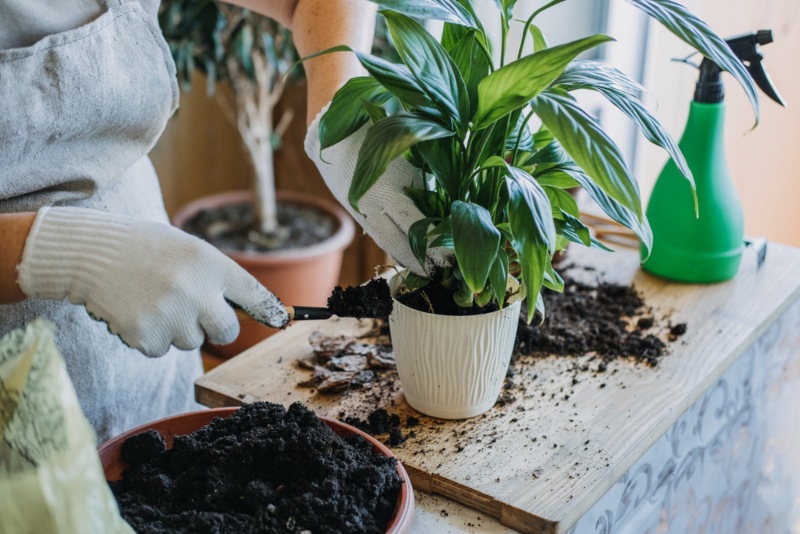
You notice that your houseplant is getting a little crowded, so you decide to give it plenty of room to grow. Instead of moving it into a pot that’s one or two inches wider, you choose a container that’s twice its original size.
More room means less repotting in the future, right?
Not necessarily.
When a small root system is surrounded by a large amount of potting mix, that extra soil can remain wet for longer than the plant can comfortably tolerate.
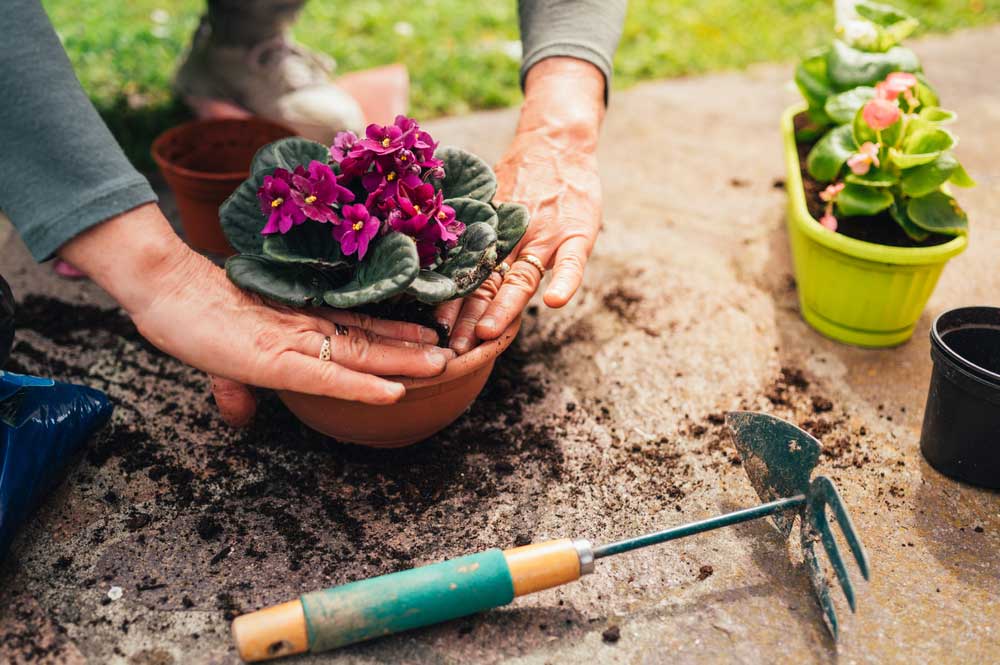
Depending on the plant and its growing conditions, this can increase the risk of root rot.
That’s particularly troublesome for plants like hoyas, peperomias, jade plants, and snake plants, which generally prefer their potting mix to dry out between waterings.
A better approach is to increase your pot size gradually.
For most houseplants, choosing a container just one or two inches wider than the existing pot is a good starting point. For smaller plants with delicate root systems, even less extra space may be appropriate.
And whatever container you choose, make sure it has adequate drainage holes.
Your houseplants will thank you!
Sometimes, Less Really Is More
Here’s the takeaway: not every houseplant needs a bigger pot to thrive.
Some of our favorite indoor plants grow perfectly well in snug containers, and a few flowering varieties may even perform better when their roots are slightly crowded.
Of course, there’s no need to let your plants become severely root-bound just to avoid repotting.
Pay attention to how quickly the soil dries, watch for changes in growth, and check the roots occasionally. Those simple observations will tell you far more than any rigid repotting schedule.
And the next time you’re tempted to move a perfectly healthy houseplant into a much bigger container, remember that sometimes the best gardening decision is to leave well enough alone.
One less repotting project on the weekend? Sounds pretty good to me!