Because your Holiday cactus deserves better than guesswork.
I’ll be honest with you. For years, my Christmas cactus sat on the same windowsill, looking perfectly fine – not spectacular, not dead, just… fine.
It bloomed every December out of sheer stubbornness, I think, because I certainly wasn’t doing anything particularly strategic about its care. Feeding it? Occasionally. With what? Whatever fertilizer was closest. On what schedule? Let’s call it “intuition.”
Then I started actually paying attention. And here’s what I discovered: Christmas cacti are not high-maintenance plants.
But they do have a rhythm – a predictable cycle of growing, resting, and blooming – and when you feed them in sync with that rhythm, the difference in bloom quality is genuinely remarkable.
We’re talking more buds, more color, and a plant that doesn’t look like it’s just surviving winter.
So I did what any curious gardener would do: I dug into the research, consulted the experts, and tested things myself.
What I found is a clear, month-by-month fertilizer routine that takes all the guesswork out of feeding your Christmas cactus.
Read on – whether you’re a seasoned plant parent or someone who’s been crossing their fingers every November, this guide is for you.
First, the Quick Overview
Before we go month by month, here’s the short version — the headline, if you will:
- Fertilizer type: Use a balanced, water-soluble houseplant fertilizer (look for something close to 20-20-20 or 20-10-20) diluted to half strength. Not full strength – half. These plants are sensitive to salt buildup, and more fertilizer is not better here.
- Feeding window: Feed monthly from early spring (March) through the end of August. After that, you back off and let the plant do its thing.
- Fall and winter: No fertilizer while the plant is budding or blooming. This is non-negotiable. Feeding during this phase can push the plant to grow foliage instead of flowers – and then you’ll be the person wondering why your Christmas cactus didn’t bloom at Christmas.
- Optional magnesium boost: Some gardeners swear by a monthly Epsom salt watering (1 teaspoon per gallon of water) during the growing season for extra lush growth. It can help – just never use it the same week as your regular fertilizer.
Good? Good. Now let’s break it down, month by month.
The Month-by-Month Fertilizer Guide
🌸 January & February — Rest. Just Rest.
Status: Your plant is likely still blooming or has just finished. It’s in full rest mode.
Fertilizer: None. Zip. Put the fertilizer bottle away.
I know it’s tempting to do something while you’re staring at it. But feeding a resting plant just leads to weak, leggy growth and salt buildup in the soil. Think of this as your plant’s January vacation. Let it be.
🌱 March — Wake-Up Call
Status: New stem segments start appearing as days lengthen. This is your green light.
Fertilizer: Start feeding once this month — balanced fertilizer, half strength, mixed right into your regular watering.
Optional: Give it one Epsom salt watering this month for a magnesium boost – just not the same week as the regular fertilizer.
Note to self: put a sticky note on the calendar so you don’t accidentally double up.
🌿 April — Settling Into the Groove
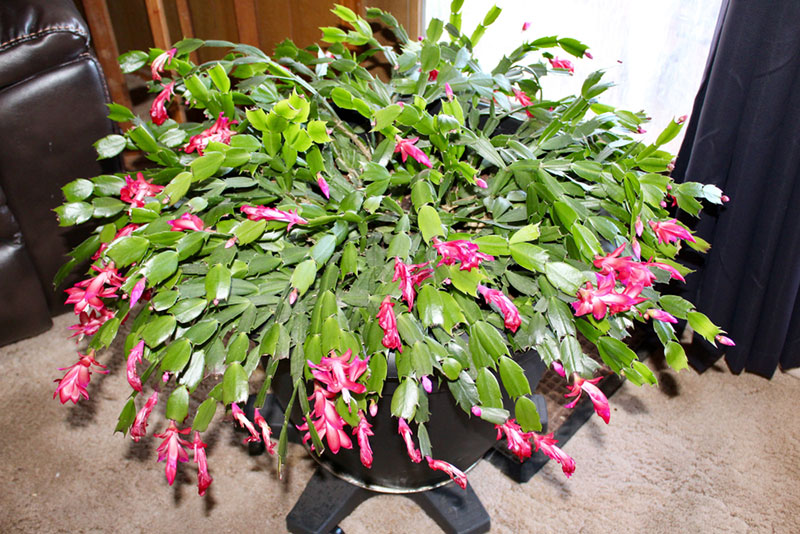
Status: Active vegetative growth. The plant is officially in its main glow-up era.
Fertilizer: Once this month, same balanced formula at half strength.
Optional: One Epsom salt watering in a separate week. Keep it simple — you’re building a routine here, not a PhD dissertation.
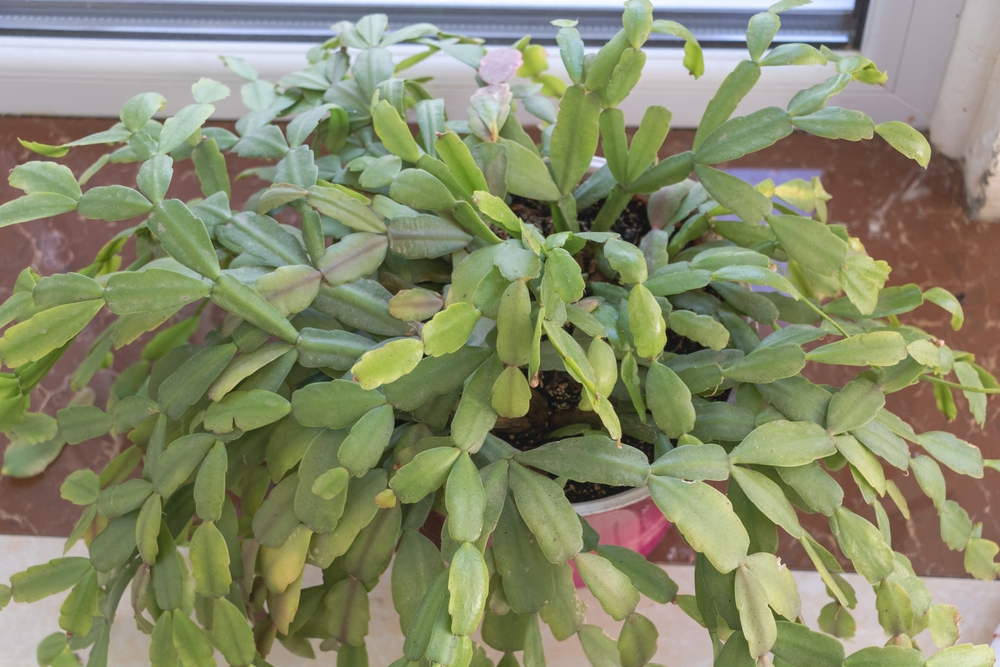
💪 May — Building Steam
Status: Strong growth. The plant is banking energy for next December’s big show.
Fertilizer: Once this month with balanced, half-strength fertilizer.
Optional magnesium watering this month — separate week. By now you’ve got this down to a rhythm.
☀️ June — Peak Growing Season
Status: This is your plant at its most productive and hungry.
Fertilizer: Once this month, balanced, half strength. Same routine, same result.
Optional: One Epsom salt watering. At this point, if you’ve been consistent, you should be seeing noticeably lush, healthy-looking segments. More power to you — it’s working.
🌞 July — Starting to Think Ahead
Status: Still growing, but you’re beginning to think about bud-setting season.
Fertilizer: Once this month, balanced, half strength. Consider this the last “full-growth” feed of the season.
Optional: One final magnesium watering. Enjoy the growing season while it lasts — things are about to shift.
🍂 August — Last Call
Status: Late growing season. The plant is wrapping up its vegetative work.
Fertilizer: One final half-strength balanced feeding this month — and then you stop. That’s it for regular fertilizer until next spring.
Optional: Last Epsom salt watering of the year, in a different week. Then cap the bottle and put it on the shelf. You’ve done your job — now let the plant do its.
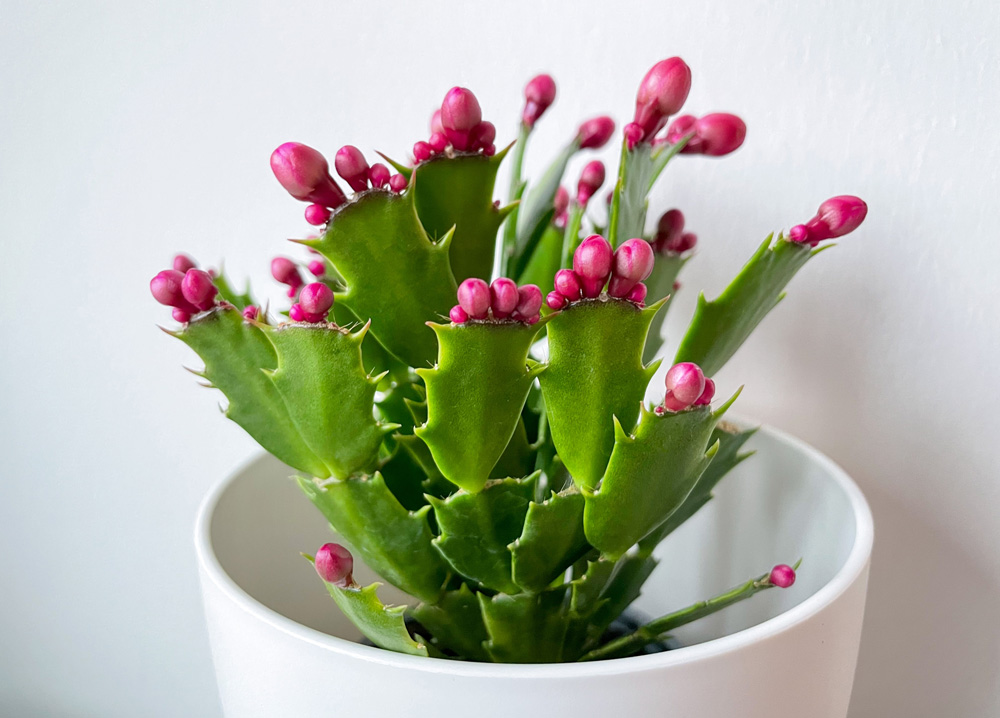
🌙 September — The Bud-Setting Setup
Status: Bud-setting season begins. Days are shorter, temps are cooling — exactly what your Christmas cactus has been waiting for.
Fertilizer: Two schools of thought here:
- Conservative approach: Stop fertilizing entirely. Simple, effective, and encourages bud formation.
- Advanced approach: One low-nitrogen, higher-phosphorus feed early in the month (something like 0-15-10) to nudge blooming along — then stop.
The critical thing this month isn’t really fertilizer at all — it’s darkness. Your plant needs about 13 hours of darkness per night and cooler temperatures (ideally in the low 50s°F at night) to trigger bud formation. If your plant didn’t bloom last year, this is probably where the problem was.
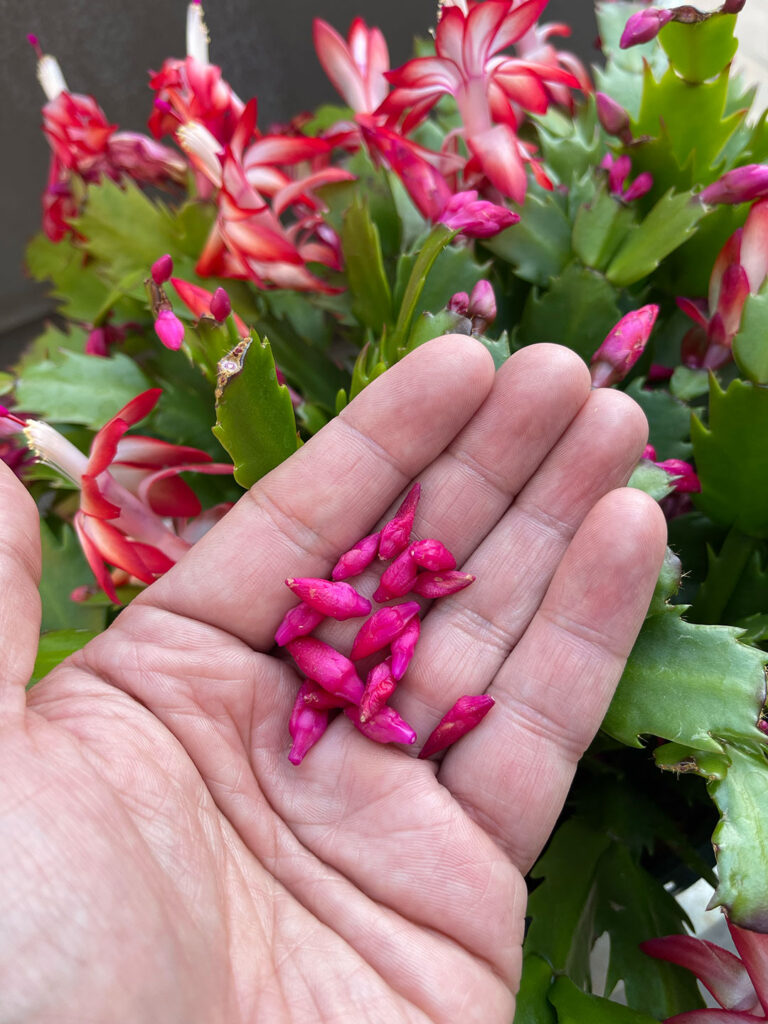
🌼 October — Hands Off!
Status: Buds are forming, or about to.
Fertilizer: None. Not even a smidge.
Fertilizing now is one of the most common mistakes Christmas cactus owners make. It pushes the plant to grow leaves instead of flowers — and it can trigger bud drop. Also: do not move the plant. Don’t change its light. Don’t rearrange the living room around it. October is a month of deliberate, almost radical non-intervention.
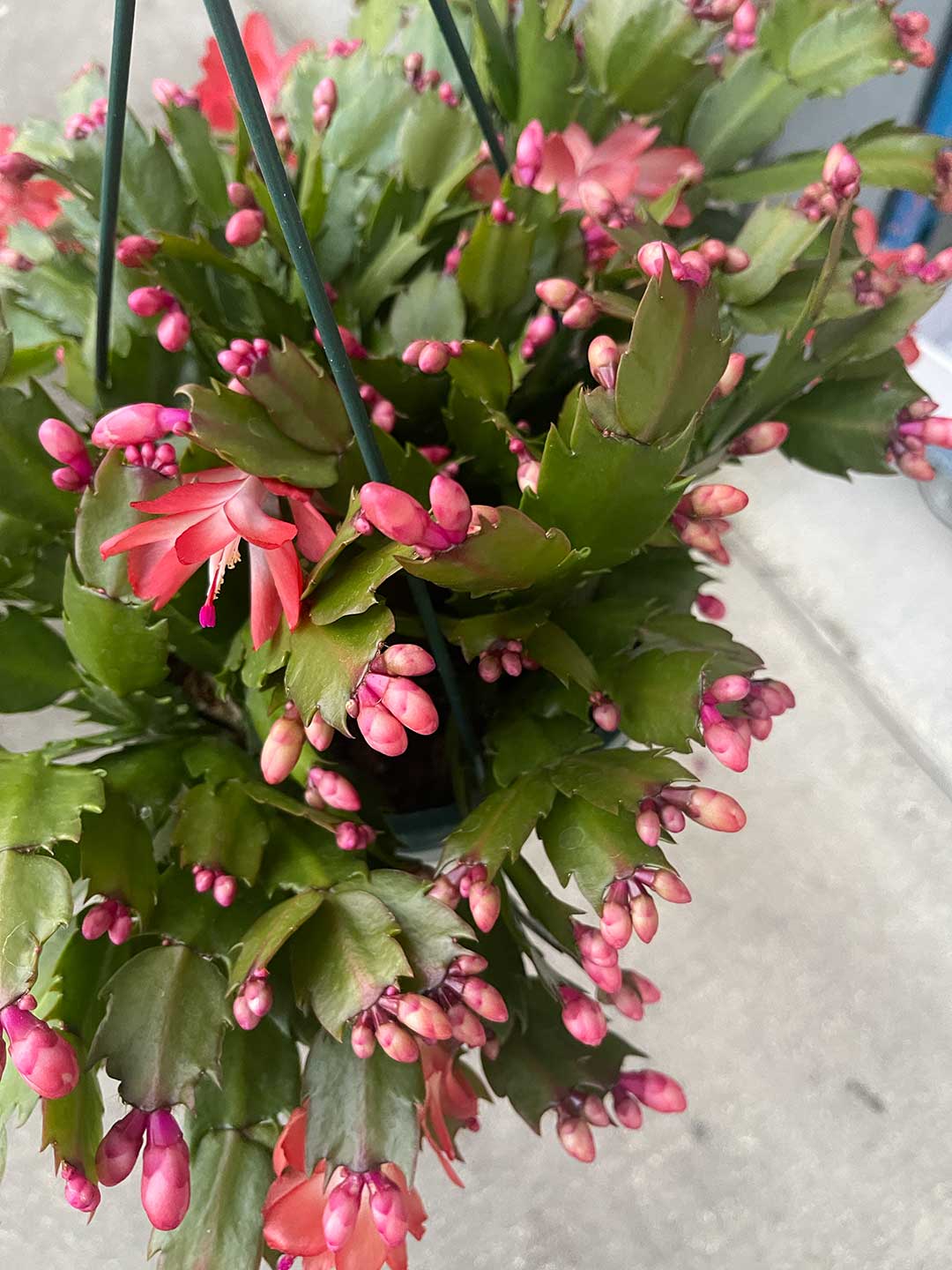
🌺 November — Almost Showtime
Status: Buds are swelling and starting to open. It’s happening!
Fertilizer: Still none. Zip.
Keep moisture steady (let the top inch of soil dry before watering), avoid drastic temperature swings, and resist any urge to fiddle. Your only job this month is to not mess it up. Good enough for me.
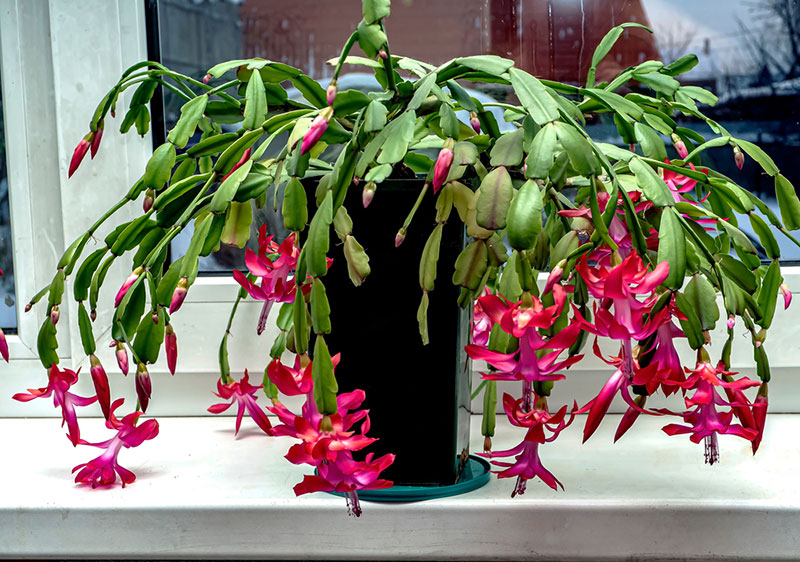
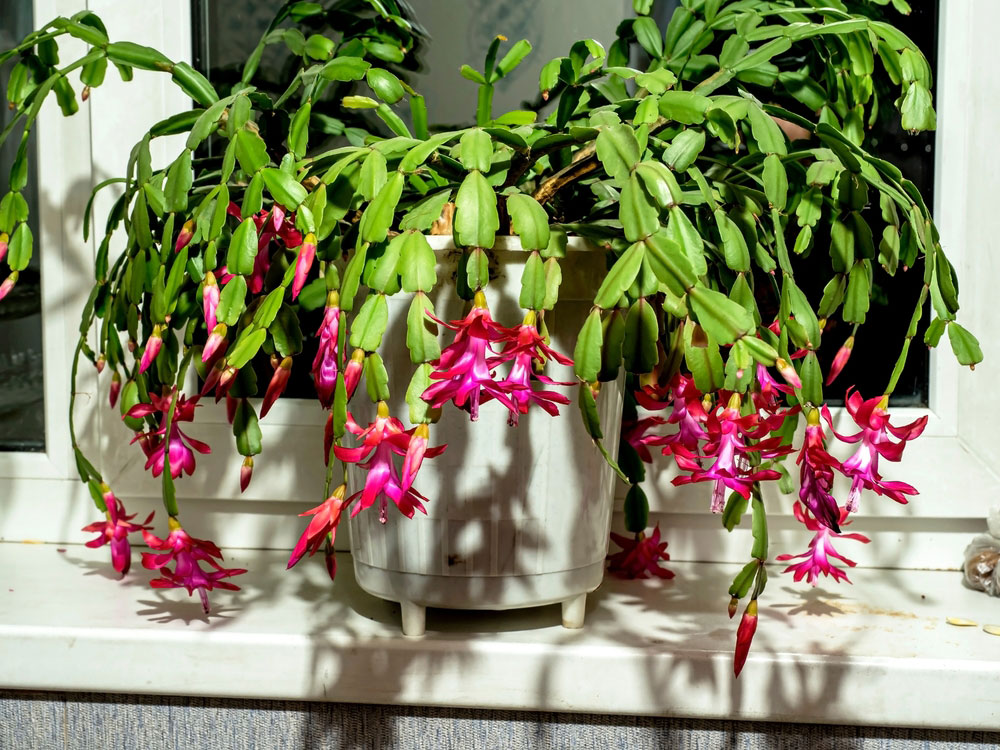
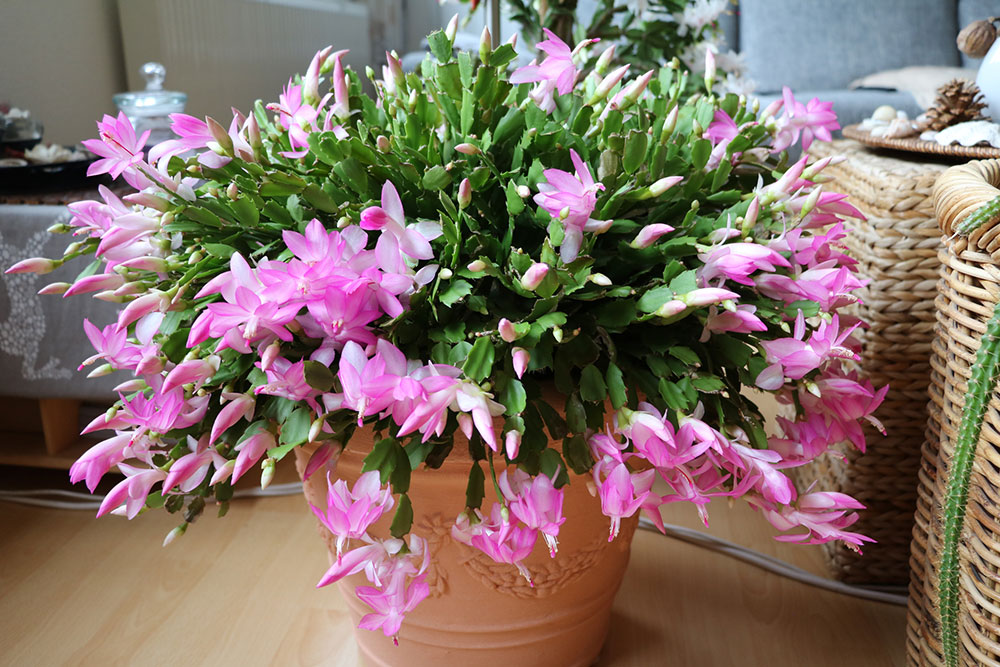
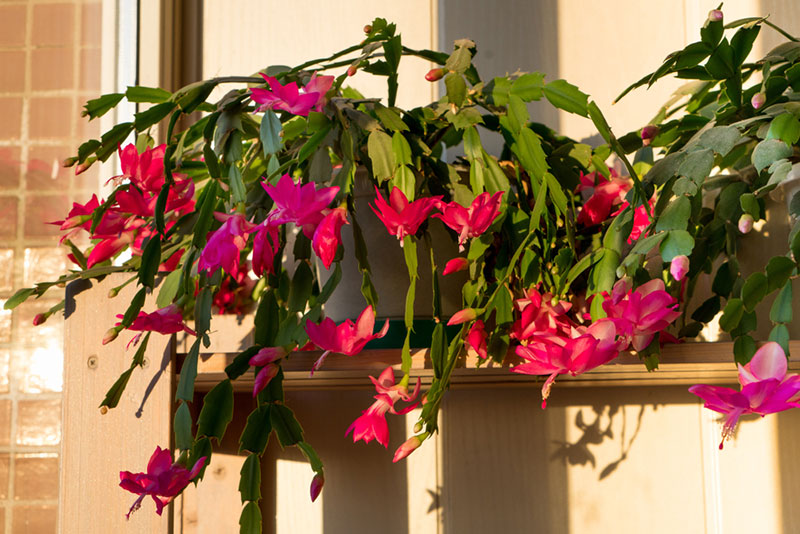
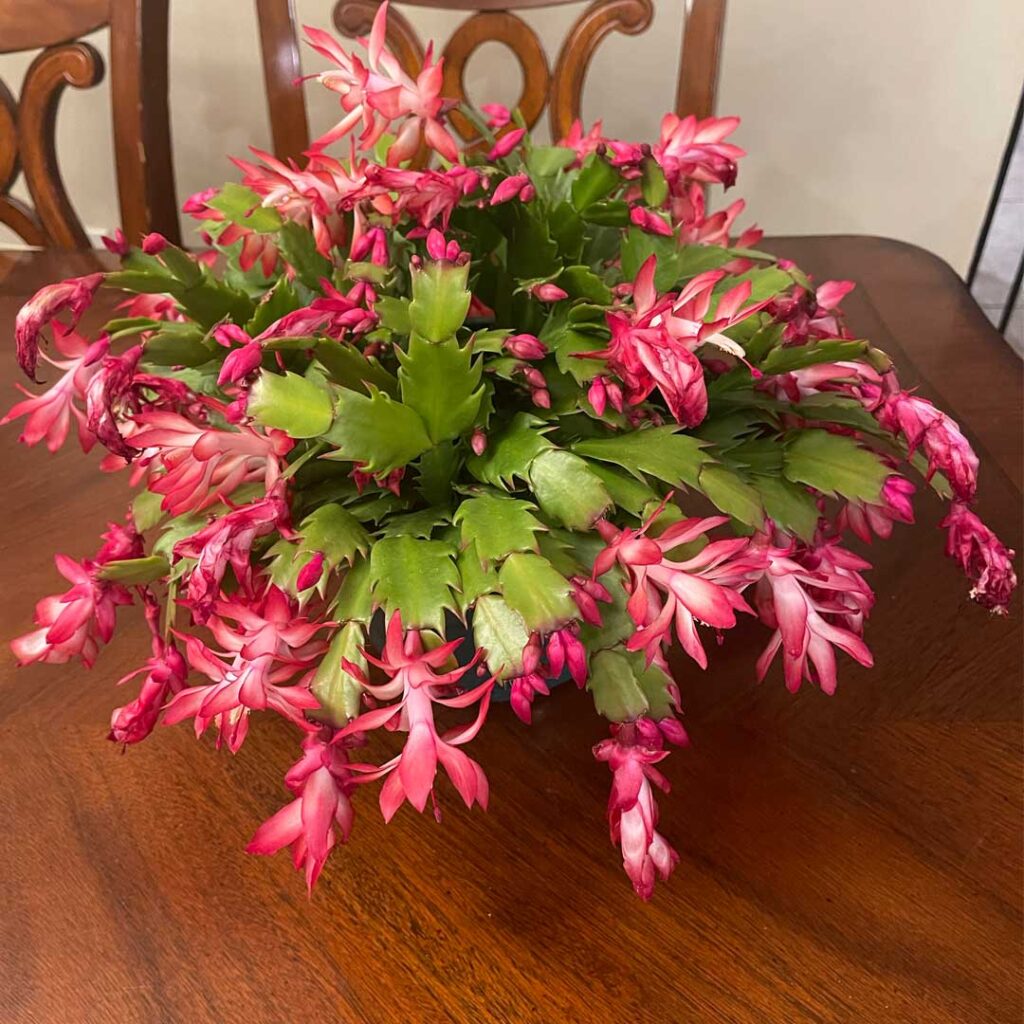
🎄 December — Enjoy the Show
Status: Main blooming month. This is what all that careful feeding was for.
Fertilizer: Absolutely none while flowering. The plant is drawing on its stored nutrients – the ones you so diligently helped it build from March through August.
Water when the top inch of soil is dry, don’t overdo it, and simply enjoy what you’ve been working toward all year. You earned those blooms.
| Month | Plant Stage | Fertilizer Routine | Care Focus |
|---|---|---|---|
| January–February | Blooming or resting | None. Let the plant rest. | Bright indirect light. Water when the top inch of soil dries. |
| March | New growth begins | Start feeding once this month with a balanced fertilizer (20-20-20 or 20-10-20) at half strength. | Resume regular watering and good light. |
| April | Active growth | Feed once this month using balanced fertilizer at half strength. | Avoid soggy soil. Good bright light helps strong growth. |
| May | Strong growth | Feed once this month with balanced fertilizer at half strength. | Rotate the pot occasionally for even growth. |
| June | Peak growing season | Feed once this month with balanced fertilizer at half strength. | Water consistently but avoid letting the plant sit in water. |
| July | Continued growth | Feed once this month with balanced fertilizer at half strength. | Keep watering steady and avoid stress. |
| August | Late growing season | Final balanced feeding of the year at half strength. | After this month, stop fertilizing. |
| September | Bud formation begins | Usually none. Some growers apply one low-nitrogen bloom fertilizer early in the month. | Provide long nights (about 13 hours of darkness). |
| October | Buds developing | None. | Keep the plant in a consistent location and avoid moving it. |
| November | Buds opening | None during bloom preparation. | Keep soil lightly moist and avoid sudden temperature changes. |
| December | Blooming | None while flowering. | Enjoy the blooms and water when soil begins to dry. |
A Few Practical Tips Before You Go
Always dilute to half strength. Follow the label directions first — then cut the amount of fertilizer in half before mixing with water. Root burn from over-fertilizing is a real thing, and it’s not a fun diagnostic process.
Flush the soil once or twice a year. Run plain water slowly through the pot until it drains freely from the bottom. This washes out built-up fertilizer salts that can harm the roots over time. Think of it as a spa day for the soil.
Epsom salts and fertilizer don’t mix – literally. If you choose to use the magnesium boost, always apply it in a separate week from your balanced fertilizer. They can interfere with each other’s absorption.
Don’t be mad if this doesn’t work perfectly the first year. Christmas cacti can be a little stubborn about adjusting to a new routine. Give it a full growing season. Consistency is the whole game here.