I’ll say it plainly: I’ve made some spectacular mistakes in this garden of mine.
After four decades of digging, planting, pruning, and occasionally talking to my roses (don’t judge), I’ve learned that some plants are best admired from a safe distance, preferably someone else’s yard.
These eight beauties charmed me completely before revealing their true, chaotic natures.
Read on, because I’d love to save you the trouble.
1. Weeping Willow (Salix babylonica)
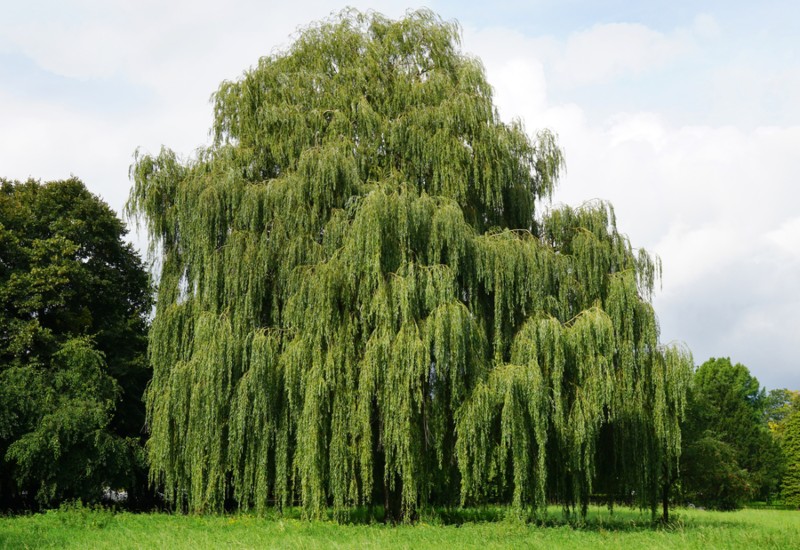
Oh, the weeping willow. Romantic. Dramatic. The kind of tree that looks like it belongs on a greeting card or beside a babbling brook in a Jane Austen novel.
I planted one in my backyard in what I can only describe as a moment of pure optimism. It was gorgeous for about three years. Then the roots found my water line. And my sewer line. And, I’m fairly certain, my neighbor’s patience.
Here’s what the nursery tag does not tell you: weeping willow roots are relentless.
They can travel up to 100 feet from the trunk in search of water, and they will absolutely demolish underground pipes, crack foundations, and heave up sidewalks without a single apology. Mine cost me a plumbing repair that I’d rather not put a dollar figure on.
Note to self: “weeping” was a warning, not a personality description.
If you love the drooping, graceful silhouette, try a dwarf weeping cherry (Prunus pendula) instead. All the elegance, none of the infrastructure damage.
2. Ipomoea (Morning Glory Vine)
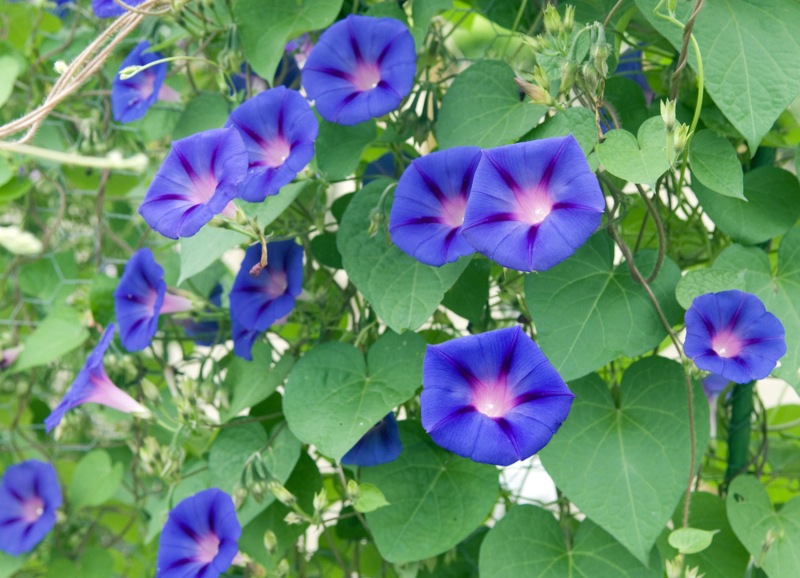
I know, I know. Morning glories are gorgeous. That deep violet-blue, those trumpet-shaped blooms opening with the sun every morning. I was completely smitten. I planted a little packet of seeds along my back fence thinking I’d get a charming cottage-garden look.
What I got was a takeover.
Morning glories self-seed with the enthusiasm of someone who just discovered gardening for the first time. One summer turned into two, and suddenly I was spending entire weekends pulling volunteers out of my vegetable beds, my rose border, and, I’m not making this up, out of the cracks in my patio. They also twine aggressively around neighboring plants and, if left to their own devices, will happily strangle whatever is nearby.
In some states, certain Ipomoea species are classified as invasive. Worth looking up your region before you plant.
More power to you if you’ve managed to keep them contained. I have not cracked that code.
For a similarly dramatic flowering vine without the mutiny, try a clematis. Beautiful, vigorous, and in my experience, a much more agreeable neighbor.
3. English Ivy (Hedera helix)
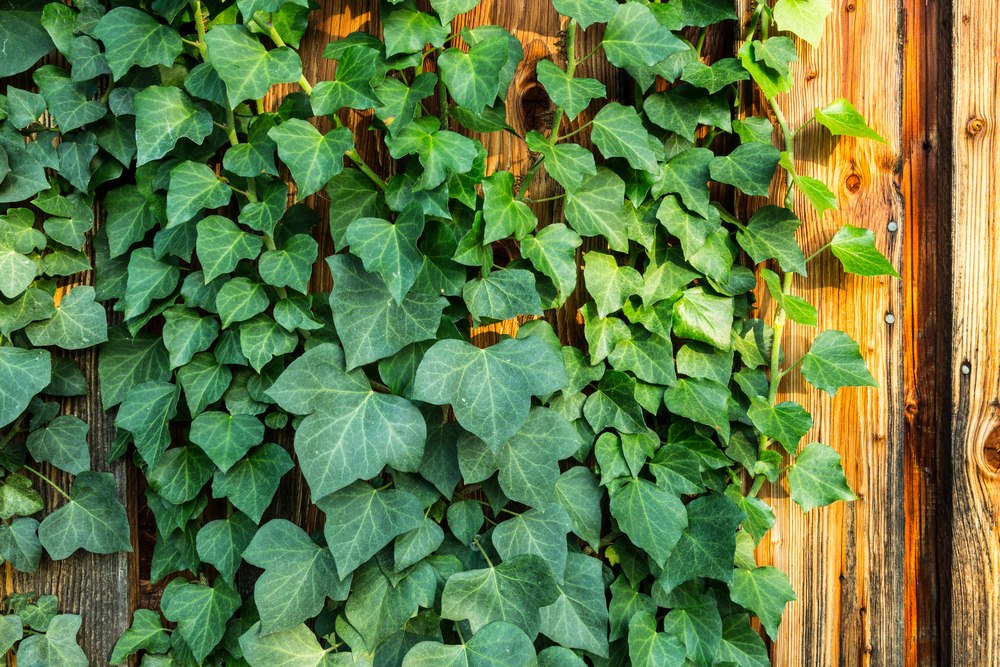
Let’s talk about English ivy for a moment, because I think it deserves a full accounting.
I planted it as a ground cover under a large oak tree where nothing else would grow. It solved my problem immediately, lush, dark green, spreading beautifully. For a few years, I genuinely congratulated myself.
Then it started climbing the oak. Then the fence. Then it began creeping into the lawn with the slow, determined energy of someone who has absolutely nowhere else to be. English ivy, it turns out, doesn’t really have an “off” switch.
Ecologically, it’s also a bit of a villain. It’s invasive across much of North America, outcompeting native plants and creating what ecologists call “ivy deserts,” dense mats where nothing else can survive. It can harbor rat populations (delightful), and when it climbs trees, the added weight can make them vulnerable to storm damage.
Removing it was, frankly, a multi-season project involving gloves, loppers, and language I won’t repeat here.
For a shade-tolerant ground cover that won’t stage a coup, try native ginger (Asarum canadense) or Pennsylvania sedge. Your local ecosystem will thank you.
4. Nandina domestica (Heavenly Bamboo)
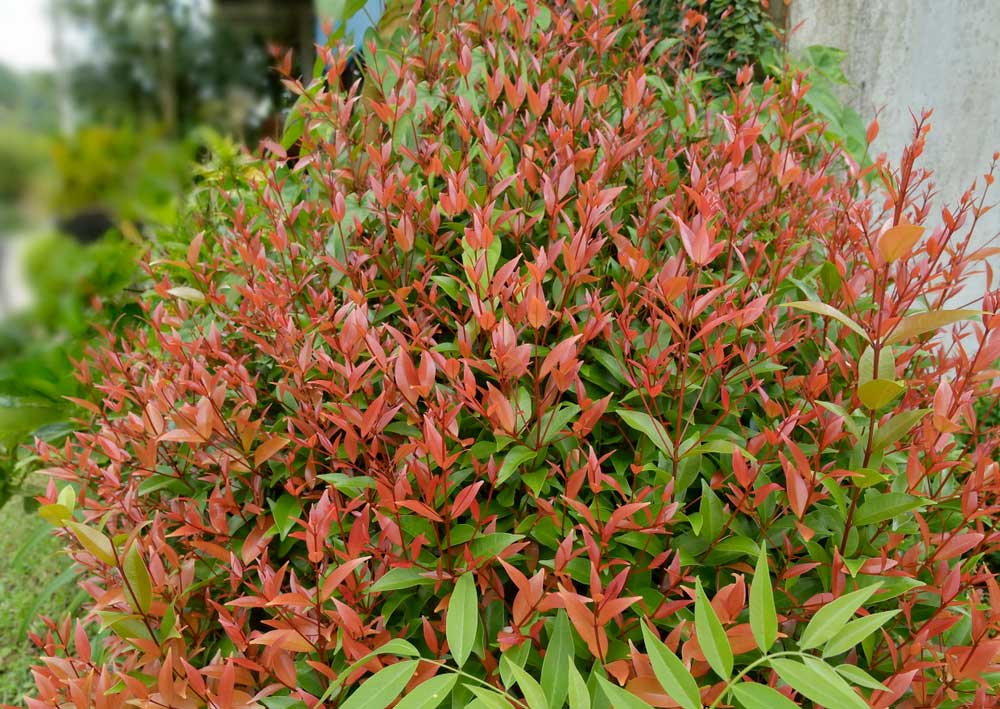
The name alone should have been my first clue. “Heavenly bamboo,” it sounds so serene! So manageable!
I planted a row of nandina along my front walkway years ago, charmed by the feathery foliage and bright red berries in winter. It was pretty. I’ll give it that.
What I didn’t know then, and wish I had, is that those cheerful red berries are toxic to birds, particularly cedar waxwings, which eat them in large quantities and can die from cyanide poisoning. I found this out from a birder friend who looked at my front walkway and gave me a very specific look.
Beyond the wildlife concerns, nandina is classified as invasive in several southeastern states, spreading readily by seed into natural areas. It’s also allelopathic, meaning it releases chemicals that can inhibit the growth of surrounding plants.
Out it came. All of it.
For winter interest and bird-friendly berries, try winterberry holly (Ilex verticillata). It’s native, dramatic, and the birds can eat the berries without any consequences whatsoever.
5. Eucalyptus globulus (Blue Gum Eucalyptus)
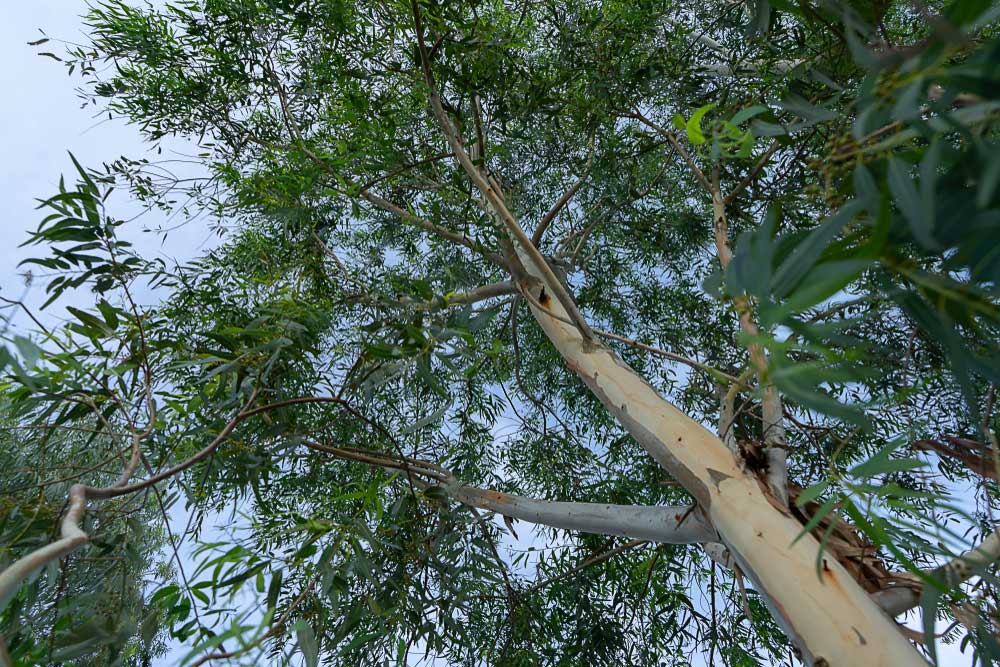
I’ll admit this one was ambitious on my part. I planted a young blue gum eucalyptus in my back corner thinking the silvery foliage would add some drama and the scent would be divine.
Both of those things were true. The drama, however, scaled up considerably.
Eucalyptus globulus is one of the fastest-growing trees on the planet. Mine went from “charming sapling” to “genuinely alarming height” faster than I could process what was happening. They also drop constantly. Bark, branches, leaves soaked in flammable oils. My back corner became a permanent cleanup project and, I eventually realized, a significant fire risk. In California and other fire-prone areas, blue gum eucalyptus is considered a serious hazard.
The roots are aggressive, the leaf litter suppresses other plants, and the trees are notoriously brittle in wind, dropping large limbs with very little warning.
So much for that serene corner garden.
If you want fast-growing screening with interesting foliage, try a native serviceberry (Amelanchier) or a clumping bamboo in a buried root barrier. Far more civilized.
6. Robinia pseudoacacia ‘Purple Robe’ (Purple Robe Locust)
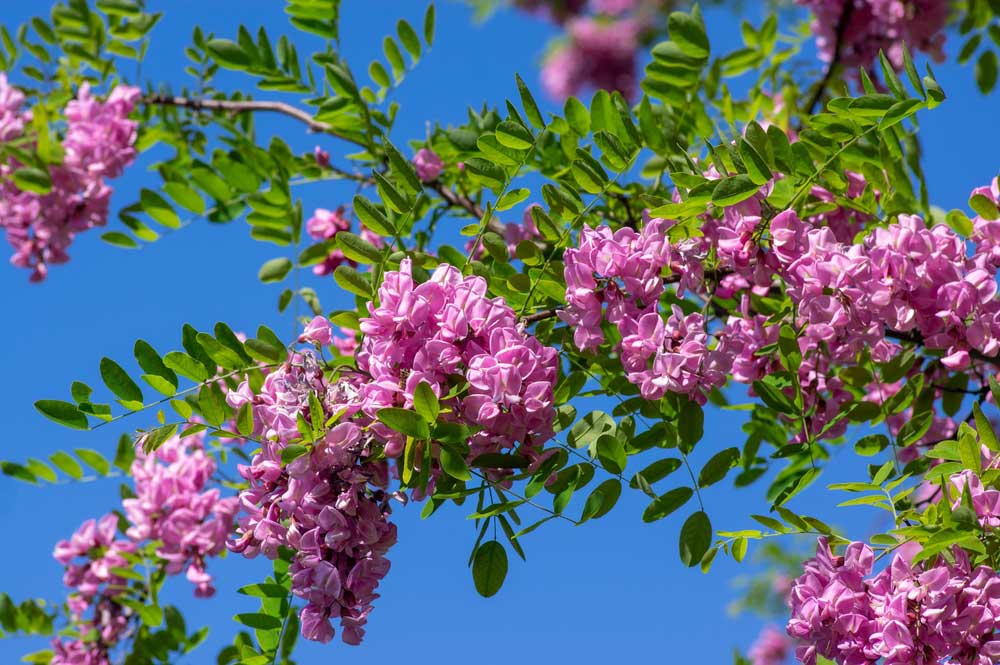
And then there’s the one that really stung, because it was so beautiful.
Purple Robe locust in bloom is genuinely one of the showiest trees you’ll ever see. Cascades of fragrant, deep rose-purple flowers in late spring, ferny foliage, a lovely vase shape. I planted one and spent two glorious springs just staring at it.
Then I noticed the suckers. Dozens of them, popping up from the roots several feet from the trunk in every direction. Black locust, which ‘Purple Robe’ is a cultivar of, spreads aggressively by root sprouting, and once it starts, it does not stop. I was pulling suckers out of my lawn, my perennial border, and my vegetable garden for years.
The thorns are also not to be underestimated. (Note to self: heavy gloves are not optional.) And the wood, while beautiful, is brittle enough that storm damage is a recurring concern.
Robinia is listed as invasive in many parts of the U.S. and Europe, crowding out native species in natural areas.
For a stunning flowering tree that blooms around the same time with none of the underground ambitions, try a native fringe tree (Chionanthus virginicus). Elegant, well-behaved, and absolutely breathtaking in bloom.
7. Trumpet Vine (Campsis radicans)
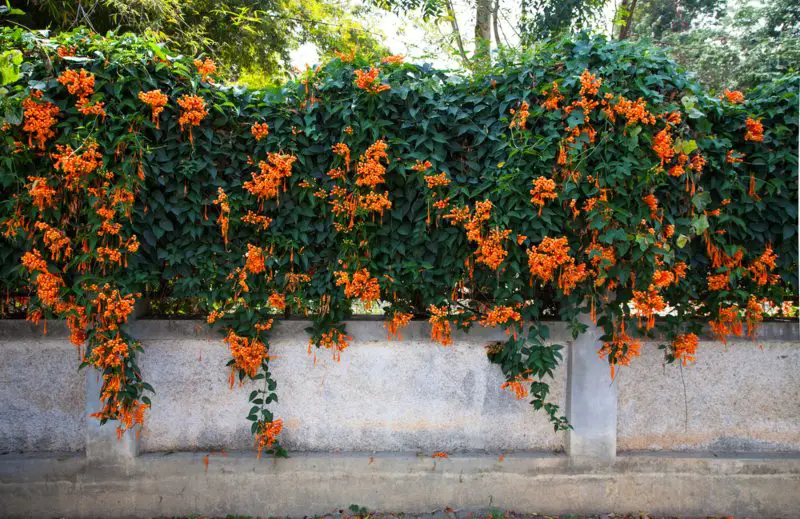
I planted trumpet vine on my back pergola with the best of intentions. Hummingbirds love it, the orange-red blooms are absolutely electric in summer, and it looked stunning in every garden photo I’d ever seen. What could go wrong?
Everything. Everything could go wrong.
Trumpet vine attaches itself to surfaces using aerial rootlets that can work their way into wood, mortar, and siding, and when you try to remove it, those rootlets leave behind damage that’s genuinely upsetting to look at. Mine made a serious attempt on my pergola’s structural integrity before I intervened.
But the real story is what it does underground. Trumpet vine spreads by runners, and those runners travel. Far.
I was finding new shoots coming up in the middle of my lawn, through the cracks in my patio, and, memorably, inside my garage through a gap in the foundation. It suckers so prolifically that some gardeners spend years trying to fully eradicate it after a change of heart.
It’s also considered invasive in parts of the Midwest and Mid-Atlantic states.
If you want to keep the hummingbirds happy without the hostile takeover, try coral honeysuckle (Lonicera sempervirens) instead. Native, vigorous, and it actually knows where its boundaries are.
8. Butterfly Bush (Buddleja davidii)
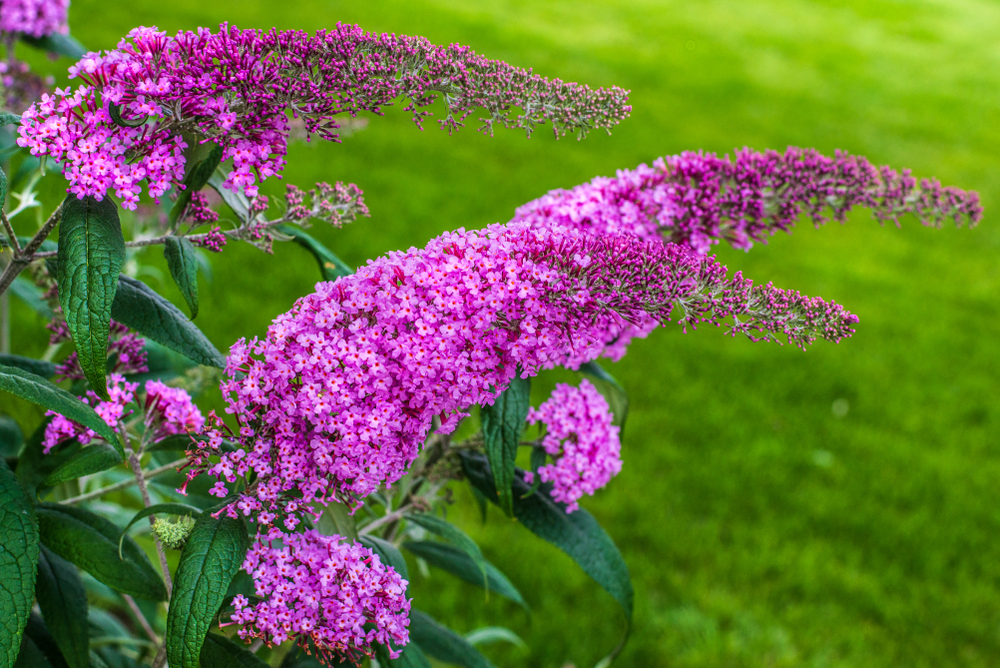
This one genuinely broke my heart a little, because I adored my butterfly bush. Big, arching shrubs covered in fragrant purple flower spikes from midsummer straight through fall, with butterflies practically queuing up to visit. It was one of my garden’s great joys for years.
Then I started reading the research. And I wished, briefly, that I hadn’t.
Here’s the complicated truth: butterfly bush does attract adult butterflies, it’s like a nectar bar they can’t resist.
But it provides zero value as a host plant for butterfly larvae. No native butterfly or moth species can complete its life cycle on buddleja, which means it’s essentially offering fast food with no nutritional substance to populations that need real habitat support.
Entomologists have started calling it a “butterfly trap,” luring pollinators away from the native plants they actually need.
Add to that the fact that it self-seeds prolifically and is classified as invasive in Oregon, Washington, and parts of the Pacific Northwest, crowding out the native plants that do support wildlife, and my enthusiasm cooled considerably.
Out it came. I won’t pretend I wasn’t a little sad about it.
The good news? Native alternatives have come a long way. Joe Pye weed (Eutrochium purpureum), native coneflowers (Echinacea), and ironweed (Vernonia) will bring just as many, arguably more, butterflies to your garden, and this time you’ll actually be helping them.