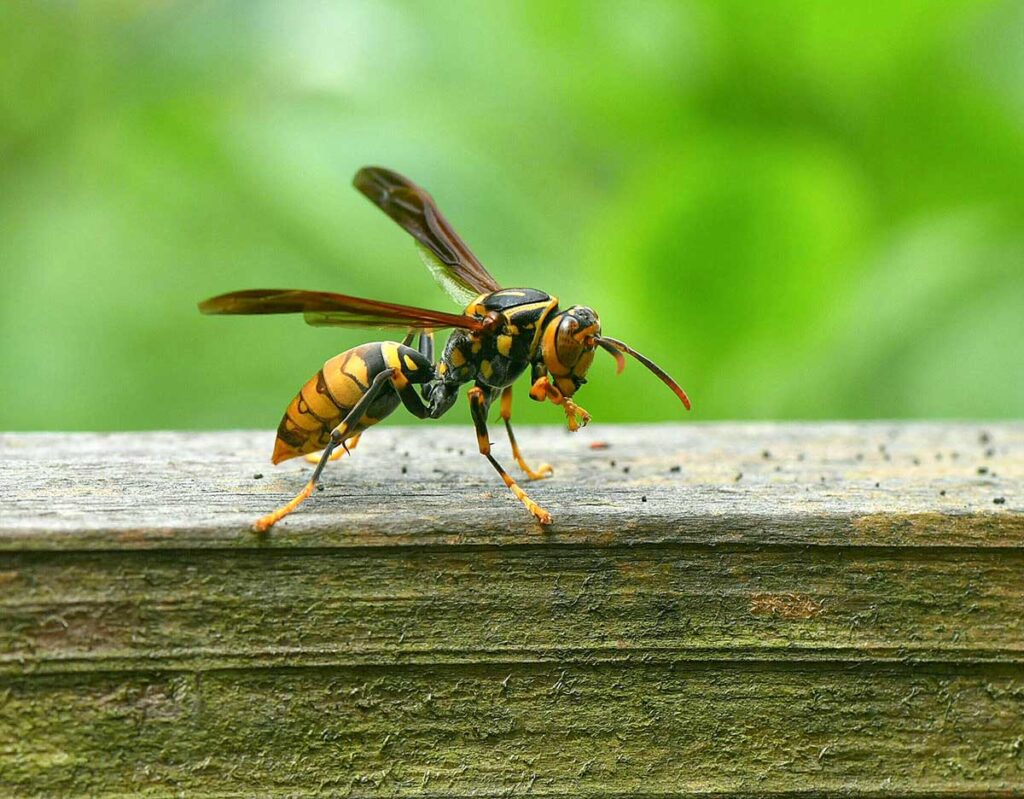
“Plant mint by the door and the wasps will stay away.” You’ve probably heard that one. Maybe you’ve even tried it. Did it work? Sort of.
Here’s the myth: a few pots of herbs work like a wasp force field. They don’t. The research behind most lists of wasp-repelling plants tested plant oils near wasp bait, not potted plants sitting on a porch.
Still, those oils pushed wasps away in the field, and the plants they come from are easy to grow and nice to have around.
Put a few pots next to your chair, and your porch gets a little less inviting to wasps. And if you have a dog or cat, three of the ten are pet-safe.
What Scented Plants Can (and Can’t) Do
In a 2013 field study published in Pest Management Science, researchers tested 21 essential oils on yellow jackets and paper wasps. Seventeen of them kept the wasps away. The strongest result came from a blend of clove, geranium and lemongrass oils. With or without rosemary oil added, that blend stopped wasps from coming to the bait at all.
That was concentrated oil, though, set right at the traps. A plant in a pot doesn’t give off scent that way. Most of its scent comes out when the leaves get brushed, pinched or crushed, so think of these plants as a nudge rather than a fence.
And please go easy on the wasps that aren’t bothering you. Out in the garden, they eat a lot of pests.
Where these numbers come from: sun, height and zones below come from the NC State Extension Plant Toolbox unless noted, and pet safety comes from the ASPCA’s toxic and non-toxic plant database.
1. Spearmint (Mentha spicata)
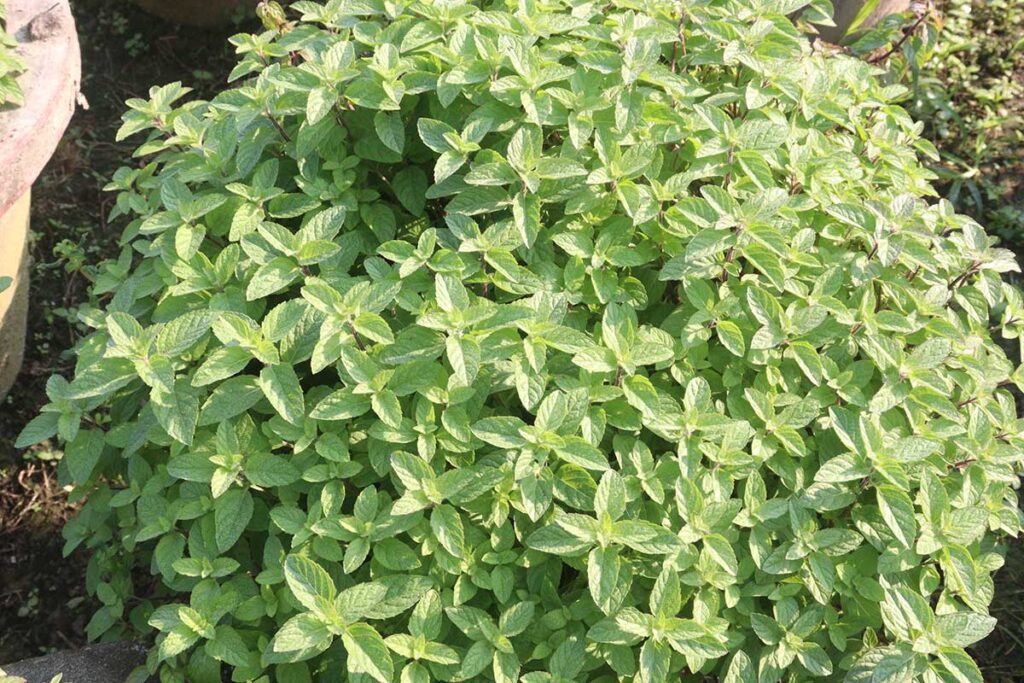
| Botanical name | Mentha spicata |
| Sun | Full sun to part shade |
| Height | 1 to 2 feet |
| USDA zones | 4 to 9 |
| Pet safety | Toxic to dogs and cats (ASPCA) |
Spearmint is about the easiest herb you’ll ever grow, which is exactly why it belongs in a pot. Plant it in a garden bed and it spreads by underground runners, rooting wherever a stem touches the soil. By the time you notice, that tidy little plant has turned the whole bed into a mint bed.
That fast-growing habit works in your favor on a porch, though. Spearmint oil was one of the 17 oils that kept wasps away in the study, and a full, leafy pot gives you plenty of scent to work with. So keep a pot close to where you sit.
Garden Lovers Club Tip: When small flower spikes show up in late summer, shear them off. You’ll get a fresh flush of leaves, and the leaves are where the scent lives.
2. Lavender (Lavandula angustifolia)
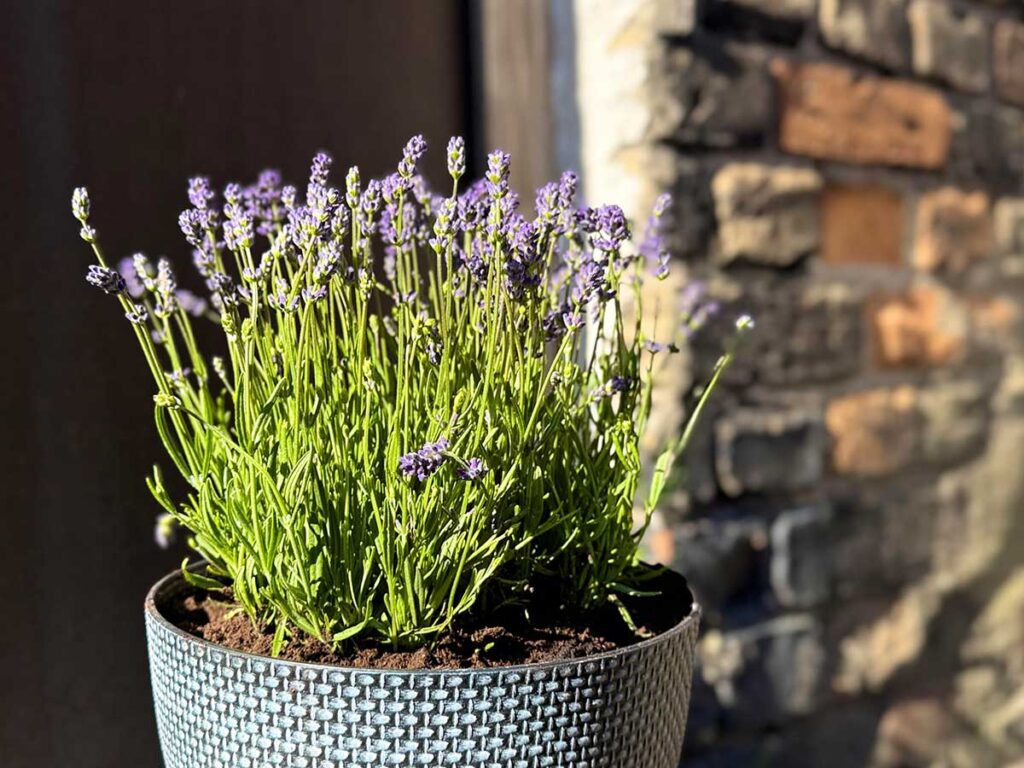
| Botanical name | Lavandula angustifolia |
| Sun | Full sun |
| Height | Up to 2 feet (2 to 3 feet wide) |
| USDA zones | 5 to 9 |
| Pet safety | Toxic to dogs and cats (ASPCA) |
Lavender earns a spot on a sunny porch for its looks alone, with purple, pink or white flower spikes in summer. English lavender is also the source of true lavender oil, which made the study’s list of wasp repellents.
Its one demand is drainage. Lavender wants perfectly drained soil on the dry side, so a soggy, humid summer can leave it sulking. That’s why a pot with a fast-draining mix usually beats a wet garden bed: you control the soil.
Garden Lovers Club Tip: Brush the leaves as you walk by. That releases the scent, and your hands come away smelling great.
If you’re planning to keep yours for years, our lavender growing guide walks you through the rest.
3. Rosemary (Salvia rosmarinus)
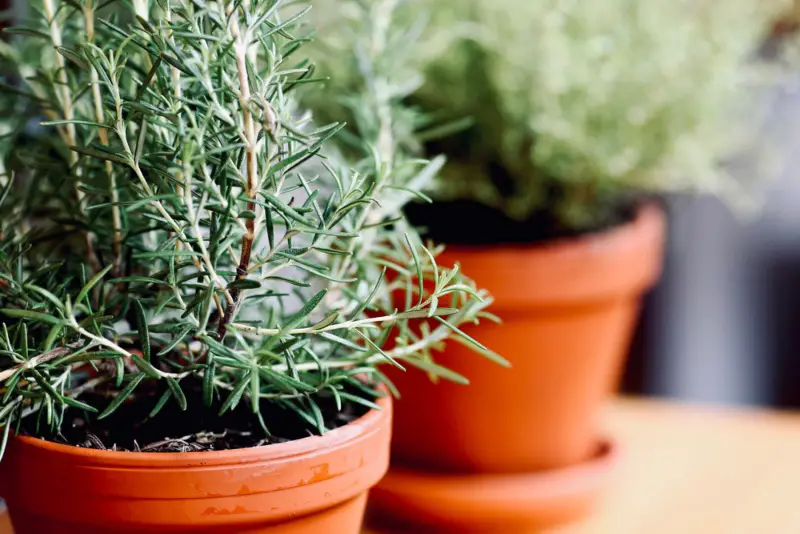
| Botanical name | Salvia rosmarinus |
| Sun | Full sun |
| Height | 4 to 5 feet (3 to 4 feet wide) |
| USDA zones | 8 to 10 |
| Pet safety | Non-toxic to dogs and cats (ASPCA) |
Rosemary pulls double duty on a porch: it’s a kitchen herb, and its oil was part of the four-oil blend that kept wasps off the bait entirely. It’s also one of the three pet-safe picks on this list.
In zones 8 to 10, it can live in the ground year-round and grow into a woody shrub. In colder zones, keep it in a pot you can move to a bright, sheltered spot for winter.
It likes well-drained soil and handles drought, so let the pot dry out a bit between waterings.
Garden Lovers Club Tip: Clip sprigs for dinner as often as you like. Every cut releases a little more scent right where you’re sitting.
4. Peppermint (Mentha × piperita)

| Botanical name | Mentha × piperita |
| Sun | Sun to part shade (at least 3 hours of sun) |
| Height | Up to 3 feet (1 to 2 feet wide) |
| USDA zones | 5 to 9 |
| Pet safety | Toxic to dogs and cats (ASPCA) |
Peppermint is the mint for the side of the porch that doesn’t get much sun. It prefers rich, moist soil and part shade, and NC State says it does surprisingly well in shadier sites.
Its oil repelled wasps in the study, and menthone, one of the compounds behind that cool, sharp smell, kept them away even when tested by itself.
Like spearmint, it spreads with aggressive runners, so give it a container of its own.
Garden Lovers Club Tip: Keep that pot watered. Peppermint puts up with a lot of things, but dry soil isn’t one of them.
5. Lemongrass (Cymbopogon citratus)

| Botanical name | Cymbopogon citratus |
| Sun | Full sun |
| Height | Up to 4 feet (about 2 feet wide) |
| USDA zones | 8b to 11 |
| Pet safety | Toxic to dogs and cats (ASPCA) |
Lemongrass brings a bright lemon smell to the porch, and it scored well in the study. Its oil was in both blends that completely blocked wasps from the bait, and citral, the compound behind that smell, worked on its own too.
It forms a tall, grassy clump and is grown for its leaves rather than flowers, which makes it an easy neighbor for a seating area. Bonus: the leaves go straight into soups and tea.
Garden Lovers Club Tip: Outside zones 8b to 11, grow it in a container and bring it inside for winter. Don’t let the soil dry out while it’s indoors.
6. Scented Geranium (Pelargonium graveolens)
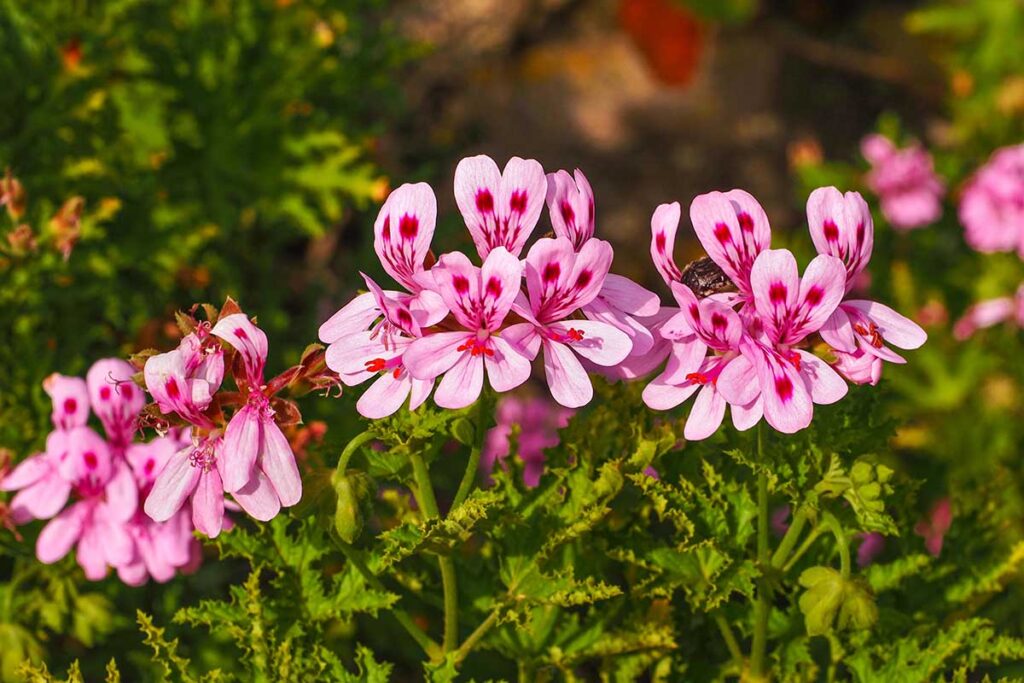
| Botanical name | Pelargonium graveolens |
| Sun | Full sun to part shade |
| Height | 1 to 3 feet (1 to 2 feet wide) |
| USDA zones | 10 to 11 |
| Pet safety | Toxic to dogs and cats (ASPCA) |
Brush past a scented geranium and you’ll know right away where its scent lives: in the leaves. It’s a classic porch-pot plant, and geranium oil was another key ingredient in the study’s best blends.
Every touch releases a little more of that scent, so set the pot beside the steps or the door, where it gets brushed as people walk by. Give it soil that drains well. According to the Missouri Botanical Garden, it’s only hardy in zones 10 and 11, so most of us grow it as a summer plant.
Garden Lovers Club Tip: Bring the pot indoors before your first frost, or start a new one in spring.
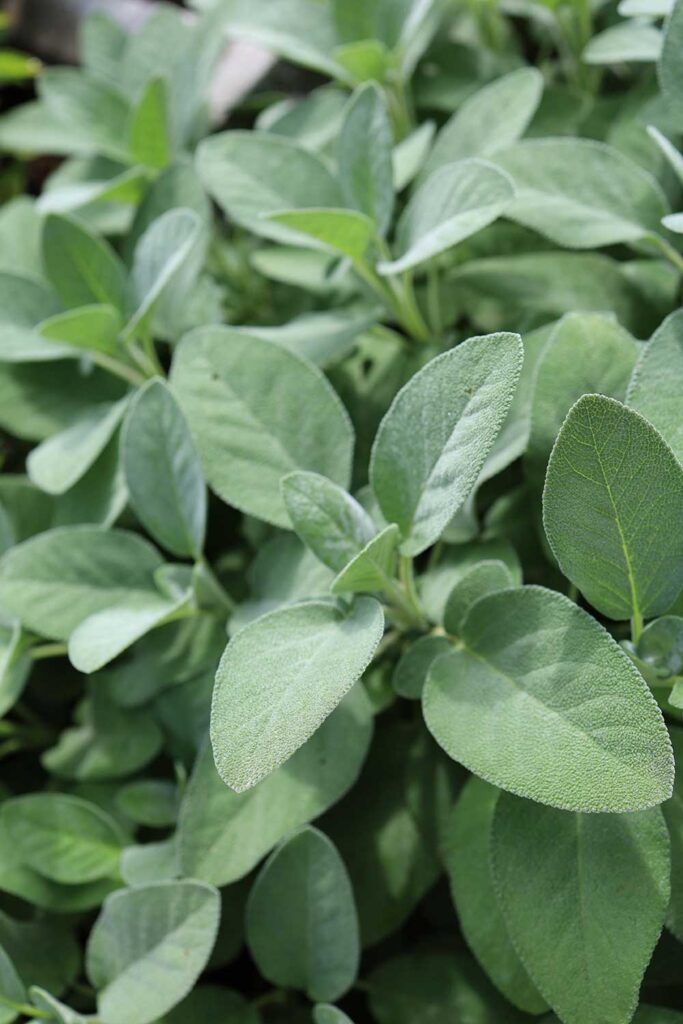
7. Garden Sage (Salvia officinalis)
| Botanical name | Salvia officinalis |
| Sun | Full sun to part shade |
| Height | Up to 2 feet (2 to 3 feet wide) |
| USDA zones | 4 to 8 |
| Pet safety | Non-toxic to dogs and cats (ASPCA) |
If you have pets, garden sage is a keeper. It’s safe around dogs and cats, and the research is on its side too: sage oil repelled wasps in the study, and so did thujone, one of its compounds, when tested alone.
It’s a bushy, semi-woody plant with soft, gray-green leaves, and it likes the kind of dry soil it grows in around the Mediterranean. So go easy on the watering and let the pot drain well.
Garden Lovers Club Tip: Sage is short-lived even in good conditions, so if yours gives out, don’t take it personally. Just replace it.
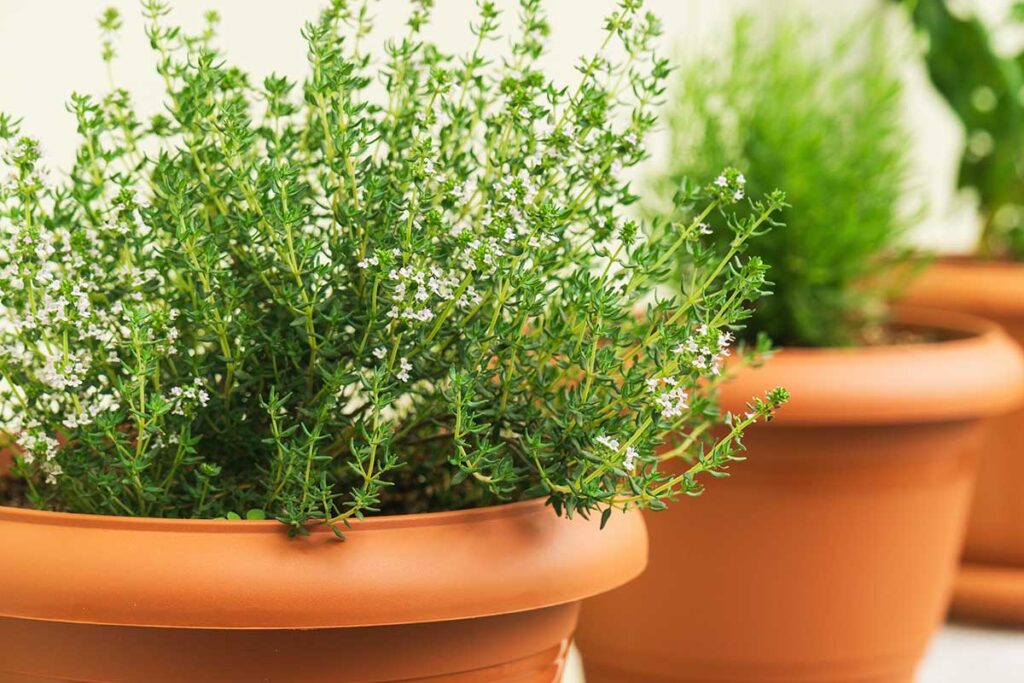
8. Thyme (Thymus vulgaris)
| Botanical name | Thymus vulgaris |
| Sun | Full sun |
| Height | Up to 1 foot |
| USDA zones | 5 to 9 |
| Pet safety | Non-toxic to dogs and cats (ASPCA) |
Thyme is small, tough and pet-safe, and its oil made the study’s list of wasp repellents. At up to a foot tall, it fits almost anywhere.
That size makes it a natural edger for a mixed pot. Tuck it around the base of rosemary and sage, and you’ve got a pet-safe trio for the spot by the door.
It wants good drainage and handles a dry spell well. Small white to pinkish-lavender flowers show up from May to July.
Garden Lovers Club Tip: On the pot closest to your seat, trim the flowers off and enjoy the leaves.
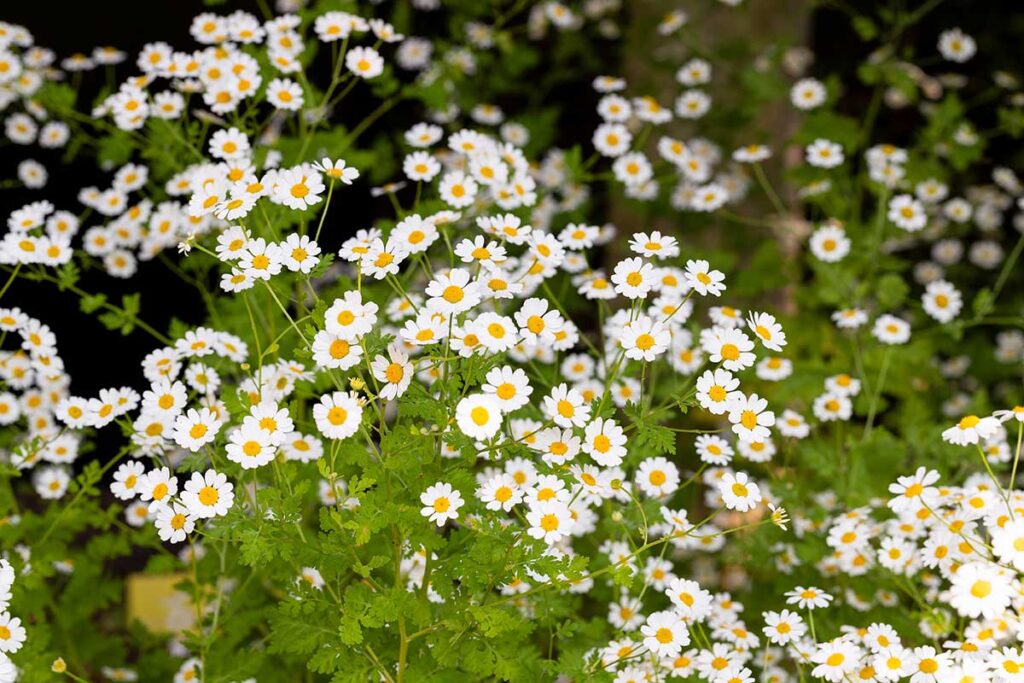
9. Roman Chamomile (Chamaemelum nobile)
| Botanical name | Chamaemelum nobile |
| Sun | Full sun to part shade |
| Height | 1 to 2 feet |
| USDA zones | 4 to 9 |
| Pet safety | Toxic to dogs and cats (ASPCA) |
To us, Roman chamomile has a soft, calming scent. To wasps, not so much: its oil was another of the 17 repellents in the study.
It’s a fast-spreading evergreen with white, daisy-like flowers from summer into fall. NC State Extension suggests planting it along a patio or walkway to enjoy the fragrance. That’s right where you want it for wasp duty too, so plant it along the edge of your patio in soil that drains well.
Garden Lovers Club Tip: Wear gloves when you handle it, since it can irritate some people’s skin.
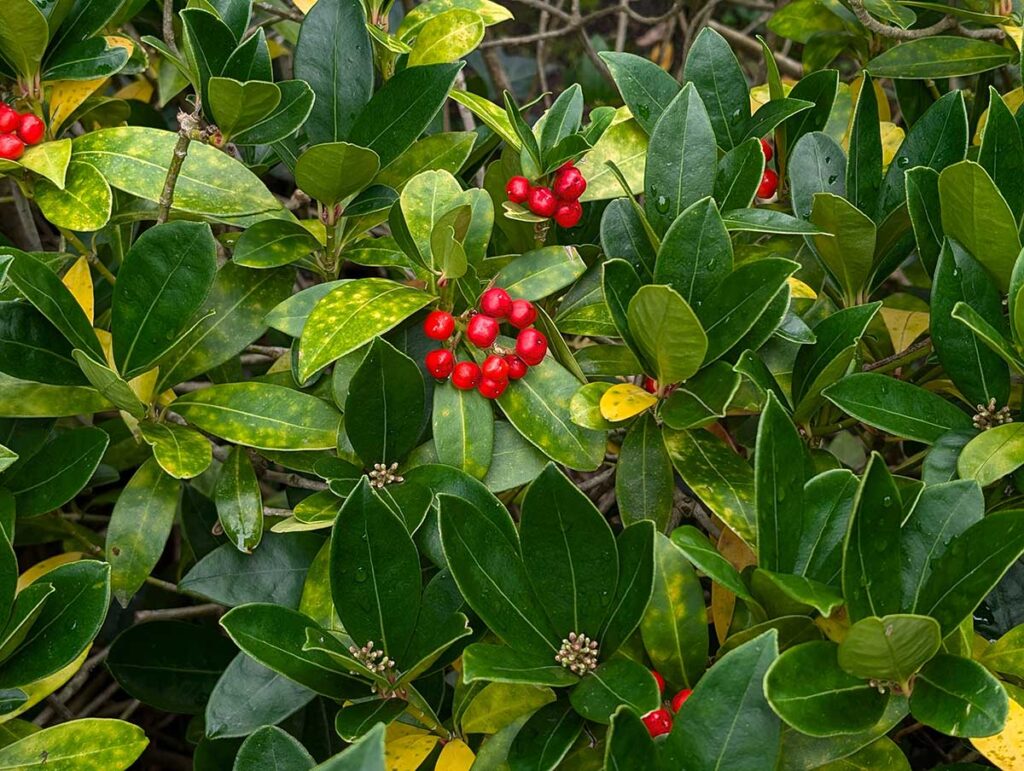
10. Wintergreen (Gaultheria procumbens)
| Botanical name | Gaultheria procumbens |
| Sun | Part shade to deep shade |
| Height | 4 to 8 inches (6 to 12 inches wide) |
| USDA zones | 3 to 7 |
| Pet safety | Not on the ASPCA toxic or non-toxic lists |
Got a shady porch up north? This one’s for you. Wintergreen oil repelled wasps in the study, and methyl salicylate, the compound behind its minty smell, did the same on its own.
It’s a low, evergreen groundcover with red berries in fall, and it’s happiest in dappled to deep shade. It also needs acidic soil, so check that your soil’s pH is below 6.0 before you plant.
Garden Lovers Club Tip: A basic soil test kit tells you your soil’s pH, so you’re not planting wintergreen somewhere it can’t settle in.
How to Get the Most From These Plants
- Keep pots right next to your chairs and table, not out in the yard.
- Brush or pinch a few leaves when you sit down. That’s when they give off the most scent.
- Trim flower spikes on the pots closest to you. Blooming herbs bring in bees and other pollinators, and the leaves are what you’re growing them for.
- If you have a dog or cat, stick with rosemary, sage and thyme. They’re the three on this list the ASPCA rates as non-toxic.
Your Zone Makes a Difference
Where you live decides which of these can stay outside all year and which need a ride indoors.
- Zones 3 to 5: Wintergreen (from zone 3), spearmint, sage and Roman chamomile (from zone 4), and lavender, peppermint and thyme (from zone 5) can live in the ground. Grow rosemary, lemongrass and scented geranium in pots and bring them in for winter.
- Zones 6 to 7: Most of the plants on this list do fine in the ground here, including wintergreen, which tops out at zone 7. Rosemary, lemongrass and scented geranium still need to come indoors for winter.
- Zones 8 to 9: Rosemary can stay in the ground from zone 8, and lemongrass from zone 8b. Sage is rated only to zone 8, so zone 9 is a stretch. Skip wintergreen, and bring scented geranium in before frost.
- Zones 10 to 11: Lemongrass and scented geranium can live outside year-round, and rosemary is rated to zone 10. Spearmint, peppermint, lavender, thyme and Roman chamomile are only rated to zone 9, and sage to zone 8, so lean on lemongrass and scented geranium, plus rosemary in zone 10.
What Else Keeps Wasps Off the Porch
Plants work best alongside the basics. Cover sweet drinks and food when you eat outside, and keep trash and recycling bins closed.
Look for nests early in the season, while they’re still small: under the eaves, along porch railings and beneath outdoor furniture. Penn State Extension notes that dealing with a nest early is safer and easier than waiting for it to grow. For a yellow jacket nest, see our guide to getting rid of yellow jackets. If anyone in your house is allergic to stings, call a pest professional instead of handling it yourself.
Do the basics, keep a few fragrant pots within arm’s reach, and let the wasps out in the garden get back to work on your pests.