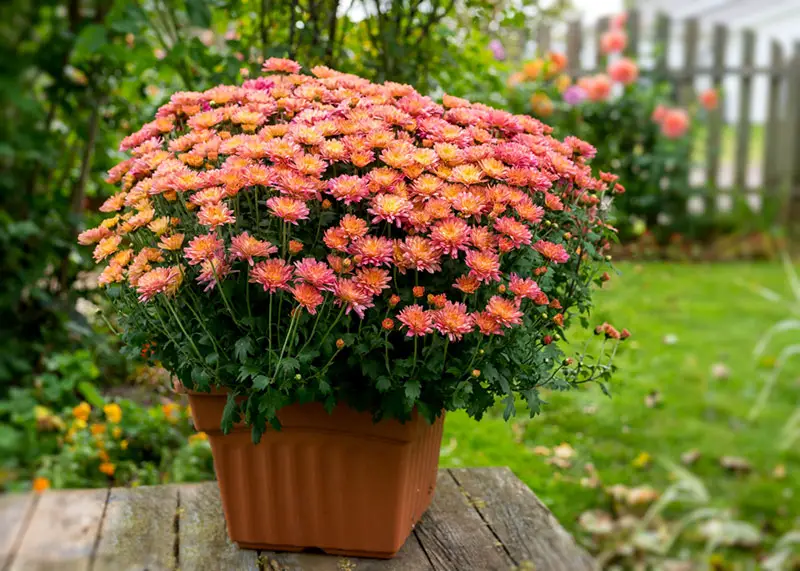

Every fall, I seem to have the same problem with mums.
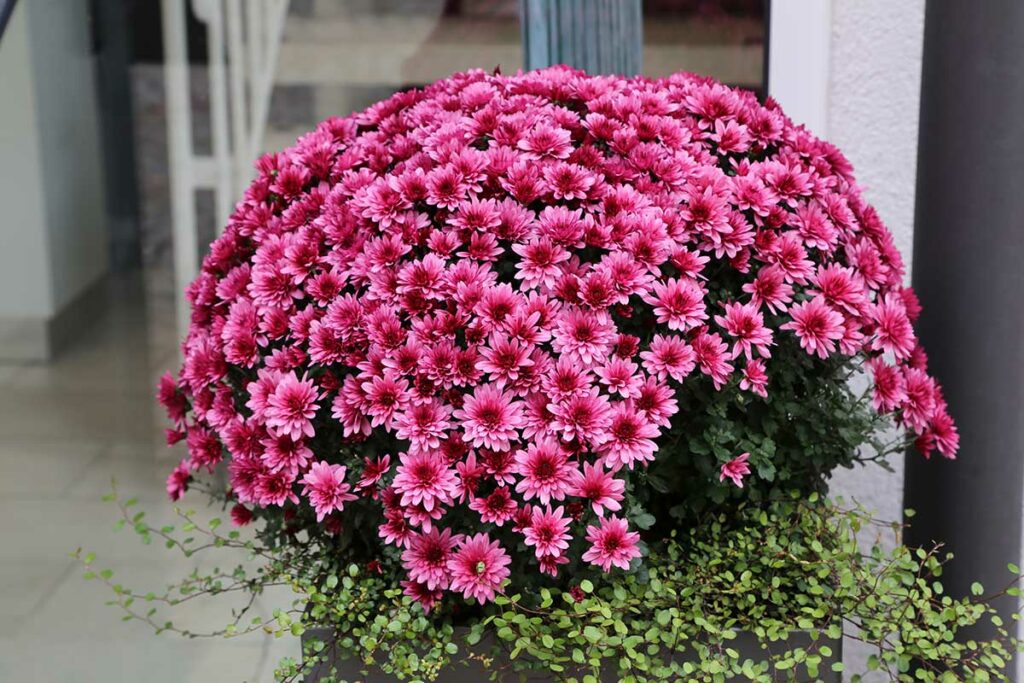
They look absolutely gorgeous when I bring them home. Full, colorful, and covered in blooms.
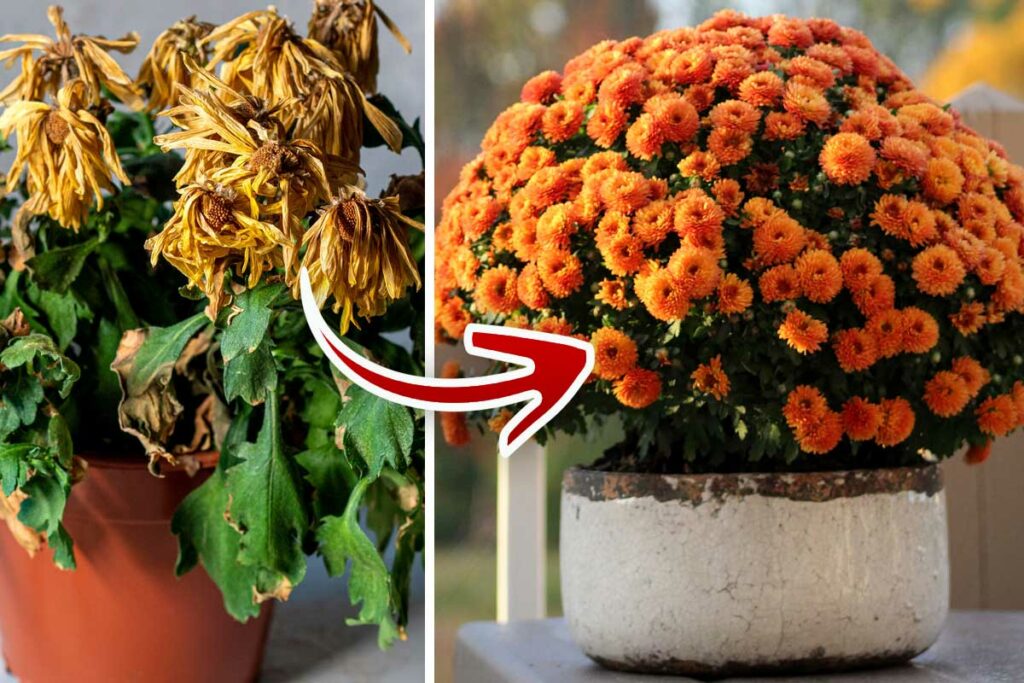
Then a few warm fall days go by, and suddenly they’re drooping as I forgot about them for a week.
So, do mums really need to be watered every single day?
Sometimes, yes. But not always.
Potted mums can dry out surprisingly fast, especially when they’re packed with roots and sitting outside in warm, sunny, or windy weather. But watering them automatically every morning isn’t necessarily the answer either.
The better approach is to check the soil.
Here’s how often mums really need water, how to tell when they’re thirsty, and a few simple mistakes that can shorten those beautiful fall blooms.
Do Mums Need Water Every Day?
If you have mums growing in pots, you may need to check them every day.
That’s different from saying you need to water them every day.
Container-grown mums can dry much faster than plants growing in the ground, especially if they’re still in small nursery pots.
During warm, sunny, or windy weather, some potted mums may genuinely need water every day. Once the weather cools down, the same plant may go much longer between waterings.
That’s why I prefer checking the soil instead of following a strict schedule.
The Easy Finger Test
Before reaching for the hose, press your finger about an inch into the soil.
If the soil feels moist, wait.
If it feels dry, it’s time to water.
That simple test is more useful than trying to remember whether you watered yesterday.
Mums like consistent moisture, but they don’t want their roots sitting in soggy soil.
And fall weather changes quickly. One week can be warm enough to dry out a pot almost every day, while the next week may be cool and cloudy enough that the soil stays moist much longer.
Why Potted Mums Dry Out So Quickly
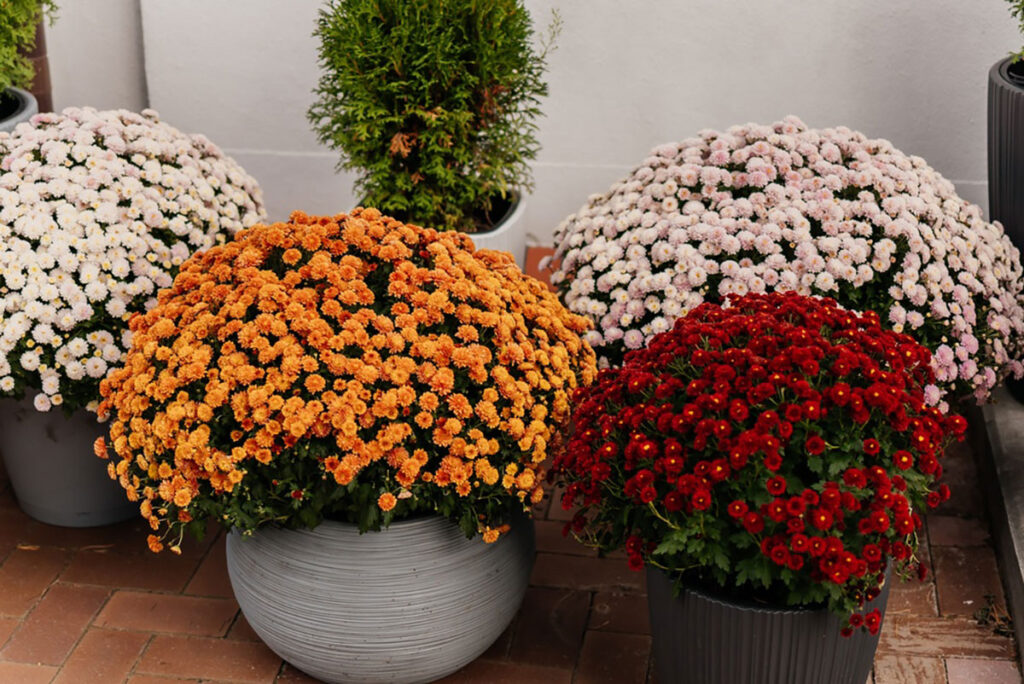
Those big, beautiful mums we buy in fall can be a little deceiving.
Above the pot, you see a huge mound of leaves and flowers.
Below the pot, there may not be much soil at all.
Many mums are growing in fairly small nursery containers compared with the size of the plant. That means there isn’t much soil available to hold moisture for all those stems, leaves, and blooms.
Add sunshine and wind, and the pot can dry out surprisingly fast.
That’s why a mum that looked perfectly fine in the morning can sometimes look wilted by late afternoon.
How to Water Mums the Right Way
When your mum does need water, give it a thorough drink instead of just wetting the surface.
Water slowly around the base of the plant until excess water begins draining from the bottom of the pot.
Then stop.
You want the root ball evenly moist, but you don’t want the pot sitting in water afterward.
If your mum came wrapped in decorative foil or is sitting inside another decorative container, check underneath it.
Those pretty covers can sometimes trap water around the nursery pot.
Cute? Yes.
Great for drainage? Not always.
Make sure excess water can escape freely.
Try to Keep the Flowers and Leaves Dry
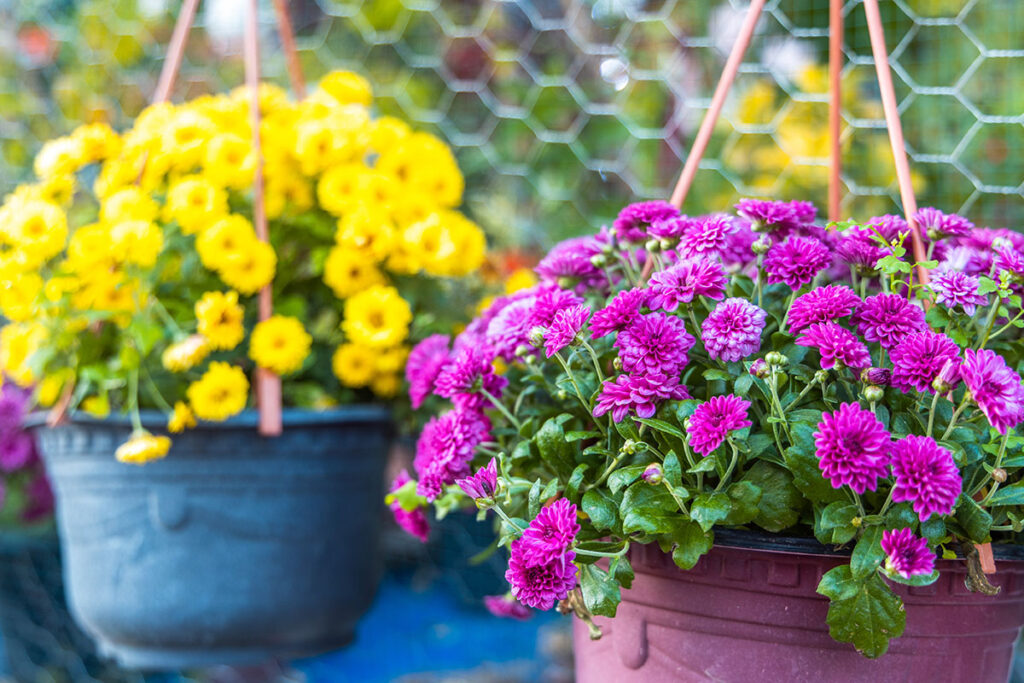
Whenever possible, direct the water toward the soil instead of spraying the entire plant from above.
Mums can be susceptible to fungal problems, and repeatedly soaking the leaves and flowers can create conditions that encourage disease.
With a dense mum, you may need to gently move the foliage aside and aim your watering wand underneath it.
A little awkward, but worth it.
How Often Should You Water Mums in Pots?
There isn’t one schedule that works for every porch or patio.
A small pot in full sun may dry out quickly.
A larger container in cooler weather may stay moist for several days.
As a general rule:
- Warm, sunny, or windy weather: Check the soil daily.
- Mild fall weather: Check every day or two.
- Cooler fall weather: The soil may stay moist longer, so always check before watering.
The important part is simple:
Water when the soil starts to dry out, not because the calendar says it’s time.
Your mum doesn’t know what day of the week it is.
What About Mums Planted in the Ground?
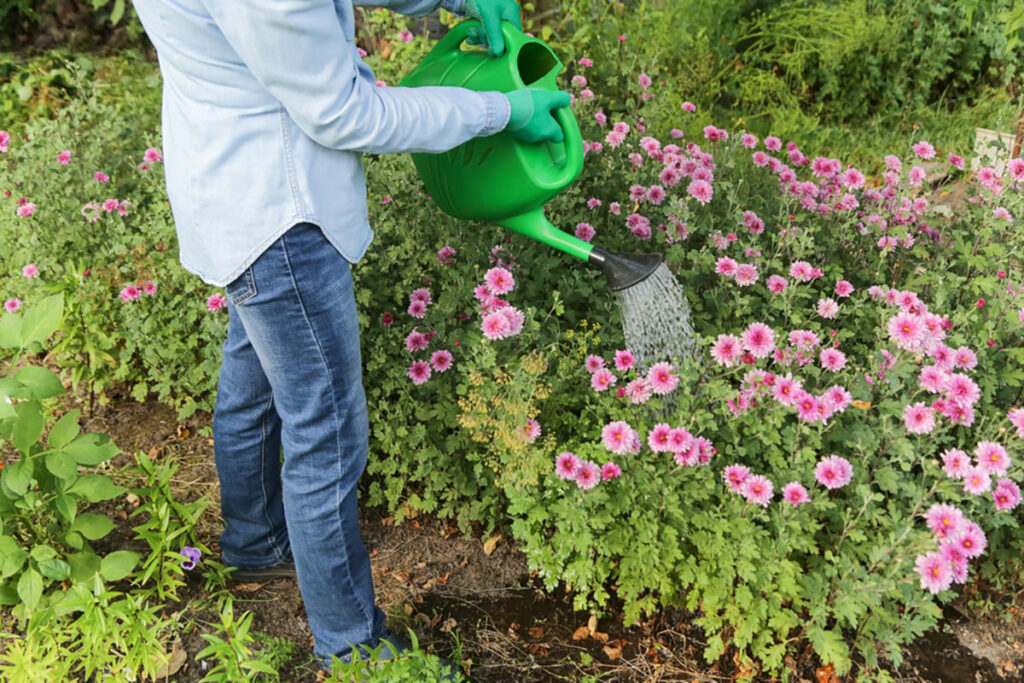
Mums growing in the garden are a little different.
They usually don’t need the same near-daily attention as a plant growing in a small nursery pot.
Garden soil holds much more moisture than a container, so in-ground mums can often go longer between waterings.
During dry weather, check the soil and water deeply when it begins to dry out.
A layer of mulch can also help the soil hold moisture longer.
Just avoid piling mulch directly against the stems.
Don’t Let Mums Completely Dry Out
One mistake I try especially hard to avoid is letting a blooming mum become bone dry.
You’ll usually know when it happens.
The leaves start drooping, the flowers look tired, and the whole plant suddenly loses that full, fluffy appearance that made you buy it in the first place.
Mums can sometimes perk back up after watering, but repeatedly letting them wilt can stress the plant and shorten the display.
But Don’t Drown Them Either
Mums like moisture.
They just don’t like constant sogginess.
If the soil is still wet and you keep watering because you were told mums need water every day, you can create a whole new problem.
If the soil stays saturated for long periods, check the drainage before adding more water.
What If the Soil Is Extremely Dry?
Have you ever watered a very dry pot and watched the water run straight down the sides and out the bottom?
I’ve done this plenty of times.
Unfortunately, that doesn’t always mean the root ball actually absorbed much water.
Very dry potting mix can sometimes be difficult to rewet.
If that happens, water slowly, let the soil sit for a moment, and then water again.
The goal isn’t to pour more water onto the plant.
It’s to make sure the root ball actually gets wet.
Quick Mum Watering Cheat Sheet
| Situation | How Often to Check | What to Do |
|---|---|---|
| Potted mums in warm, sunny weather | Daily | Water when the top inch of soil feels dry |
| Potted mums in cool fall weather | Every 1–2 days | Water only when the soil begins to dry |
| Mums in small nursery pots | Daily | Watch closely because small pots dry out faster |
| Mums in large containers | Every 1–2 days | Check the soil before watering |
| Mums planted in the ground | During dry spells | Water deeply when the soil begins to dry |
| Soil still feels moist | Wait | Check again the next day |
| Soil feels dry about 1 inch down | Water | Soak thoroughly until excess water drains out |
| Mum is badly wilted and very dry | Water slowly | Let the soil absorb moisture, then water again if needed |
The Bottom Line
So, do mums really need water every day?
Not necessarily.
Potted mums often need to be checked every day, especially during warm, dry, or windy fall weather. Some may actually need daily watering.
Others won’t.
Mums planted in the ground usually need water less often because garden soil holds moisture longer than a small container.
The easiest rule is also the one that’s hardest to mess up:
Stick your finger in the soil before you water.
If it feels dry, give your mum a thorough drink.
If it still feels moist, put the watering can down and check again tomorrow.
Your mums should stay happier, and hopefully you’ll get to enjoy those colorful blooms for much more of fall.