We all want our container plants to thrive, and nothing is more frustrating than watching a beloved plant slowly decline from soggy, waterlogged soil.
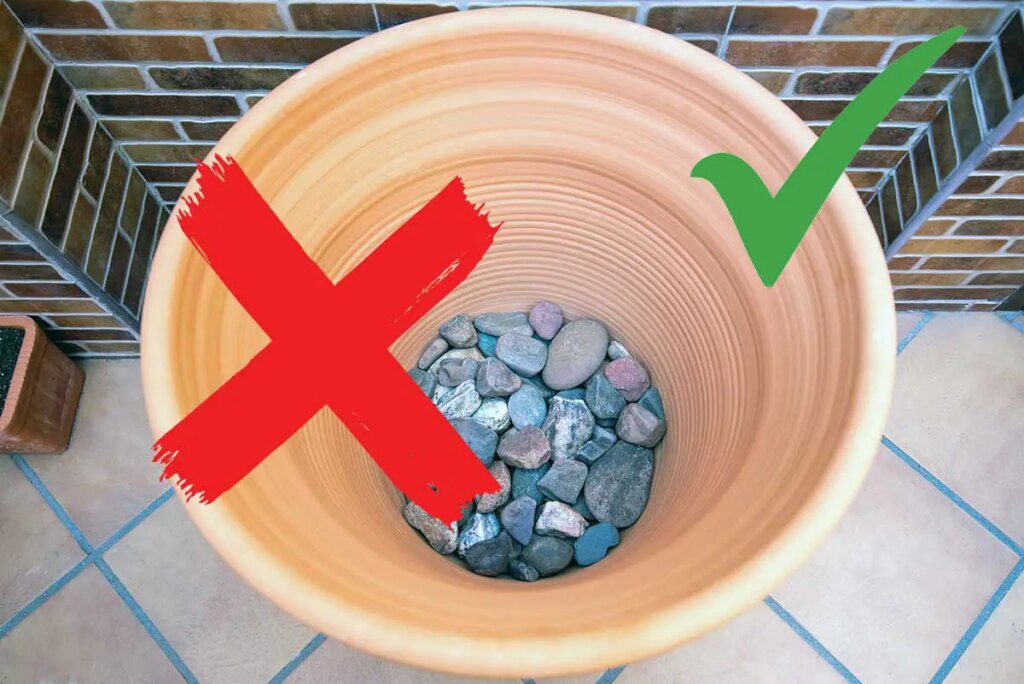
So when someone tells us to toss a layer of gravel or stones at the bottom of our pots to “improve drainage,” it just sounds like common sense, doesn’t it?
Today, we’ll go over the truth behind this incredibly popular gardening practice – because, in fact, what’s happening inside that pot might surprise you.
But Does It Actually Work?
Let’s look at the logic first, because it’s easy to see why so many gardeners swear by this method.
You’re growing plants in containers, overwatering is one of the most common ways to lose them, and so naturally, you want to help excess water escape as quickly as possible.
Dropping a layer of gravel or stones at the bottom seems like a straightforward fix.
Makes sense, right?
Well, here’s where it gets interesting.
Studies have actually shown that placing coarser material – like gravel or stones – beneath your potting soil causes your soil to retain more moisture, not less.
And so instead of improving drainage, you’re accidentally doing the opposite of what you intended.
Here’s why: soil doesn’t simply release its water downward into those larger particles until it becomes fully saturated first.
Think of it like a sponge sitting on top of a pile of rocks – that sponge is going to hold onto every drop of water it can before anything trickles through to the rocks below.
This is what soil scientists refer to as an “interface” problem, where two very different textures meet and essentially create a barrier.
So while your intentions are completely good, that layer of gravel is creating a perched water zone right above it – and that’s exactly the waterlogged environment you were trying to avoid in the first place.
What About the Drainage Hole Itself?
Let’s go over one scenario where a stone or two can actually be helpful. If your pot has a large drainage hole, you’ll want to prevent your potting soil from simply washing straight through it every time you water.
Placing one or two larger river rocks directly over – not filling the entire base, just covering the hole – can help diffuse the flow of water without creating that problematic interface layer throughout the pot.
However, that’s a very targeted, limited use of stones. We’re talking one or two rocks, not a full inch-deep layer covering the entire bottom of your container.
So What Should You Do Instead?
If you’re looking to give your container plants the best possible drainage, here’s the good news: the solution is actually simpler – and cheaper – than the gravel method.
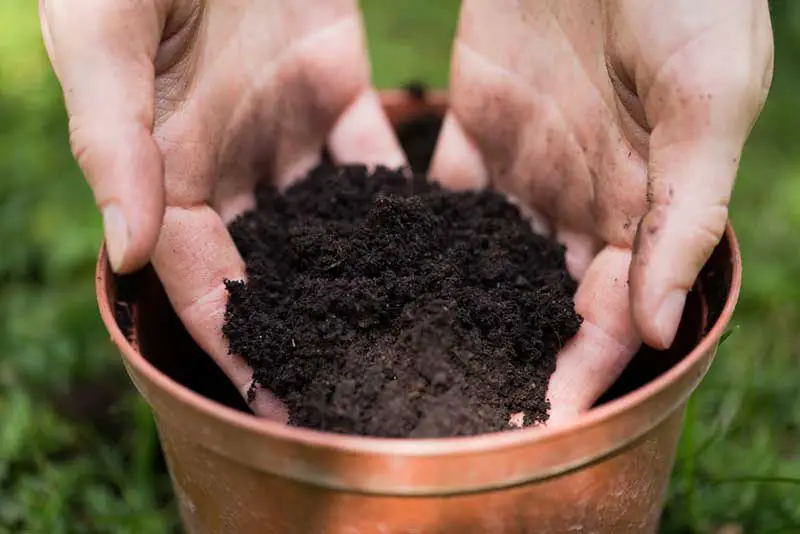
Start with excellent potting soil. This is genuinely the most important step. A high-quality potting mix is already engineered to provide the right balance of drainage and moisture retention that container plants need. You can skip the gravel entirely.
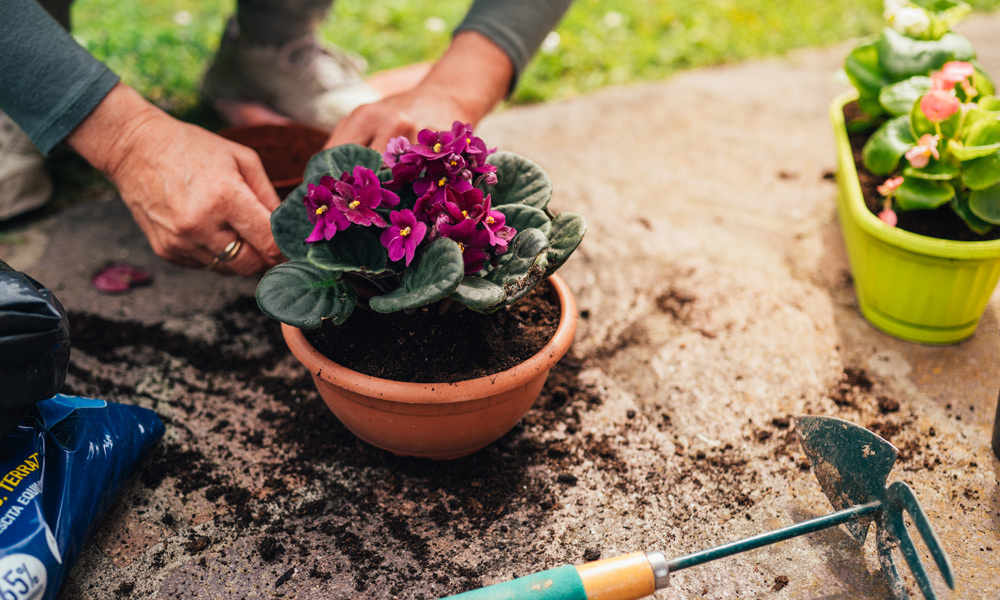
Always use a pot with a drainage hole. It sounds obvious, but you’ll want to make sure water has somewhere to actually escape. A saucer or plate underneath will catch any excess, which may either evaporate naturally or even get wicked back up into the soil over time — a handy little bonus.
Water correctly. In fact, this might be the simplest fix of all: don’t overwater your plants. Learning to read your plant’s moisture needs and watering deeply but infrequently is far more effective than any drainage hack.
Natural Sponges or Coffee Filters
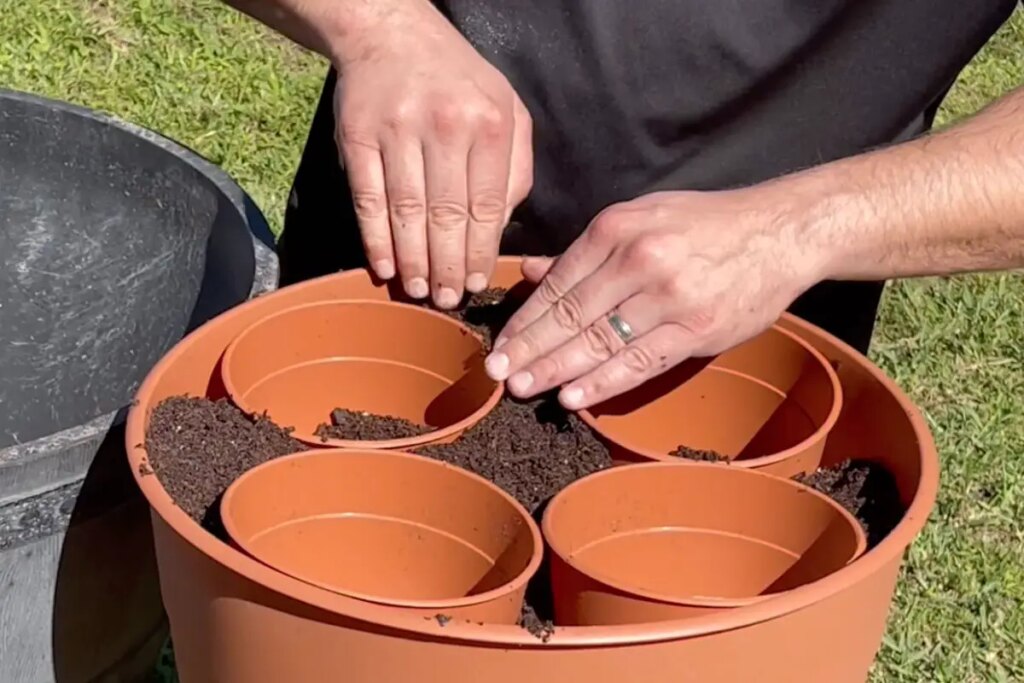
If you still feel like you need something at the bottom of your containers, one option worth considering is cutting up old natural sponges and placing them at the base.
Unlike gravel, sponge material holds moisture and releases it back up into the soil as it dries out – essentially creating a gentle, self-regulating sub-irrigation system.
There are also commercial products designed to do exactly this, if you’d prefer a ready-made solution.
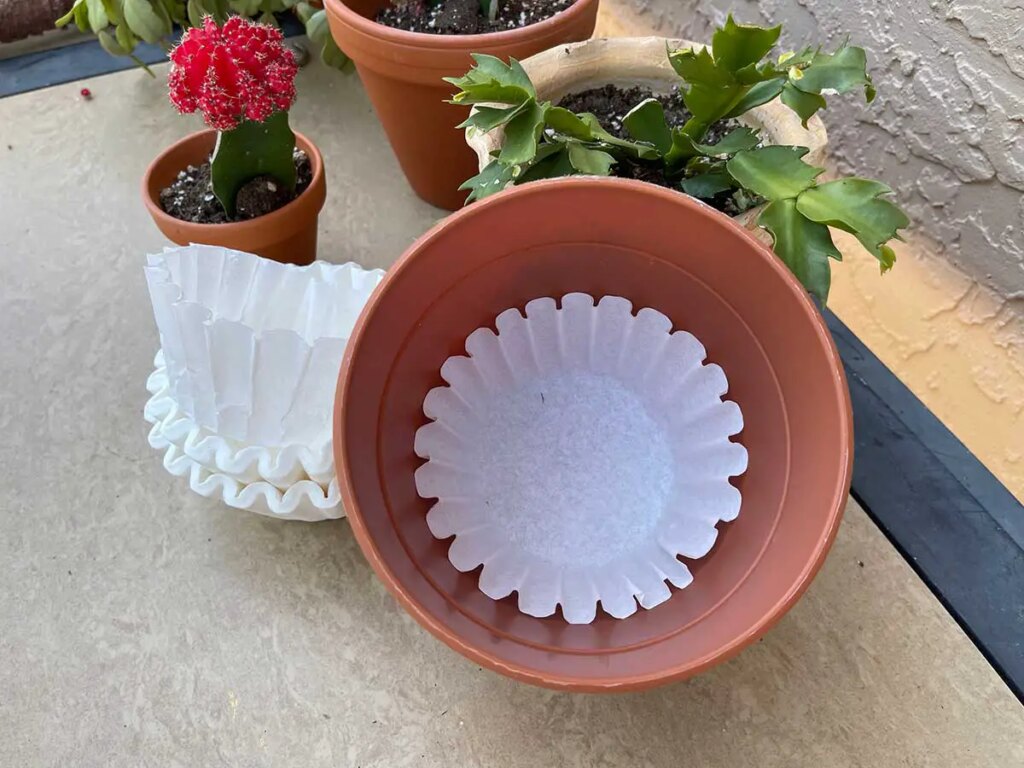
Here are 15 Clever Options to Cover Drainage Holes in Containers
Let’s Go Over the Pros and Cons
Pros of using stones at the base of containers:
- Covers large drainage holes to prevent soil washout
- Widely available and inexpensive
- Can feel reassuring for beginners
Cons of using stones at the base of containers:
- Actually increases moisture retention in the soil above
- Creates an interface that impedes natural water movement
- Takes up valuable root space in your container
- Adds unnecessary weight
FAQ
Does putting gravel in the bottom of a pot really hurt my plants?
It can, yes – while it likely won’t kill a resilient plant outright, it does create wetter conditions near the roots than most plants prefer, which over time can contribute to root rot.
What if my pot doesn’t have a drainage hole? Can I use gravel then?
You can, but honestly you’ll want to find a way to add drainage before anything else.
Gravel in a container with no drainage hole still won’t solve your problem – water will simply accumulate beneath it instead.
Consider drilling a hole, or repotting into a container that already has one.
Can I use stones in raised garden beds?
The same principle applies here. Rather than layering gravel at the base of a raised bed, you’ll want to focus on filling it with rich, well-structured soil and breaking up any compacted layers beneath it.
Is this really a common mistake?
It really is! This is one of those gardening myths that gets passed down from generation to generation because the logic sounds so reasonable.
The good news is that once you know the truth, fixing it is easy – and your plants will thank you for it.
Remember, great container gardening doesn’t have to be complicated. Skip the gravel layer, invest in really good potting soil, make sure your pot has a drainage hole, and water your plants well.
Bee balm, tomatoes, herbs, flowers – whatever you’re growing, getting back to these basics will serve you far better than any shortcut.