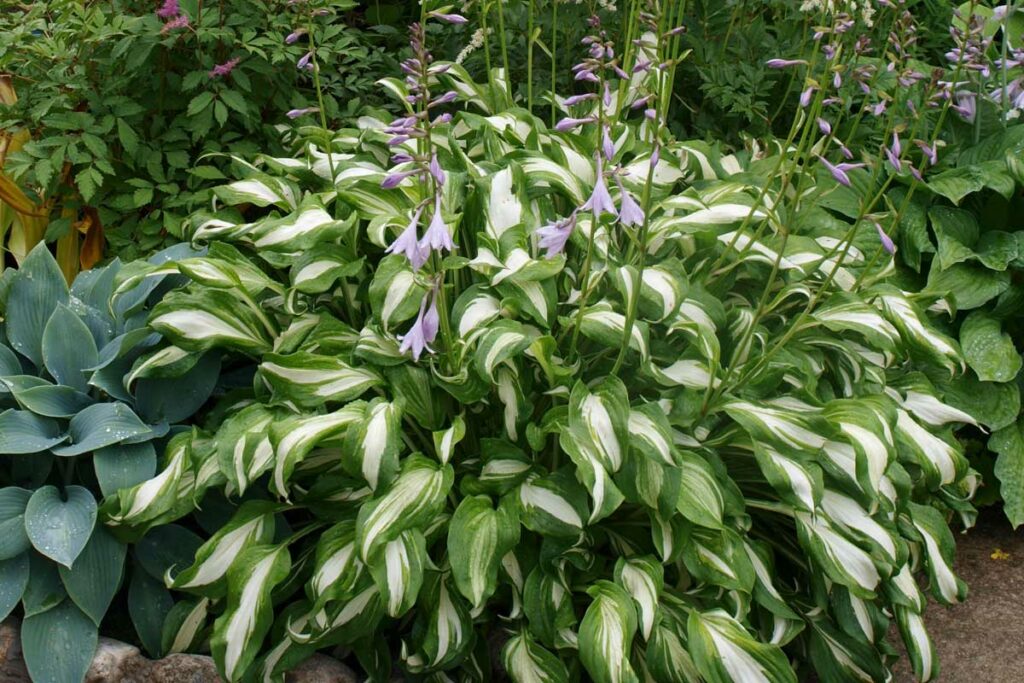
I’ll be honest with you: I’ve planted every single thing on this list. A couple of them I planted twice, which tells you I’m either an incurable optimist or a very slow learner. (My money’s on slow learner.)
Here’s the thing nobody warns you about at the garden center. The plants that get sold as “easy,” “fast-filling,” and “you can’t kill it” are sometimes telling you the truth in a slightly threatening way. A plant that’s impossible to kill is also, by definition, a plant that’s impossible to get rid of once it decides your whole flower bed belongs to it now.
So I did what any curious gardener with a sore back and a wheelbarrow full of regret would do. I tested these in my own beds, I pestered a Master Gardener at my county extension office, and I read more about rhizomes than any retired person should reasonably have to.
Here’s what I learned, plus what I plant instead so you don’t lose a Saturday digging.
One quick note before we start: gardening is wonderfully regional. A plant that’s a polite little clump in your zone can be an absolute outlaw in mine.
So if one of these has behaved beautifully for you, more power to you. Truly. Keep it. The rest of you, read on.
1. Bishop’s Weed (Goutweed)
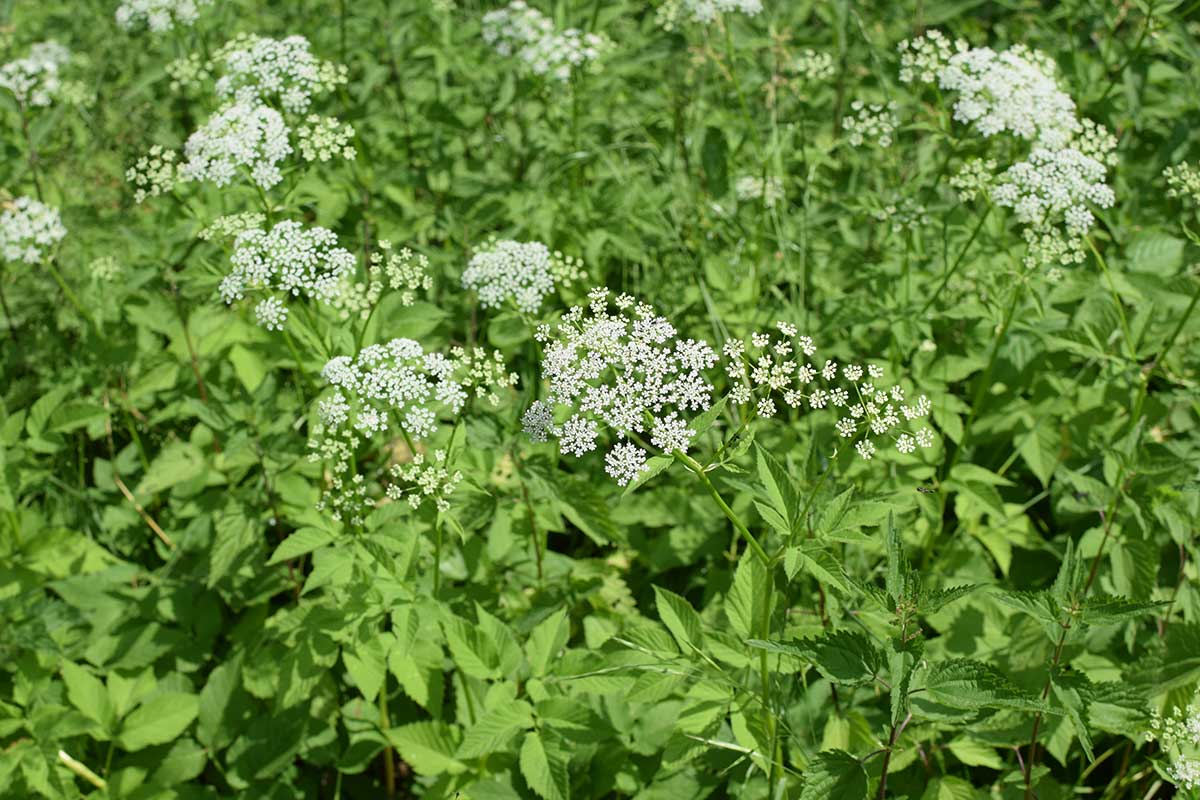
Oh, Bishop’s Weed. You start innocently enough, wanting a pretty variegated groundcover for that awkward shady spot under the maple. What you get is a botanical houseguest who never leaves and slowly redecorates.
The problem is underground. It spreads by rhizomes (think of them as little roving roots with big ambitions), and every fragment you leave behind throws a comeback party. I once “removed” mine and found it cheerfully reappearing two summers later, three feet from where it started.
Plant instead: Epimedium (barrenwort) or foamflower. Both handle dry shade, both stay where you put them, and neither one plots against you.
2. Gooseneck Loosestrife
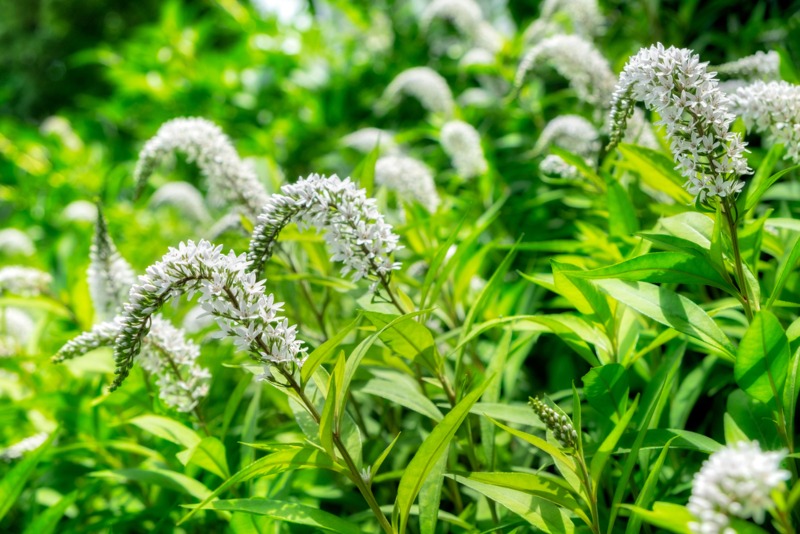
It’s genuinely lovely. Those little arching white flower spikes really do look like a flock of geese craning their necks, and I understand why it ends up in so many cottage gardens. I planted three. I now have, conservatively, four hundred.
This one runs on aggressive underground rhizomes and shows zero interest in property lines. It’ll march straight through your coneflowers and out the other side.
Plant instead: Culver’s root for that same tall, elegant white-spire look, or a clumping astilbe if you want feathery and well-behaved.
3. Obedient Plant
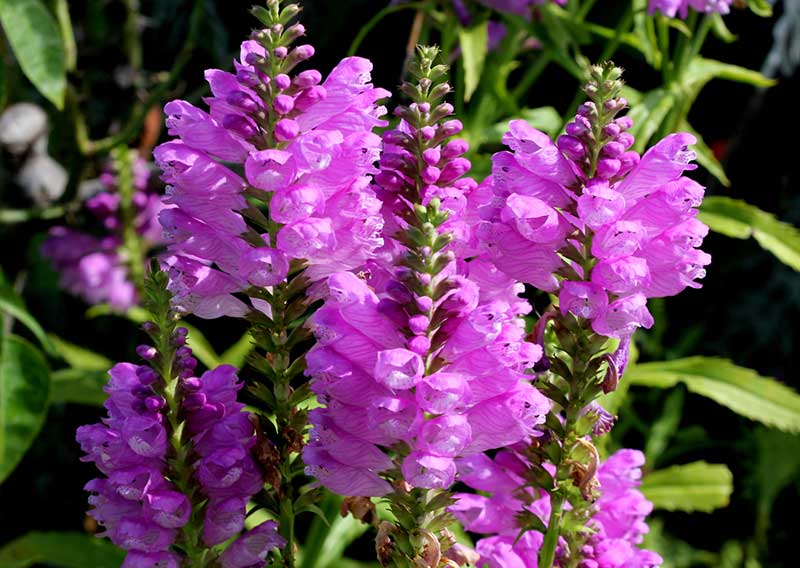
Whoever named this plant had a wicked sense of humor, and I’d like to shake their hand. The “obedient” part refers to the individual flowers, which stay put when you nudge them. The plant as a whole? Lawless.
It spreads by rhizomes (sensing a theme yet?) and forms wandering colonies that quietly evict your tidier perennials.
Plant instead: Liatris (blazing star) for those vertical late-summer spikes, or a clumping salvia like ‘Caradonna’ that lives up to its manners.
4. Creeping Bellflower
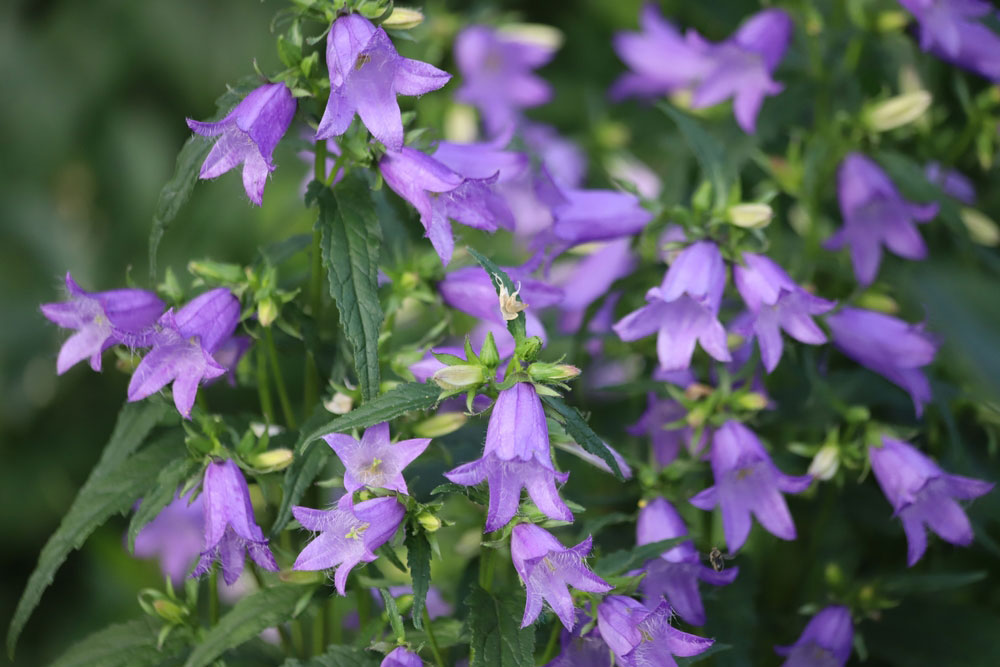
This is the one I’d tattoo a warning about if I were the tattoo type. Those purple bells are charming, which is exactly how it gets you. Underneath, it grows deep, brittle taproots and spreads by seed and rhizome, which is a bit like a thief who picks locks and climbs windows.
Note to self, learned the hard way: you cannot simply pull it. The root snaps, and the bottom half just shrugs and regrows.
Plant instead: A true clumping bellflower like Campanula ‘Birch Hybrid,’ or balloon flower for that same blue-purple charm without the criminal record.
5. Chameleon Plant
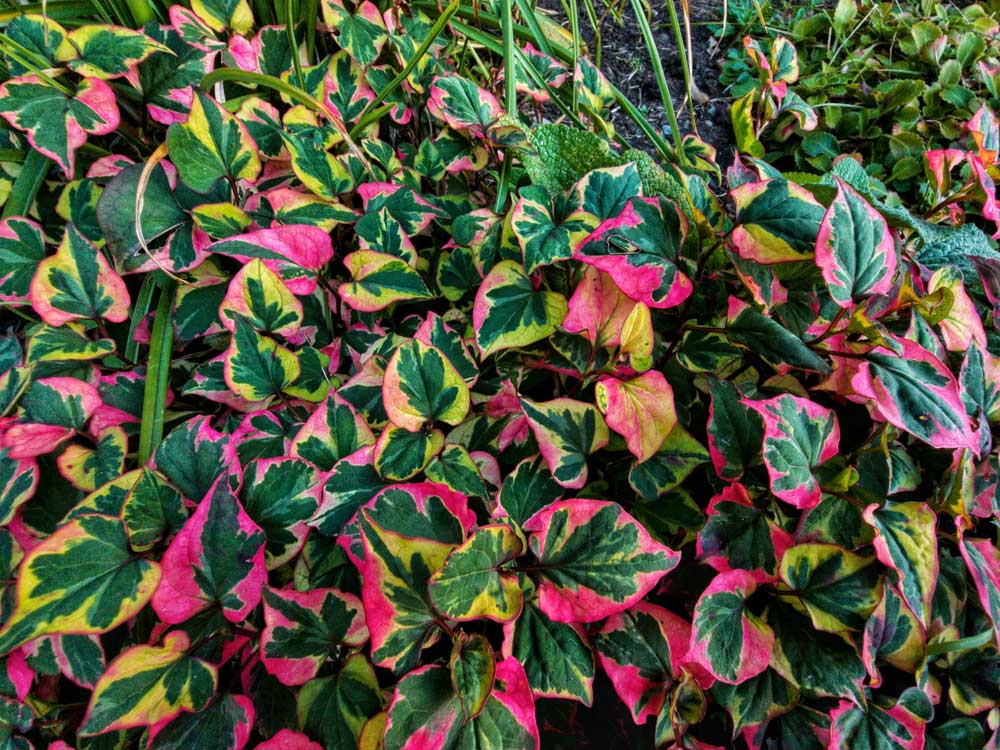
Sold for its splashy red, green, and cream leaves, this one earns its name by being impossible to pin down. Once it’s in, it’s in. Gardeners online swap horror stories about it surviving herbicide, smothering, and what I can only describe as spite.
It boils down to those rhizomes again, which fragment and resprout from the tiniest piece.
Plant instead: Brunnera ‘Jack Frost’ or a variegated heuchera. You get the show-off foliage and keep your sanity.
6. Mint
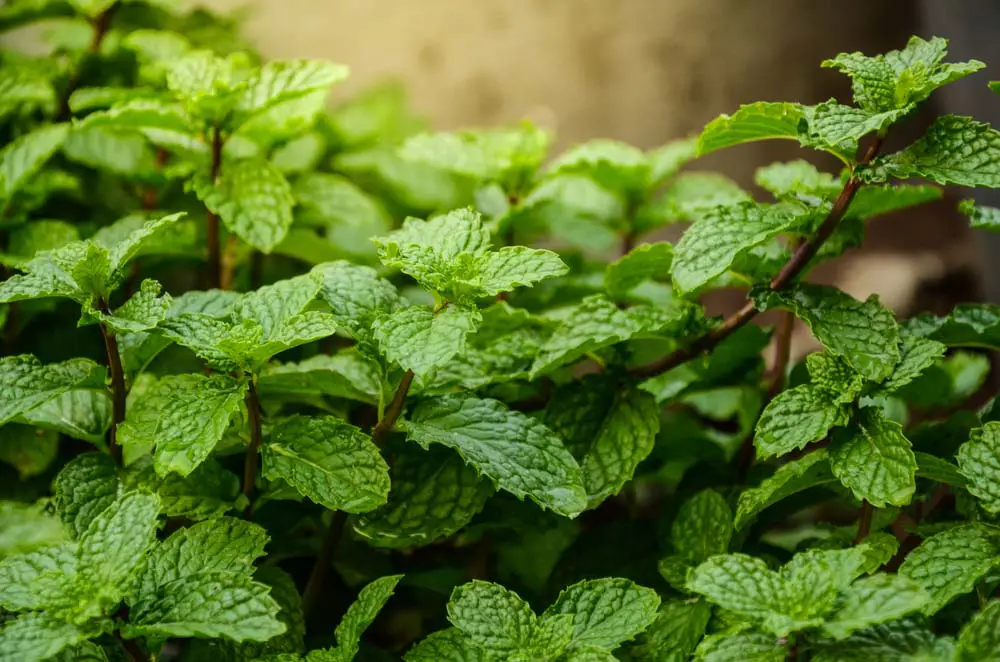
Yes, I know mint is technically an herb and we’re talking perennials. But so many of us tuck it into a flower bed for the smell, then live to regret it, that it has more than earned its spot on this list. I planted a single sprig by my back step about a decade ago. It now considers the entire side yard its rightful kingdom, and I am merely a tenant.
The trouble is those runners, which creep sideways just under the surface and pop up wherever they please. Leave one little piece behind and it starts the whole takeover over again. (My mother warned me. I did not listen. Note to self: listen to your mother.)
Plant instead: If it’s the fragrance you’re after, try mountain mint. It’s a native cousin that behaves far better and the pollinators adore it. Or grow your regular mint the only sensible way, which is in a pot, where it can be as ambitious as it likes inside four walls.
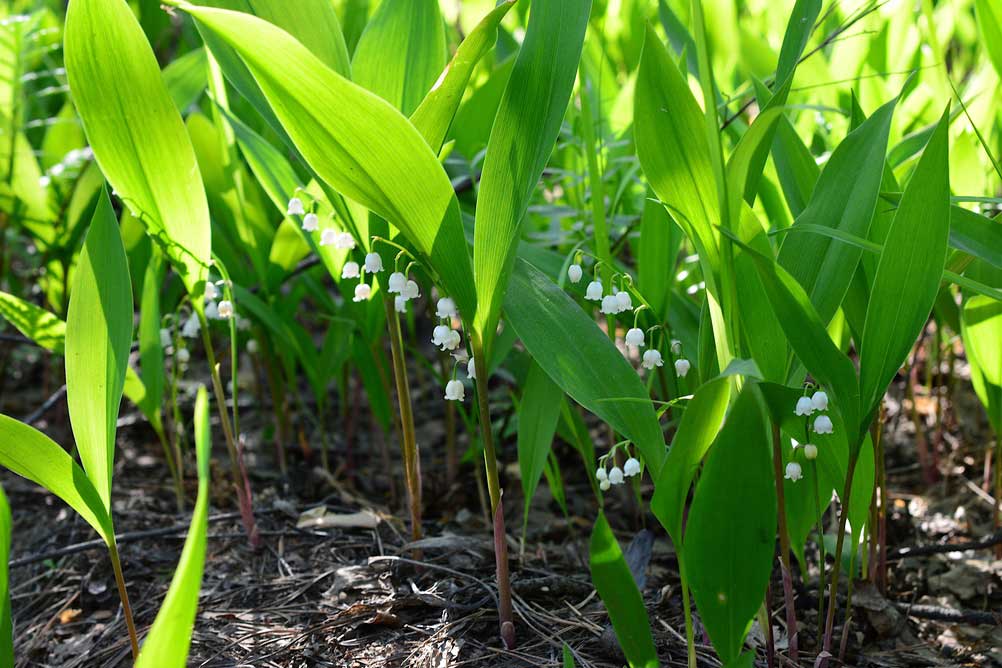
7. Lily of the Valley
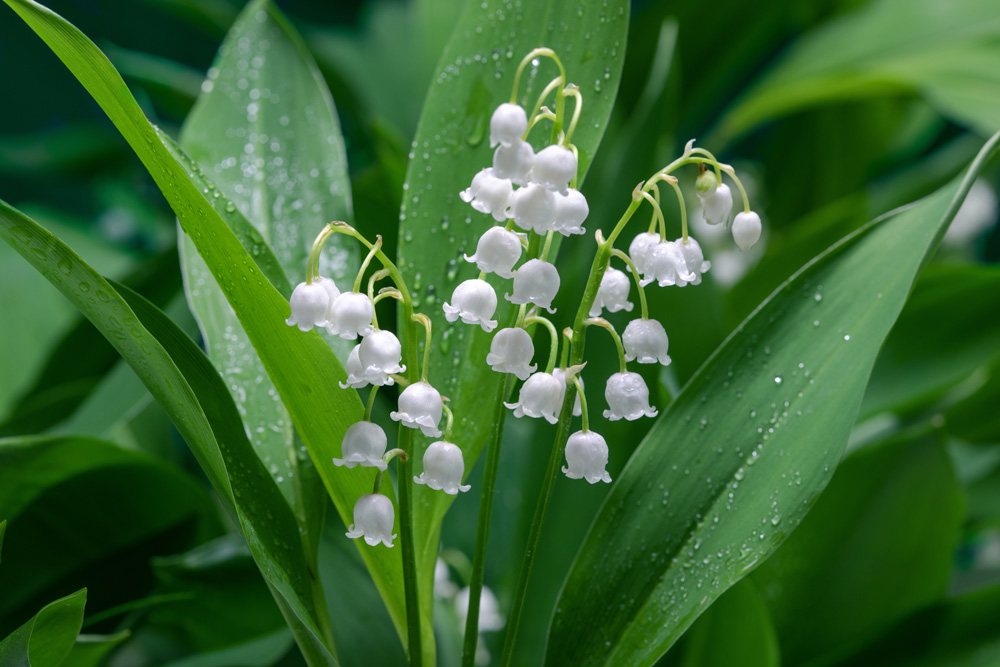
I know. I know. This one hurts, because it’s tied up with memories. My mother grew it, and the smell still stops me in my tracks. But sentiment aside, it spreads into dense mats by rhizome, crowds out everything tender, and (worth knowing if you have grandkids or curious dogs) every part of it is toxic if eaten.
I haven’t ripped mine out entirely. I’ve just contained it to one bordered spot where it can be nostalgic without being imperial.
Plant instead, or alongside: Solomon’s seal for that same arching woodland grace. It clumps slowly and stays gracious about it.
8. Yellow Flag Iris
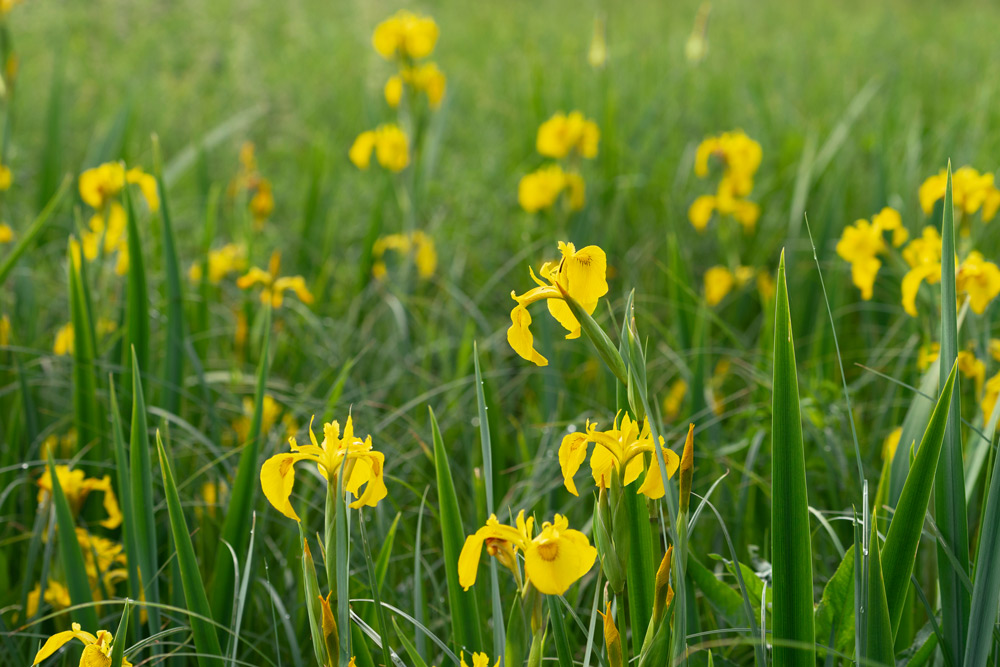
Gorgeous bright-yellow blooms, and a magnet for anyone with a pond or a soggy corner. The trouble is that it doesn’t stay in your soggy corner. It escapes into wetlands and waterways, where it’s classified as invasive in a good number of regions and genuinely crowds out native plants that wildlife depends on.
This is one where I’d gently ask you to check your local invasive species list before planting, not just your personal taste.
Plant instead: Native blue flag iris or a clumping Siberian iris. Same elegant blooms, none of the ecological guilt.
9. Periwinkle (Vinca)
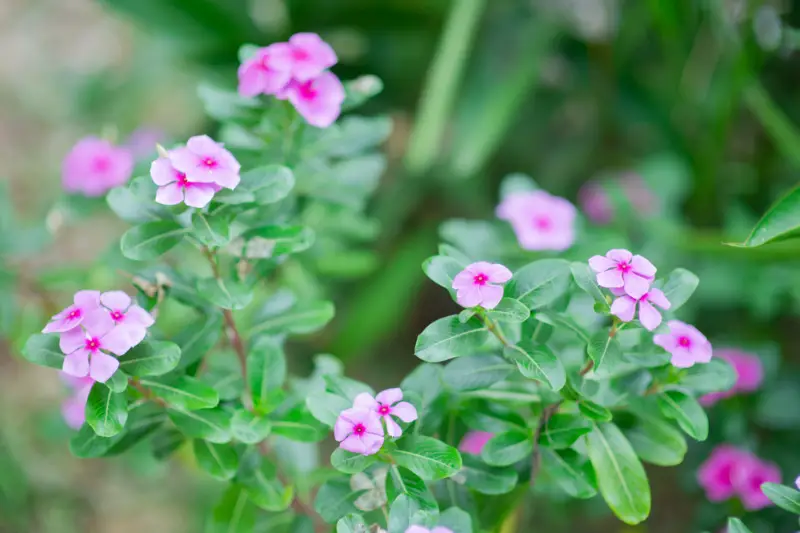
Evergreen, glossy, dotted with little blue flowers, sold by the flat as the answer to every shady slope. And for erosion it does work. The catch is that it doesn’t know when to stop, escaping garden beds and carpeting woodland floors where it smothers spring wildflowers.
Plant instead: Wild ginger, foamflower, or creeping phlox depending on your light. They cover ground without conquering it.
10. Bugleweed (Ajuga)
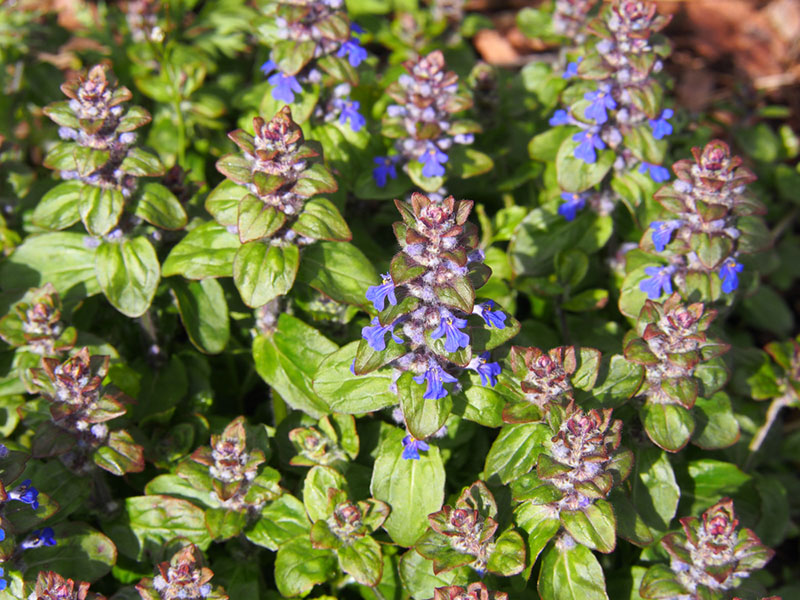
We’ll end on the one that gets into your lawn. Those low blue flower spikes are honestly delightful in spring. Then it creeps out of the bed, into the grass, and turns your turf into a patchwork you didn’t sign up for. It spreads by surface runners, so it travels fast and sideways.
Plant instead: Creeping phlox for sun or Pennsylvania sedge for shade. You get the low, tidy carpet without the lawn drama.
So Should You Rip Everything Out Tomorrow?
Goodness, no. Don’t go declaring war on your whole garden because a retired lady on the internet told you to. A garden isn’t a museum, and half the fun is figuring out what works in your dirt, your weather, and your tolerance for a plant that likes to roam.
Here’s my actual advice, friend to friend. If one of these is already thriving and you love it, enjoy it, just keep an eye on the edges and don’t let it hop the fence into wild spaces.
If you’re standing in the garden center with one of these in your cart, maybe set it down and reach for the better-behaved cousin instead.
Future You, the one who doesn’t spend next August on her knees with a trowel and a grudge, will thank you.
And if you plant one of these anyway? Don’t be mad if it takes over. But more power to you for trying.