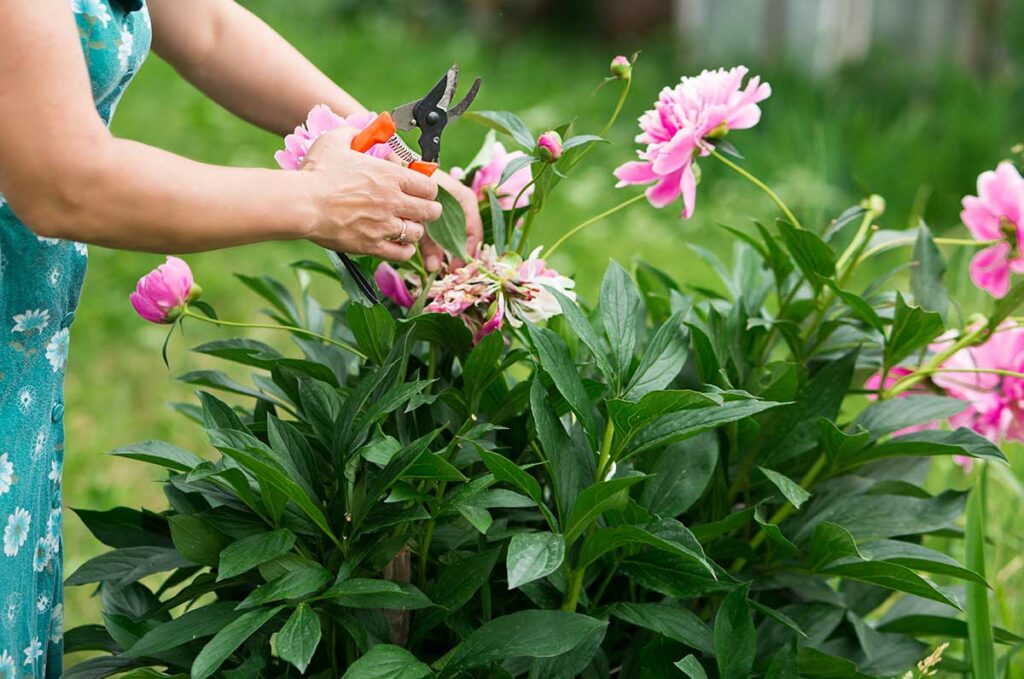
Want more color from your flower beds without replanting every season?
These long-blooming perennials can help keep the garden looking lively for weeks, and in some cases, months.
Some of these plants bloom over a long stretch on their own, while others put on their best show with regular deadheading, good sunlight, and the right growing conditions.
A few are especially valuable because they take over later in the season, when spring and early-summer flowers have faded.
Here are 21 perennials worth growing for dependable color that lasts longer than a quick spring flush.
Popular Long-Lasting Perennial Flowers
1. Shasta Daisy
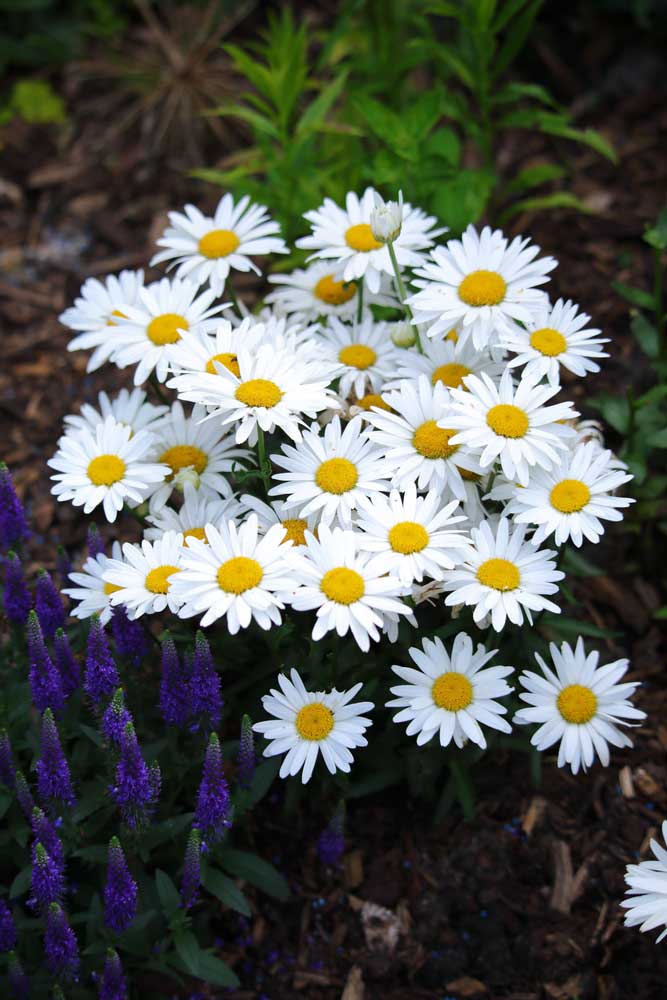
Shasta Daisies bring cheerful, white flowers with yellow centers to your garden. They bloom from early summer to early fall, providing long-lasting color. Plant them in a sunny location with well-draining soil.
2. Blanket Flower (Gaillardia)
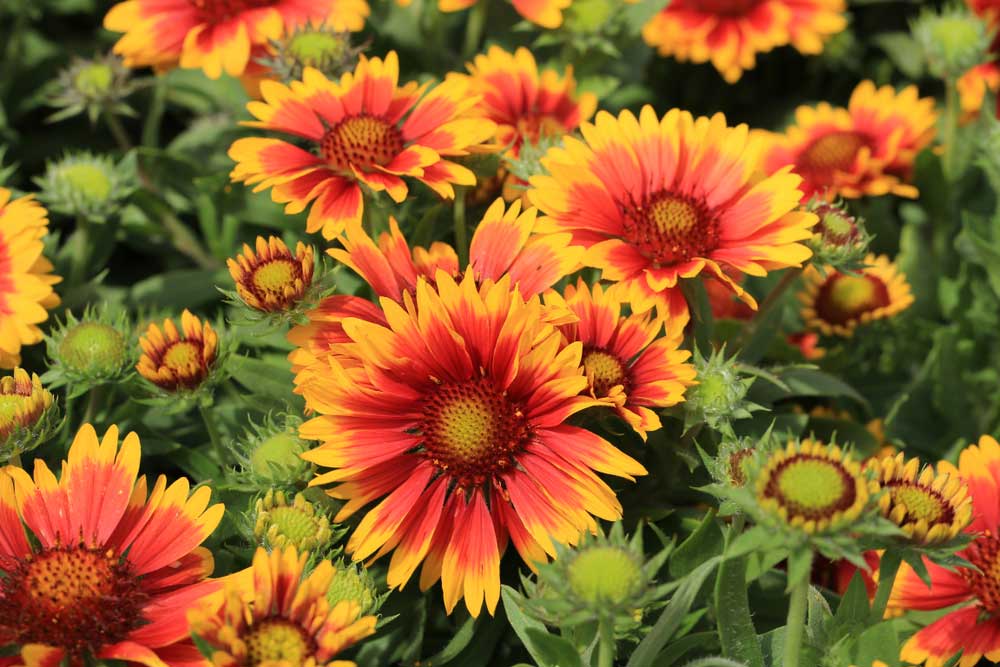
These vibrant, colorful flowers bloom from early summer to fall. They can thrive in various soil types and need full sun to grow. Blanket flowers are drought-tolerant and attract pollinators to your garden.
3. Catmint (Nepeta)
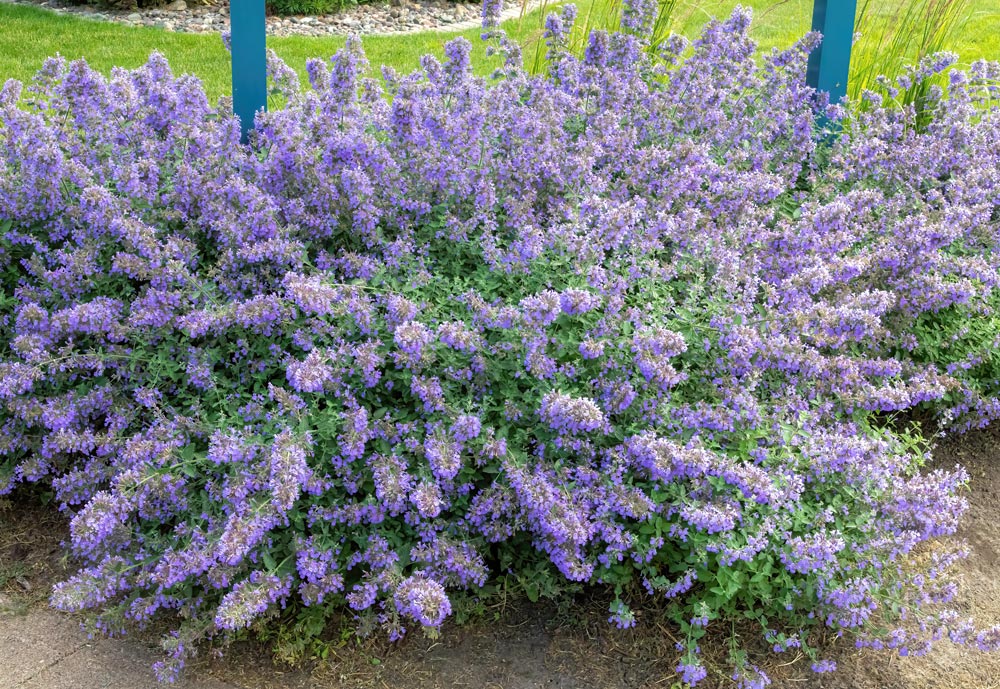
Catmint (Nepeta) is a hardy perennial known for its aromatic foliage and abundant clusters of lavender-blue flowers. It blooms from late spring to summer and often reblooms in the fall, attracting pollinators like bees and butterflies. Catmint thrives in full sun to partial shade and prefers well-draining soil. Once established, it’s drought-tolerant and low-maintenance, making it an ideal choice for both flower beds and borders.
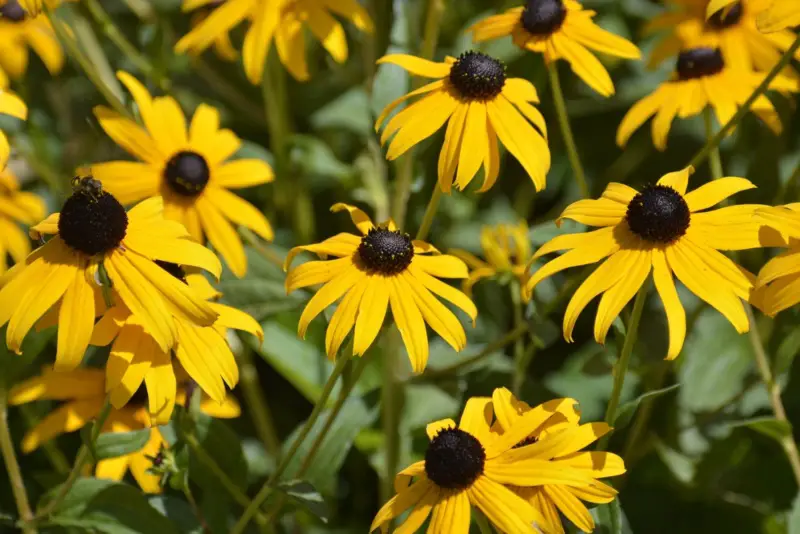
4. Black-Eyed Susan (Rudbeckia)
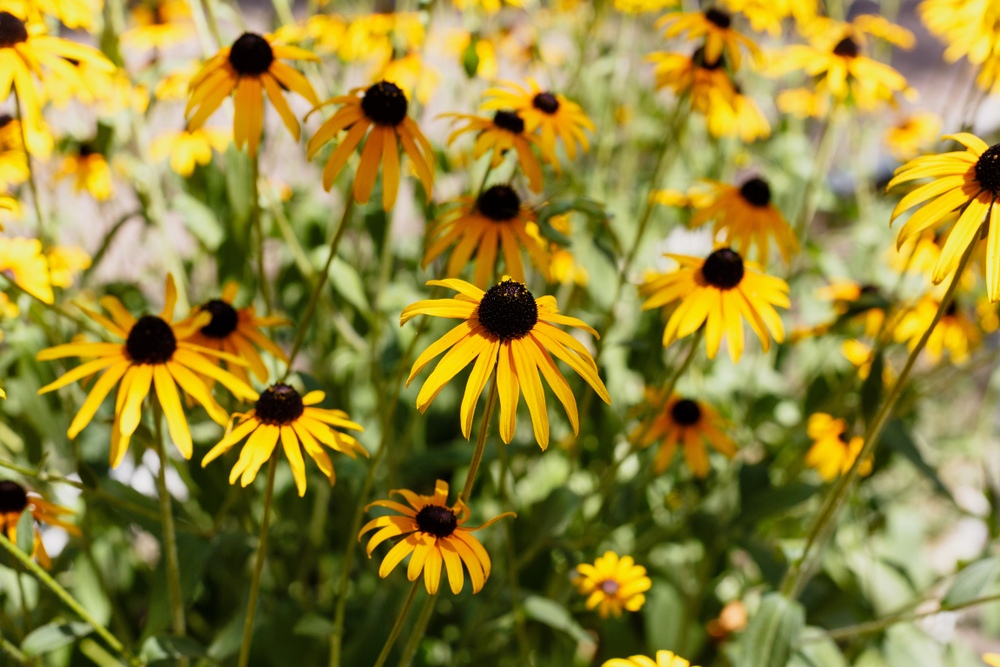
Black-Eyed Susans are a summer-favorite with yellow-orange petals surrounding a dark center. They bloom from mid-summer to early fall and prefer full sun and well-drained soil.
5. Coreopsis (Coreopsis)
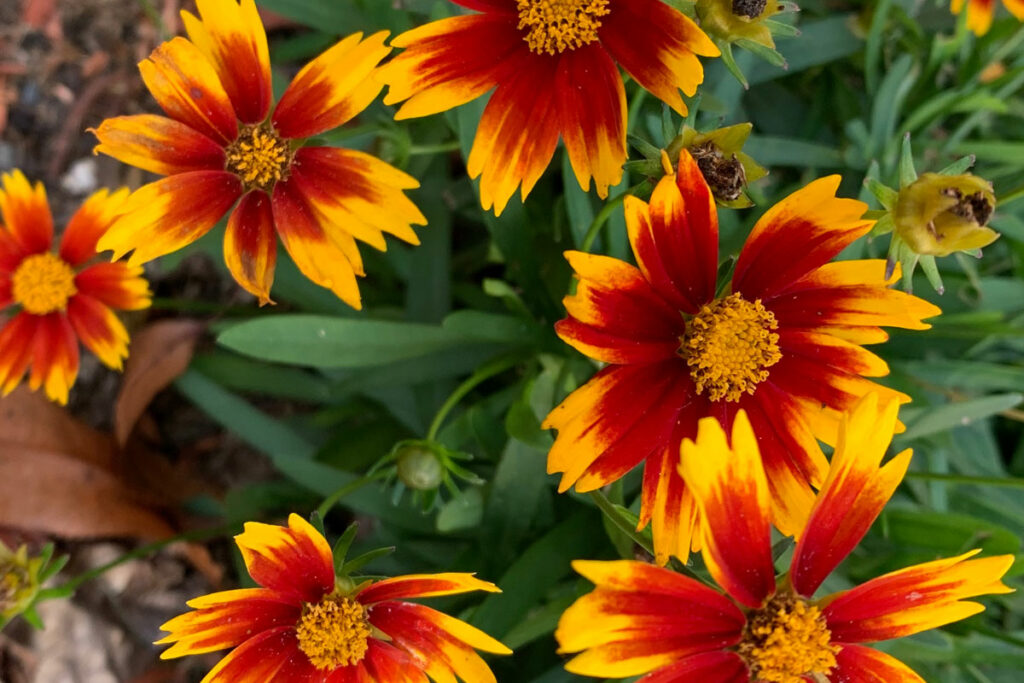
Coreopsis offers bright yellow or pink flowers that bloom from early summer to fall. They enjoy full sun and well-draining soil. With their long-lasting blooms, coreopsis is perfect for borders and containers.
6. Salvia (Salvia spp.)
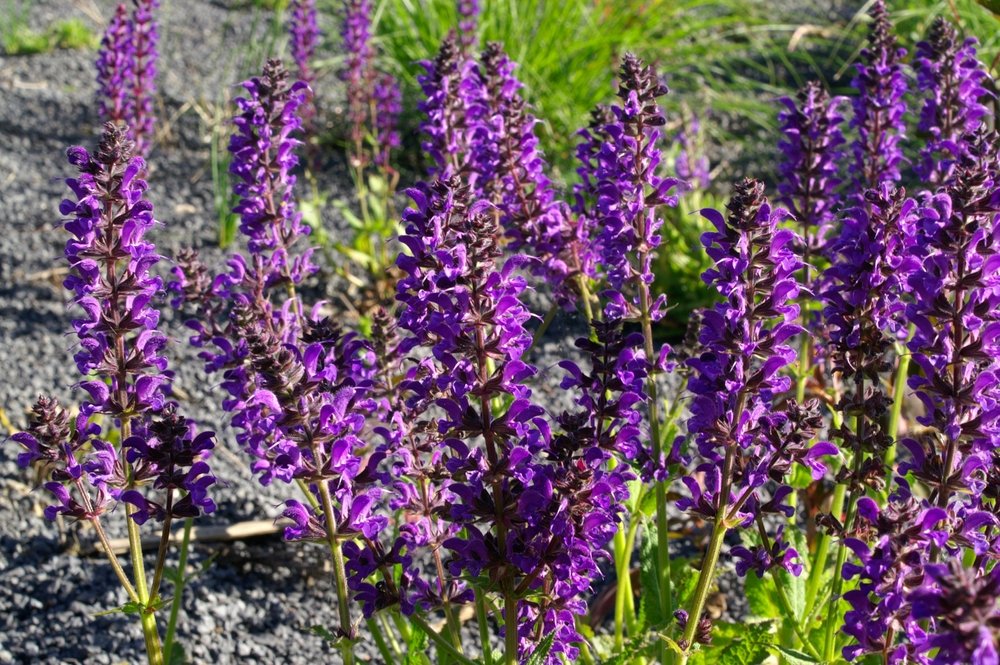
Salvia provides colorful spikes of flowers from early summer to fall. They thrive in full sun and well-draining soil. Plant them in your garden for a friendly invitation to beneficial pollinators.
7. Russian Sage
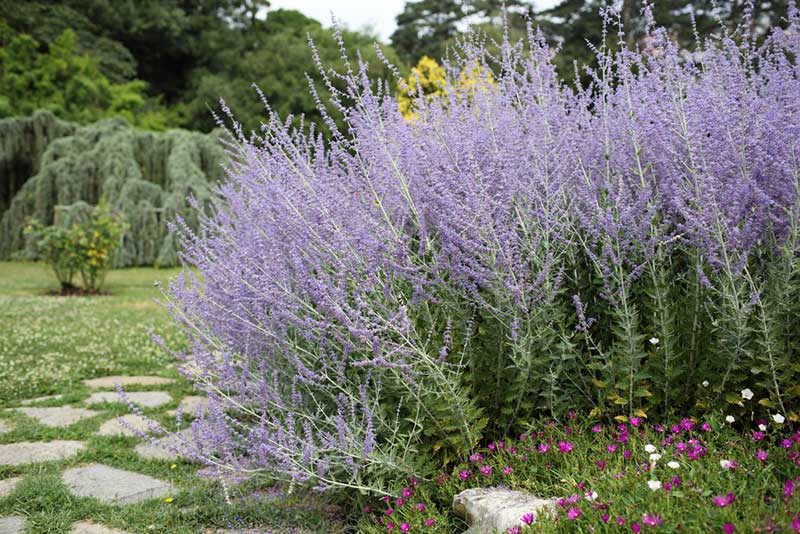
This perennial features lovely blue-purple flowers and grey-green foliage. Russian Sage blooms from midsummer to fall and prefers full sun and well-draining soil.
8. Sedum (Sedum spp.)
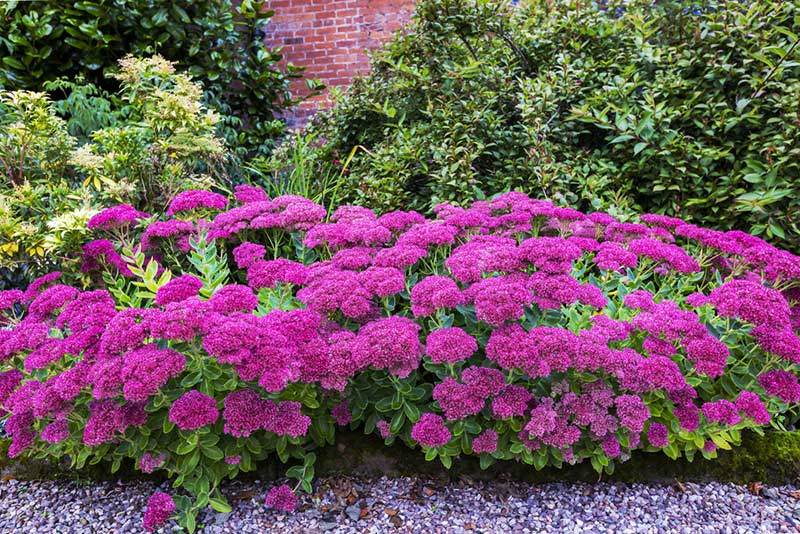
Sedums have succulent leaves and flower clusters that bloom from late summer to fall. They excel in full sun and well-draining soil, and are known for being low-maintenance and drought-tolerant.
9. Astilbe
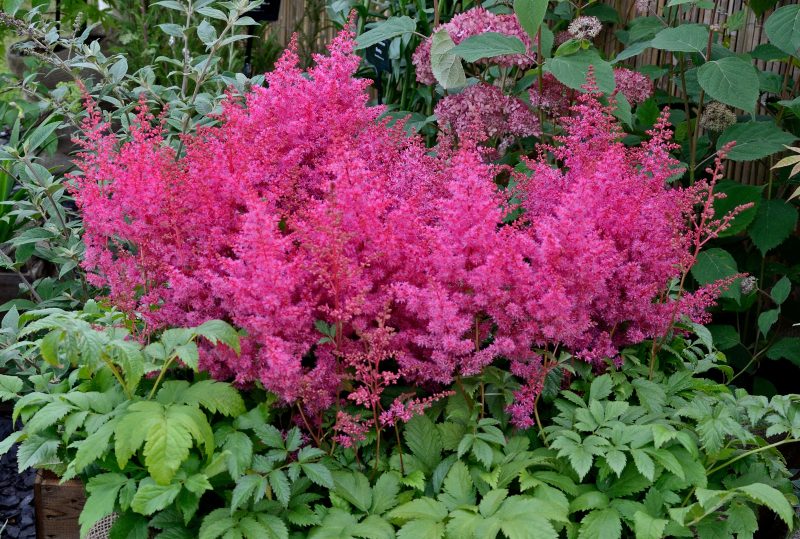
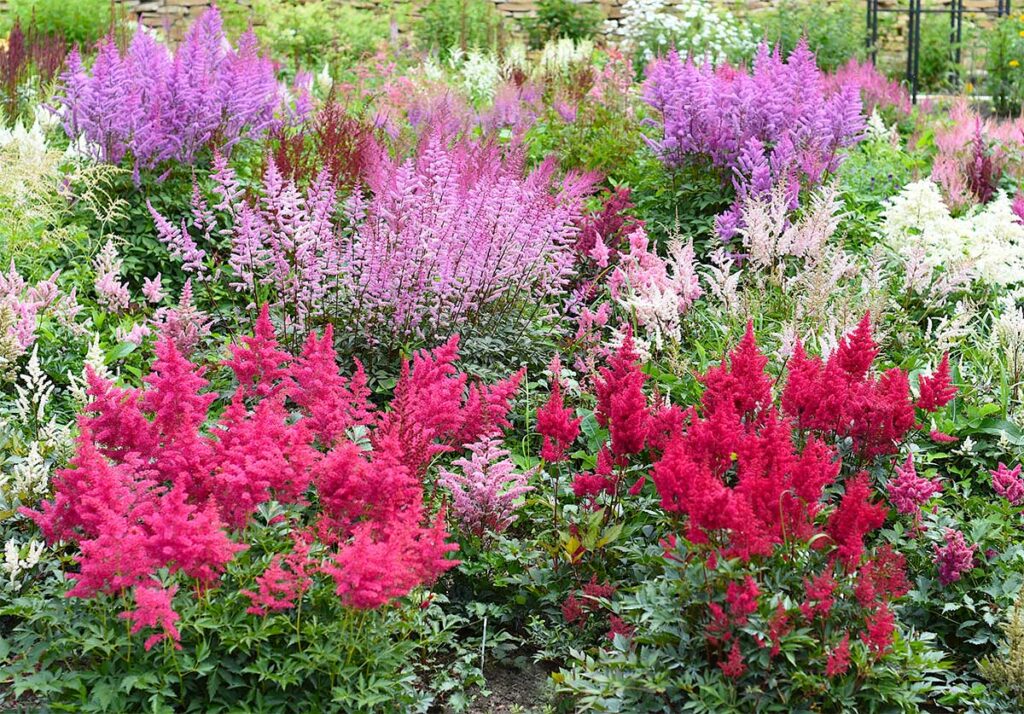
Astilbes produce soft, feathery plumes in shades of pink, red, white, and purple. They are a beautiful choice for shady or partly shaded gardens, especially where the soil stays consistently moist.
Astilbe is not one of the longest-blooming plants on this list, but it earns its place because it brings dependable early-summer color to areas where many sun-loving perennials will struggle.
The flowers usually last for several weeks, and the fern-like foliage continues to look attractive after the blooms fade.
Read More: Growing Guide: Tips for Caring for Astilbe
10. Garden Phlox (Phlox paniculata)
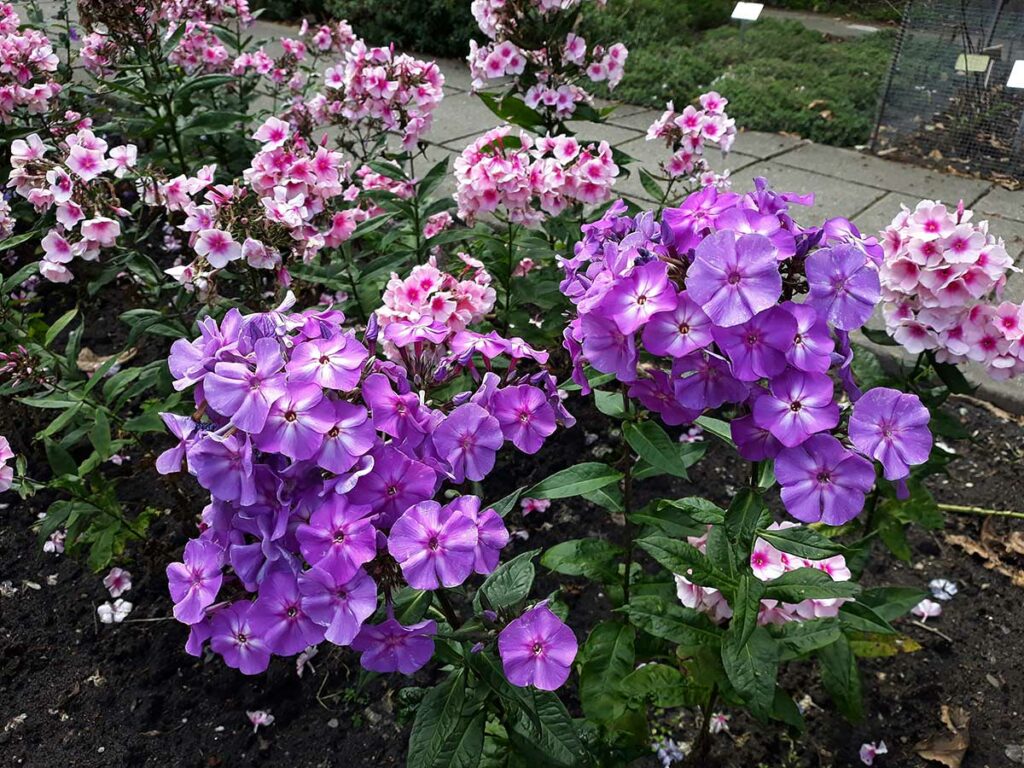
Garden Phlox provides fragrant, showy flowers from mid-summer to early fall. They thrive in full sun and well-draining soil but require good air circulation to prevent powdery mildew.
11. Yarrow
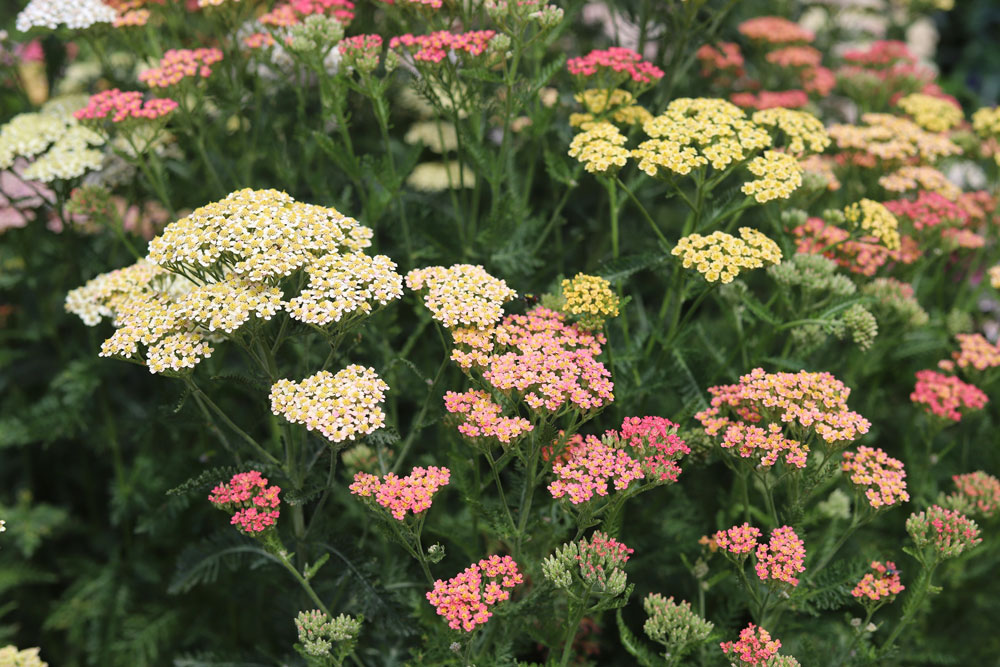
Yarrow is a fantastic choice if you’re looking for a long-blooming perennial. These plants bloom brilliantly from June through September, offering months of vibrant colors.
Yarrow thrives in full sun with well-draining soil. They’re perfect for planting zones 3 through 9, making them quite versatile across different climates.
Planting yarrow in your garden is relatively easy. These plants are drought-resistant, so you don’t need to water them constantly. Their mini blooms create a beautiful, umbrella-like canopy that adds charm and elegance to any garden setting.
If you love low-maintenance plants, yarrow is a great option. You can enjoy their pretty white, pink, or yellow flowers without a lot of hassle.
12. Lavender
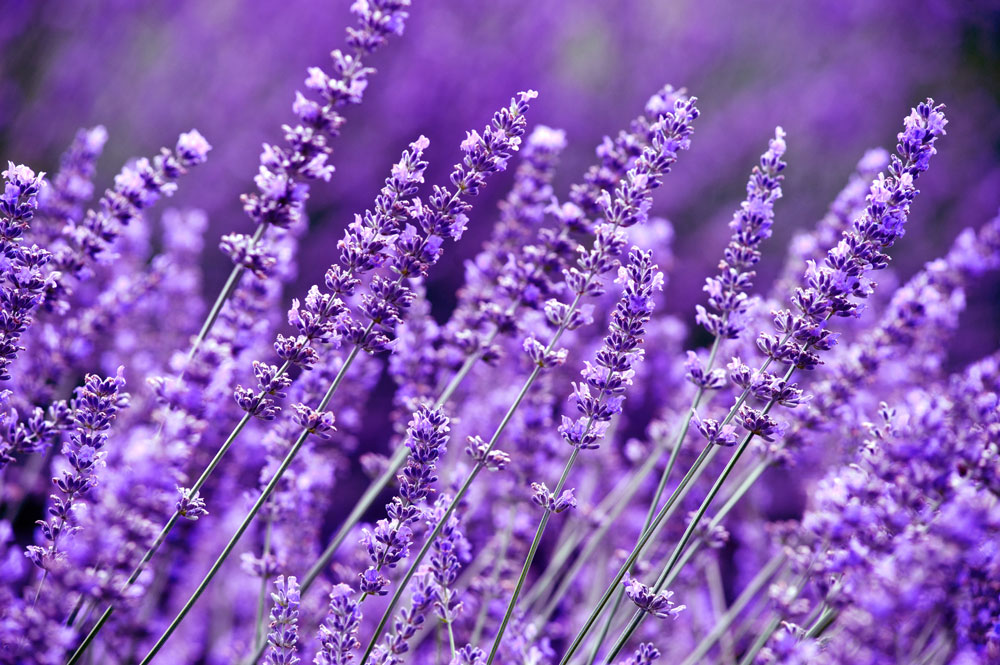
Lavender is a popular choice for gardens because of its lovely fragrance and long blooming period. It brightens up any space with its vibrant colors.
Types of Lavender:
- English Lavender: Known for its strong aroma and elegant purple flowers.
- Spanish Lavender: Features unique bloom shapes and Mediterranean charm.
- French Lavender: Has a variety of flower colors and blends of scents.
Growth Tips:
Lavender grows best in well-drained soil and a sunny spot. It’s a hardy plant that can withstand some drought. Water it sparingly to avoid root rot.
With the right care, lavender blooms can last for a significant part of the season, offering you continual enjoyment. Whether you’re a seasoned gardener or just starting, lavender is a superb choice for adding color and fragrance to your outdoor space.
13. Geranium
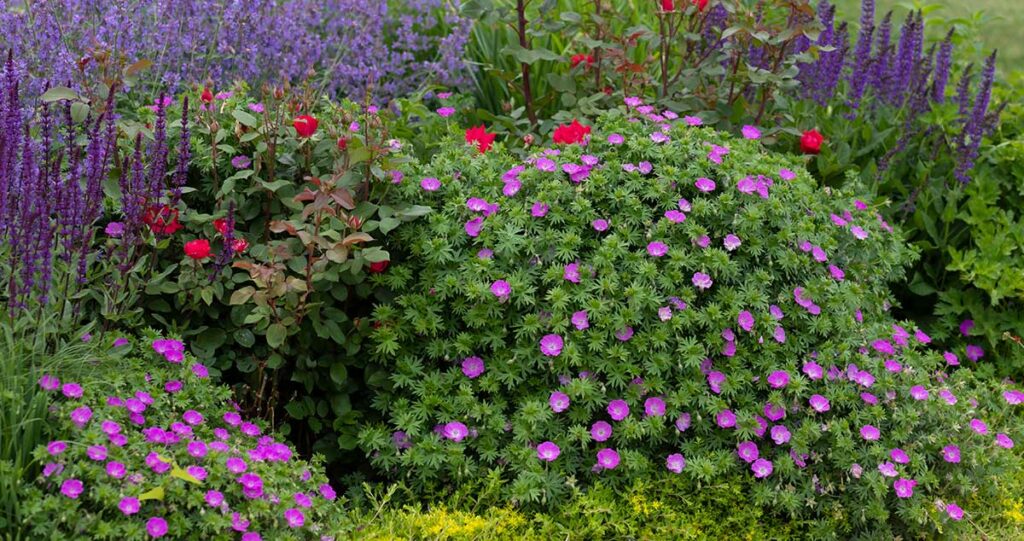
Bursting with vibrant colors, hardy geraniums are a gardener’s delight. They flower for a long time, making your garden lively and cheerful for months.
These plants thrive in various settings, from sunny spots to shadier woodland areas. Hardy geraniums need moderate soil and minimal care, making them perfect for busy gardeners like you.
Most geraniums are low-growing, reaching heights of 12 to 18 inches. Their spread can be 2 to 3 feet wide. This makes them a lovely ground cover, giving your garden a neat, filled-in look.
Here are a few popular varieties you might enjoy:
- Geranium palmatum: Features showy flowers and lush foliage.
- Blue Cloud: Known for its pale color.
- Brookside: Flowers have striking reddish veins.
Many hardy geraniums are pest and disease resistant. This means they look good even when conditions are not perfect. Give them a spot in well-drained soil, and they’ll reward you with little fuss.
14. Bleeding Heart
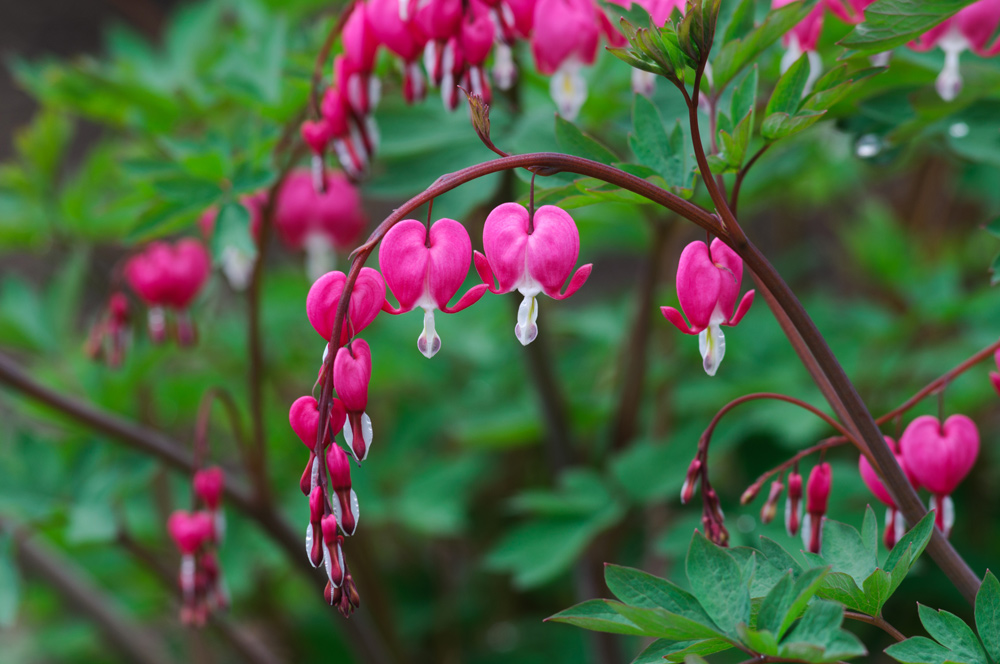
Bleeding hearts bring charm to shady gardens with their dangling, heart-shaped flowers. The old-fashioned bleeding heart is usually a spring bloomer, so it should not be described as a season-long flower.
For a longer bloom period, look for fringed bleeding heart, which can flower longer than the classic type, especially in cool, moist conditions. It is a good choice for woodland-style gardens, shaded borders, and spots where you want delicate flowers in late spring and early summer.
Read More: How to Grow and Care For Bleeding Heart Plants
15. Ice Plant (Delosperma)
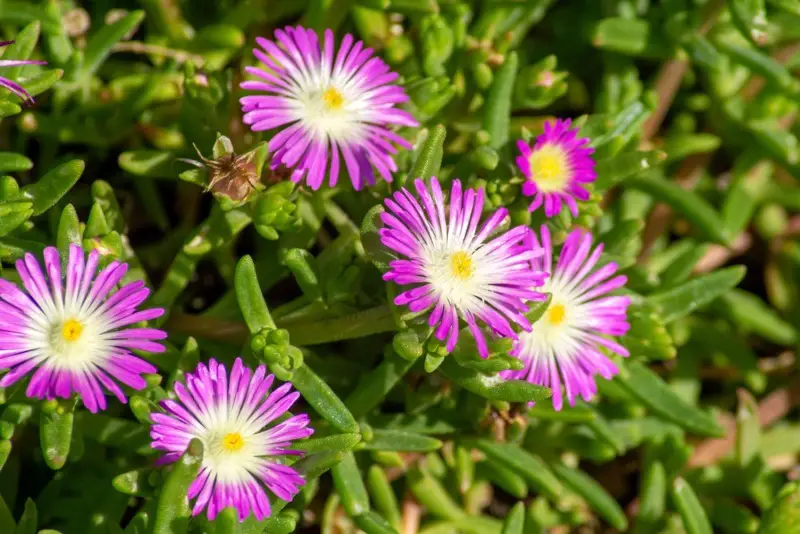
The Ice Plant, known scientifically as Delosperma, is a popular choice for gardeners who love colorful and hardy plants. These ground cover succulents are known for their vibrant daisy-like flowers that can bring a pop of color to any garden.
Native to eastern and southern Africa, Ice Plants thrive in warm and sunny locations. They are drought-tolerant and need well-draining soil to prevent root rot. Once established, these perennials need little maintenance, making them perfect for busy gardeners.
16. Sneezeweed
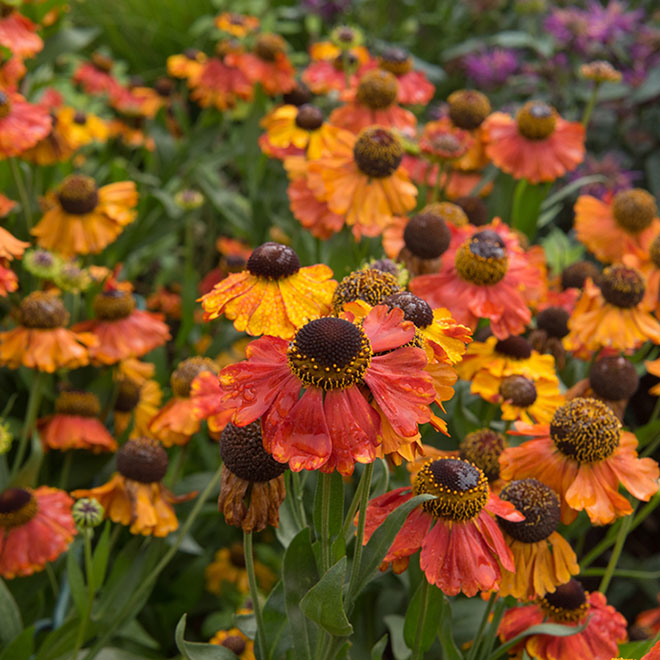
Sneezeweed, known as Helenium autumnale, is a cheerful addition to any garden. This lovely plant is part of the daisy family and is native to North America. Its bright yellow flowers bring color to your garden from late summer through fall.
These plants can reach a height of 3 to 5 feet when grown in full sun with moist soil. The yellow, daisy-like blooms attract bees and butterflies, making sneezeweed a favorite for pollinator gardens.
Don’t let the name fool you—sneezeweed is not a weed. It thrives in moist to wet areas, like edges, shores, and open fields. It’s a perennial, so it comes back year after year with little fuss.
17. Blue Vervain
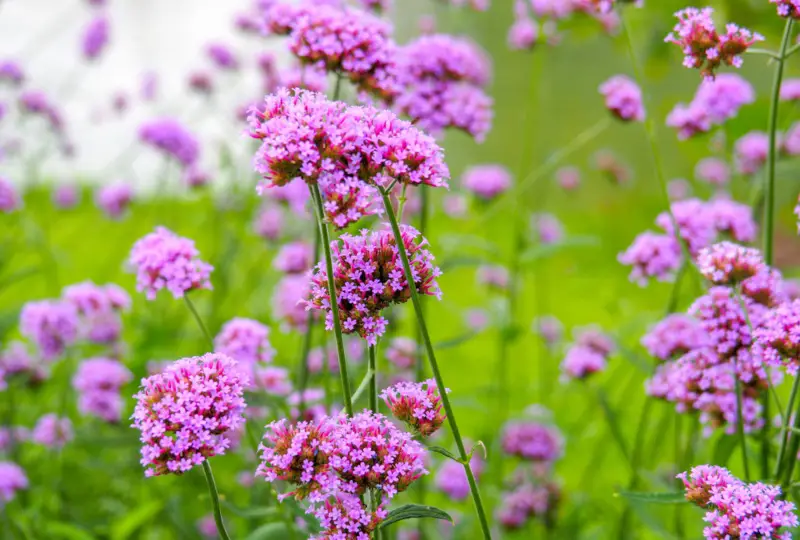
Blue vervain is a lovely perennial that can bring charm to your garden. With its tall spikes of purplish-blue flowers, it stands out beautifully. These blooms can attract many pollinators, making it a friendly choice for a wildlife garden.
This plant grows to heights of 2-5 feet, depending on the conditions. Its square stems can be green or red and are noticeable with their unique shape. The lance-shaped leaves have a toothed edge, adding texture to the plant.
Blue vervain thrives best in moist conditions. If you have a spot with poor drainage, this plant can be perfect for you. It enjoys full sun to partial shade, making it versatile for different garden areas.
Its blooming period is a delight, extending from July to September. During this time, only a few flowers bloom at once on each spike, creating a subtle yet constant display of color.
18. Joe-Pye Weed
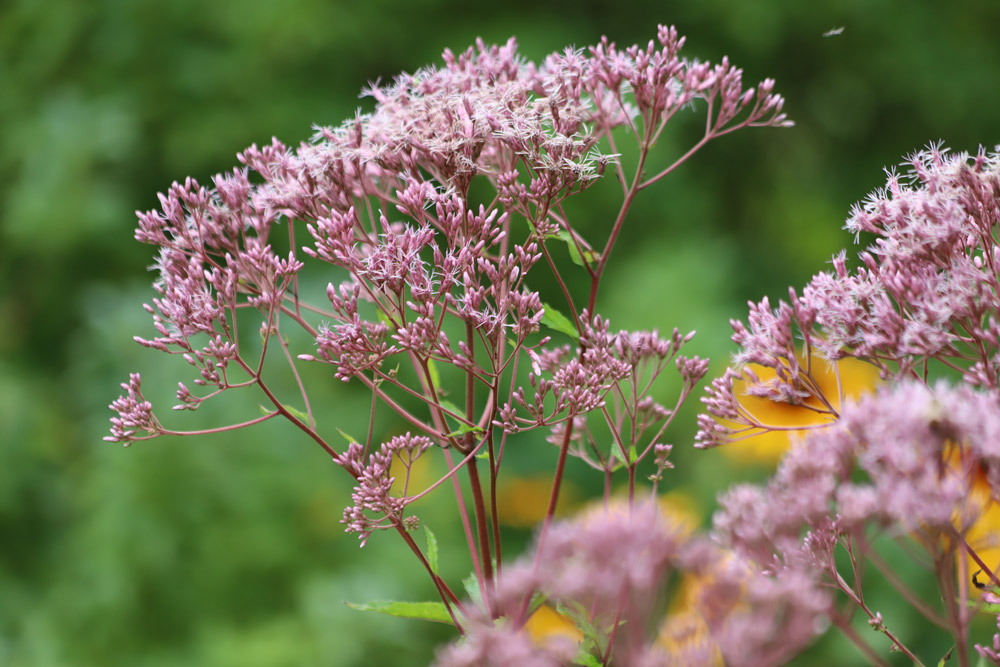
Joe-Pye Weed is a tall perennial that adds a splash of color to your garden. It can grow up to 8 feet tall, giving your garden a striking vertical element. This plant is perfect for the back of borders.
Its clusters of tiny pink or purple flowers bloom from mid-summer to fall. The blooms attract butterflies, making your garden lively and beautiful.
Plant Joe-Pye Weed in full sun or partial shade. It loves moist soil, so it’s ideal for rain gardens or near ponds. This plant is also fairly easy to care for.
19. Aster
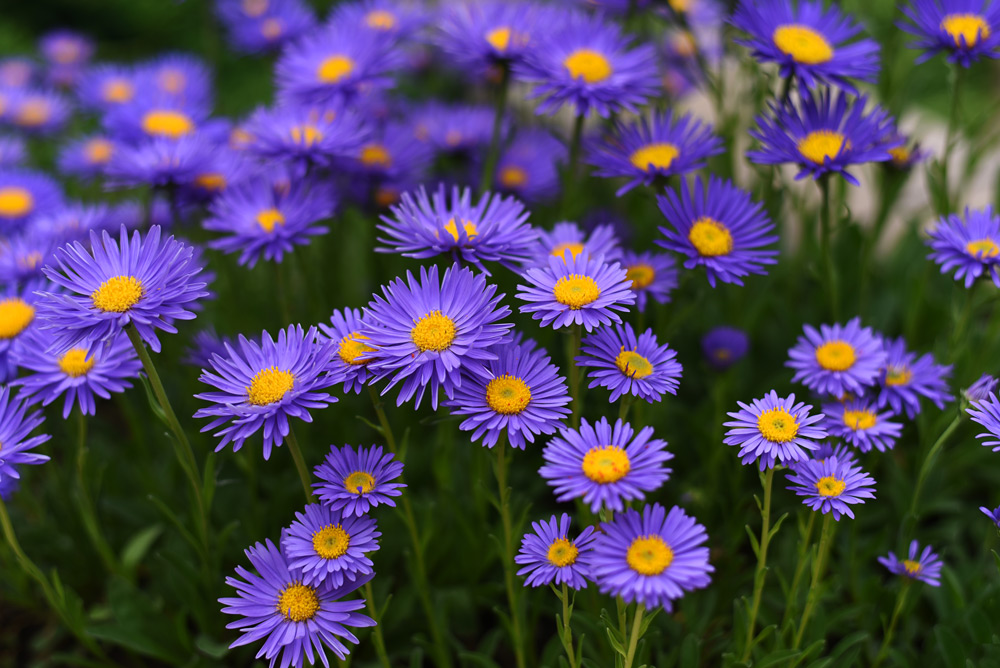
Asters are delightful perennials known for their vibrant daisy-like flowers. They bloom from late summer to fall, adding a splash of color to your garden when many other plants have faded.
Colors and Variety:
Asters come in various colors like purple, pink, blue, and white. With dozens of species, you can choose the perfect type for your garden.
Pollinator Friendly:
These flowers are not just pretty; they’re important for pollinators like bees and butterflies, especially towards the end of the season.
Zones and Growth:
Asters are versatile and suitable for USDA Hardiness Zones 3 to 8. Depending on the variety, they can grow from 1 to 6 feet tall.
20. Goldenrod
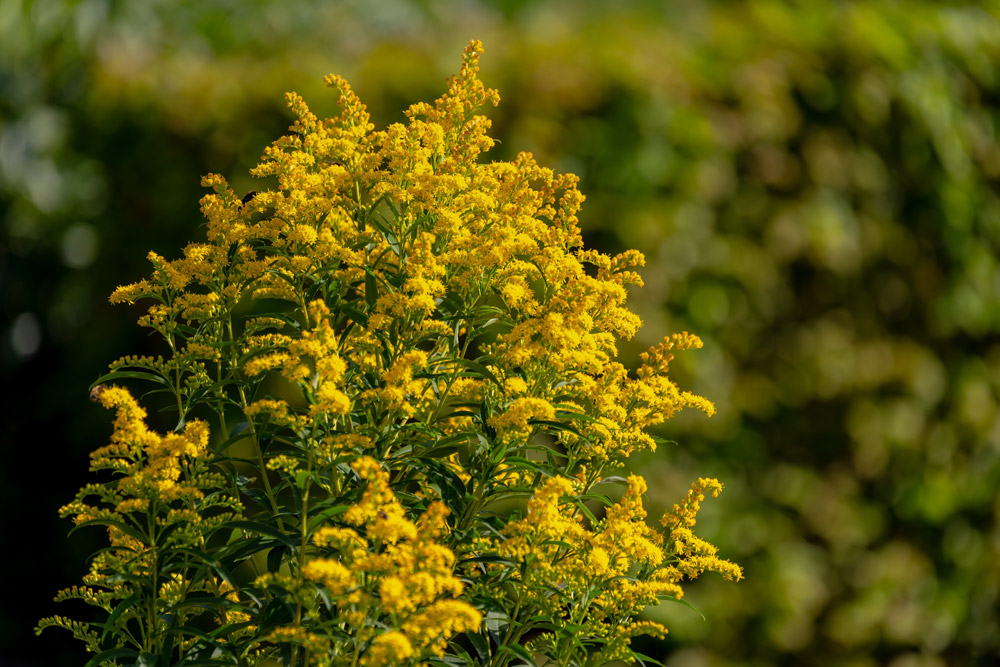
Goldenrod is a lovely addition to your garden. With its bright yellow flowers, it blooms in late summer through fall. You can find it in many shapes and sizes, making it perfect for beds, borders, or even containers on your patio. Its feathery plumes bring a joyful splash of color.
These plants are also wonderful for bees and butterflies. They provide a habitat and food source for these pollinators, helping your entire garden thrive. Most goldenrods do well in sunny spots, and they’re quite forgiving, growing in average to poor soil.
21. Pincushion Flower
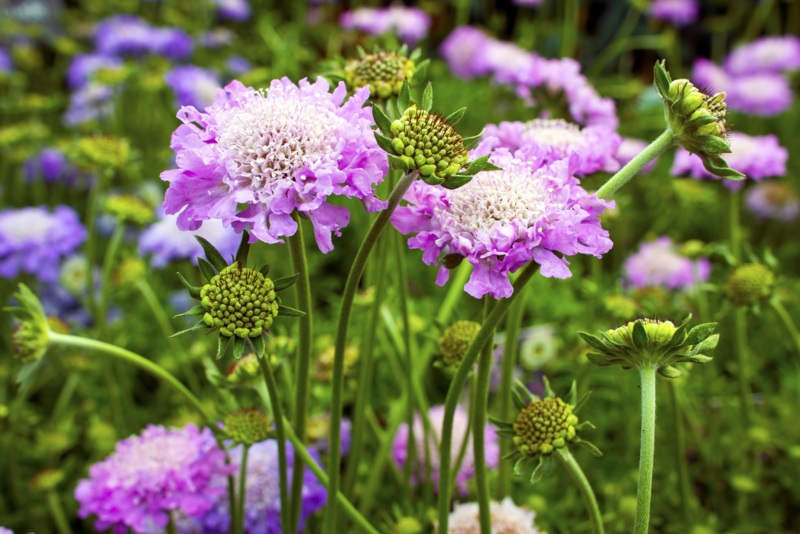
The pincushion flower, also known as Scabiosa, is a charming addition to your garden. You’ll often find it in lovely shades of blue, pink, or white. Its button-like blooms range from 1 to 3½ inches, adding delightful color.
These flowers are perennials, meaning they come back year after year. They tend to bloom from late spring to the first frost. Under ideal conditions, their bloom can stretch even longer.
Pincushion flowers are known for attracting bees and butterflies. Their flat shape makes it easy for these creatures to land, bringing life to your garden. They also have interesting wiry foliage that adds texture.
Easy to grow, pincushion flowers thrive in USDA zones 4-9. They’re versatile and fit nicely into many garden settings. They look great in larger groups or as companion plants with other perennials.
Please Note: Bloom times can vary by region, weather, variety, and care. In warmer climates, some plants may slow down during the hottest part of summer. In cooler climates, bloom periods may start later. Deadheading, watering during dry spells, and planting in the right amount of sun can also make a big difference.
| Common Name | Scientific Name | Typical Blooming Period | Notes |
|---|---|---|---|
| Catmint | Nepeta | Late spring to summer, often reblooms | Long-blooming, drought-tolerant, and loved by pollinators. |
| Blanket Flower | Gaillardia | Early summer to fall | Excellent for sunny, dry spots. Deadheading can help extend bloom. |
| Coreopsis | Coreopsis | Early summer to fall | Daisy-like flowers, good for sunny borders, and often blooms for months. |
| Yarrow | Achillea | June to September | Hardy, drought-tolerant, and useful for pollinator gardens. |
| Black-eyed Susan | Rudbeckia | Midsummer to early fall | Reliable late-summer color with cheerful yellow blooms. |
| Garden Phlox | Phlox paniculata | Midsummer to early fall | Fragrant flowers. Choose mildew-resistant varieties and provide good air circulation. |
| Russian Sage | Perovskia | Midsummer to fall | Drought-tolerant, airy purple-blue flowers, and excellent for sunny borders. |
| Salvia | Salvia spp. | Late spring to summer, sometimes reblooms | Varies by species and cultivar. Deadheading can encourage more flowers. |
| Pincushion Flower | Scabiosa | Late spring to fall in good conditions | A strong long-blooming choice. ‘Butterfly Blue’ is known for blooming from May to September or longer. |
| Ice Plant | Delosperma | June to September | Colorful ground cover for sunny, dry areas with excellent drainage. |
| Shasta Daisy | Leucanthemum | Early summer to late summer | Classic white flowers. Deadheading can extend the display. |
| Lavender | Lavandula | Late spring to summer | Fragrant, drought-tolerant, and best in full sun with sharp drainage. |
| Perennial Geranium | Geranium | Late spring to summer, varies by variety | Some varieties bloom longer than others. Good for borders and ground cover. |
| Astilbe | Astilbe | Late spring to early summer | Best for shady, moist spots. Beautiful but not a months-long bloomer. |
| Bleeding Heart | Dicentra / Lamprocapnos | Spring to early summer, longer for fringed types | Old-fashioned bleeding heart is mostly a spring bloomer. Fringed bleeding heart may bloom longer. |
| Sneezeweed | Helenium | Late summer to fall | Great for late-season color and pollinators. |
| Blue Vervain | Verbena hastata | Midsummer to early fall | Native plant with tall flower spikes. Best in moist soil. |
| Joe-Pye Weed | Eutrochium | Midsummer to fall | Tall native perennial that attracts butterflies and works well in moist areas. |
| Aster | Symphyotrichum | Late summer to fall | Excellent late-season color when many summer flowers are fading. |
| Goldenrod | Solidago | Late summer to fall | Valuable native plant for pollinators and late-season yellow color. |
| Sedum | Hylotelephium / Sedum | Late summer to fall | Low-maintenance, drought-tolerant, and great for bees late in the season. |